


Prepackaged Coffee Filter Packs
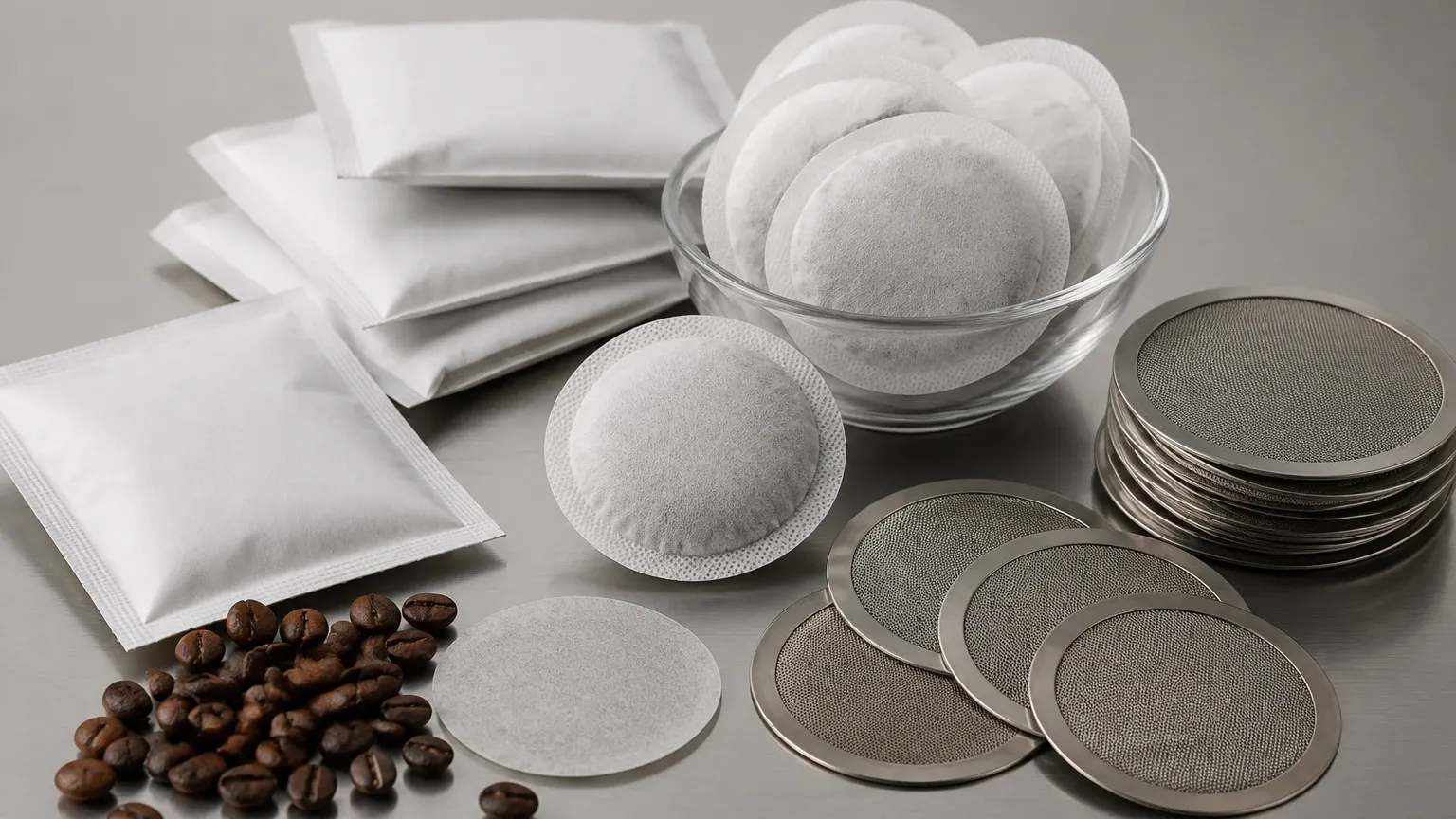
In the commercial beverage and industrial food processing sectors, the efficiency of extraction processes depends heavily on the precision of the filtration media. While paper filters are common in domestic settings, industrial-scale brewing and extraction require the durability and consistency offered by metal filtration components. Prepackaged coffee filter packs, engineered from high-grade stainless steel wire mesh, represent a critical component in commercial espresso machines, cold brew systems, and large-scale botanical extraction units. These components are often categorized under the broader umbrella of Filter Discs & Packs, which provide the structural integrity and micron-level accuracy necessary for high-pressure environments.
For engineers and procurement specialists, selecting the right filtration assembly involves understanding the interplay between material science, mesh geometry, and mechanical design. This guide explores the technical specifications and engineering considerations for industrial-grade prepackaged coffee filter packs.
The Engineering Behind Prepackaged Coffee Filter Packs
Industrial prepackaged coffee filter packs are not merely simple screens; they are precision-engineered assemblies designed to handle specific flow rates and pressure differentials. The primary material used is stainless steel, typically Grade 304 or Grade 316, due to its excellent corrosion resistance and food-grade safety profiles.
Material Selection and Chemical Stability
Stainless steel 304 is the standard for most food and beverage applications, offering sufficient resistance to the organic acids found in coffee. However, in environments where aggressive cleaning chemicals or high-salinity water are present, Grade 316 is preferred due to its molybdenum content, which provides enhanced resistance to pitting and crevice corrosion. These materials ensure that the filter does not impart any metallic taste to the final product, maintaining the sensory profile of the beverage.
Mesh Weave Types
The performance of a filter pack is largely determined by the weave of the wire mesh. Common weave types include:
* Plain Weave: The most straightforward design where wires cross over and under each other. It provides high flow rates but is generally limited to coarser filtration.
* Dutch Weave: This involves using heavier warp wires and finer shute wires, resulting in a dense, strong mesh with very fine filtration openings. This is often used in high-pressure extraction where fine sediment control is paramount.
* Twilled Weave: Used for finer filtration, this weave allows for thicker wires to be used for a given mesh count, increasing the overall strength of the disc.
Design and Construction of Filter Discs & Packs
In industrial applications, a single layer of mesh is rarely sufficient to withstand the mechanical stresses of repeated brewing cycles. Prepackaged coffee filter packs are typically constructed as multi-layer assemblies.
Multi-Layer Support Structures
A standard industrial filter pack might consist of three to five layers. The central layer is the "filter media," which determines the micron rating. This is sandwiched between coarser "support layers" and "protective layers." This structure prevents the fine filter mesh from deforming under the hydraulic pressure of the pump. By distributing the load across multiple layers, the assembly maintains its geometric integrity over thousands of cycles.
Edge Treatment and Sealing
One of the most critical aspects of prepackaged filter packs is the edge treatment. To prevent "bypass"—where fluid escapes around the edges of the filter rather than passing through the mesh—the edges must be securely sealed. Common methods include:
* Spot Welding: Multiple layers are welded at specific points to keep them aligned.
* Rimming (Framing): The layers are encased in a metal U-section rim, usually made of the same stainless steel grade. This provides a smooth, rigid edge that integrates seamlessly with the machine’s gaskets or housings.
* Sintering: In high-end applications, the layers are diffusion-bonded (sintered) together in a vacuum furnace. This creates a monolithic porous part that cannot delaminate and offers superior mechanical strength.
Key Performance Metrics for Industrial Filtration
When specifying prepackaged coffee filter packs for OEM equipment, engineers must evaluate several performance metrics to ensure the filter meets the application's demands.
Micron Rating and Sediment Control
The micron rating defines the size of the smallest particle the filter can reliably capture. For coffee filtration, this typically ranges from 50 to 200 microns. A finer micron rating produces a cleaner cup but increases the pressure required to maintain the flow rate. Conversely, a coarser rating allows more oils and fine particulates through, which may be desirable for certain flavor profiles but can lead to sediment buildup in downstream components.
Hydraulic Conductivity and Pressure Drop
Pressure drop (the difference in pressure before and after the filter) is a vital consideration. If the filter is too restrictive, it can strain the pump and lead to inconsistent extraction times. Engineers must balance the filtration fineness with the available surface area to ensure that the pressure drop remains within the machine's operating parameters.
Mechanical Fatigue Resistance
In a commercial setting, a filter pack may be subjected to rapid pressure fluctuations. The ability of the stainless steel mesh to resist fatigue and prevent wire breakage is essential for preventing contamination and ensuring the longevity of the equipment.
Advantages of Stainless Steel over Traditional Media
While paper and plastic filters are common in lower-volume applications, stainless steel prepackaged coffee filter packs offer distinct advantages for industrial and high-volume commercial use.
1. Reusability and Sustainability: Unlike single-use paper filters, stainless steel packs can be cleaned and reused for years, significantly reducing the waste stream and long-term operational costs.
2. Thermal Stability: Stainless steel maintains its structural properties at high temperatures, ensuring consistent filtration even during continuous brewing cycles where heat buildup is common.
3. Consistency: Paper filters can vary in thickness and porosity between batches. Precision-manufactured metal mesh provides a consistent, repeatable pore size, which is critical for maintaining quality control in large-scale production.
4. Permeability to Essential Oils: Metal filters allow many of the aromatic oils found in coffee to pass through into the final brew, which are often trapped by the fibers of paper filters. This results in a fuller-bodied beverage.
Customization and OEM Considerations
For manufacturers of brewing equipment, off-the-shelf solutions are rarely sufficient. Prepackaged coffee filter packs are often customized to fit specific hardware dimensions and performance requirements.
Specifying Dimensions and Tolerances
Precision is paramount when integrating a filter pack into a portafilter or extraction chamber. Manufacturers like Kaifil work with engineers to define exact diameters and thicknesses, often within tolerances of +/- 0.05mm. This ensures a tight fit that prevents bypass and mechanical rattling during operation.
Customized Layer Configurations
Depending on the viscosity of the extract and the desired clarity, the layer configuration can be adjusted. For example, a cold brew system might require a thicker stack with a higher dirt-holding capacity to handle the long extraction times and high volume of grounds, whereas an espresso machine requires a thinner, high-strength disc capable of withstanding 9-15 bars of pressure.
Maintenance and Total Cost of Ownership (TCO)
While the initial cost of a stainless steel filter pack is higher than disposable alternatives, the Total Cost of Ownership (TCO) is significantly lower when considering the lifespan of the component. Proper maintenance is key to maximizing this ROI.
Cleaning Protocols
Over time, coffee oils and fine particulates can accumulate within the mesh layers. In industrial settings, cleaning is typically performed using:
* Ultrasonic Cleaning: High-frequency sound waves create cavitation bubbles that dislodge particles from deep within the mesh.
* Chemical Backwashing: Using food-safe alkaline cleaners to dissolve organic buildup.
* Steam Sterilization: Ensuring the filter remains hygienic between production runs.
Replacement Cycles
Despite their durability, metal filter packs are wear items. Regular inspection should look for signs of mesh deformation, rim separation, or permanent clogging that cannot be resolved through cleaning. Establishing a preventative maintenance schedule for filter replacement ensures that beverage quality remains consistent and prevents unexpected downtime.
Conclusion
Prepackaged coffee filter packs are essential components for achieving precision and consistency in the commercial beverage industry. By utilizing high-quality Filter Discs & Packs, engineers can ensure their equipment delivers superior extraction performance while maintaining high standards of durability and hygiene. When selecting these components, focusing on material grade, mesh geometry, and edge construction will lead to more reliable systems and a lower total cost of ownership. For specialized applications, partnering with a manufacturer capable of providing custom OEM solutions is the most effective way to optimize filtration performance.
