


Raw Filter Packs
In the landscape of industrial filtration, raw filter packs represent the fundamental building blocks for high-pressure and high-temperature separation processes. These components, primarily composed of layered stainless steel wire mesh, are critical in industries ranging from polymer extrusion and chemical processing to oil and gas refining. For engineers and procurement specialists, understanding the technical nuances of these packs is essential for optimizing machine uptime and ensuring product purity.
As a core component of the broader category of Filter Discs & Packs, raw filter packs are often specified by their material grade, weave type, and layering configuration. Unlike standard off-the-shelf filters, these packs must be engineered to withstand significant mechanical stress while maintaining precise micron ratings. This guide examines the technical specifications, selection criteria, and operational considerations necessary for integrating raw filter packs into industrial systems.
Understanding the Composition of Raw Filter Packs
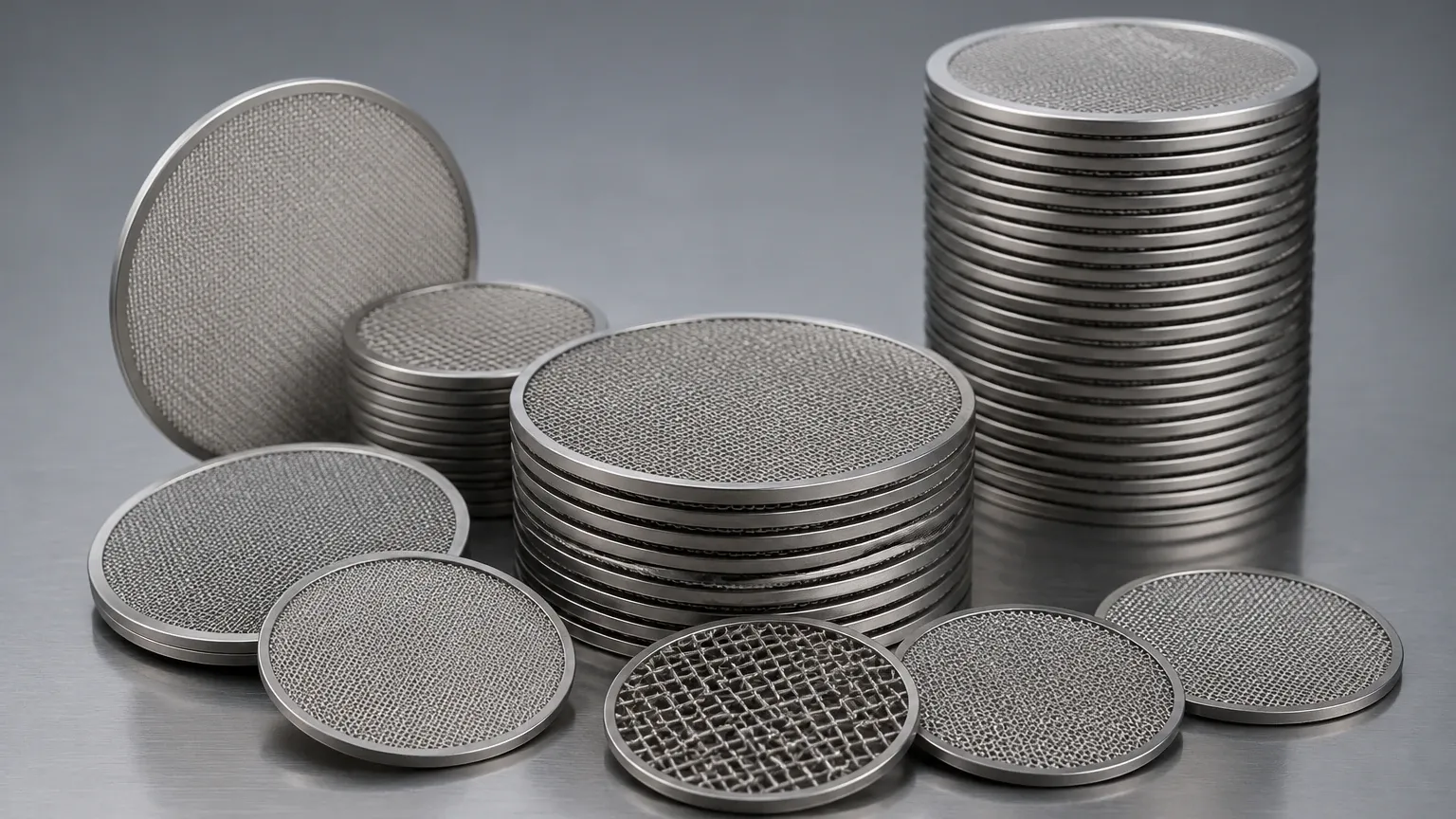
Raw filter packs are typically manufactured from multiple layers of woven wire cloth. The term "raw" generally refers to the basic, often unframed or spot-welded mesh configurations that serve as the primary filtration media within a larger assembly, such as an extruder screen changer or a hydraulic manifold.
Material Selection: SS304 vs. SS316L
The choice of alloy is the first critical decision in the engineering process.
* Stainless Steel 304: This is the standard industrial grade, offering excellent mechanical properties and good resistance to atmospheric corrosion. It is suitable for most general industrial applications where extreme chemical exposure is not a primary concern.
* Stainless Steel 316L: The "L" denotes low carbon content, which provides superior resistance to intergranular corrosion after welding. SS316L is the preferred choice for pharmaceutical, food and beverage, and chemical processing due to its enhanced resistance to chlorides and acids.
In high-temperature environments, such as polymer melt filtration, the thermal expansion coefficients of these materials must be accounted for to prevent the shifting of mesh layers, which could lead to "bypass"—where unfiltered fluid escapes through gaps in the pack.
Weave Types and Their Functions
The performance of raw filter packs is dictated by the weave of the wire mesh. Each weave offers a different balance between strength, flow rate, and filtration accuracy:
1. Plain Weave: The most common and economical weave, where each warp wire crosses over and under each weft wire. It provides high flow rates but is generally limited to coarser filtration tasks.
2. Dutch Weave (Plain and Twill): This weave uses a heavier warp wire and a finer weft wire. The result is a dense, high-strength mesh that can achieve much finer micron ratings (down to 5–10 microns) while maintaining the structural integrity required for high-pressure applications.
3. Twill Weave: Each warp wire passes over two and under two weft wires, allowing for a heavier wire diameter for a given mesh count. This is ideal for packs that require high load-bearing capacity.
Structural Engineering: Layering and Configuration
A single layer of mesh is rarely sufficient for industrial applications. Raw filter packs are almost always multi-layered to achieve a specific performance profile. A typical configuration includes three distinct functional layers:
* The Filtration Layer: This is the fine mesh (e.g., 20 microns) that performs the actual separation of contaminants.
* The Support Layer: Positioned on the downstream side, this coarser mesh prevents the fine filtration layer from deforming or collapsing under the pressure of the fluid flow.
* The Drainage/Protective Layer: Often placed on the upstream side, this layer protects the fine mesh from physical damage by large particles and helps distribute the flow evenly across the surface of the filter.
By combining different mesh counts, engineers can create a "gradient" filtration effect. This allows larger particles to be trapped in the outer layers while finer particles are caught deep within the pack, significantly extending the service life of the component compared to a single-layer disc.
Key Evaluation Criteria for Engineers
When specifying raw filter packs, technical professionals must move beyond simple dimensions. To ensure the reliability of Filter Discs & Packs, the following criteria should be evaluated:
1. Filtration Accuracy (Micron Rating)
It is vital to distinguish between nominal and absolute micron ratings. A nominal rating refers to the ability of the filter to retain a certain percentage (usually 60-90%) of particles of a specific size. An absolute rating implies that 99.9% of particles above that size will be captured. For critical applications like hydraulic systems or pharmaceutical synthesis, absolute ratings are mandatory.
2. Pressure Drop (Delta P)
The pressure drop is the difference in pressure between the upstream and downstream sides of the filter. A high initial pressure drop indicates that the mesh is too dense for the required flow rate, which can lead to premature clogging and increased energy consumption by pumps or extruders.
3. Structural Integrity and Edge Finish
In raw filter packs, the edges are a potential point of failure. If the pack is not properly spot-welded or rimmed, individual wires can fray and enter the process stream—a phenomenon known as media migration. Engineers should confirm that the manufacturing process includes ultrasonic cleaning to remove any residual oils or metal fragments from the cutting process.
Common Risks in Industrial Applications
Identifying potential failure modes is a key part of the procurement process. For raw filter packs, the risks often stem from environmental factors or improper installation.
* Corrosion and Pitting: Even stainless steel can fail if exposed to incompatible chemicals. In chemical processing, the presence of halides can cause localized pitting, which compromises the mesh structure.
* Mechanical Fatigue: In systems with pulsating flow, the mesh layers can vibrate. Over time, this causes work-hardening of the wire and eventual cracking. Selecting a pack with a robust support layer is the primary mitigation strategy for fatigue.
* Thermal Degradation: While stainless steel has a high melting point, its mechanical strength decreases at elevated temperatures. If a pack is rated for 300°C but operated at 500°C, the mesh may stretch, altering the pore size and allowing contaminants through.
Customization and OEM Integration
Because every industrial system has unique flow dynamics and housing dimensions, customization is often a necessity rather than an option. Kaifil specializes in providing tailored filtration solutions that go beyond standard sizes.
Customization options for raw filter packs include:
* Variable Layering: Adjusting the sequence and number of layers to match the viscosity of the fluid.
* Specific Shapes: While circular discs are standard, packs can be manufactured in oval, rectangular, or ring shapes to fit proprietary machinery.
* Rimmed Edges: For applications where the filter is frequently changed, adding a metal rim (usually aluminum or stainless steel) provides easier handling and a better seal within the housing.
* Spot Welding Patterns: Precision spot welding ensures that multi-layer packs remain aligned during shipping and installation without obstructing the effective filtration area.
Total Cost of Ownership vs. Initial Purchase Price
For purchasing teams, the lowest per-unit cost for raw filter packs can be deceptive. The true cost of filtration includes the frequency of replacement, the labor required for changeovers, and the potential cost of downstream equipment damage if a filter fails.
A high-quality, precision-engineered pack may have a higher initial price but can offer a significantly longer service life and better protection for expensive machinery. Engineers should look for suppliers who provide material certifications (MTRs) and can demonstrate consistent pore size distribution through bubble point testing or other standardized validation methods.
Conclusion: Steps Before Purchasing
Before finalizing a specification for raw filter packs, technical teams should confirm several key data points with their manufacturer:
1. Operating Environment: Provide details on the chemical composition, temperature range, and maximum operating pressure.
2. Contaminant Profile: Understand the nature of the solids being removed (e.g., hard abrasive particles vs. soft gels) to select the appropriate mesh weave.
3. Dimensional Tolerances: Ensure the pack dimensions account for thermal expansion and the specific sealing requirements of the filter housing.
4. Cleaning Requirements: Determine if the packs are intended for single use or if they must be cleaned and reused, which influences the choice of construction (e.g., welded vs. non-welded).
By focusing on these technical boundaries, engineers can ensure that their selection of Filter Discs & Packs provides the reliability and performance required for demanding industrial environments. Kaifil’s expertise in custom stainless steel filtration ensures that every raw filter pack is designed to meet the exact rigors of its intended application, from material selection to final quality inspection.
