


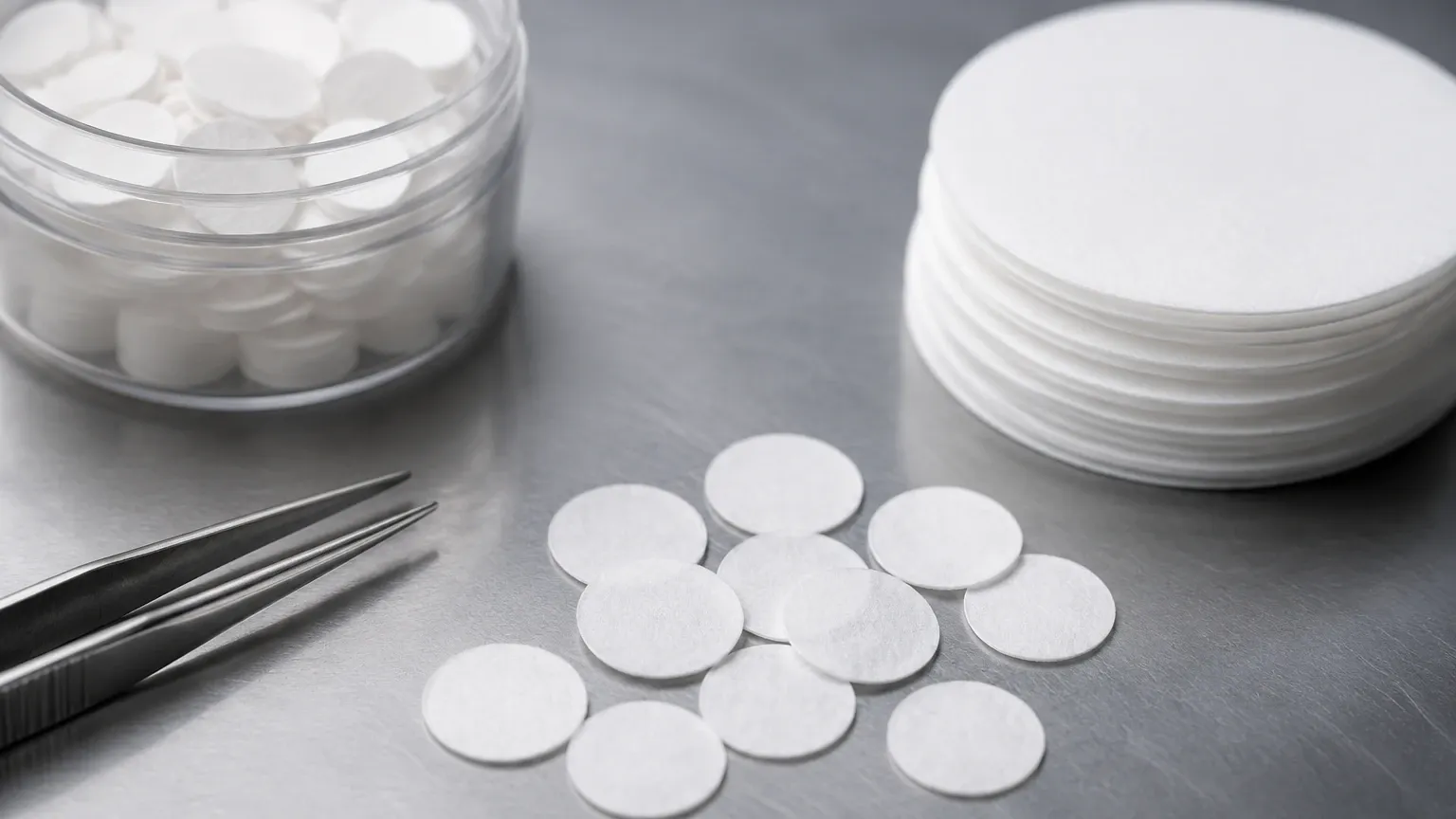
Sterile Filter Paper Discs 6 Mm Diameter
In laboratory and industrial filtration, the precision of a filter component is often the determining factor in the success of an analytical process or a production cycle. The use of sterile filter paper discs 6 mm diameter is a standard practice in microbiology, particularly for antibiotic susceptibility testing (AST) and the evaluation of antimicrobial activity. While these small-scale paper components are essential for diagnostic and research environments, they represent one end of a broad spectrum of filtration solutions that include high-performance industrial Filter Discs & Packs.
Understanding the technical specifications, material properties, and performance expectations of these discs is crucial for engineers and lab managers. This guide explores the engineering considerations behind 6 mm sterile discs and how they relate to broader industrial filtration requirements.
Understanding the Role of 6 mm Sterile Filter Paper Discs in Microbiology
The 6 mm diameter format for filter paper discs has become a global standard, primarily due to its historical use in the Kirby-Bauer disk diffusion method. In this application, the disc acts as a reservoir for a specific concentration of an antimicrobial agent. When placed on an agar plate inoculated with bacteria, the agent diffuses into the medium, creating a concentration gradient.
Key Functions in Laboratory Settings
1. Absorption Capacity: The disc must be capable of holding a precise volume of liquid without losing its structural integrity. This is typically achieved through high-purity cellulose fibers.
2. Uniform Diffusion: The porosity and capillary structure of the paper must ensure that the substance is released at a predictable rate.
3. Sterility Assurance: For microbiological work, the discs must be free of any microbial load that could interfere with the test results. Sterilization is usually achieved through gamma irradiation or autoclaving.
While paper-based discs are excellent for single-use diagnostic applications, industrial processes often require the same level of precision but with significantly higher durability. This is where the transition from cellulose to stainless steel filter components becomes necessary.
Technical Specifications and Material Selection for Precision Discs
When selecting a filtration disc, whether it is a sterile filter paper discs 6 mm diameter for a lab or a multi-layer mesh pack for a hydraulic system, material selection is the first engineering hurdle.
Cellulose-Based Discs
For 6 mm paper discs, the primary material is high-quality cotton linters or alpha-cellulose. These materials are chosen for their low ash content and high absorption. However, they are limited by their chemical resistance and mechanical strength. They cannot withstand high pressures or aggressive solvents, which limits their use to low-pressure, aqueous environments.
Stainless Steel and Metal Discs
In contrast, industrial filter discs and packs utilize stainless steel (304, 316, or 316L) to provide mechanical stability and chemical inertness. For applications involving high temperatures, corrosive chemicals, or high-pressure differentials, metal discs are the only viable option. These are often constructed from multiple layers of wire mesh, sintered together to create a rigid, high-precision filter medium.
| Feature | Sterile Paper Discs (6 mm) | Stainless Steel Filter Discs |
| :— | :— | :— |
| Primary Use | Microbial Testing / AST | Industrial Fluid Processing |
| Durability | Single-use, Low Strength | Reusable, High Strength |
| Temperature Limit | Generally < 120°C | Up to 600°C+ (depending on alloy) |
| Chemical Resistance | Limited to mild buffers | High (Acids, Bases, Solvents) |
| Filtration Rating | Nominal | Absolute or Nominal |
Evaluation Criteria for Industrial Filter Discs & Packs
For purchasing teams and engineers, moving beyond the laboratory scale requires a different set of evaluation criteria. While a 6 mm paper disc is evaluated on its absorption, an industrial Filter Discs & Packs solution is evaluated on flow rate, pressure drop, and dirt-holding capacity.
1. Filtration Accuracy (Micron Rating)
In precision metal filtration, the micron rating can be controlled with extreme accuracy. Whether the application requires 5-micron or 100-micron filtration, the pore size must remain consistent under load. Unlike paper, which may compress or swell, stainless steel mesh maintains its geometry.
2. Mechanical Integrity
Industrial filters are often subject to back-pressure and mechanical stress. A well-designed filter pack uses a "support layer" and a "drainage layer" to protect the fine filtration mesh. This multi-layer construction prevents the mesh from deforming or migrating into the fluid stream.
3. Cleaning and Reusability
While sterile filter paper discs 6 mm diameter are discarded after a single use to prevent cross-contamination, industrial metal filters are often designed for cleaning. Methods such as ultrasonic cleaning, backwashing, or chemical baths allow these components to be reused, lowering the total cost of ownership in the long run.
Engineering Considerations: Durability and Chemical Compatibility
In the pharmaceutical and chemical processing sectors, the compatibility of the filter medium with the process fluid is non-negotiable. If a filter disc leaches impurities or reacts with the product, the entire batch may be compromised.
Sterilization Compatibility
For sterile applications, the filter must survive the sterilization process. While paper discs are sterilized via gamma rays, metal filter packs are frequently subjected to Steam-in-Place (SIP) or Autoclave cycles. Stainless steel 316L is preferred in these scenarios due to its resistance to pitting and stress corrosion cracking in high-moisture, high-temperature environments.
Flow Dynamics and Pressure Drop
Engineers must calculate the pressure drop (ΔP) across the filter disc. A high pressure drop indicates high resistance, which can lead to increased energy consumption or pump failure. In industrial systems, the surface area of the disc is optimized to ensure maximum flow with minimal resistance. This is often achieved by using pleated designs or larger diameter packs when a simple 6 mm or 10 mm disc is insufficient for the required volume.
Customization and OEM Solutions for Filtration Components
One of the most significant advantages for B2B buyers is the ability to customize filtration components. While sterile filter paper discs 6 mm diameter are a commodity product with fixed dimensions, industrial filter discs can be engineered to meet specific housing requirements.
Custom Geometries
Beyond the standard circular disc, manufacturers like Kaifil can produce oval, rectangular, or ring-shaped filter packs. These are often used in polymer filtration, fiber production, and hydraulic systems where the filter must fit into a specialized manifold.
Layer Configuration
Custom filter packs can be configured with varying mesh counts. For example, a 5-layer sintered mesh pack might include:
* Outer Protection Layer: Coarse mesh to protect against large particles.
* Control Layer: The primary filtration layer that determines the micron rating.
* Support Layers: Multiple layers of heavy-duty mesh to provide structural rigidity.
This level of customization ensures that the filtration component is perfectly matched to the viscosity of the fluid and the expected contaminant load.
Quality Control and Performance Validation in Sterile Environments
In industries such as food and beverage or pharmaceuticals, the validation of filter performance is a regulatory requirement. For 6 mm sterile discs, this involves batch testing for sterility and absorption consistency. For industrial metal filters, the validation process is more rigorous.
Bubble Point Testing
The bubble point test is a non-destructive method used to determine the maximum pore size of a filter. By submerging the filter in a liquid and gradually increasing air pressure, engineers can identify the point at which the first bubble appears, which correlates to the largest pore in the mesh.
Material Certification
For B2B procurement, material traceability is essential. Suppliers should provide Mill Test Reports (MTRs) to confirm the chemical composition of the stainless steel. This ensures that the filter will perform as expected in corrosive environments and meet FDA or other industry-specific compliance standards.
Total Cost of Ownership and Replacement Cycles
When evaluating the transition from disposable filtration to permanent or semi-permanent industrial solutions, purchasing teams must look at the total cost of ownership (TCO).
Disposable vs. Reusable
* Paper Discs: Low initial cost, high recurring cost, and significant waste generation. Ideal for low-volume lab testing.
* Metal Filter Discs: Higher initial investment, lower long-term cost due to reusability, and reduced downtime for replacements. Ideal for continuous industrial processes.
Maintenance and Replacement Cycles
The replacement cycle for an industrial filter disc is determined by the terminal pressure drop. Once the filter reaches a pre-defined pressure limit, it must be cleaned or replaced. High-quality stainless steel filters can undergo dozens of cleaning cycles before the mesh integrity begins to degrade, making them a cost-effective choice for demanding applications.
Conclusion: Selecting the Right Filtration Partner
Whether your application requires the precision of sterile filter paper discs 6 mm diameter for microbiological assays or the robust performance of industrial Filter Discs & Packs for chemical processing, the fundamental principles of filtration remain the same: accuracy, durability, and compatibility.
For engineers and technical professionals, the key is to identify the specific demands of the environment—temperature, pressure, and chemical exposure—and select a filter medium that provides the necessary performance without compromising the integrity of the process. By partnering with a manufacturer that understands these engineering nuances, companies can optimize their filtration efficiency and ensure long-term operational success.
