


Synthetic Filter Discs Near Me
In the industrial filtration landscape, the search for "synthetic filter discs near me" often reflects an immediate operational need. Whether a facility is facing an unexpected equipment breakdown or a purchasing department is looking to optimize a supply chain for recurring consumables, understanding the technical nuances of these components is vital. Synthetic filter discs and packs are critical elements in diverse sectors, including chemical processing, water treatment, and food production, where they serve as the primary barrier against particulate contamination.
While local availability is a significant factor for emergency maintenance, the engineering requirements of high-performance filtration often necessitate a deeper look into material science, manufacturing precision, and long-term reliability. This guide explores the technical specifications of synthetic filter discs, the criteria for selecting the right supplier, and how to balance local procurement with global manufacturing expertise.
Understanding the Composition of Synthetic Filter Discs
Synthetic filter discs are typically manufactured from polymer-based meshes or non-woven fabrics. Unlike their metallic counterparts, synthetic materials offer unique advantages in specific chemical environments and weight-sensitive applications. The most common materials include:
1. Polyamide (Nylon)
Nylon is frequently selected for its high mechanical strength and excellent abrasion resistance. It is highly effective in alkaline environments and is often used in the medical and food industries due to its precise mesh openings and non-shedding characteristics.
2. Polyester (PET)
Polyester is a versatile material known for its high tensile strength and resistance to most acids. It maintains excellent dimensional stability, even under significant tension or varying temperatures, making it a preferred choice for precision Filter Discs & Packs used in industrial screening.
3. Polypropylene (PP)
Polypropylene is the go-to material for applications involving aggressive chemicals, including both strong acids and bases. It has a low moisture absorption rate and is relatively cost-effective, though it has lower temperature resistance compared to polyester.
4. Fluoropolymers (PTFE/PFA)
For the most extreme chemical environments and high-temperature requirements, PTFE synthetic discs are utilized. These materials are nearly inert and can withstand temperatures that would melt standard polymers, though they represent a higher initial investment.
The Engineering of Filter Discs & Packs
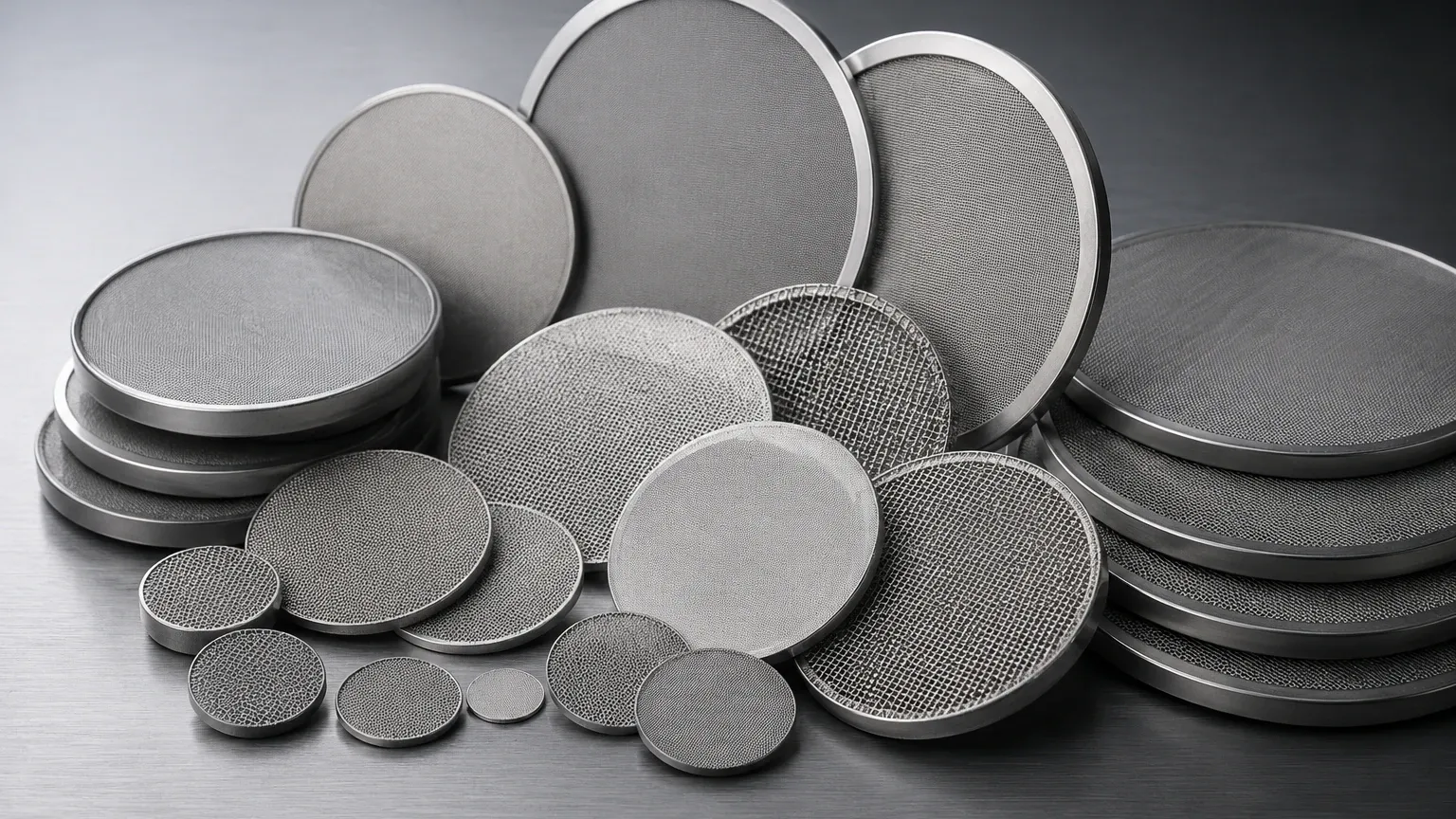
In many industrial processes, a single layer of synthetic mesh is insufficient to meet filtration goals. This is where the concept of "packs" becomes essential. A filter pack consists of multiple layers of media, often with varying micron ratings, combined to provide depth filtration or to protect a fine inner mesh with coarser outer support layers.
Layer Configuration
Engineers must determine the optimal sequence of layers. A typical multi-layer synthetic pack might include:
- Support Layer: A coarse mesh that provides structural integrity.
- Filtration Layer: The primary media responsible for capturing particles at the target micron rating.
- Drainage Layer: Facilitates the flow of the filtrate away from the filtration zone, preventing localized pressure buildup.
Edge Treatment and Sealing
When sourcing synthetic filter discs, the method of edge sealing is a critical quality indicator. For synthetic materials, ultrasonic welding or heat sealing is commonly used to fuse the edges of multi-layer packs. This ensures that no bypass occurs at the periphery of the disc and prevents the synthetic fibers from fraying and entering the process stream.
Evaluating "Near Me" Sourcing vs. Direct Manufacturing
When searching for "synthetic filter discs near me," industrial buyers are often weighing the trade-off between speed and specialization. Local distributors provide the advantage of immediate stock and reduced shipping costs, which is ideal for standard sizes and common materials.
However, for specialized OEM applications or high-volume industrial requirements, working directly with a manufacturer like Kaifil offers several advantages:
1. Customization: Local stock is often limited to standard diameters and micron ratings. Manufacturers can produce discs to exact specifications, including non-standard shapes, custom multi-layer configurations, and specific edge treatments.
2. Material Traceability: In regulated industries like pharmaceuticals or food processing, knowing the exact origin and compliance (FDA, REACH, RoHS) of the polymer resin is mandatory. Direct manufacturers provide comprehensive documentation that local resellers may lack.
3. Technical Support: Engineers often need to discuss flow rates, pressure drop calculations, and chemical compatibility. A manufacturer with deep expertise in filtration can provide data-backed recommendations that go beyond a simple product catalog.
4. Cost Efficiency at Scale: While a local supplier is convenient for five discs, a direct manufacturing partnership is significantly more cost-effective for annual contracts involving thousands of units.
Key Performance Criteria for Selection
Before finalizing a purchase of synthetic filter discs, technical teams should evaluate the following performance metrics to ensure the component is fit for purpose:
Micron Rating: Absolute vs. Nominal
It is vital to distinguish between a nominal rating (an approximate value representing the percentage of particles retained) and an absolute rating (the diameter of the largest particle that can pass through the mesh). For critical applications, an absolute rating is usually required to ensure process consistency.
Flow Rate and Pressure Drop
The permeability of the synthetic mesh determines how much fluid can pass through the disc at a given pressure. A disc with too fine a mesh may lead to excessive pressure drop, increasing energy costs and potentially causing the filter to burst. Conversely, too coarse a mesh will fail to protect downstream equipment.
Chemical and Thermal Compatibility
Synthetic materials are sensitive to environmental factors. A polyester disc that performs perfectly at room temperature may lose its structural integrity if the process temperature spikes. Similarly, pH levels must be matched to the polymer’s resistance profile to prevent premature degradation.
Common Applications for Synthetic Filter Discs
Synthetic filtration media are ubiquitous across several high-stakes industries. Understanding these applications helps in identifying the specific features required for your own facility.
- Water Treatment: Used in pre-filtration for reverse osmosis (RO) systems and in the removal of microplastics or organic debris.
- Chemical Processing: Synthetic discs are used to filter catalysts, pigments, and various chemical intermediates where metallic contamination must be avoided.
- Pharmaceuticals: Precision nylon or polyester discs are used in the production of APIs (Active Pharmaceutical Ingredients) and in laboratory-scale separation processes.
- Automotive and Aerospace: Used in the filtration of hydraulic fluids and fuels where lightweight components are prioritized.
Maintenance, Replacement, and Total Cost of Ownership
In a B2B environment, the unit price of a filter disc is only one component of the Total Cost of Ownership (TCO). High-quality synthetic filter discs may have a higher upfront cost but offer a longer service life and better protection for expensive downstream machinery.
Monitoring Performance
Differential pressure (DP) gauges are the most reliable way to determine when a filter disc needs replacement. A sudden drop in DP might indicate a ruptured disc, while a steady increase signals that the mesh is blinded by particulates.
Cleaning vs. Disposal
While some heavy-duty stainless steel filters can be cleaned and reused multiple times, many synthetic filter discs are designed for single-use or limited-cycle applications. Attempting to clean synthetic mesh with harsh chemicals or high-pressure air can damage the pore structure, leading to inconsistent filtration performance. It is usually more cost-effective and safer to replace synthetic discs according to a fixed schedule or DP trigger.
Conclusion: Making an Informed Procurement Decision
Finding "synthetic filter discs near me" is the start of a procurement journey, but it should not be the end. While local availability solves the problem of "now," technical excellence solves the problem of "how well." For engineers and purchasing managers, the goal is to find a balance between logistical convenience and the rigorous standards required by modern industrial processes.
By focusing on material compatibility, precise micron ratings, and the structural integrity of the disc or pack, facilities can reduce downtime and improve product quality. Whether you are looking for standard synthetic discs or complex, multi-layer Filter Discs & Packs, partnering with a manufacturer that understands the intersection of material science and mechanical engineering is the most reliable path to optimized filtration performance.
