


Synthetic Filter Discs Nearby
In industrial filtration, the search for "synthetic filter discs nearby" often stems from an immediate operational need—minimizing downtime, reducing shipping costs, or securing a secondary supply line for critical consumables. Synthetic filter discs, typically manufactured from polymers such as polyester (PET), nylon (PA), polypropylene (PP), or fluoropolymers (PTFE), serve as essential components in liquid and gas separation processes. However, for engineers and procurement professionals in the chemical, pharmaceutical, and food processing sectors, proximity is only one factor in a complex selection matrix.
Understanding the technical nuances of synthetic media, its structural limitations, and the advantages of integrating it with high-precision metal components is vital for maintaining system integrity. This guide examines the engineering considerations behind sourcing synthetic filter discs and how they interface with professional Filter Discs & Packs to achieve optimal filtration performance.
Understanding the Demand for Synthetic Filter Discs in Industrial Applications
Synthetic filter discs are widely utilized due to their specific chemical resistances and cost-effectiveness in low-to-medium temperature environments. Unlike metal mesh, synthetic fibers can be engineered into various structures, including monofilament woven meshes, multifilament fabrics, and non-woven felts.
When searching for synthetic filter discs nearby, technical teams are usually looking for solutions to address specific fluid dynamics. For instance, nylon discs are frequently selected for their excellent abrasion resistance and stability in alkaline environments, making them staples in wastewater treatment and paint filtration. Conversely, polyester is preferred in acidic conditions where dimensional stability is paramount. The choice of material directly impacts the "nearby" sourcing strategy; while standard polypropylene discs might be readily available from local distributors, specialized PTFE or PEEK discs for high-temperature chemical processing often require sourcing from specialized manufacturers with advanced conversion capabilities.
Key Evaluation Criteria for Sourcing Synthetic Filter Discs
Procuring filtration components requires more than just matching a diameter. To ensure that a local or regional supplier meets industrial standards, several technical benchmarks must be evaluated:
1. Micron Rating and Pore Distribution
Synthetic media can offer very fine filtration, but the consistency of the pore size is critical. In woven synthetic discs, the precision of the mesh opening depends on the weaving technology. Non-woven media, while offering high dirt-holding capacity, may have a broader pore size distribution. Engineers must confirm whether the rated micron size is "absolute" or "nominal" to prevent bypass of contaminants.
2. Chemical and Thermal Compatibility
One of the primary risks of sourcing synthetic filter discs nearby without rigorous vetting is material degradation. A polymer that performs well in a lab setting may fail when exposed to the combined stress of high pressure, fluctuating temperatures, and aggressive solvents. For example, polypropylene typically has a maximum operating temperature of around 90°C, while specialized synthetics can reach higher. Exceeding these limits leads to fiber softening, pore deformation, and eventual structural failure.
3. Mechanical Strength and Burst Pressure
Synthetic discs lack the inherent rigidity of stainless steel. Under high differential pressure (ΔP), a synthetic disc may stretch or "blind" (clog) more rapidly if not properly supported. This is where the integration of synthetic media into multi-layer Filter Discs & Packs becomes necessary, often utilizing a stainless steel support mesh to provide the required mechanical backbone.
The Intersection of Synthetic Media and Metal Filter Discs & Packs
In many demanding industrial environments, a standalone synthetic disc is insufficient. High-pressure hydraulic systems, polymer extrusion, and heavy-duty chemical processing often require a hybrid approach. This involves combining the fine filtration capabilities of synthetic or fiber metal felt with the robust structural support of woven wire mesh.
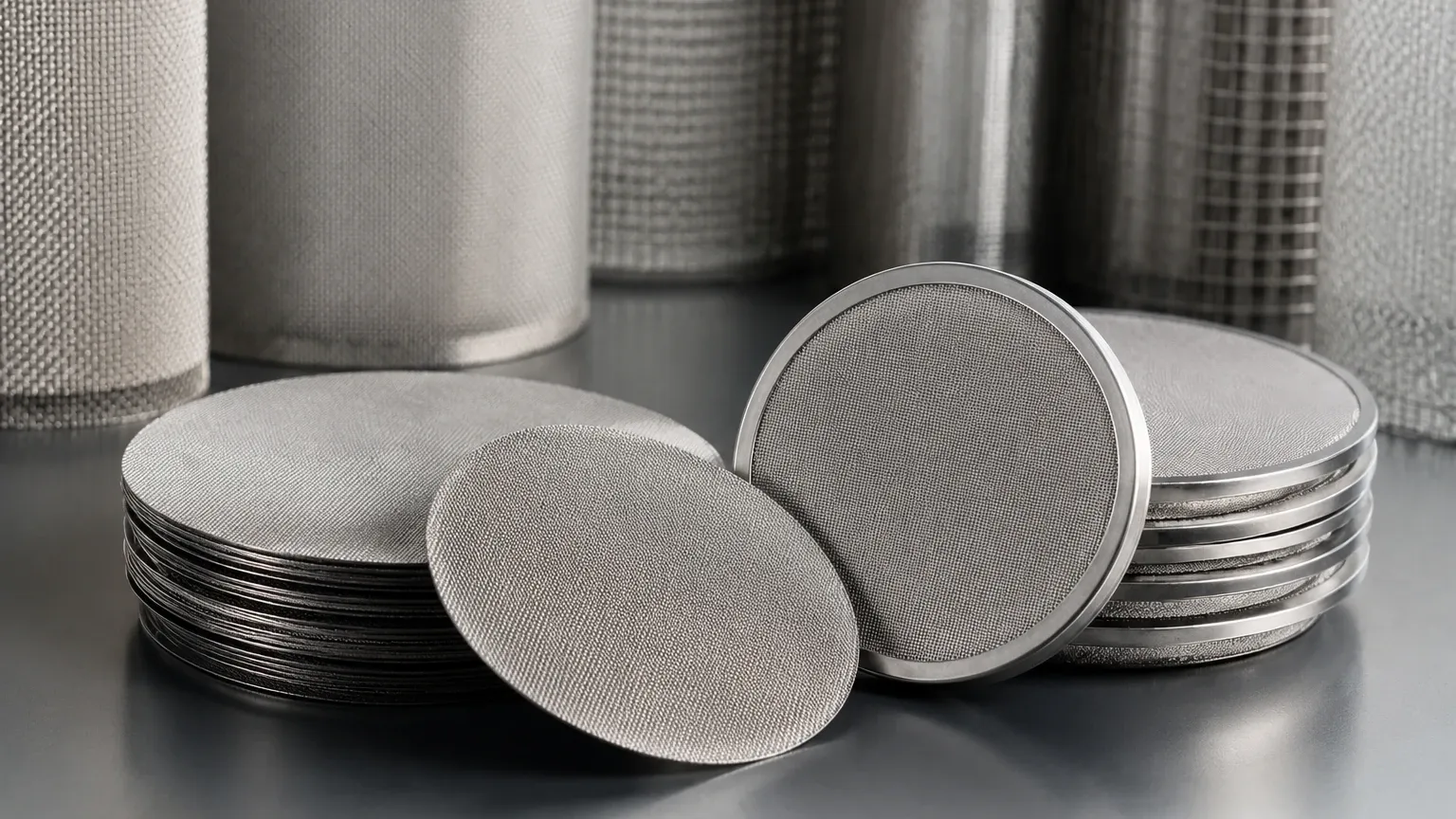
Professional manufacturers like Kaifil specialize in creating these sophisticated assemblies. By encasing synthetic layers within stainless steel rims or layering them between different grades of wire mesh, the resulting Filter Discs & Packs offer the best of both worlds: the precise particle capture of specialized media and the high-pressure resistance of metal. When searching for "synthetic filter discs nearby," it is often more productive to look for a manufacturer that can provide these reinforced assemblies, as they significantly extend the service life of the filter and reduce the frequency of replacement cycles.
Navigating the Risks of "Nearby" Sourcing for Technical Components
While local sourcing offers the advantage of shorter lead times, it introduces several risks that can compromise industrial operations. Technical professionals must be vigilant regarding the following:
* Material Traceability: In the pharmaceutical and food and beverage industries, material certification (such as FDA compliance or USP Class VI) is non-negotiable. Local distributors may not always provide the full traceability required for regulated environments.
* Quality Consistency: Small-scale local converters might lack the cleanroom environments or precision die-cutting equipment necessary to produce discs with burr-free edges and consistent dimensions. Edge fraying in synthetic discs is a common source of downstream contamination.
* Limited Customization: A "nearby" supplier often stocks standard sizes. However, industrial filtration housings frequently require custom diameters, center holes, or specialized edge-welding to prevent bypass. Working with a specialized manufacturer allows for OEM-level customization that local off-the-shelf options cannot match.
Technical Specifications to Confirm Before Procurement
Before finalizing a purchase for synthetic filter discs, whether sourced locally or from a global manufacturer, the following engineering data should be confirmed:
1. Effective Filtration Area (EFA): Ensure the disc dimensions and any sealing rims do not restrict the flow beyond the system’s design parameters.
2. Air Permeability / Water Flow Rate: This is usually measured in L/m²/s at a specific pressure drop. It defines how the media will behave under actual process conditions.
3. Cleanliness Levels: For high-purity applications, ask if the discs have been ultrasonically cleaned to remove residual manufacturing oils or loose fibers.
4. Edge Treatment: Determine if the disc is cold-cut, laser-cut, or ultrasonic-sealed. Ultrasonic sealing is often preferred for synthetics to prevent the edges from unravelling during installation or operation.
Optimizing Filtration Systems with Custom Metal and Synthetic Solutions
For many organizations, the goal of finding "synthetic filter discs nearby" is ultimately about optimizing filtration efficiency and total cost of ownership. While synthetic media is excellent for certain stages of filtration, transitioning to or incorporating stainless steel components often provides a more sustainable long-term solution.
Stainless steel filter discs, for instance, are cleanable and reusable, whereas most synthetic discs are single-use. In applications involving high temperatures or high-viscosity fluids, the durability of metal mesh is unparalleled. Kaifil provides a bridge between these needs, offering custom-engineered Filter Discs & Packs that can be tailored to replace or enhance existing synthetic setups. By focusing on precision manufacturing—from material selection to final assembly—engineers can ensure that their filtration components withstand the rigors of the application, regardless of the supplier's physical distance.
Engineering Confirmation: Steps Before Finalizing a Purchase Order
To ensure the success of a filtration project, the following steps are recommended for any purchasing or engineering team:
* Request a Technical Data Sheet (TDS): Do not rely on verbal descriptions. A formal TDS should outline the polymer type, weight, thickness, and tensile strength.
* Validate the Housing Compatibility: Ensure the disc thickness, especially if it is a multi-layer pack, will fit within the existing filter holder or extruder screen changer without causing seal leaks.
* Perform a Trial Run: If moving from a known supplier to a new "nearby" source, conduct a pilot test to monitor pressure drop trends and filtrate quality over a full production cycle.
* Consult with Filtration Experts: Manufacturers like Kaifil can provide insight into whether a synthetic disc is the most efficient choice or if a stainless steel wire mesh alternative would offer better ROI through cleanability and durability.
In conclusion, while the convenience of finding "synthetic filter discs nearby" is attractive, the technical requirements of industrial filtration demand a focus on quality, material integrity, and structural design. By evaluating suppliers based on their ability to provide high-performance Filter Discs & Packs and their understanding of complex filtration challenges, businesses can achieve more reliable and cost-effective outcomes.
