


Synthetic Filter Discs
In the landscape of industrial filtration, the selection of media is a critical engineering decision that directly impacts process efficiency, product purity, and operational costs. Synthetic filter discs, manufactured from high-performance polymers such as polypropylene, polyester, and polyamide (nylon), serve as essential components in liquid and gas filtration systems. While stainless steel remains the gold standard for high-temperature and high-pressure environments, synthetic media offer unique advantages in chemical compatibility and cost-effectiveness for specific industrial applications.
For engineers and procurement professionals, understanding the technical nuances of synthetic filter media—and how they integrate with traditional Filter Discs & Packs—is vital for optimizing filtration performance. This guide explores the engineering considerations, material properties, and application-specific selection criteria for synthetic filter discs in a B2B context.
1. Material Science of Synthetic Filter Media
The performance of a synthetic filter disc is primarily dictated by the polymer used in its construction. Unlike metallic meshes, synthetic fibers provide a degree of flexibility and chemical resistance that can be tailored to the specific pH levels and solvent profiles of a process stream.
Polypropylene (PP)
Polypropylene is one of the most widely used materials for synthetic filter discs due to its excellent resistance to both acids and alkalis. It is hydrophobic, meaning it does not absorb moisture, which ensures dimensional stability in aqueous applications. However, its thermal threshold is relatively low, typically limited to continuous operating temperatures below 90°C (194°F).
Polyester (PET)
Polyester offers superior mechanical strength and better thermal resistance than polypropylene, often withstanding temperatures up to 150°C (302°F). It provides excellent resistance to most oxidizing agents and organic solvents, though it can be susceptible to hydrolysis in high-temperature, high-moisture alkaline environments.
Polyamide (Nylon/PA)
Nylon is characterized by its high abrasion resistance and excellent alkali resistance. It is frequently used in the form of high-precision monofilament mesh for sifting and straining applications. Because nylon is hydrophilic, it may swell slightly in water, which engineers must account for when calculating flow rates and micron retention in wet environments.
2. Weave Types and Filtration Mechanics
The geometry of the weave determines the filtration accuracy (micron rating) and the mechanical integrity of the disc. In industrial manufacturing, synthetic filter discs are typically produced using one of three primary weave patterns:
* Plain Weave: The simplest pattern where each warp thread crosses over and under each subsequent weft thread. This provides a uniform pore size and is ideal for surface filtration where particle cake release is a priority.
* Twill Weave: This pattern allows for a heavier and more durable fabric by passing threads over two or more intersecting threads. Twill weaves are often used when higher mechanical strength is required for high-pressure differentials.
* Dutch Weave: Similar to its stainless steel counterpart, a synthetic Dutch weave utilizes different diameters for warp and weft threads. This creates a dense, multi-layered structure that provides excellent depth filtration and the ability to capture finer particles than a standard plain weave.
3. Engineering Considerations: Synthetic vs. Stainless Steel
When designing a filtration system, engineers must weigh the benefits of synthetic filter discs against stainless steel alternatives. The choice often depends on the "Total Cost of Ownership" (TCO) and the specific rigors of the application.
Chemical Compatibility
While stainless steel (304, 316L) is highly resistant to many chemicals, it can succumb to pitting or stress corrosion cracking in the presence of high concentrations of chlorides or certain aggressive acids. Synthetic filter discs, particularly those made of PTFE or specialized polypropylene, can offer superior resistance in these niche chemical environments.
Thermal and Mechanical Stability
Stainless steel is the clear winner for high-temperature applications (exceeding 250°C) and high-pressure hydraulic systems. Synthetic discs are prone to "creep" or deformation under sustained high pressure and temperature. In many advanced industrial setups, a hybrid approach is used: synthetic media provide the fine filtration layer, while a robust stainless steel wire mesh provides the structural support within a multi-layer pack.
Precision and Micron Ratings
Synthetic monofilament meshes can be manufactured with extremely precise pore sizes, often down to 5-10 microns. Because the fibers are extruded, they maintain a very smooth surface, which reduces the risk of fiber shedding—a critical requirement in pharmaceutical and food-grade applications.
4. Integration into Filter Discs & Packs
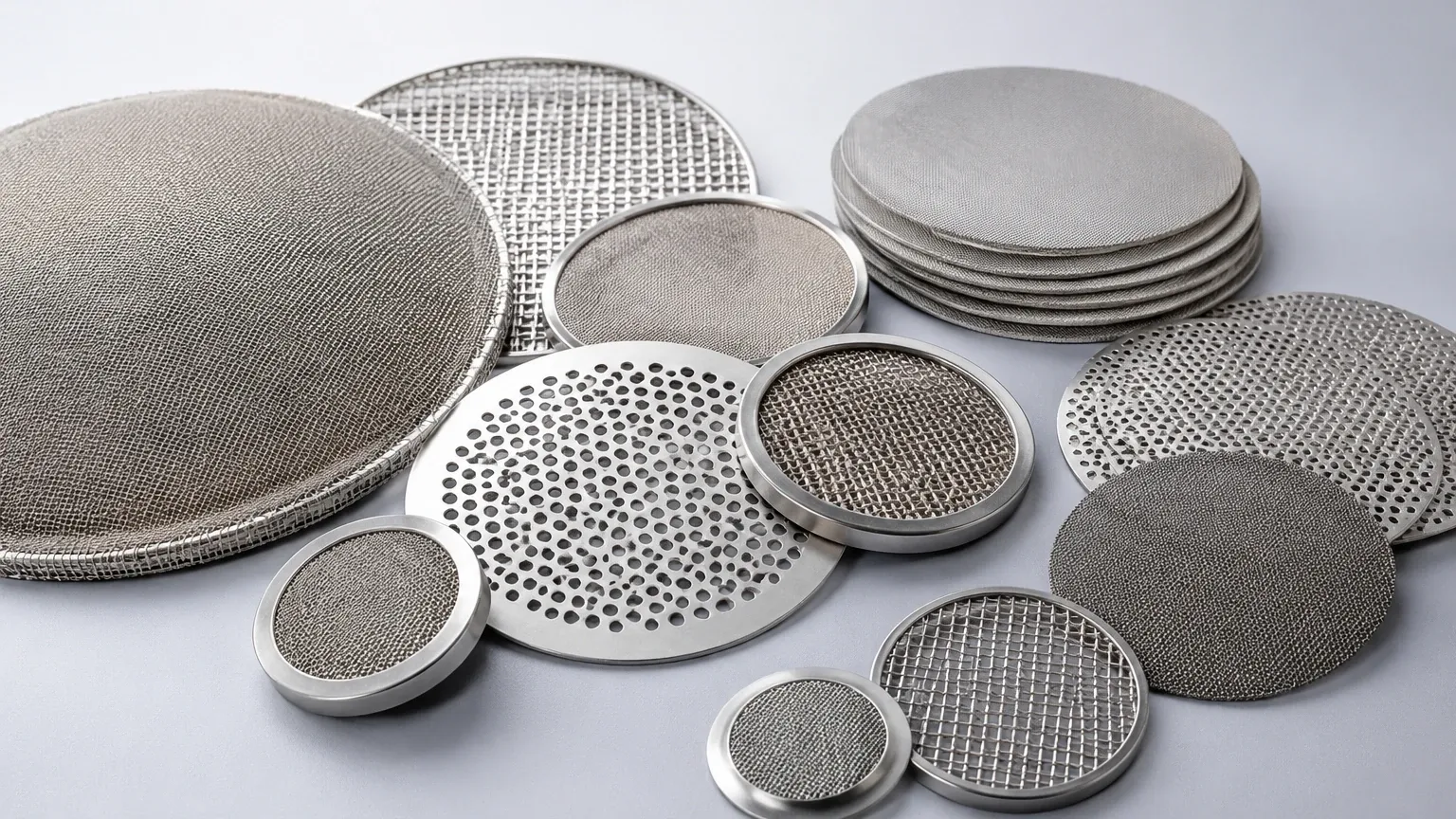
In many industrial processes, a single layer of filter media is insufficient. Instead, multiple layers are combined into Filter Discs & Packs to achieve a balance of fine filtration, high flow rates, and structural longevity.
Multi-Layer Construction
A typical high-performance pack may consist of:
1. A Drainage Layer: A coarse mesh (often stainless steel) that allows the filtrate to flow freely away from the fine filter layer.
2. The Filtration Layer: The synthetic filter disc or fine wire mesh that determines the micron rating.
3. The Support Layer: A rigid mesh that prevents the filtration layer from collapsing under pressure.
Edging and Sealing
To prevent bypass (where unfiltered fluid escapes around the edges of the disc), synthetic filter discs must be properly sealed. In B2B manufacturing, this is achieved through various methods:
* Ultrasonic Welding: For pure synthetic packs, ultrasonic energy fuses the edges of the layers together, creating a clean, fiber-free seal.
* Aluminum or Stainless Steel Rimming: For hybrid packs, a metal rim is crimped around the circumference. This provides mechanical rigidity and ensures a tight fit within the filter housing or extruder breaker plate.
5. Key Applications for Synthetic Filter Discs
Polymer and Plastic Extrusion
In the production of synthetic fibers and plastic films, filter packs are used to remove gels and carbonized particles from the melt. While the primary support is usually metal, synthetic layers are sometimes used in the pre-filtration stages or in specialized recycling processes where chemical additives are present.
Chemical and Petrochemical Processing
Synthetic discs are widely used for the filtration of aggressive solvents, acids, and bases where metallic corrosion would lead to batch contamination. Their lightweight nature and ease of disposal make them ideal for batch-processing environments.
Water Treatment and Desalination
In membrane pre-filtration and desalination plants, synthetic mesh discs serve as the first line of defense against macro-particles. Their resistance to saltwater corrosion makes them more durable than standard grade steels in marine environments.
Food and Beverage
Nylon and polyester discs are frequently used in the filtration of juices, oils, and spirits. Manufacturers must ensure that the synthetic materials are FDA-compliant and free from migrating substances that could affect the sensory profile of the product.
6. Selection Criteria: A Guide for Engineers
Before specifying a synthetic filter disc, technical teams should confirm the following parameters with their manufacturer:
1. Operating Temperature: What is the peak and continuous temperature of the process? This will eliminate certain polymers (like PP) immediately if the temperature exceeds 100°C.
2. Differential Pressure (ΔP): What is the maximum pressure the disc will encounter before cleaning or replacement? Synthetic media may require additional support mesh to prevent rupturing.
3. Chemical Composition: Are there trace amounts of solvents or cleaning agents (like CIP chemicals) that could degrade the polymer over time?
4. Flow Rate Requirements: Synthetic fibers are generally thicker than stainless steel wires for the same micron rating, which may result in a lower open area and higher initial pressure drop.
5. Cleanability: Is the disc intended for single-use (disposable) or can it be cleaned via backwashing or ultrasonic baths? Synthetic media are generally more difficult to clean than stainless steel without damaging the pore structure.
7. The Role of Customization in Filtration Efficiency
No two industrial processes are identical. Off-the-shelf filtration solutions often lead to premature clogging or insufficient particle retention. Custom-engineered Filter Discs & Packs allow for the optimization of layer sequences, material combinations, and rim designs.
At Kaifil, we specialize in the precision manufacturing of filtration components that meet the rigorous demands of global industries. By combining advanced material selection with expert engineering, we provide filtration solutions that enhance the reliability of your equipment and the quality of your output. Whether your application requires the extreme durability of stainless steel or the specific chemical resistance of synthetic media, selecting the right disc configuration is the first step toward process optimization.
Conclusion
Synthetic filter discs represent a versatile and essential segment of the industrial filtration market. By understanding the interplay between polymer science, weave geometry, and pack construction, engineers can select the most effective media for their specific needs. While synthetic options provide excellent chemical resistance and cost benefits, they are often most effective when integrated into a professionally engineered pack that provides the necessary mechanical support for demanding industrial environments.
