


Tetra Filter Pack 600
In the landscape of industrial filtration, precision and structural integrity are the primary determinants of process efficiency. The term "tetra filter pack 600" often surfaces in technical discussions regarding multi-layer filtration assemblies designed for high-pressure or high-viscosity applications. For engineers and procurement specialists, understanding the configuration of these packs—specifically those utilizing a four-layer (tetra) construction or those rated for specific mesh counts like 600—is essential for optimizing throughput and protecting downstream equipment.
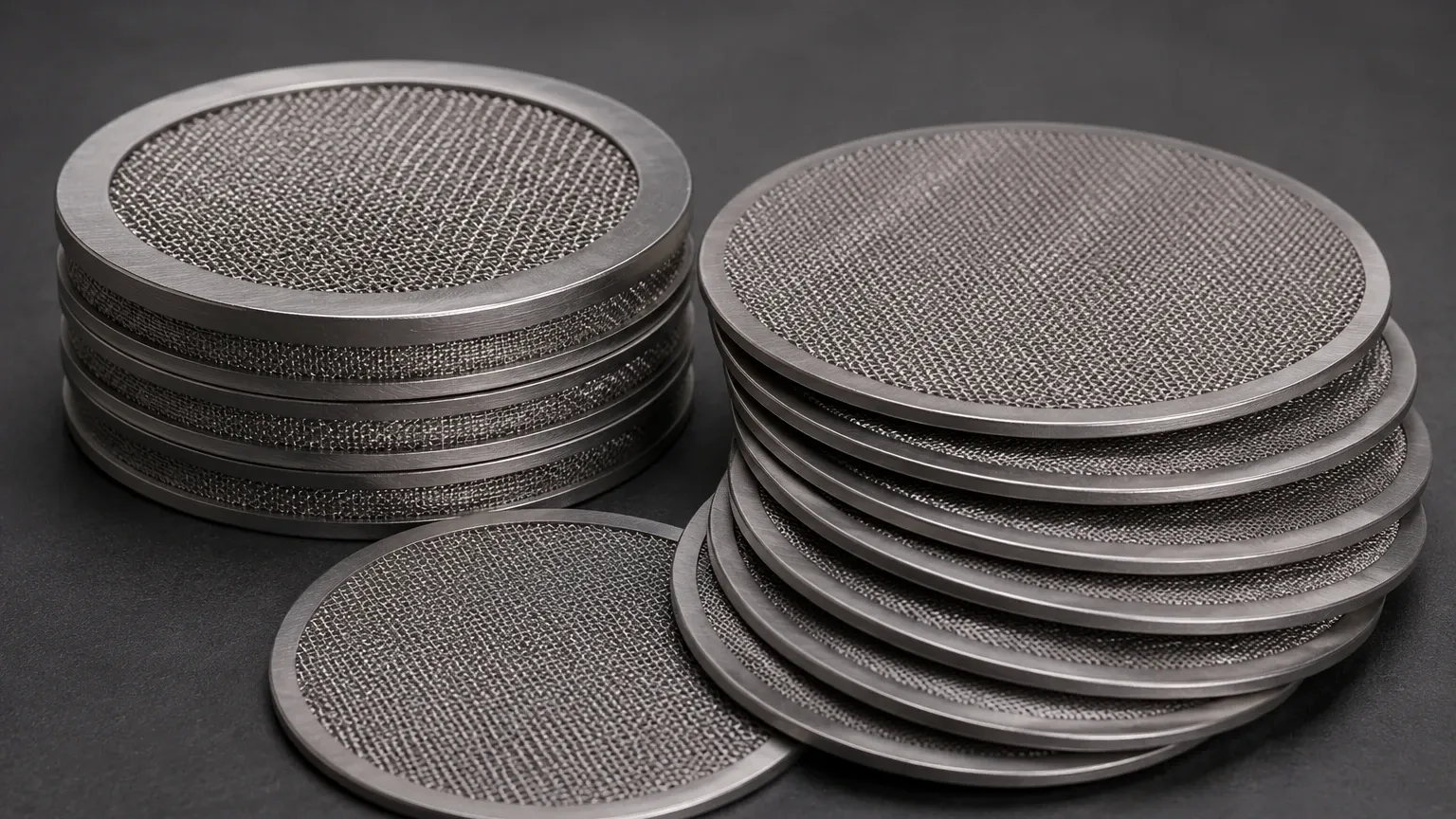
As a specialized manufacturer, Kaifil provides high-performance Filter Discs & Packs that address the rigorous demands of chemical processing, polymer extrusion, and hydraulic systems. This guide examines the engineering principles, material considerations, and performance metrics associated with industrial-grade filter packs, providing the technical foundation necessary for informed selection.
Engineering Principles of Multi-Layer Filter Packs
Industrial filtration rarely relies on a single layer of wire mesh. While a single layer can provide basic screening, it often lacks the mechanical strength to withstand high differential pressures or the depth required to prevent premature blinding. Multi-layer filter packs, often referred to in configurations like the tetra (four-layer) setup, are engineered to distribute the mechanical load and provide graduated filtration.
Structural Layering
In a typical four-layer configuration, the layers are arranged to serve distinct functions:
1. The Filtration Layer: Usually the finest mesh (such as a 600-mesh or equivalent micron-rated screen), this layer determines the absolute filtration accuracy of the pack.
2. The Support Layer: A coarser mesh placed immediately behind the filtration layer to prevent it from deforming or migrating under pressure.
3. The Drainage Layer: A medium-coarse mesh that facilitates the flow of the filtrate away from the filtration zone, reducing the overall pressure drop.
4. The Outer Protective Layer: A robust, coarse mesh that protects the inner delicate layers from mechanical damage during installation or backwashing.
By combining these layers, manufacturers can create a component that offers the fine filtration of a 600-mesh screen with the structural rigidity of a heavy-duty plate. This is particularly critical in applications involving high-viscosity fluids, where the force exerted on the mesh can lead to "wire shifting" if not properly supported.
Material Selection for Corrosive and High-Temperature Environments
The performance of a filter pack is only as reliable as the material from which it is constructed. In industrial sectors such as pharmaceutical manufacturing or chemical processing, material compatibility is non-negotiable. Stainless steel remains the industry standard due to its balance of mechanical strength and chemical resistance.
Stainless Steel 304 vs. 316L
Most industrial filter packs are fabricated from either Grade 304 or Grade 316L stainless steel. While 304 is suitable for many general-purpose applications, 316L is preferred in environments containing chlorides or organic acids. The "L" in 316L denotes low carbon content, which improves weldability and reduces the risk of intergranular corrosion at the spot-welded points of the pack.
Specialized Alloys
For extreme environments, such as those found in petrochemical refining or high-temperature polymer extrusion, specialized alloys like Hastelloy, Inconel, or Monel may be used. These materials maintain their tensile strength at temperatures exceeding 500°C and offer superior resistance to oxidative and reductive atmospheres. When specifying a tetra filter pack 600 configuration, engineers must confirm that the alloy selected matches the pH levels and temperature cycles of the specific process.
Performance Metrics: Micron Rating and Pressure Drop
When evaluating a filter pack, two primary metrics define its utility: the filtration accuracy (micron rating) and the clean pressure drop (ΔP). In the context of a "600" series pack, this often refers to either a 600-mesh count (approximately 25 microns) or a specific flow capacity.
Understanding Mesh vs. Micron
Mesh count refers to the number of openings per linear inch. A 600-mesh screen is exceptionally fine, with wire diameters often in the range of 0.02mm. For engineers, it is crucial to distinguish between nominal and absolute micron ratings. A nominal rating indicates the ability of the filter to retain a majority of particles at that size, while an absolute rating—often achieved through multi-layering and sintering—guarantees the retention of all particles above the specified threshold.
Managing Differential Pressure
The pressure drop across a filter pack is a function of the mesh weave, the total surface area, and the fluid viscosity. A multi-layer pack must be designed to minimize initial ΔP to extend the service life before the "terminal pressure drop" is reached. If the initial pressure drop is too high, the system will reach its cleaning or replacement threshold prematurely, increasing the total cost of ownership. Kaifil’s engineering approach focuses on optimizing the internal geometry of Filter Discs & Packs to ensure maximum flow efficiency without compromising particle retention.
Customization and Fabrication Techniques
Industrial applications rarely accept "off-the-shelf" solutions. Customization is required to ensure the filter pack fits perfectly within the housing and maintains a leak-proof seal under pressure. Fabrication techniques play a vital role in the longevity of the component.
Spot Welding and Sintering
For standard multi-layer packs, spot welding is used to join the layers at the periphery. This keeps the layers aligned during handling. For more demanding applications, diffusion bonding (sintering) is employed. Sintering involves heating the multi-layer mesh under pressure in a vacuum furnace, causing the wires at every contact point to fuse. This creates a monolithic structure that cannot migrate or deform, even under extreme hydraulic shock.
Edging and Framing
To prevent bypass—where fluid flows around the edges of the filter rather than through it—packs are often finished with a metal rim or frame. Common materials for framing include aluminum, stainless steel, or copper. The frame provides a compression surface that ensures a tight seal against the filter holder. In high-pressure extrusion, an aluminum rim is often preferred because it is soft enough to deform slightly and create a high-integrity seal.
Application-Specific Considerations
The utility of a tetra filter pack 600 configuration spans several critical industries, each with its own set of challenges.
Polymer and Plastic Extrusion
In the plastics industry, filter packs (often called screen packs) are used to remove "black specks," un-melted resin, and contaminants from the polymer melt. The 600-series packs are typically used in the final stages of extrusion for high-quality films or fibers where even microscopic contaminants can cause breakage or surface defects.
Hydraulic and Lubrication Systems
Precision hydraulic systems require ultra-clean oil to prevent wear on valves and actuators. Multi-layer stainless steel packs are used here because they are cleanable and reusable, unlike disposable paper or fiberglass elements. Their ability to withstand high-pressure spikes makes them ideal for protecting sensitive hydraulic components.
Food and Beverage Processing
In food production, the primary concern is hygiene and compliance with FDA or EU regulations. Stainless steel filter packs provide a non-leaching, easy-to-sanitize solution for filtering syrups, oils, and liquid ingredients. The multi-layer design ensures that no wire fragments can break off and enter the product stream, a risk that is higher with single-layer screens.
Maintenance, Cleaning, and Replacement Cycles
One of the significant advantages of stainless steel filter packs over synthetic media is their cleanability. However, the cleaning process must be carefully managed to avoid damaging the fine 600-mesh layers.
Cleaning Methods
1. Ultrasonic Cleaning: High-frequency sound waves create cavitation bubbles that dislodge particles from deep within the mesh layers. This is the most effective method for fine multi-layer packs.
2. Pyrolysis (Burn-off): In polymer applications, the packs are heated in a controlled oven to carbonize the plastic, which is then removed via ultrasonic cleaning or high-pressure air.
3. Chemical Cleaning: Soaking the packs in specialized solvents or acids to dissolve contaminants. This requires careful verification of the mesh material's chemical compatibility.
Determining Replacement
While cleanable, filter packs have a finite lifespan. Repeated cleaning cycles can eventually lead to work-hardening of the wires or residual blockage that cannot be removed (permanent ΔP). Engineers should monitor the time it takes to reach terminal pressure after each cleaning. A significant decrease in the cycle time indicates that the pack has reached the end of its functional life and should be replaced to prevent system inefficiency or potential failure.
Technical Confirmation Before Procurement
Before finalizing a specification for a tetra filter pack 600 or similar multi-layer assembly, technical teams should confirm the following parameters with their manufacturer:
* Layer Sequence: Specify the exact mesh count for each of the four layers to ensure the desired graduated filtration effect.
* Sealing Method: Confirm if a rim is required and specify the material (e.g., Aluminum 1050 or SS 316L).
* Differential Pressure Limits: Ensure the pack is rated for the maximum expected ΔP of the system.
* Compliance Requirements: For pharmaceutical or food applications, request material certificates (MTRs) to verify alloy purity.
By focusing on these technical boundaries, procurement teams can ensure they receive a component that not only fits their equipment but also enhances the overall reliability of their industrial process. Kaifil continues to support global engineering teams by delivering customized Filter Discs & Packs that meet these exacting standards, ensuring durability and precise performance in the most demanding environments.
