


Tyvek Filter Discs
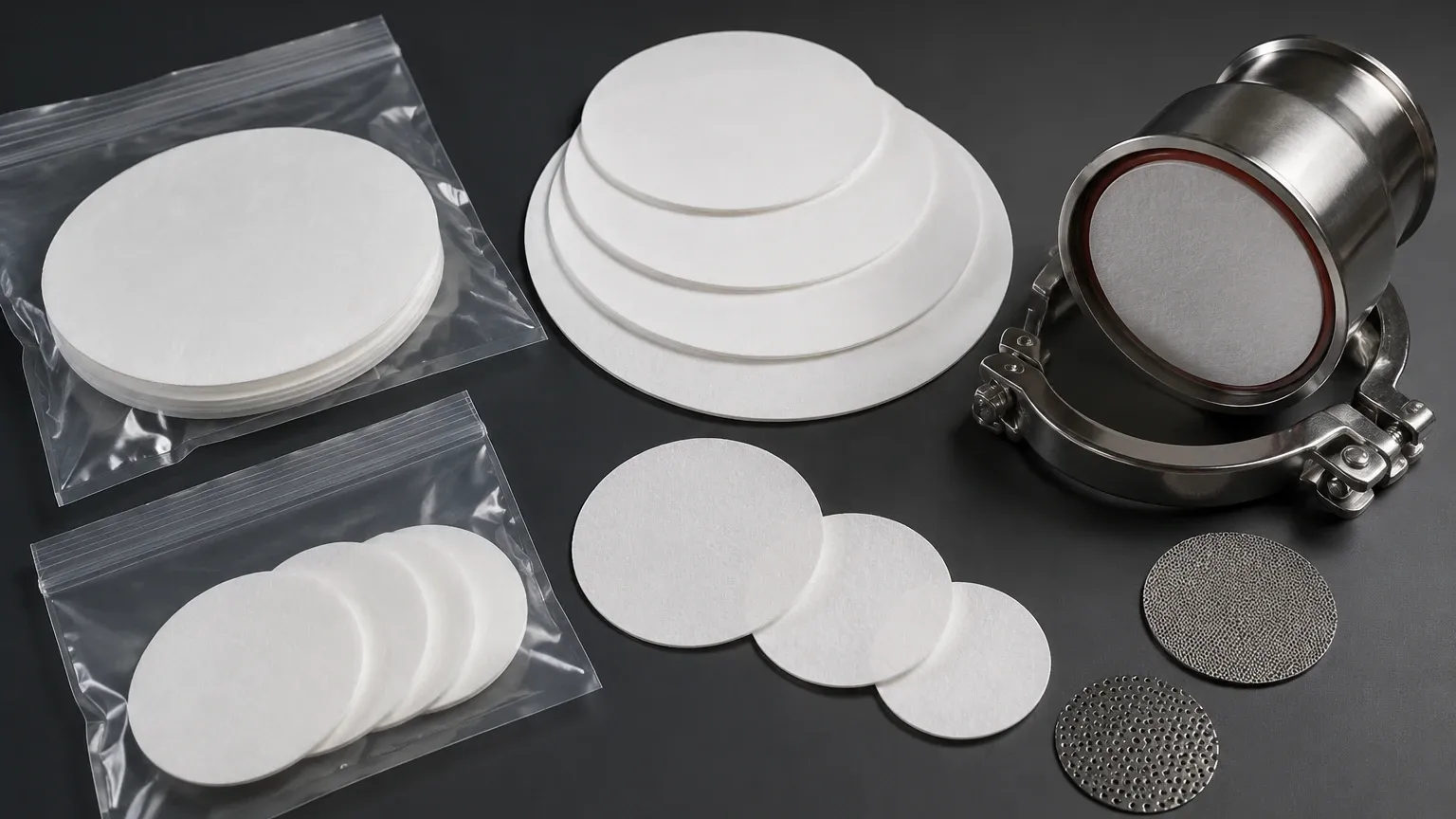
In the landscape of industrial filtration, material selection is dictated by the specific requirements of the application, ranging from chemical compatibility and temperature resistance to microbial barrier performance. Tyvek filter discs represent a specialized category of filtration components designed primarily for gas exchange, venting, and sterile barrier applications. Unlike traditional woven fabrics or paper filters, Tyvek is a non-woven material composed of flash-spun high-density polyethylene (HDPE) fibers. This unique structure provides a combination of breathability and high-efficiency particulate filtration that is critical in pharmaceutical, medical, and specialized industrial processes.
For engineers and procurement professionals, understanding the technical boundaries of Tyvek is essential when comparing it to other filtration media, such as stainless steel Filter Discs & Packs. While metal filters offer superior mechanical strength and high-temperature tolerance, Tyvek provides a lightweight, cost-effective, and highly effective microbial barrier for single-use or controlled-environment applications.
The Role of Tyvek in Industrial Filtration Systems
Tyvek filter discs are engineered to allow the passage of air and gases while preventing the ingress of liquids and microscopic contaminants, including bacteria and spores. The material is formed by a continuous process where HDPE fibers are spun into a web and then bonded using heat and pressure. This results in a "tortuous path" structure—a complex network of microscopic voids that trap particles while allowing gas molecules to diffuse through.
In industrial settings, these discs are frequently used as venting elements. For instance, in containers that undergo pressure changes or sterilization, the disc allows for pressure equalization without compromising the internal sterility. The hydrophobic nature of HDPE also ensures that the filter remains functional even when exposed to moisture, as the material resists wetting and maintains its structural integrity in high-humidity environments.
Material Properties and Technical Performance
The performance of tyvek filter discs is defined by several key physical and mechanical properties. Because the material is 100% HDPE, it is chemically inert to most acids, bases, and salts. This makes it suitable for use in environments where chemical vapors might degrade other synthetic or natural fibers.
Microbial Barrier Efficiency
One of the primary reasons for selecting Tyvek is its superior microbial barrier. Standard grades used in filtration are tested for their ability to prevent the passage of microorganisms. This is often measured using the ASTM F1608 standard, which evaluates the log reduction value (LRV) of the material. High-performance Tyvek grades can achieve an LRV that effectively classifies them as sterile grade barriers, making them indispensable in the production of medical devices and pharmaceutical packaging.
Breathability and Porosity
The breathability of Tyvek is measured by its Gurley Hill porosity, which indicates the time required for a specific volume of air to pass through a given area of the material at a constant pressure. Lower Gurley values indicate higher permeability. For engineers, balancing this permeability with the required filtration efficiency is a critical step in the selection process. If the airflow is too restricted, pressure build-up can occur; if it is too high, the filtration efficiency may be compromised.
Comparative Analysis: Tyvek vs. Stainless Steel Filter Discs & Packs
When designing a filtration system, it is common to evaluate Tyvek against metallic alternatives. While both serve as filter discs, their operational envelopes differ significantly.
1. Temperature Resistance: Stainless steel Filter Discs & Packs can withstand temperatures exceeding 400°C, depending on the alloy. In contrast, Tyvek has a melting point of approximately 135°C (275°F). Therefore, Tyvek is unsuitable for high-heat industrial exhausts or steam-heavy processes that exceed its thermal limits.
2. Durability and Reusability: Metal filters are designed for long-term use and can be cleaned via backwashing, ultrasonic cleaning, or chemical baths. Tyvek filter discs are almost exclusively single-use components. Once the tortuous path is loaded with contaminants, the disc is replaced rather than cleaned.
3. Filtration Mechanism: Metal mesh filters provide surface filtration or depth filtration depending on the weave and layer count. They are excellent for removing rigid particles from liquids and gases. Tyvek excels in gas-phase filtration where a sterile barrier is required, providing a higher level of microbial protection than standard coarse metal meshes.
4. Mechanical Strength: While Tyvek is remarkably tear-resistant for a non-woven material, it cannot match the burst strength of a multi-layer sintered stainless steel pack. In high-pressure hydraulic or gas systems, metal filter packs are the standard, whereas Tyvek is reserved for low-pressure venting and gas exchange.
Engineering Considerations for Airflow and Pressure Drop
System designers must account for the pressure drop (differential pressure) across the tyvek filter discs. As air flows through the microscopic HDPE fiber matrix, it encounters resistance. This resistance increases as the filter captures particulates over time.
In applications like mushroom cultivation or laboratory cell culture, where gas exchange is vital for biological respiration, the disc must provide enough surface area to allow for CO2 and O2 exchange without creating a vacuum or overpressure. Engineers often calculate the required disc diameter based on the expected flow rate and the specific Gurley porosity of the Tyvek grade selected. Increasing the surface area of the disc is the most effective way to reduce pressure drop while maintaining high filtration efficiency.
Sterilization Methods and Material Stability
Because many applications for Tyvek are in the life sciences and food industries, the material's compatibility with sterilization processes is a major technical consideration. Tyvek is compatible with several common sterilization methods:
* Ethylene Oxide (EtO): This is the most common method for Tyvek. The gas easily penetrates the porous structure to sterilize the contents of a container or the filter itself, and then dissipates during the aeration phase.
* Gamma Radiation and Electron Beam: Tyvek is highly resistant to radiation. Unlike some polymers that become brittle or yellow after exposure, HDPE maintains its mechanical properties and microbial barrier integrity after standard sterilization doses (typically 25-50 kGy).
* Autoclave (Steam Sterilization): While Tyvek can be autoclaved, it requires careful control. The temperature must be maintained below the HDPE softening point (usually around 121°C for limited cycles). If the temperature spikes, the fibers can shrink or fuse, which drastically alters the porosity and filtration performance.
Common Industrial Applications and Use Cases
Tyvek filter discs are utilized across various sectors where a clean, breathable, and moisture-resistant barrier is required.
Pharmaceutical and Medical Venting
In pharmaceutical manufacturing, containers holding sterile fluids or powders often require venting to allow for pressure changes during transport or processing. Tyvek discs are integrated into bottle caps or container lids to provide a sterile vent. They prevent environmental contaminants from entering the container while allowing the internal atmosphere to equilibrate with the outside environment.
Mushroom Cultivation and Mycology
In the commercial cultivation of mushrooms, gas exchange is critical during the colonization of substrate. Tyvek discs are used in the lids of spawn jars or bags. They provide a high-efficiency barrier against mold spores and bacteria while allowing the mycelium to "breathe" by exchanging oxygen and carbon dioxide. The hydrophobic nature of Tyvek is particularly useful here, as it prevents external moisture from soaking through the filter and causing contamination.
Laboratory and Research Equipment
Laboratory carboys, bioreactors, and flasks often utilize Tyvek discs as a low-cost alternative to PTFE membrane filters for gas exchange. While PTFE offers higher chemical resistance and more precise pore size ratings, Tyvek is often sufficient for general-purpose sterile venting in non-corrosive environments.
Procurement and Customization Guide for Filter Components
When sourcing tyvek filter discs, it is important to specify the exact grade and dimensions required for the application. Tyvek is available in several industrial grades, such as 1059B (medium weight) and 1073B (heavyweight), each offering different levels of puncture resistance and airflow.
Key Specifications to Confirm:
1. Disc Diameter: Precision die-cutting ensures that the discs fit perfectly into housings, caps, or mechanical clamps without gaps that could lead to bypass.
2. Grade Selection: Choose the grade based on the required microbial barrier and the physical stress the disc will encounter. Heavier grades offer better protection but lower airflow.
3. Attachment Method: How will the disc be secured? Common methods include mechanical clamping, ultrasonic welding, or heat sealing. Since Tyvek is a thermoplastic, it bonds well to other polyethylene or polypropylene surfaces through heat and pressure.
4. Regulatory Compliance: Ensure the material meets relevant standards such as FDA 21 CFR for food contact or USP Class VI for medical applications.
For complex filtration challenges, consulting with a manufacturer that understands both synthetic and metallic filtration media is beneficial. While Tyvek is excellent for sterile venting, many industrial processes require the robustness of stainless steel Filter Discs & Packs to handle high pressures, aggressive chemicals, or extreme temperatures. By evaluating the total cost of ownership, including replacement frequency and system downtime, engineers can determine whether a single-use Tyvek solution or a permanent metal filtration component is the most efficient choice for their specific operational needs.
