


Water Filter Disc Type
In industrial water treatment and process engineering, selecting the correct water filter disc type is a critical decision that impacts system efficiency, maintenance frequency, and the purity of the final effluent. Unlike standard cartridge filters, disc-based filtration offers a unique combination of surface and depth filtration characteristics, particularly when constructed from high-grade stainless steel wire mesh. For engineers and procurement specialists, understanding the technical nuances of these components is essential for optimizing filtration performance in demanding environments.
Industrial water filtration requires components that can withstand high pressures, corrosive fluids, and varying thermal loads. The term "water filter disc type" generally refers to a circular filtration element—either used individually or in assembled packs—designed to remove suspended solids from water streams. These discs are integrated into various housings, ranging from simple inline strainers to complex multi-stage filtration towers.
Defining the Water Filter Disc Type in Industrial Contexts
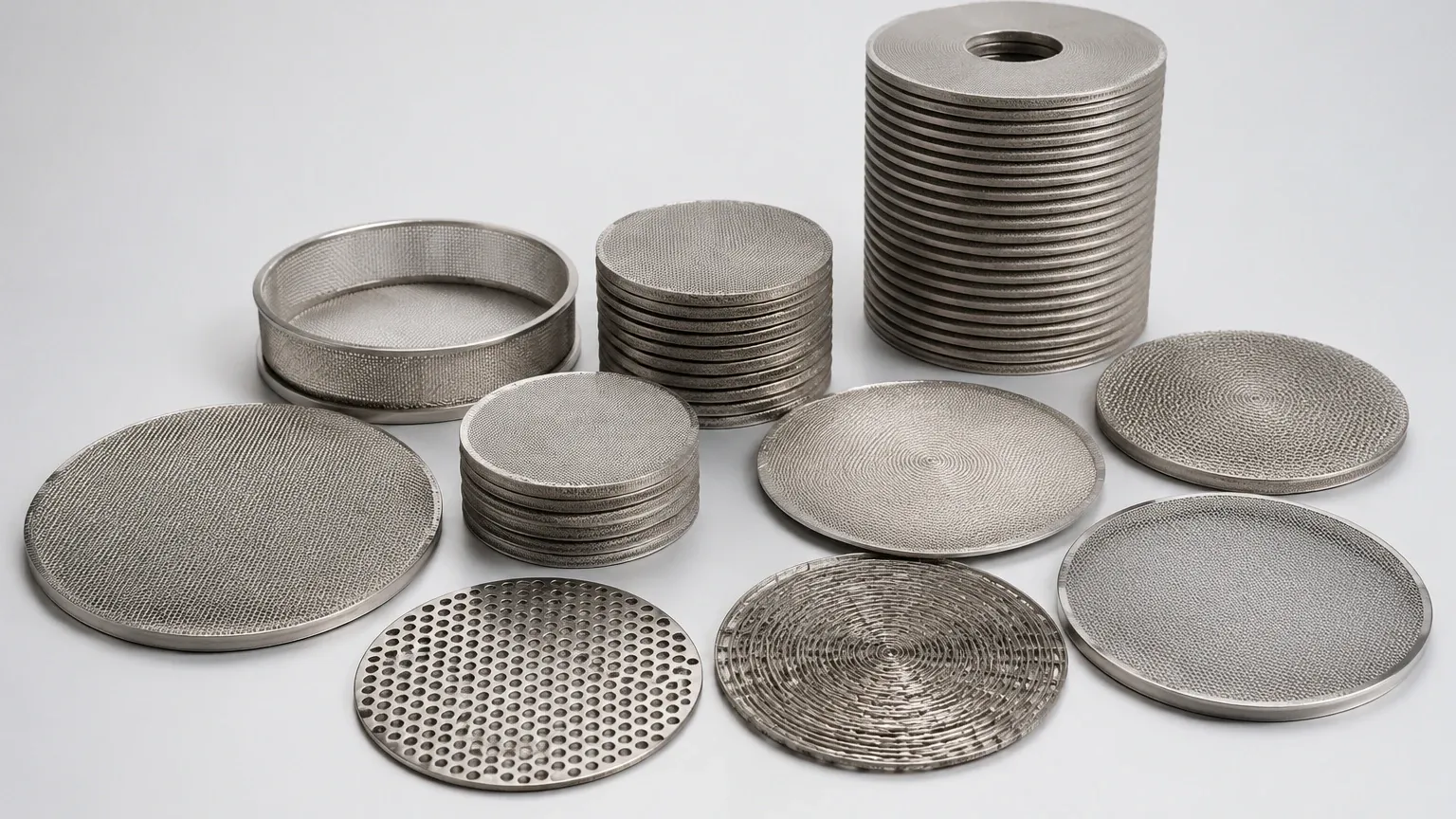
The water filter disc type is categorized primarily by its construction and the mechanism it uses to capture contaminants. In industrial B2B applications, we distinguish between two primary categories: plastic grooved discs and stainless steel wire mesh discs. While plastic discs are common in agricultural irrigation, stainless steel Filter Discs & Packs are the standard for industrial processing due to their precision and durability.
Stainless steel discs utilize woven wire cloth to achieve specific micron ratings. The filtration occurs as water passes through the geometric openings of the mesh. Depending on the weave type—such as plain, twill, or dutch weave—the disc can act as a precise surface filter or, when layered, provide a degree of depth filtration. This versatility allows engineers to specify a water filter disc type that matches the particle size distribution of the specific process water they are treating.
Material Engineering: Why Stainless Steel is Preferred
When evaluating a water filter disc type, material selection is the most significant factor in determining the component's lifespan and chemical compatibility. Industrial water is rarely pure H2O; it often contains dissolved minerals, gases, and chemicals that can degrade inferior materials.
Grade 304 Stainless Steel
This is the standard material for general water filtration. It provides excellent strength and good corrosion resistance for most freshwater applications, including cooling tower water and pre-filtration for municipal systems.
Grade 316 and 316L Stainless Steel
For applications involving brackish water, high chloride concentrations, or chemical processing, Grade 316 is preferred. The addition of molybdenum enhances resistance to pitting and crevice corrosion. Grade 316L (low carbon) is specifically used when welding is required in the disc assembly to prevent carbide precipitation, ensuring the structural integrity of the filter pack.
Specialized Alloys
In extreme environments, such as high-salinity seawater filtration or aggressive chemical wastewater treatment, alloys like Monel or Hastelloy may be utilized. These materials ensure that the water filter disc type remains functional without leaching metallic ions into the process stream or suffering from premature structural failure.
Structural Variations of Filter Discs & Packs
The physical architecture of a water filter disc type determines its flow capacity and pressure resistance. Engineers must choose between single-layer discs and multi-layer packs based on the mechanical stresses of the application.
Single-Layer Filter Discs
Single-layer discs are typically used in low-pressure applications or as a final safety screen. They are cost-effective and easy to clean but lack the structural rigidity required for high-differential pressure environments. They are often used in laboratory equipment or precision spray nozzle protection.
Multi-Layer Filter Packs
To handle higher flow rates and pressure drops, multiple layers of wire mesh are combined. A typical multi-layer water filter disc type includes:
1. Filtration Layer: The middle layer with the specific micron rating required for the process.
2. Support Layers: Coarser mesh layers on both sides of the filtration layer that provide mechanical strength and prevent the fine mesh from deforming under pressure.
3. Drainage Layers: Ensure that the fluid is distributed evenly across the entire surface area of the disc, maximizing the effective filtration area.
These layers can be spot-welded together or bound with a metal rim (aluminum or stainless steel) to create a robust, leak-proof unit. Rimmed discs are particularly effective in preventing bypass, which is a common failure point in high-pressure water systems.
Technical Performance Metrics for Water Filtration
Selecting a water filter disc type requires a deep dive into performance data. Engineers should focus on three primary metrics: micron rating, pressure drop (ΔP), and dirt-holding capacity.
Micron Rating and Filtration Efficiency
Industrial mesh discs offer absolute or nominal ratings. An absolute rating indicates that 99.9% of particles above a certain size will be captured. For critical water applications, such as pharmaceutical grade water or food-grade ingredient water, absolute-rated Filter Discs & Packs are necessary. Nominal ratings are more common in general industrial water recycling.
Pressure Drop and Flow Rate
The geometric open area of the mesh determines the initial pressure drop. A water filter disc type with a high open-area percentage allows for higher flow rates with minimal energy consumption. However, as the disc captures debris, the pressure drop increases. Engineers must calculate the "terminal pressure drop"—the point at which the disc must be cleaned or replaced to prevent system damage or pump cavitation.
Dirt-Holding Capacity
Multi-layer sintered or compressed mesh discs offer a higher dirt-holding capacity than single-layer types. By trapping particles within the interstices of the mesh layers, these discs can operate longer between maintenance cycles, which is a key consideration for reducing the total cost of ownership (TCO).
Industrial Applications and Chemical Compatibility
The versatility of the stainless steel water filter disc type makes it suitable for a wide array of B2B sectors. Each industry has specific requirements for compatibility and hygiene.
* Chemical and Petrochemical: Discs are used to filter process water used in heat exchangers. The material must resist the various chemical additives used to prevent scaling and biofouling.
* Food and Beverage: In this sector, the water filter disc type must be made of food-grade stainless steel (316L) and be capable of withstanding Clean-in-Place (CIP) procedures involving high-temperature caustic washes.
* Hydraulic and Power Generation: Water-glycol fluids and cooling water for turbines require fine filtration to protect precision components from erosion. Metal discs are preferred here because they do not shed fibers, which could contaminate sensitive valves.
* Water Treatment and Desalination: As a pre-filter for Reverse Osmosis (RO) membranes, disc filters remove larger particulates that would otherwise clog the expensive membranes, extending the overall life of the desalination system.
Maintenance, Cleaning, and Replacement Protocols
One of the primary advantages of a metal water filter disc type over disposable media is cleanability. For many industrial operations, the ability to regenerate the filter element significantly reduces operational waste and long-term costs.
Cleaning Methods
* Backwashing: Reversing the flow of water through the disc to dislodge surface contaminants. This is effective for coarse mesh and single-layer discs.
* Ultrasonic Cleaning: Using high-frequency sound waves in a cleaning solvent to remove fine particles trapped deep within multi-layer packs. This is the most effective method for restoring the original flow characteristics of the disc.
* Chemical Cleaning: Soaking the discs in mild acids or bases to dissolve organic biofouling or mineral scale. Engineers must ensure the chemical agent is compatible with the stainless steel grade used.
Replacement Indicators
Despite their durability, filter discs eventually require replacement. Signs that a water filter disc type has reached the end of its service life include permanent deformation (warping) of the mesh, visible breakage in the wire weave, or a baseline pressure drop that remains high even after thorough cleaning.
Customization Parameters for Engineering Teams
Standard off-the-shelf components rarely meet the exact needs of specialized industrial machinery. When sourcing a water filter disc type, customization is often necessary to ensure a perfect fit within existing housings.
Dimensional Precision
Discs can be manufactured in diameters ranging from a few millimeters to over a meter. Precision stamping and laser cutting ensure that the outer diameter (OD) and inner diameter (ID) tolerances are tight, which is essential for maintaining a proper seal and preventing fluid bypass.
Edge Treatment and Assembly
For high-pressure water applications, the edges of the disc must be finished to prevent fraying. Options include:
* Spot Welding: Secures multi-layer packs at strategic points.
* Rimmed Edges: Enclosing the edge in a U-shaped metal channel. This provides a flat surface for gaskets to seat against, ensuring a leak-proof installation.
* Sintering: Bonding the wires at every contact point through heat and pressure. This creates the most rigid water filter disc type possible, ideal for the most extreme industrial environments.
Weave Selection
The choice of weave—Plain, Twill, or Dutch—directly affects the filtration characteristics. For example, a Reverse Dutch Weave provides high strength and is often used in vertical pressure leaf filters for water clarification, whereas a Plain Weave is more suitable for simple straining tasks.
Conclusion
Choosing the right water filter disc type is a balance of material science, mechanical design, and fluid dynamics. By prioritizing high-quality stainless steel Filter Discs & Packs, industrial operators can achieve reliable filtration, protect downstream equipment, and minimize maintenance downtime. Whether the application involves simple process water cooling or complex pharmaceutical purification, the structural integrity and precision of the filter disc remain the foundation of a successful filtration strategy. Engineers should work closely with manufacturers to define the exact micron ratings, layer configurations, and edge treatments required to meet their specific operational goals.
