


X Filter Posts
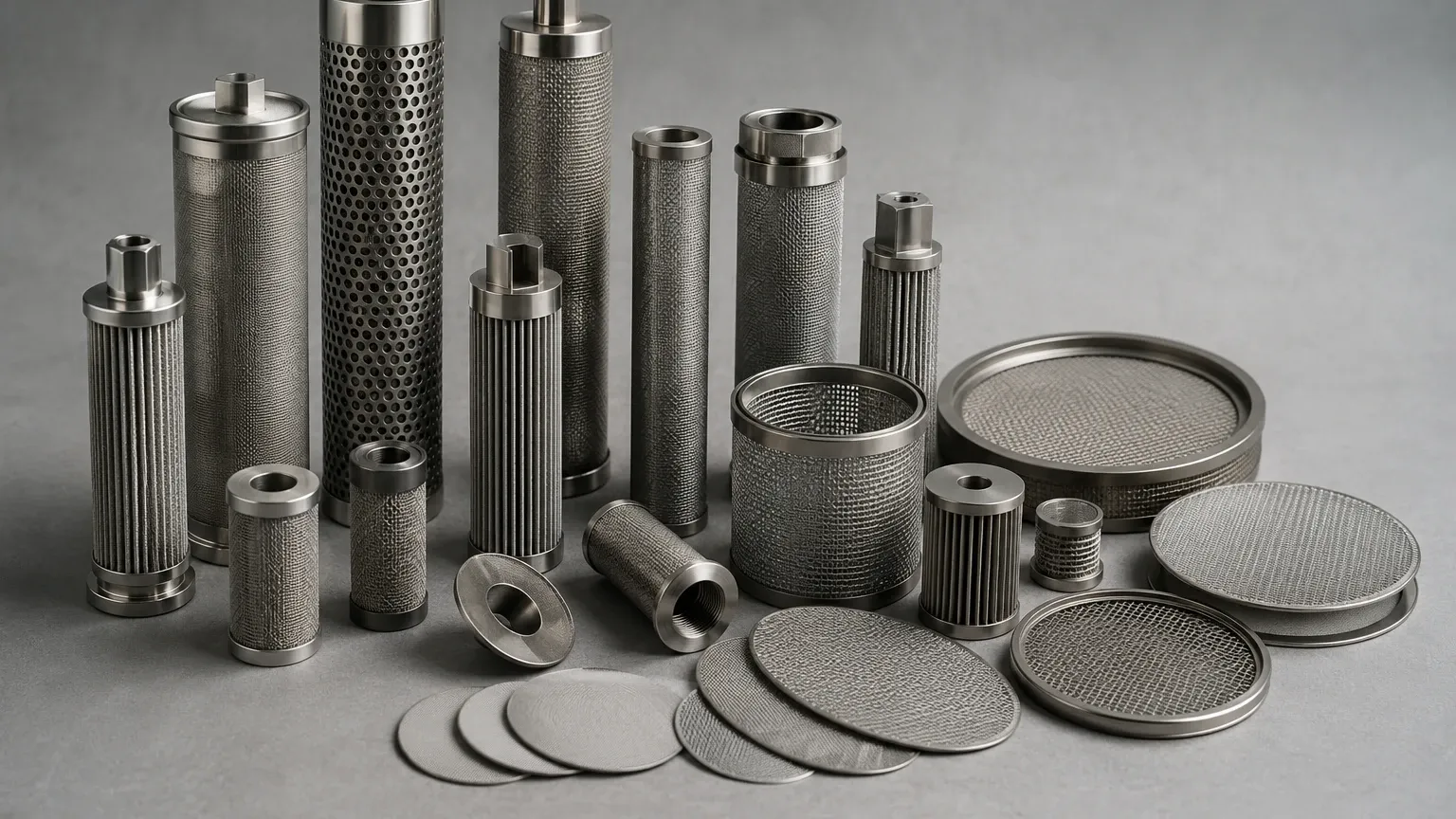
In the landscape of industrial filtration, the structural integrity of a filtration assembly is as critical as the media itself. While the mesh or membrane performs the actual separation, the internal components—specifically the support structures often referred to as filter posts—ensure that the system operates under high pressure without mechanical failure. For engineers and procurement specialists managing complex fluid processing systems, understanding the relationship between Filter Discs & Packs and their internal support mechanisms, such as x filter posts, is essential for optimizing performance and longevity.
Industrial filtration is rarely a matter of a single layer of mesh. Instead, it involves sophisticated stacks and multi-layered configurations designed to handle specific flow rates, particle loads, and chemical environments. The "post" in these systems serves as the central axis or the structural backbone that holds these layers in precise alignment. This article examines the technical specifications, engineering considerations, and selection criteria for these critical components.
The Role of Support Structures in Disc Filtration
Filter discs and packs are frequently used in polymer extrusion, hydraulic systems, and chemical processing. In many of these applications, the discs are stacked vertically or horizontally along a central shaft or support rod. This rod, or x filter posts, must withstand significant mechanical stresses.
Mechanical Stability Under Pressure
In high-viscosity applications, such as plastic recycling or resin production, the differential pressure across a filter pack can be immense. If the central support post lacks the necessary rigidity or is improperly sized, the filter discs may warp or shift. This shifting creates gaps, leading to "bypass," where unfiltered fluid escapes through the edges rather than passing through the mesh. Technical professionals must ensure that the x filter posts are machined to tight tolerances to maintain a perfect seal between the disc ID (inner diameter) and the post surface.
Alignment and Flow Distribution
The geometry of the support post also influences flow dynamics. A well-designed post ensures that fluid is distributed evenly across the entire surface area of the filter discs. In systems utilizing x filter posts, the cross-sectional design is often optimized to minimize dead zones where stagnant fluid could degrade or harbor bacteria, which is particularly vital in food, beverage, and pharmaceutical processing.
Engineering Specifications for Filter Discs & Packs
When specifying Filter Discs & Packs, engineers must look beyond the micron rating. The construction of the pack determines how it will interact with the x filter posts and the housing.
Layer Configuration
Filter packs are typically classified into two categories: single-layer and multi-layer.
1. Single-Layer Discs: Often used for simple straining or as a final safety screen. These are usually stamped from stainless steel wire mesh.
2. Multi-Layer Packs: These consist of several layers of mesh with varying mesh counts. A typical configuration includes a fine filtration layer sandwiched between coarser support and drainage layers. These layers are often spot-welded or bound with a metal rim (aluminum or stainless steel) to form a cohesive unit.
Sintered vs. Non-Sintered Media
For the most demanding environments, sintered wire mesh is preferred. Sintering involves a diffusion-bonding process that fuses the contact points of the wire mesh layers without the use of binders. This results in a permanent, rigid structure that will not migrate or shed wires under the stress of high-pressure flow or backwashing. When paired with heavy-duty x filter posts, sintered packs offer the highest level of reliability for continuous industrial operations.
Material Selection and Chemical Compatibility
The choice of material for both the filter media and the support posts is dictated by the operating environment. Kaifil specializes in stainless steel solutions because of the material's versatility and durability.
Stainless Steel 304 vs. 316L
* Type 304: Suitable for general industrial applications where moisture is present but corrosive chemicals are limited. It offers good strength and cost-effectiveness.
* Type 316L: The "L" stands for low carbon, which improves weldability and resistance to intergranular corrosion. 316L contains molybdenum, making it significantly more resistant to chlorides and acidic environments. This is the standard for pharmaceutical and marine applications.
Specialty Alloys
In extreme cases involving highly corrosive acids or high temperatures (exceeding 800°F), specialty alloys like Hastelloy, Inconel, or Monel may be required for both the filter discs and the x filter posts. Using dissimilar metals for the post and the filter pack should be avoided to prevent galvanic corrosion, which can lead to premature failure of the assembly.
Evaluating Performance: Micron Rating and Permeability
Engineers must balance filtration efficiency with the allowable pressure drop. A common mistake in the procurement of Filter Discs & Packs is selecting a micron rating that is finer than necessary, which leads to rapid clogging and frequent downtime.
Absolute vs. Nominal Filtration
* Nominal Rating: Refers to an approximate micron size where a percentage of particles are retained. It is less precise and varies by manufacturer.
* Absolute Rating: Refers to the diameter of the largest spherical particle that can pass through the mesh under laboratory conditions. For critical applications, an absolute rating is required to ensure consistent product quality.
The Impact of x Filter Posts on Permeability
The presence of internal support structures like x filter posts inherently reduces the available flow area. When calculating the total open area of a filtration system, engineers must subtract the area occupied by the posts. If the post-to-mesh ratio is too high, the velocity of the fluid increases, which can cause particle shearing or premature blinding of the filter media.
Customization and OEM Considerations
No two industrial processes are identical, which is why customization is a cornerstone of effective filtration. When working with a manufacturer like Kaifil, the design process for filter assemblies involving x filter posts usually follows a specific technical workflow.
Dimensional Accuracy
Custom filter discs must be manufactured with precise tolerances for both the OD (outer diameter) and ID. If the ID is too large, the disc will wobble on the x filter posts; if it is too small, installation becomes impossible. High-precision laser cutting or CNC stamping is utilized to ensure every disc in a thousand-unit batch is identical.
Edge Treatment
The edges of filter packs are a common point of failure. In high-pressure systems, the layers can delaminate. Options for edge treatment include:
* Spot Welding: Economical and effective for low-to-medium pressure.
* Aluminum/Stainless Steel Binding: Provides a smooth, compressed edge that creates a better seal against the housing wall.
* Plasma or TIG Welding: Used for sintered packs to create a monolithic structure.
Maintenance, Cleaning, and Replacement Cycles
Understanding the total cost of ownership (TCO) requires a look at the maintenance requirements of the filter assembly. Stainless steel Filter Discs & Packs are valued for their cleanability, unlike disposable polymer or paper filters.
Cleaning Methods
1. Ultrasonic Cleaning: High-frequency sound waves create cavitation bubbles that dislodge particles trapped deep within the mesh layers. This is highly effective for complex multi-layer packs.
2. Chemical Cleaning: Using solvents or acids to dissolve accumulated contaminants. This requires the x filter posts and the mesh to be made of highly corrosion-resistant materials like 316L.
3. Burn-off (Pyrolysis): In polymer applications, the filter packs are heated to high temperatures to carbonize the plastic, which is then removed. This process requires the filter assembly to have high thermal stability.
Determining Replacement Cycles
While stainless steel filters are durable, they are not infinite. Over time, repeated cleaning and pressure cycles can lead to "work hardening" of the wire mesh, making it brittle. Engineers should monitor the "clean pressure drop"—the pressure differential immediately after a cleaning cycle. If the clean pressure drop begins to rise over subsequent cycles, it indicates that the media is becoming permanently blinded and the packs should be replaced.
Common Engineering Questions Before Purchase
Before finalizing a purchase order for filter discs or x filter posts, technical teams should confirm the following details with their supplier:
1. What is the maximum operating differential pressure (ΔP)? This determines the thickness of the support layers and the diameter of the support posts.
2. Is the fluid Newtonian or non-Newtonian? This affects how the fluid will flow around the x filter posts and through the mesh.
3. Are there specific regulatory requirements? For food and beverage, components must be FDA-compliant. For pharmaceutical use, Ra (surface roughness) values on the posts may need to be strictly controlled to prevent bacterial growth.
4. What is the particle morphology? Hard, angular particles require different mesh weaves (like Dutch weave) compared to soft, deformable particles.
Conclusion
The efficiency of an industrial filtration system is a product of its weakest component. While the filter media captures the contaminants, the structural support provided by x filter posts ensures that the media can perform its job under the harsh realities of industrial processing. By selecting high-quality Filter Discs & Packs and ensuring they are matched with precision-engineered support structures, companies can achieve higher throughput, cleaner end-products, and lower operational costs.
Kaifil continues to support global industries by providing the technical expertise and manufacturing precision required to develop these custom solutions. Whether you are designing a new hydraulic system or optimizing a chemical reactor, focusing on the mechanical synergy between the filter media and its support posts is the key to long-term success.
