


X Filters
In the demanding landscape of industrial filtration, the selection of precise components is critical to ensuring process continuity and product purity. Among the various configurations used in high-pressure and high-viscosity environments, x filters and specialized Filter Discs & Packs serve as the backbone for critical separation tasks. These components are engineered to withstand extreme mechanical stress while maintaining tight filtration tolerances, particularly in sectors such as polymer extrusion, chemical processing, and hydraulic systems.
For engineers and procurement professionals, understanding the technical nuances of these filtration elements is essential. This guide explores the engineering principles, material considerations, and application-specific requirements that define high-performance filtration solutions.
Understanding Filter Discs & Packs in Industrial Applications
Industrial filtration often requires more than a simple mesh screen. When dealing with high-viscosity fluids or high-pressure differentials, a single layer of wire cloth may lack the necessary structural integrity or dirt-holding capacity. This is where Filter Discs & Packs become indispensable.
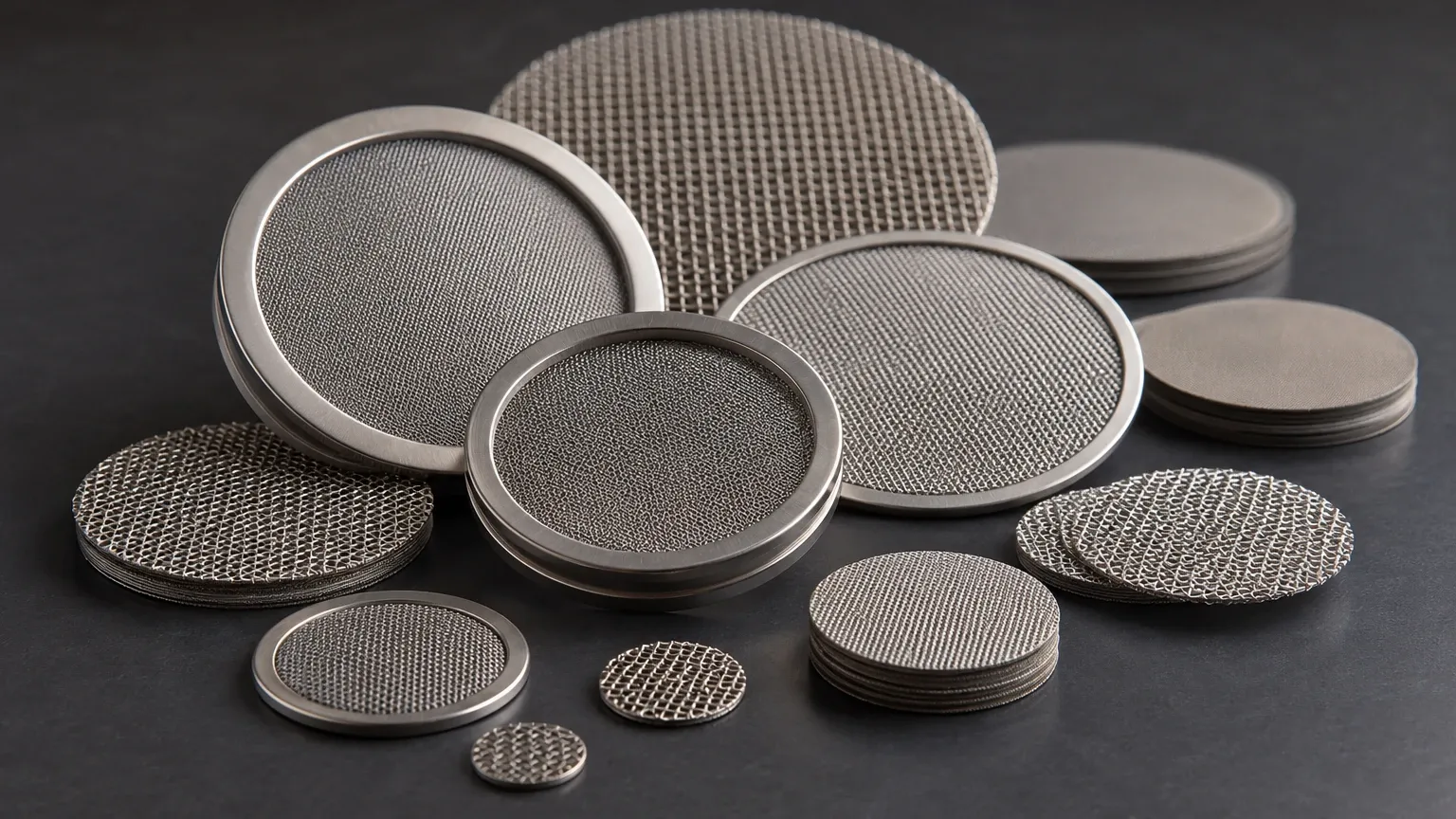
These components are typically manufactured from high-quality stainless steel wire mesh, which is cut into specific shapes—most commonly circular discs—and often layered to create a multi-stage filtration effect. The "pack" configuration involves stacking multiple layers of mesh with varying micron ratings. The outer layers usually consist of a coarse mesh that provides structural support and protects the finer inner layers, which perform the actual filtration.
In many specialized systems, x filters are integrated to handle specific flow dynamics or to fit into proprietary housing designs. The precision of the cut and the integrity of the edges are paramount; any fraying or misalignment can lead to bypass, where unfiltered material escapes through the periphery of the filter element.
Material Science: The Foundation of Durability
The performance of x filters is largely dictated by the metallurgy of the wire mesh. Stainless steel is the industry standard due to its balance of mechanical strength, thermal stability, and corrosion resistance.
Stainless Steel 304 vs. 316L
* Stainless Steel 304: This is the most common material for general industrial use. It offers excellent strength and good resistance to oxidation. It is suitable for food and beverage applications and standard chemical processing where extreme acidity is not present.
* Stainless Steel 316L: For more aggressive environments, 316L is preferred. The addition of molybdenum enhances resistance to pitting and crevice corrosion, particularly in chloride-rich environments. The "L" denotes low carbon content, which improves weldability and prevents intergranular corrosion after welding or sintering processes.
Specialized Alloys
In extreme cases involving high temperatures (exceeding 600°C) or highly corrosive acids, manufacturers may utilize exotic alloys such as Inconel, Monel, or Hastelloy. These materials ensure that the Filter Discs & Packs maintain their pore geometry even under conditions that would cause standard stainless steel to degrade.
Engineering the Weave: Micron Ratings and Flow Rates
The efficacy of x filters depends on the weave pattern of the wire mesh. Each weave type offers a different trade-off between filtration accuracy, flow resistance, and mechanical strength.
1. Plain Weave: The simplest configuration where wires cross over and under each other. It provides high flow rates and is easy to clean, making it ideal for coarse filtration.
2. Twill Weave: Each warp wire passes over and under two shute wires. This allows for a heavier wire diameter for a given mesh count, increasing the strength of the filter disc.
3. Dutch Weave: This utilizes a larger diameter warp wire and a smaller diameter shute wire, woven tightly together. This creates a tortuous path for particles, providing exceptionally fine filtration (down to 5-10 microns) while maintaining high mechanical pressure resistance.
When designing Filter Discs & Packs, engineers must calculate the "Open Area" percentage. A higher open area reduces the pressure drop across the filter but may compromise the structural strength of the mesh. Finding the equilibrium between these two factors is the hallmark of a well-engineered filtration solution.
The Role of X Filters in Polymer Extrusion
One of the most common applications for x filters is in the plastics and synthetic fiber industries. During the extrusion process, molten polymer is forced through a series of filters to remove contaminants, gels, and un-melted particles. These contaminants, if not removed, can cause breakages in fiber spinning or surface defects in extruded films.
In these high-pressure environments, the filters are often arranged in a "screen pack." A typical screen pack might consist of a 20-mesh support screen, a 100-mesh filtration screen, and another 20-mesh screen to provide symmetrical support. The use of x filters in these configurations ensures that the mesh does not deform under the immense pressure of the melt pump.
Furthermore, the edges of these discs are often bound with a metal rim (typically aluminum, copper, or stainless steel). This rim serves two purposes: it prevents the individual layers of the pack from separating and provides a compression seal against the filter housing to prevent bypass.
Customization and OEM Considerations
No two industrial processes are identical, which is why customization is a core requirement for Filter Discs & Packs. When sourcing these components, engineers should confirm several technical parameters with the manufacturer:
* Layer Configuration: Should the layers be spot-welded together or bound with a rim? Spot welding is often sufficient for stationary filters, whereas rimmed packs are preferred for automatic screen changers.
* Sintering: For the most demanding applications, the mesh layers can be sintered together. Sintering involves heating the stack in a vacuum furnace until the contact points of the wires fuse. This creates a monolithic structure that cannot delaminate and offers the highest possible mechanical stability.
* Shape and Geometry: While circular discs are standard, x filters can be produced in oval, rectangular, or complex geometric shapes to fit specific machinery. Precision laser cutting or die-stamping ensures that tolerances are met within microns.
Evaluation Criteria for Procurement
When evaluating a supplier for Filter Discs & Packs, technical professionals should look beyond the unit price and focus on the total cost of ownership (TCO). A low-quality filter that fails prematurely or allows bypass can result in thousands of dollars in downstream equipment damage or lost production time.
Key Performance Indicators (KPIs):
* Pressure Drop (ΔP): A high initial pressure drop indicates an inefficient weave or insufficient open area, which will lead to shorter service life.
* Dirt Holding Capacity: This refers to the amount of contaminant the filter can retain before the pressure drop reaches a critical limit. Multi-layer packs generally offer superior dirt-holding capacity compared to single-layer discs.
* Cleaning and Reusability: Stainless steel filters are often cleanable via ultrasonic baths or chemical cleaning. The ability to reuse a filter multiple times significantly reduces the long-term cost compared to disposable polymer filters.
Maintenance and Replacement Cycles
Determining the optimal replacement cycle for x filters is a data-driven process. Most modern industrial systems monitor the pressure differential across the filter housing. As the mesh becomes loaded with contaminants, the pressure on the upstream side increases.
It is vital to establish a "terminal pressure drop"—the point at which the filter must be changed to prevent mesh rupture or pump strain. For critical applications, redundant filtration systems (duplex filters) allow for the replacement of Filter Discs & Packs without shutting down the entire production line.
Regular inspection of used filters can also provide diagnostic insights into the production process. For instance, an unusual amount of metallic debris on the filter might indicate wear in upstream pumps or mixers, allowing for proactive maintenance before a catastrophic failure occurs.
Conclusion
Precision-engineered x filters and Filter Discs & Packs are essential components for maintaining the integrity of industrial processes. By selecting the appropriate material, weave, and structural configuration, engineers can optimize filtration performance, protect sensitive equipment, and ensure the highest quality of the final product.
As a professional manufacturer, Kaifil specializes in providing these customized stainless steel filtration solutions. From material selection and micron accuracy to complex multi-layer designs, our engineering team works to deliver components that meet the rigorous demands of the chemical, pharmaceutical, and industrial sectors. Investing in high-quality filtration is not merely a maintenance task; it is a strategic decision that enhances operational efficiency and reduces the total cost of production.
