


1 Bag Filter Housing
In industrial liquid filtration, the 1 bag filter housing serves as a fundamental component for batch processing, pre-filtration, and final polishing applications. Designed to contain a single filter bag, these vessels provide a versatile and cost-effective solution for removing particulate matter from various fluids. For engineers and procurement specialists, selecting the correct 1 bag filter housing requires a deep understanding of fluid dynamics, material compatibility, and the specific mechanical requirements of the process line.
As a specialized manufacturer of stainless steel filtration solutions, Kaifil provides precision-engineered housings that meet the demanding standards of the chemical, pharmaceutical, and food and beverage industries. Understanding the technical nuances of these vessels is essential for optimizing filtration efficiency and ensuring long-term system reliability.
Fundamentals of 1 Bag Filter Housing Design
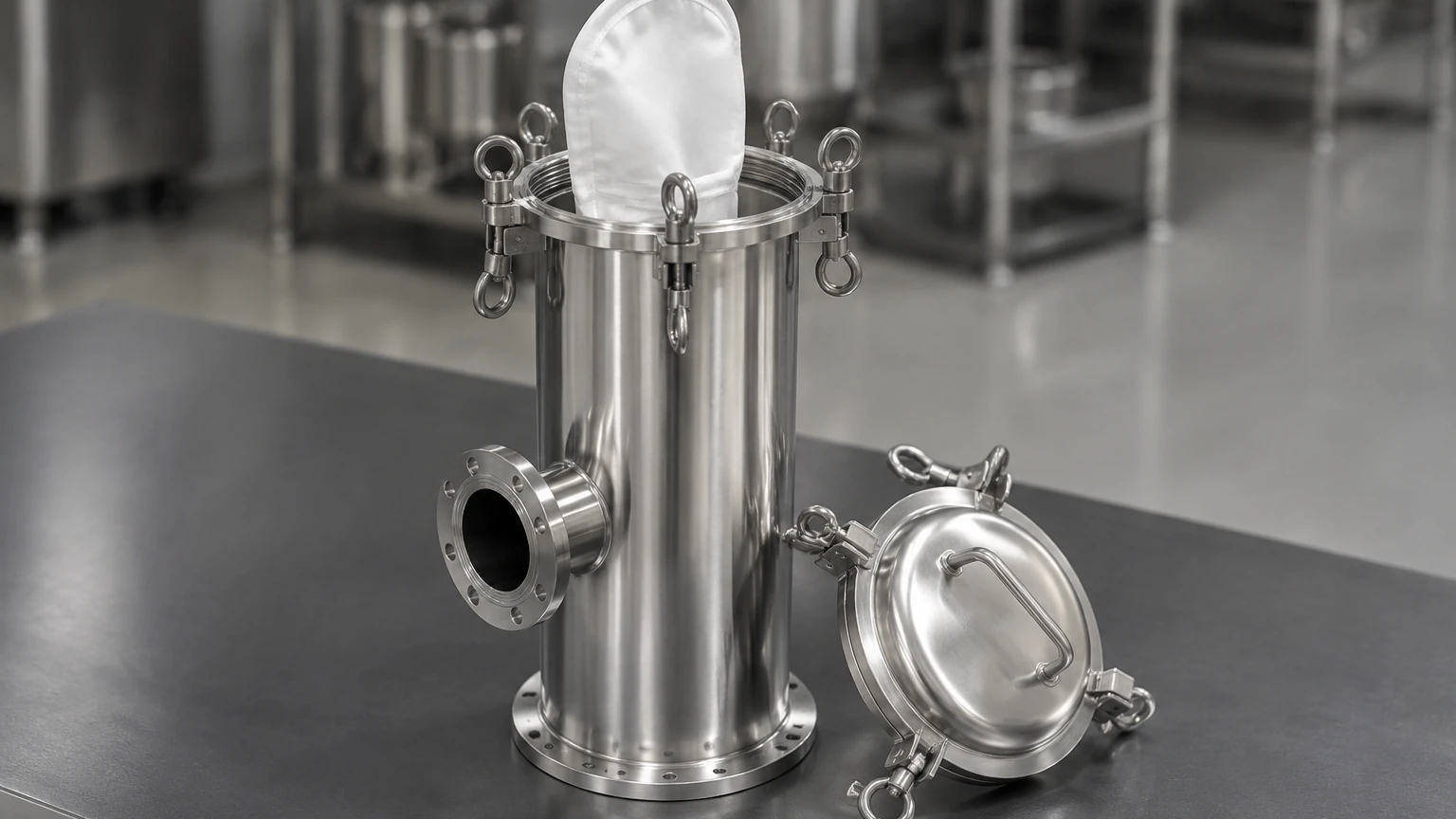
A 1 bag filter housing is a pressure vessel consisting of a cylindrical body, a removable cover, and an internal support basket. The primary function of the housing is to hold the filter bag securely in place while directing the flow of fluid through the filter media. Unlike multi-bag housings used for high-volume continuous flow, the single-bag configuration is ideal for low-to-medium flow rates or applications where frequent bag changes are not required.
Flow Configurations
There are two primary flow designs for a 1 bag filter housing: side-inlet and top-inlet.
1. Side-Inlet Design: In this configuration, the fluid enters through the side of the housing, flows over the top of the bag, and exits through the bottom. While common, this design can sometimes lead to a small amount of unfiltered liquid remaining in the head space during bag changes.
2. Top-Inlet Design: Often considered the superior engineering choice for high-purity applications, the top-inlet design ensures that fluid enters directly above the bag. This creates a 360-degree seal and minimizes the risk of bypass, as the pressure of the fluid helps seat the bag flange against the internal basket rim.
Closure Mechanisms
The method of securing the housing cover is critical for both safety and ease of maintenance. Common closure types include:
* Swing Bolt Closures: These are robust and suitable for high-pressure applications. They allow for relatively quick access without the need for specialized tools, though they require more manual effort than automated systems.
* V-Clamp Closures: Often used in lower-pressure or sanitary applications, V-clamps provide a lightweight and quick-opening solution.
* Threaded Covers: Typically found on smaller, low-flow housings, threaded lids are simple but may be prone to galling if not maintained correctly in corrosive environments.
Material Selection and Chemical Compatibility
The longevity of a 1 bag filter housing is largely determined by the materials used in its construction. Stainless steel is the industry standard due to its mechanical strength and resistance to oxidation.
Stainless Steel Grades
* 304 Stainless Steel: This is the most common material for general industrial applications, such as cooling water filtration, parts washing, and pre-filtration for reverse osmosis systems. It offers good corrosion resistance at a lower price point.
* 316L Stainless Steel: For more aggressive environments, 316L is preferred. The addition of molybdenum provides superior resistance to chlorides and acids. This grade is essential in pharmaceutical and chemical processing where fluid purity and vessel integrity are paramount.
Gaskets and Seals
The choice of O-ring or gasket material is just as important as the metal housing itself. Common materials include EPDM, Viton (FKM), Nitrile (Buna-N), and PTFE-encapsulated silicone. Engineers must verify that the seal material is compatible with both the process fluid and the operating temperature. For example, Viton is excellent for high-temperature oils, while EPDM is often preferred for steam and water applications.
Surface Finishes
In industries like food and beverage or biotechnology, the internal surface finish of the 1 bag filter housing must be smooth to prevent bacterial growth. Standard industrial finishes include bead blasting or pickling, while sanitary applications may require mechanical polishing to a specific Ra (Roughness Average) or electropolishing to achieve a mirror-like finish.
Technical Performance Parameters
Sizing a 1 bag filter housing involves more than matching pipe diameters. Engineers must calculate the expected pressure drop and flow velocity to ensure the system operates within its design limits.
Flow Rate and Viscosity
The maximum flow rate of a 1 bag filter housing is influenced by the viscosity of the fluid. While a standard #2 bag housing might handle 200 GPM of water, that capacity drops significantly as viscosity increases. If the fluid is thick (e.g., resins or syrups), the increased resistance requires a larger housing or a slower flow rate to prevent excessive pressure buildup.
Differential Pressure ($ΔP$)
The clean pressure drop is the initial resistance caused by the housing and the clean filter bag. As the bag collects contaminants, the differential pressure increases. It is standard practice to replace the filter bag when the $ΔP$ reaches 15–25 psi, even if the bag has not reached its physical burst strength, to prevent contaminant unloading or bypass.
Pressure Ratings
Most industrial 1 bag filter housings are rated for 150 psi (10 bar) at a specific temperature. However, high-pressure applications may require vessels designed to ASME Code standards. It is vital to confirm that the housing's maximum allowable working pressure (MAWP) exceeds the system’s peak pump pressure, including potential water hammer effects.
Key Features for Operational Efficiency
To improve the utility of a 1 bag filter housing, several design features can be integrated during the manufacturing process. At Kaifil, we focus on these technical details to ensure the equipment supports long-term operational goals.
* Internal Support Baskets: The basket is the structural backbone of the filtration process. It must be perforated or made of heavy-duty wire mesh to support the bag under pressure. Precision-engineered baskets ensure a tight seal at the top rim, which is the most common point for fluid bypass.
* Displacement Balloons: To reduce fluid loss during bag changes, a sealed stainless steel "balloon" can be placed inside the filter bag. This occupies the volume of the bag's interior, forcing the fluid out through the media and leaving less liquid to be drained when the housing is opened.
* Adjustable Mounting Legs: Stability is essential for safety. Adjustable legs allow the housing to be leveled on uneven floors and provide flexibility for aligning the inlet and outlet ports with existing piping.
* Vent and Drain Ports: Every 1 bag filter housing should include a vent port on the cover to release trapped air and a drain port at the bottom to empty the vessel before maintenance. These ports should be fitted with high-quality valves to prevent leaks.
Maintenance and Safety Protocols
Proper maintenance of a 1 bag filter housing ensures consistent filtration quality and protects downstream equipment. The following protocols are recommended for industrial operators:
1. Pressure Relief: Never attempt to open a housing while it is under pressure. Always close the inlet and outlet valves and open the vent valve to equalize the pressure with the atmosphere.
2. Seal Inspection: Each time the cover is removed, the O-ring should be inspected for nicks, compression sets, or chemical degradation. Lubricating the O-ring with a compatible lubricant can extend its life and ensure a better seal.
3. Basket Cleaning: Over time, fine particles may bypass the bag and accumulate in the support basket. Periodically removing and cleaning the basket prevents flow restrictions and potential contamination.
4. Monitoring Instrumentation: Installing pressure gauges on both the inlet and outlet allows operators to monitor the differential pressure in real-time. Automated systems may use differential pressure transducers to trigger alarms or bypass valves.
Selecting the Right Solution with Kaifil
Choosing the right 1 bag filter housing is a balance of technical requirements and budget considerations. While a standard off-the-shelf unit may suffice for simple water filtration, complex industrial processes often require customized features such as specialized coatings, non-standard port sizes, or specific alloy constructions.
Kaifil specializes in manufacturing high-performance stainless steel filtration components tailored to these specific needs. By focusing on precision engineering and quality materials, we help industrial clients achieve reliable filtration results in demanding environments. Whether you are designing a new system or upgrading an existing process, confirming the chemical compatibility, pressure requirements, and flow characteristics is the first step toward a successful installation.
For more information on our full range of stainless steel filter cartridges, wire mesh filters, and custom filtration housings, please visit our Main Page to review product options and application support. Our team of experts is available to assist with technical specifications and OEM requirements to ensure your filtration system performs at its peak efficiency.
