


100 Micron Filter Mesh
In industrial filtration, the selection of the correct aperture size is a critical engineering decision that directly impacts process efficiency, equipment longevity, and product purity. A 100 micron filter mesh, equivalent to 0.1 millimeters or approximately 0.0039 inches, represents a versatile threshold in the filtration spectrum. It is frequently employed as a fine-straining medium or a primary filtration stage in systems where particles must be removed without excessively restricting fluid flow.
For engineers and technical procurement teams, understanding the technical nuances of 100 micron filter mesh—ranging from weave patterns and material metallurgy to flow dynamics—is essential for optimizing industrial systems. This guide examines the technical specifications, application criteria, and engineering considerations necessary for selecting and implementing 100 micron filtration solutions.
Technical Specifications and Mesh Geometry
The performance of a 100 micron filter mesh is defined by its geometry, which is a function of the wire diameter and the mesh count. In a standard plain weave configuration, a 100 micron opening typically corresponds to a mesh count of approximately 140 to 150 wires per linear inch. However, the precise mesh count can vary depending on the wire diameter selected for the application.
Wire Diameter and Open Area
Wire diameter is a pivotal variable. Thicker wires increase the mechanical strength and durability of the mesh, making it more resistant to high-pressure differentials and physical abrasion. However, increasing wire diameter reduces the "open area" percentage. The open area determines the flow capacity and the rate of pressure drop across the filter. For a 100 micron rating, an open area of 30% to 40% is common. Engineers must balance the need for structural integrity with the requirement for high throughput to ensure the system does not suffer from premature clogging or excessive energy consumption due to resistance.
Weave Types
While plain weave is the most common for 100 micron applications, other weave types offer specific advantages:
- Plain Weave: Each warp wire crosses alternately over and under each shute wire. This provides a consistent aperture size and is the most cost-effective for general liquid and gas filtration.
- Twill Weave: Each warp wire passes over and under two shute wires. This allows for the use of heavier wires in a given mesh count, enhancing the strength of the 100 micron mesh for high-pressure environments.
- Dutch Weave: This weave utilizes different wire diameters for the warp and shute, resulting in a much denser, more robust mesh. While often used for finer micron ratings, specialized Dutch weaves can be engineered for 100 micron performance where high mechanical strength and cake-release properties are required.
Material Selection: Metallurgy and Compatibility
Stainless steel is the industry standard for 100 micron filter mesh due to its exceptional mechanical properties and resistance to environmental degradation. The choice of grade depends on the chemical composition of the filtrate and the operating temperature.
Grade 304 Stainless Steel
SS304 is the most widely used material for general industrial applications. It offers excellent strength and good corrosion resistance for water treatment, food processing, and basic chemical applications. It is suitable for most environments where high concentrations of chlorides or highly acidic conditions are not present.
Grade 316L Stainless Steel
For more demanding environments, SS316L is the preferred choice. The addition of molybdenum provides superior resistance to pitting and crevice corrosion, particularly in chloride-rich environments like marine applications or chemical processing. The "L" denotes low carbon content, which improves weldability and prevents intergranular corrosion in fabricated filter components like cartridges or cylinders.
Specialty Alloys
In extreme cases involving highly corrosive acids or ultra-high temperatures, alloys such as Hastelloy, Monel, or Inconel may be utilized. These materials ensure that the 100 micron aperture remains dimensionally stable and free from corrosive widening over the component's service life.
Engineering Performance Metrics
When integrating a 100 micron filter mesh into a system, engineers must evaluate several performance metrics to ensure the component meets the application's demands.
Pressure Drop (Delta P)
The pressure drop is the difference in total pressure between the upstream and downstream sides of the mesh. For a 100 micron mesh, the initial clean pressure drop should be calculated based on fluid viscosity, flow velocity, and the mesh's open area. A high initial pressure drop indicates that the mesh may be undersized for the flow rate, leading to shortened service intervals.
Dirt Holding Capacity
This refers to the amount of contaminant the mesh can retain before the pressure drop reaches a critical terminal point. While 100 micron mesh is effective at removing sand, scale, and large organic debris, it has a lower surface area compared to pleated or depth media. In high-load applications, a 100 micron mesh is often used as a pre-filter to protect finer downstream stages, thereby extending the overall system's dirt holding capacity.
Filtration Efficiency: Absolute vs. Nominal
It is vital to distinguish between nominal and absolute ratings. A nominal 100 micron rating implies that the mesh will retain a majority of particles of that size. An absolute rating, typically achieved through precision-woven stainless steel, ensures that 99% or more of particles 100 microns and larger are captured. For critical applications, such as protecting high-precision hydraulic valves, an absolute rating is often required.
Industrial Applications of 100 Micron Mesh
The 100 micron threshold is a "sweet spot" for many industrial processes that require the removal of visible particulates without the complexity of ultra-fine filtration.
- Water Treatment: Used in intake screens and cooling water systems to remove algae, sand, and grit. It protects pumps and heat exchangers from abrasion and clogging.
- Chemical Processing: 100 micron mesh serves as a reliable medium for catalyst recovery and the removal of undissolved solids from chemical batches.
- Food and Beverage: In the production of juices, syrups, and oils, this mesh size is used to strain out pulp, seeds, or processing debris while maintaining high flow rates and meeting hygiene standards.
- Hydraulic and Lubrication Systems: It acts as a primary safety filter to catch metallic shavings or large contaminants that could cause catastrophic failure in pumps and motors.
- Pharmaceuticals: Employed in the early stages of ingredient processing to ensure raw material consistency before finer sterilization filters are used.
Customization and Fabrication Considerations
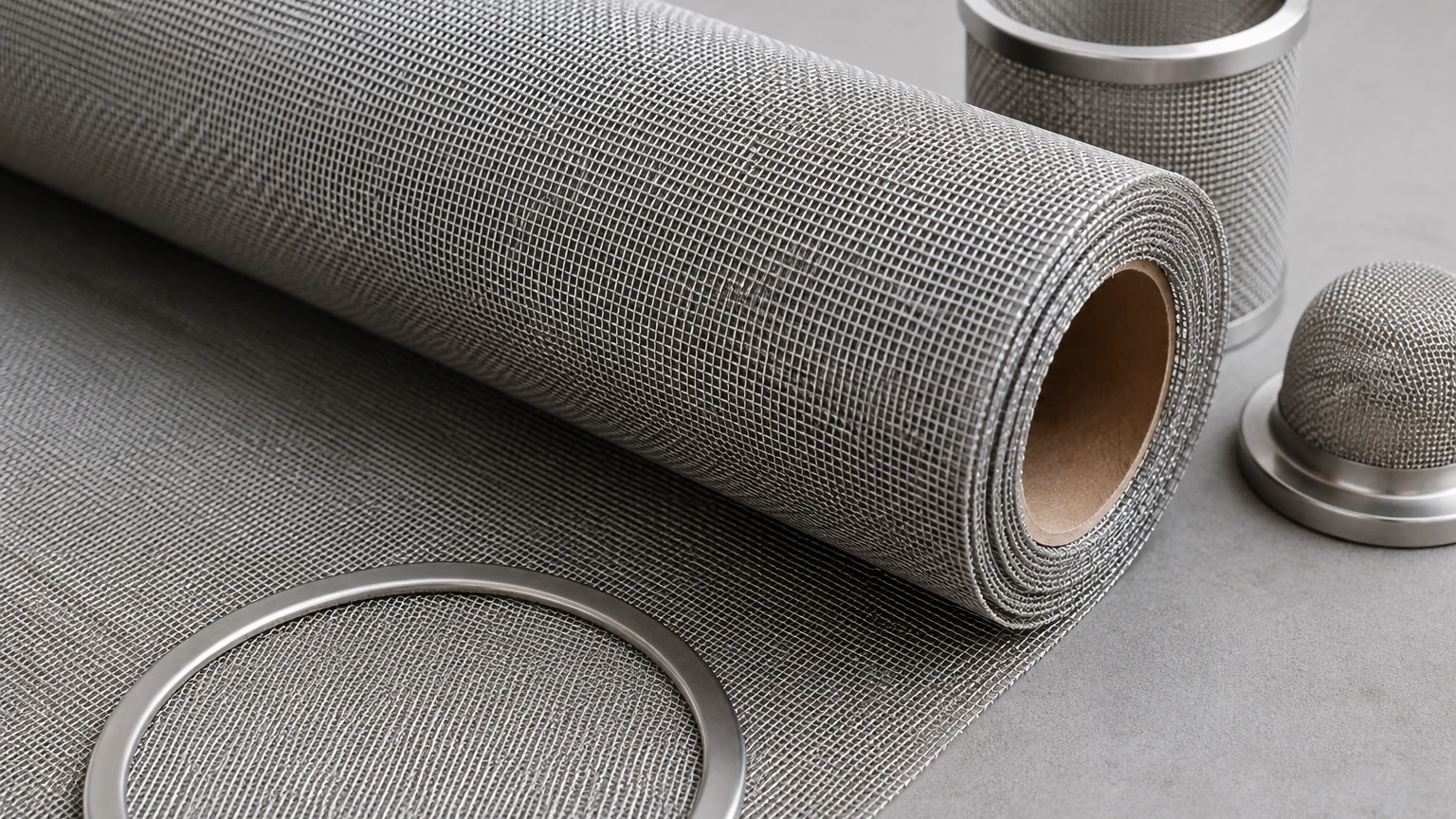
Standard rolls of 100 micron filter mesh are often just the starting point. Most industrial applications require the mesh to be fabricated into specific shapes or components. At Kaifil, we specialize in transforming raw mesh into high-performance industrial tools.
Engineers should consider the following customization options:
- Filter Cartridges: Pleating the 100 micron mesh significantly increases the effective filtration area, lowering the flow velocity through the media and extending the time between cleanings.
- Reinforced Discs and Tubes: For high-pressure applications, the mesh can be sintered or supported by a perforated metal core to prevent deformation.
- Edge Treatments: To prevent fraying and ensure a secure fit within a housing, mesh components can be finished with specialized borders, gaskets, or flanges.
For those seeking specific technical data or custom-engineered filtration components, visiting the Main Page provides access to comprehensive product specifications and engineering support.
Maintenance, Cleaning, and Longevity
One of the primary advantages of stainless steel 100 micron filter mesh is its cleanability. Unlike disposable synthetic filters, metal mesh can be refurbished multiple times, reducing the total cost of ownership.
Cleaning Methods
- Backwashing: Reversing the flow of the fluid can dislodge particles trapped on the surface of the mesh. This is often automated in continuous process industries.
- Ultrasonic Cleaning: For stubborn or microscopic contaminants lodged in the wire intersections, ultrasonic baths use high-frequency sound waves to cavitate the cleaning fluid, effectively stripping away debris without damaging the mesh.
- Chemical Cleaning: Using compatible solvents or acids can dissolve organic or mineral buildup, restoring the mesh to its original flow characteristics.
Replacement Cycles
While durable, 100 micron mesh is subject to wear. Fatigue from pressure pulsations or thinning of the wires due to erosion can eventually compromise the 100 micron aperture. Regular inspection for "blinding" (permanent clogging) or physical breaches is necessary to maintain process integrity.
Conclusion: Selecting the Right 100 Micron Solution
Selecting a 100 micron filter mesh involves more than just picking a pore size. It requires a detailed analysis of the fluid dynamics, chemical environment, and mechanical stresses of the application. By choosing the appropriate wire diameter, material grade, and fabrication style, engineers can ensure a filtration system that is both efficient and cost-effective.
Before finalizing a specification, technical teams should confirm the required flow rate, maximum allowable pressure drop, and the specific nature of the contaminants to be removed. Whether utilized as a standalone strainer or a critical component in a multi-stage filtration system, a well-engineered 100 micron mesh is a cornerstone of industrial reliability. For further technical consultation or to review specific product options, visit the Main Page to connect with filtration experts who can assist in tailoring a solution to your precise operational requirements.
