


3 a Certified
In the landscape of industrial processing—particularly within the food, beverage, dairy, and pharmaceutical sectors—the integrity of filtration components is not merely a matter of mechanical efficiency but one of public health and regulatory compliance. When engineers and procurement professionals specify equipment that is 3 a certified, they are adhering to a set of rigorous sanitary standards designed to ensure that equipment can be effectively cleaned and sanitized. For a manufacturer like Kaifil, producing stainless steel filtration solutions that meet these high-level sanitary requirements involves a deep understanding of material science, surface geometry, and the mechanics of Clean-In-Place (CIP) systems.
This guide examines the technical foundations of 3-A Sanitary Standards as they apply to filtration, providing the engineering context necessary to evaluate and select components that protect both the product and the consumer.
The Engineering Philosophy of 3-A Sanitary Standards
3-A Sanitary Standards, Inc. (3-A SSI) is an independent, not-for-profit corporation dedicated to advancing hygienic equipment design. The fundamental goal of any component that is 3 a certified is to protect the end product from contamination. This is achieved through three primary engineering pillars: cleanability, inspection, and material safety.
Unlike standard industrial filters, which may focus solely on micron ratings and pressure differentials, sanitary filters must account for the biological risks associated with stagnant product zones. In a sanitary environment, any area where fluid can become trapped—known as a "dead leg"—becomes a breeding ground for bacteria. 3-A standards dictate specific geometric constraints to eliminate these risks, ensuring that every surface in contact with the process fluid is reachable by cleaning solutions during a standard CIP cycle.
For engineers, selecting a 3 a certified filter means moving beyond basic performance metrics. It requires an evaluation of how the filter housing, the internal support structures, and the mesh media itself interact with the cleaning protocols of the facility. To explore the full range of compliant filtration components, technical teams can refer to the Main Page for detailed specifications on custom stainless steel solutions.
Material Selection: The Role of 316L Stainless Steel
Material compatibility is the first checkpoint in sanitary design. 3-A standards generally require the use of AISI 300 Series stainless steel or metals that are equally corrosion-resistant and non-toxic. In most high-performance filtration applications, 316L stainless steel is the industry standard.
316L is preferred over 304 stainless steel due to its higher molybdenum content, which provides superior resistance to pitting and crevice corrosion, especially when exposed to chlorides or the acidic cleaning agents common in the food and beverage industry. The "L" designation stands for "low carbon," which is critical during the welding process. Low carbon content prevents carbide precipitation, a phenomenon that can weaken the metal’s corrosion resistance at the weld seams—areas that are under intense scrutiny during 3-A inspections.
Beyond the base metal, any non-metallic components, such as gaskets, O-rings, and seals, must also meet specific criteria. These materials must be FDA-compliant (often meeting CFR Title 21 requirements) and must be able to withstand the thermal and chemical stresses of Steam-In-Place (SIP) and CIP processes without degrading or leaching chemicals into the product stream.
Surface Roughness and the Importance of Ra Values
A defining characteristic of equipment that is 3 a certified is the finish of the product-contact surfaces. In sanitary filtration, the smoothness of the metal is measured by the Roughness Average (Ra). The standard requirement for most 3-A applications is a finish of 32 micro-inches (0.8 micrometers) Ra or smoother.
Why is surface finish so critical? On a microscopic level, even a seemingly smooth metal surface contains peaks and valleys. If these valleys are too deep, they can trap proteins, fats, and microorganisms, shielding them from the shear forces of cleaning fluids and the chemical action of sanitizers. By achieving a 32 Ra finish, manufacturers ensure that the surface is "hygienically smooth."
To reach these levels, filtration components often undergo mechanical polishing followed by electropolishing. Electropolishing is an electrochemical process that removes a microscopic layer of metal, rounding off the "peaks" and creating a featureless, mirror-like finish. This process not only improves cleanability but also enhances the passive oxide layer of the stainless steel, further increasing its resistance to corrosion.
Designing for Clean-In-Place (CIP) and Steam-In-Place (SIP)
In modern industrial processing, manual teardown of filtration systems for cleaning is often impractical due to labor costs and the risk of re-contamination during reassembly. Therefore, 3 a certified components are designed for CIP and SIP protocols.
Clean-In-Place (CIP)
CIP involves circulating water and chemical cleaners through the filtration system at high velocities. For a filter to be truly CIP-compatible, the internal geometry must allow for turbulent flow across all surfaces. This means that internal corners must have a minimum radius (typically 1/8 inch or 3.2mm) to prevent debris from accumulating in sharp angles. Furthermore, the filter must be self-draining; any residual cleaning fluid left in the system after a cycle can lead to batch contamination.
Steam-In-Place (SIP)
SIP uses saturated steam to sterilize the system, often reaching temperatures of 121°C (250°F) or higher. Filtration components, particularly wire mesh and sintered metal cartridges, must be engineered to handle the thermal expansion and contraction associated with these temperature swings without losing structural integrity or bypass seals.
Wire Mesh vs. Sintered Metal: Sanitary Considerations
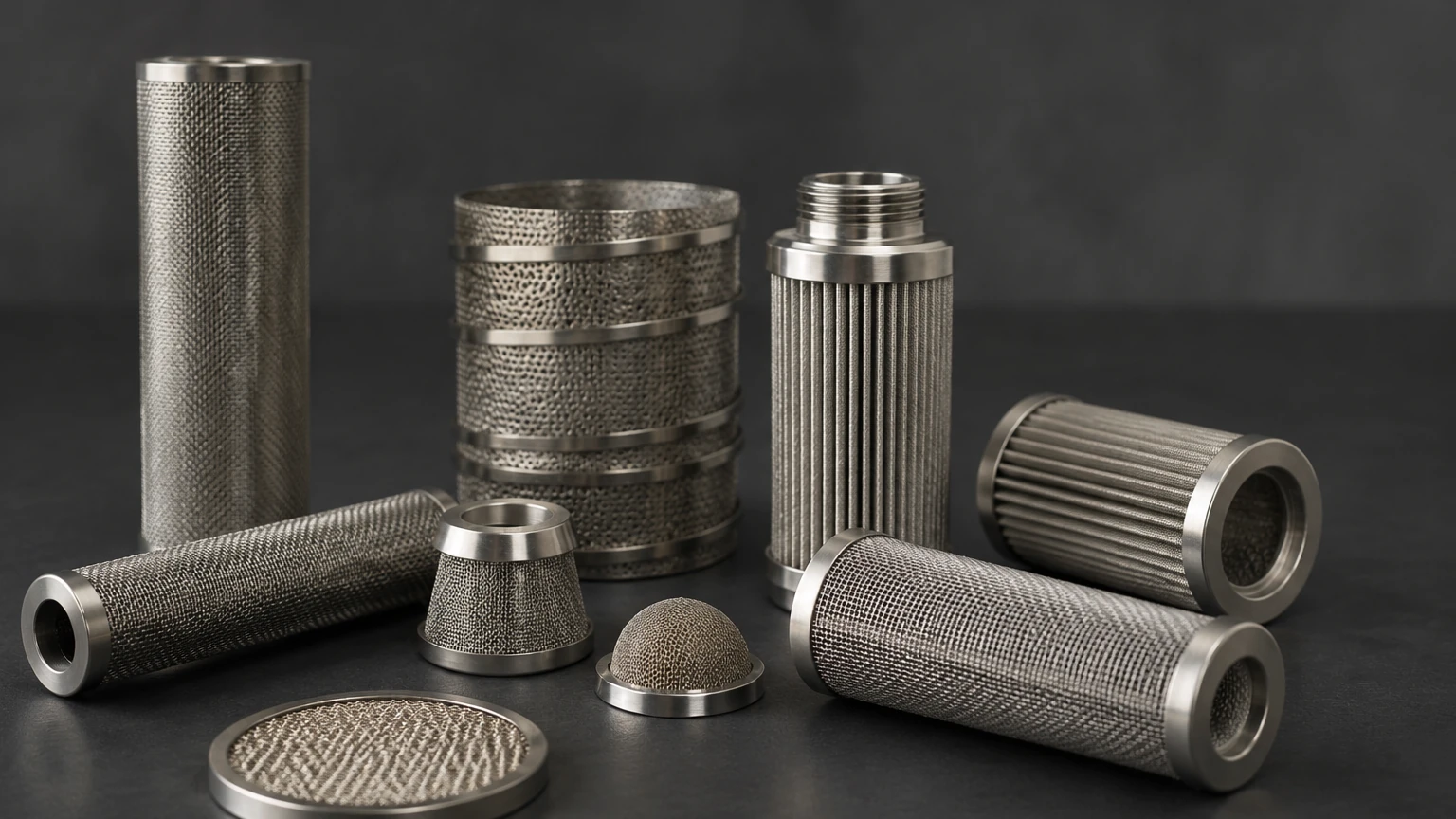
When selecting the actual filtration media for a 3 a certified system, engineers typically choose between woven wire mesh and sintered metal components. Each has distinct advantages in a sanitary context.
* Woven Wire Mesh: High-quality woven mesh provides a precise pore size and a high open area, which minimizes pressure drop. In sanitary applications, the mesh must be securely bonded to the support structure, often through plasma or TIG welding, to ensure there are no crevices where the mesh meets the housing.
* Sintered Metal: Sintered metal filters, created by fusing metal powder or multiple layers of mesh under heat and pressure, offer extreme durability. Because the structure is monolithic, there is no risk of media migration (fibers or wires breaking off into the product). However, the internal pore structure of sintered powder can be more challenging to clean than a single layer of mesh, requiring validated cleaning protocols to ensure all trapped particulates are removed.
Kaifil’s expertise in custom manufacturing allows for the development of hybrid designs that balance the precision of fine mesh with the structural rigors required for repeated sterilization cycles.
Verification: How to Confirm Compliance
One of the most common risks in procurement is the confusion between "designed to meet 3-A standards" and being officially 3 a certified. Official certification involves a Third Party Verification (TPV) by a certified 3-A Sanitary Standards Auditor. This auditor physically inspects the manufacturing facility and the equipment design to ensure every detail—from weld quality to gasket seats—complies with the specific standard (e.g., Standard 10-04 for Filters).
When evaluating a supplier, purchasing teams should request the following:
1. 3-A Symbol Authorization: A valid certificate showing the manufacturer is authorized to use the 3-A symbol on the specific equipment.
2. Material Certifications (MTRs): Mill Test Reports that prove the stainless steel used is indeed 316L or the specified grade.
3. Surface Finish Documentation: Reports confirming the Ra values of the contact surfaces.
4. Weld Logs: Documentation of weld procedures and operator qualifications, ensuring hygienic welding standards were maintained.
Total Cost of Ownership and Long-Term Value
While 3 a certified filtration components often carry a higher initial capital cost than standard industrial filters, the total cost of ownership (TCO) is frequently lower. The primary drivers of this value include:
* Reduced Cleaning Time: Properly designed sanitary filters clean faster and more thoroughly, reducing the consumption of water, chemicals, and energy during CIP cycles.
* Risk Mitigation: The cost of a single contaminated batch or a product recall can be catastrophic. 3-A certification provides a documented layer of protection against these risks.
* Durability: Because they are built to withstand harsh SIP/CIP environments, these components typically have a longer service life than non-sanitary alternatives, which may suffer from corrosion or mechanical failure under thermal stress.
By focusing on these technical and operational benefits, engineers can justify the investment in high-quality filtration that meets the most stringent global standards.
Conclusion
Achieving and maintaining a 3 a certified status for filtration components requires a meticulous approach to manufacturing and design. From the selection of low-carbon 316L stainless steel to the precision of electropolished surfaces and the elimination of dead legs, every engineering choice is aimed at ensuring product safety. For professionals tasked with optimizing their process lines, understanding these sanitary principles is essential for making informed purchasing decisions. For more information on specialized filtration components and custom OEM capabilities, visit our Main Page to connect with our technical team.
