


3-a Standards
In the landscape of industrial food, beverage, and pharmaceutical processing, the integrity of equipment design is not merely a matter of operational efficiency but a fundamental requirement for public health. Among the various regulatory and voluntary frameworks governing equipment design, the 3-a standards represent the benchmark for sanitary design and fabrication. For engineers and procurement professionals specializing in filtration systems, understanding these standards is essential to ensuring that components such as wire mesh filters and stainless steel cartridges meet the rigorous demands of hygienic processing.
Industrial filtration plays a critical role in removing contaminants and ensuring product purity. However, the filter itself can become a source of contamination if it is not designed for easy cleaning and sterilization. By adhering to 3-A Sanitary Standards, manufacturers like Kaifil ensure that filtration solutions are engineered to minimize biological risks, facilitate effective cleaning, and withstand the harsh environments of modern processing plants.
The Role of 3-A Standards in Modern Industrial Filtration
3-A Sanitary Standards, Inc. (3-A SSI) is an independent, not-for-profit corporation dedicated to advancing hygienic equipment design. The standards are developed through a collaborative effort between the "Triple-A" groups: equipment users (processors), equipment fabricators, and regulatory sanitarians. The primary objective of these standards is to protect the consumer from potential contamination by ensuring that equipment can be effectively cleaned and sanitized.
In the context of filtration, 3-A standards provide specific criteria for the design and fabrication of filter housings, elements, and related components. Unlike general industrial filters, sanitary filters must account for the behavior of microorganisms and the residues of food or chemical products. A filter that meets 3-A criteria is designed to eliminate "dead zones" where bacteria can proliferate and to ensure that all surfaces in contact with the product are accessible for cleaning, either through manual disassembly or Clean-in-Place (CIP) systems.
For technical teams, the adoption of these standards simplifies the validation process. When a component is designed according to these recognized principles, it provides a documented baseline for hygiene that satisfies both internal quality control and external regulatory inspections, such as those conducted by the FDA or USDA.
Technical Criteria for Sanitary Design and Fabrication
Engineering a filter to meet 3-a standards requires a departure from standard industrial manufacturing techniques. The focus shifts from purely mechanical performance to a combination of performance and "cleanability." Several key technical criteria define this approach:
Surface Finish and Roughness (Ra)
One of the most critical aspects of sanitary design is the surface finish of the metal. 3-A standards typically require product contact surfaces to have a maximum roughness average (Ra) of 32 micro-inches (0.8 micrometers). At Kaifil, achieving this level of precision involves specialized polishing and finishing techniques. A smooth surface prevents the adhesion of proteins, fats, and microorganisms, making the cleaning process more effective and reducing the risk of biofilm formation.
Internal Radii and Geometry
Sharp corners and crevices are the enemies of hygiene. 3-A standards mandate that all internal angles on product contact surfaces must have a minimum radius—often 1/8 inch (3.2 mm) or larger—to ensure that cleaning solutions can reach every part of the equipment. In filtration components, this means that the transition between the filter mesh and the support structure must be smooth and continuous, without gaps that could trap debris.
Weld Quality and Treatment
Welding in sanitary applications is a highly controlled process. All welds on product contact surfaces must be continuous, free of pits, folds, or cracks, and ground smooth to match the surrounding surface finish. This prevents the accumulation of material in microscopic voids. Engineers must specify TIG (Tungsten Inert Gas) welding or similar high-precision methods to ensure the structural and hygienic integrity of the filter assembly.
Self-Draining Properties
To prevent the growth of bacteria in standing liquids, equipment must be designed to be self-draining. This involves engineering specific slopes into the filter housing and ensuring that the filter elements themselves do not retain liquid once the system is powered down. Proper orientation of the inlet and outlet ports is essential to achieving this goal.
Material Integrity and Chemical Resistance
The selection of materials is a cornerstone of 3-a standards. Filtration components must be fabricated from materials that are non-toxic, non-absorbent, and resistant to corrosion from both the product and the cleaning chemicals used in the facility.
Stainless Steel Selection
AISI 300 series stainless steel is the standard for sanitary applications. While Type 304 is often acceptable for less aggressive environments, Type 316L (low carbon) is the preferred choice for most industrial filtration needs. The addition of molybdenum in 316L provides superior resistance to pitting and crevice corrosion, particularly in the presence of chlorides or acidic food products. For more information on material selection for specific industrial environments, you can visit the Main Page of our technical resource center.
Elastomers and Gaskets
Beyond the metal components, the gaskets and seals used in filter housings must also comply with 3-A standards (specifically 3-A Standard 18-). These materials, such as EPDM, PTFE, or Silicone, must be food-grade and capable of maintaining a seal under varying temperatures and pressures without leaching chemicals into the product stream. Engineers must verify that these elastomers are compatible with the specific Clean-in-Place (CIP) chemicals used in their facility, as degradation of a seal can lead to both leakage and contamination.
Operational Considerations: CIP and SIP Performance
In modern high-volume production, manual cleaning of filtration systems is often impractical due to the downtime required. Consequently, 3-A standards emphasize design for Clean-in-Place (CIP) and Sterilize-in-Place (SIP) operations.
Clean-in-Place (CIP) Efficiency
A filter designed for CIP must allow for the high-velocity flow of cleaning detergents and rinses through all parts of the assembly. The internal geometry must ensure that there are no "shadow areas" where the cleaning fluid cannot reach. For wire mesh filters, this requires a robust design that can withstand the mechanical force of the CIP cycle without deforming the precision mesh.
Sterilize-in-Place (SIP) Durability
In pharmaceutical and high-care food applications, sterilization is often achieved using saturated steam. Filtration components must be engineered to withstand temperatures typically ranging from 121°C to 135°C (250°F to 275°F) without losing structural integrity or compromising the seals. The thermal expansion of stainless steel must be accounted for in the design of the filter housing to prevent stress cracking during repeated sterilization cycles.
Procurement and Verification: Ensuring Compliance
For purchasing teams and engineers, the challenge lies in verifying that a supplier’s claims of compliance are backed by technical reality. When evaluating filtration solutions, it is important to distinguish between "designed to meet" and "certified by" 3-A SSI.
Documentation and Traceability
Reliable manufacturers provide comprehensive documentation, including material test reports (MTRs) that verify the chemical composition of the stainless steel. Furthermore, documentation should include certificates of conformance for surface finishes and elastomer specifications. This traceability is vital for facilities operating under HACCP (Hazard Analysis and Critical Control Points) or similar safety management systems.
Evaluating the Total Cost of Ownership (TCO)
While 3-A compliant filters may have a higher initial purchase price than standard industrial filters, the total cost of ownership is often lower. Non-compliant filters can lead to:
* Increased cleaning time and chemical usage.
* Higher risk of batch contamination and product recalls.
* Faster degradation of components due to improper material selection.
* Regulatory fines or plant shutdowns during audits.
By investing in high-quality stainless steel filtration that adheres to 3-a standards, companies reduce operational risks and extend the service life of their equipment.
Custom Filtration Solutions for Sanitary Applications
Every industrial process has unique requirements regarding flow rates, pressure drops, and particle retention. Standard off-the-shelf filters may not always meet the specific spatial or mechanical constraints of a specialized production line. This is where custom engineering becomes essential.
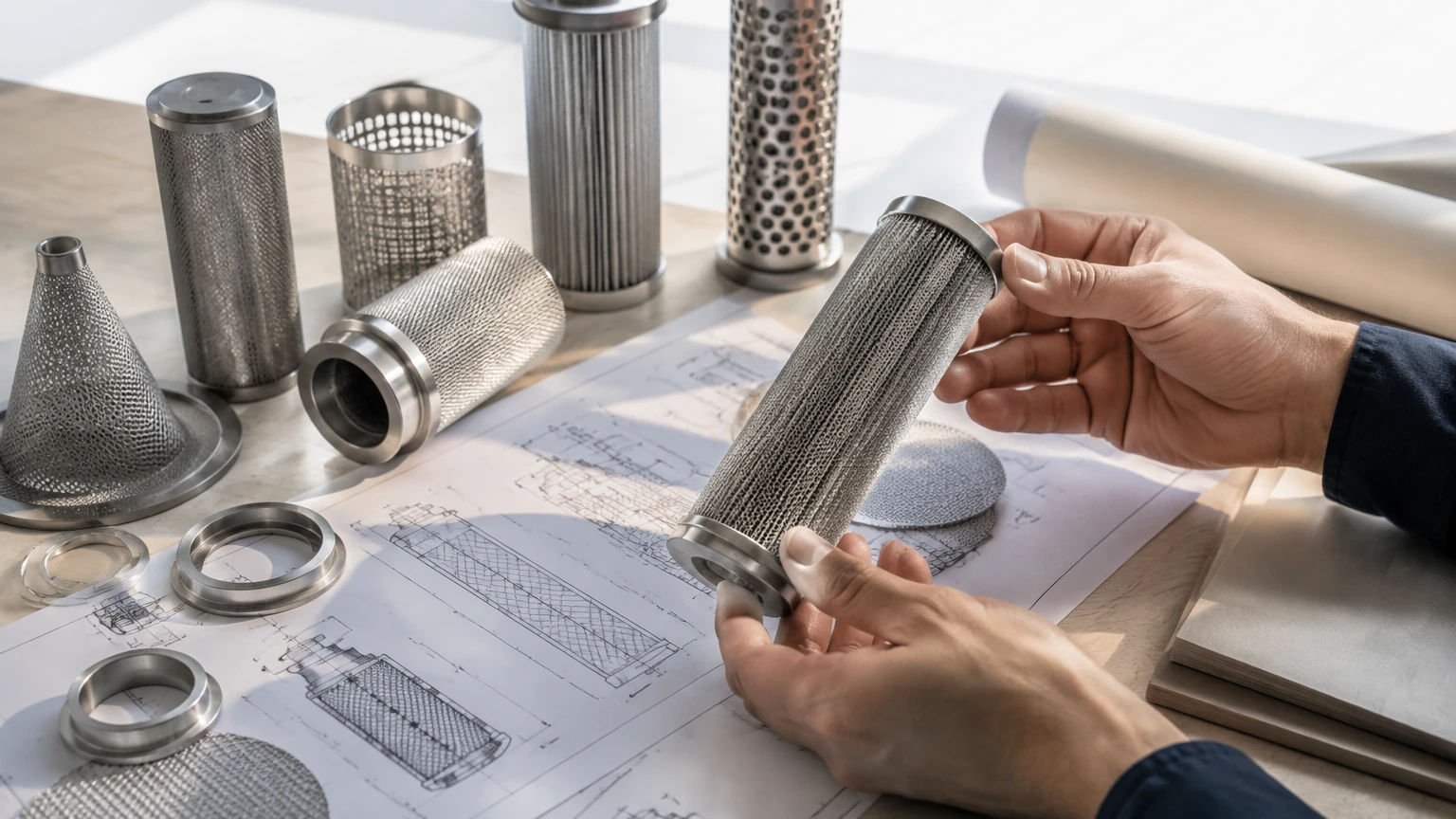
Kaifil specializes in the design and manufacture of custom stainless steel filtration solutions that bridge the gap between high-performance filtration and sanitary compliance. Whether it is a custom-sized wire mesh filter for a dairy processing line or a high-pressure filter cartridge for pharmaceutical manufacturing, the focus remains on precision and durability. Our engineering team works closely with clients to develop components that not only meet the required filtration accuracy but also adhere to the stringent geometry and surface finish requirements of the food and beverage industry.
Customization allows for the optimization of the filter’s surface area, which can lead to longer intervals between cleaning cycles and improved throughput. By integrating the principles of 3-A standards into the early stages of design, we ensure that the final product is both a high-performance tool and a hygienic asset to the facility.
Conclusion
The implementation of 3-a standards in industrial filtration is a critical safeguard in the global supply chain. For the engineers tasked with maintaining these systems, the standards provide a clear roadmap for selecting equipment that is safe, durable, and easy to maintain. From the Ra value of a polished surface to the chemical compatibility of a gasket, every detail matters in a sanitary environment.
As processing technologies continue to evolve, the demand for precision-engineered, hygienic filtration will only grow. By prioritizing 3-A principles and partnering with experienced manufacturers like Kaifil, industrial facilities can achieve the highest levels of product purity and operational reliability. For further technical specifications and to explore our range of custom stainless steel filters, please refer to the resources available on our Main Page.
