


3a Sanitary Equipment Supplier
In the food, beverage, dairy, and pharmaceutical industries, the integrity of the production environment is paramount. Contamination, whether bacterial or chemical, can lead to significant financial losses, regulatory penalties, and risks to public health. Consequently, engineers and procurement specialists must prioritize equipment that adheres to the most stringent hygienic design standards. Selecting a reputable 3a sanitary equipment supplier is a critical step in ensuring that filtration and processing components meet these rigorous requirements.
3-A Sanitary Standards, Inc. (SSI) is a non-profit organization dedicated to enhancing food safety through hygienic equipment design. When a supplier provides 3-A certified equipment, it signifies that the components are designed for easy cleaning, inspection, and the prevention of bacterial growth. For industrial filtration applications, this involves specific engineering considerations regarding material selection, surface finish, and mechanical construction.
The Significance of 3-A Certification in Industrial Filtration
Filtration is often a primary defense mechanism in sanitary processing lines. Whether it is removing particulates from a beverage or ensuring the purity of a pharmaceutical ingredient, the filter itself must not become a source of contamination. A 3a sanitary equipment supplier understands that the standard goes beyond simple material compliance; it dictates how the equipment is built to facilitate Clean-in-Place (CIP) and Steam-in-Place (SIP) protocols.
Traditional industrial filters may contain "dead legs"—areas where fluid can stagnate—or crevices where bacteria can harbor. 3-A standards mandate that all product-contact surfaces be accessible for cleaning and free of sharp internal angles. For stainless steel wire mesh filters and cartridges, this means the welds must be ground smooth and the mesh must be integrated into the housing in a way that eliminates entrapment zones.
For more information on high-performance filtration components, you can visit our Main Page to review product options and application support.
Core Engineering Requirements for Sanitary Equipment
When evaluating a 3a sanitary equipment supplier, technical professionals should focus on several core engineering benchmarks that define a truly sanitary product.
1. Material Selection and Traceability
Stainless steel is the industry standard due to its corrosion resistance and durability. However, not all stainless steel is suitable for sanitary applications. Most 3-A standards require the use of AISI 300 series stainless steel, typically 316L (low carbon), which offers superior resistance to the corrosive chemicals used in CIP cycles. A reliable supplier must provide material test reports (MTRs) to ensure the chemical composition of the metal meets the specified grades.
2. Surface Finish and Roughness (Ra)
The smoothness of a surface is measured by its Roughness Average (Ra). For 3-A compliance, product contact surfaces generally require a finish of 32 micro-inches (0.8 μm) Ra or smoother. Achieving this often requires a combination of mechanical polishing and electropolishing. Electropolishing is particularly effective for complex filter geometries, such as sintered wire mesh or perforated metal, as it removes microscopic peaks and valleys, creating a passive, chrome-rich layer that is highly resistant to bacterial adhesion.
3. Weld Integrity and Geometry
In sanitary equipment, welds must be continuous and ground flush with the base metal. Any pits, cracks, or undercut in a weld can serve as a breeding ground for microorganisms. A 3a sanitary equipment supplier utilizes advanced welding techniques, such as TIG (Tungsten Inert Gas) or orbital welding, to ensure consistent penetration and a smooth profile that does not interfere with the flow of cleaning agents.
Evaluating a 3a Sanitary Equipment Supplier: Technical Benchmarks
Selecting a supplier requires a deep dive into their manufacturing capabilities and quality control processes. It is not enough for a supplier to claim their products are "sanitary-style"; they must demonstrate an understanding of the engineering principles that underpin the standards.
Quality Control and Documentation
An authoritative supplier should provide a comprehensive documentation package, often referred to as a turnover package (TOP). This includes:
* Material Test Reports (MTRs): Confirming the metallurgy of the stainless steel.
* Certificate of Conformance: Stating that the product meets the specific 3-A standard.
* Surface Roughness Logs: Measurements taken with a profilometer to verify Ra values.
* Weld Maps and Inspector Qualifications: Proof that welds were performed by certified personnel and inspected for defects.
Design for Cleanability
Engineers should ask potential suppliers how they handle internal radii. 3-A standards typically require a minimum radius (often 1/8 inch or 3.2 mm) for all internal corners to ensure that cleaning fluids can reach every surface. If a filter cartridge has tight pleats or complex support structures, the supplier must explain how these areas are validated for cleanability.
Integration with CIP and SIP Systems
Sanitary filtration systems are rarely removed for manual cleaning. Instead, they are cleaned and sterilized in place. A 3a sanitary equipment supplier must ensure that their components can withstand the thermal and chemical stresses of these processes.
* CIP (Clean-in-Place): This involves circulating caustic and acidic solutions at high velocities. The filter media and seals must be chemically compatible with these agents to prevent degradation.
* SIP (Steam-in-Place): This involves the use of saturated steam, often at temperatures exceeding 121°C (250°F), to achieve sterilization. The filter housing and the filter element itself must be designed to handle the thermal expansion and pressure associated with steam sterilization without warping or losing structural integrity.
Addressing Customization and OEM Requirements
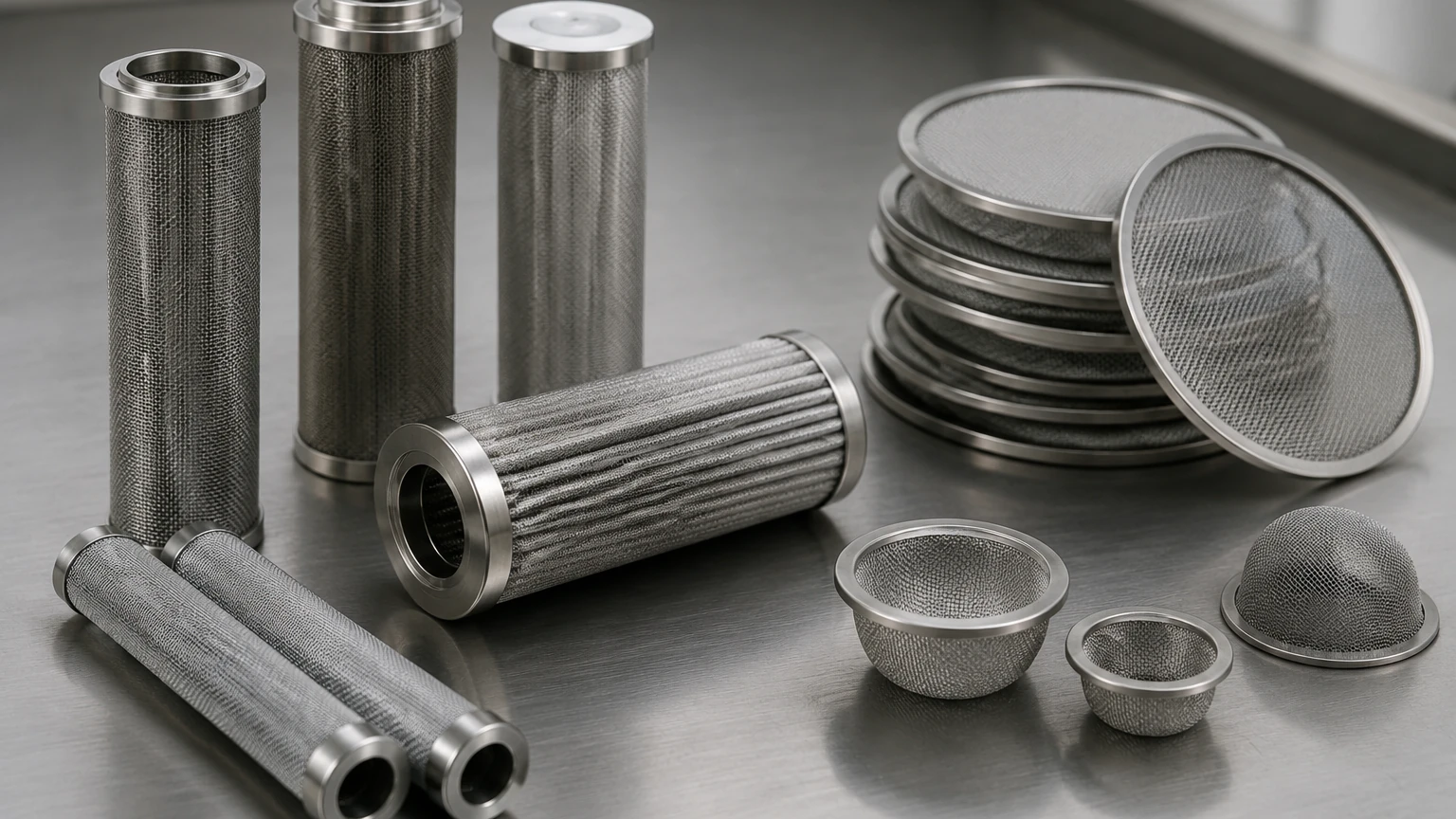
Many industrial applications require bespoke filtration solutions that do not fit standard catalog dimensions. A versatile 3a sanitary equipment supplier like Kaifil offers OEM and customized designs that maintain 3-A principles while meeting specific space or flow requirements.
Customization might involve:
* Custom End Fittings: Ensuring the filter integrates seamlessly with existing Tri-Clamp or DIN connections.
* Varying Micron Ratings: Providing precise filtration accuracy from coarse straining to fine particulate removal using multi-layer sintered mesh.
* High-Pressure Designs: Engineering reinforced filter cores for applications with high differential pressures, such as hydraulic systems or high-viscosity food processing.
When requesting a custom design, engineers should provide the supplier with the operating temperature, pressure, fluid viscosity, and the specific cleaning chemicals used. This allows the supplier to select the appropriate mesh weave and support structure to ensure long-term durability.
Common Risks and Pitfalls in Procurement
Procurement teams must be vigilant against common risks when sourcing sanitary equipment. One of the most frequent issues is the use of "sanitary-style" terminology. This is a marketing phrase that does not guarantee compliance with 3-A or other recognized standards. Without third-party verification or rigorous internal documentation, these products may fail to meet the hygiene requirements of a regulated facility.
Another risk is the use of non-compliant elastomers. Gaskets and O-rings used in sanitary filters must be FDA-compliant and, in many cases, meet USP Class VI standards for biocompatibility. Common materials include EPDM, Silicone, and Viton (FKM). A supplier should be able to provide the specific compound numbers and compliance certifications for all non-metallic components.
Finally, poor surface treatment can lead to premature failure. If the passivation process—the chemical treatment that restores the protective oxide layer on stainless steel—is skipped or performed incorrectly, the equipment may develop localized corrosion (pitting) when exposed to chlorides in the process stream.
Conclusion: Selecting a Reliable Partner
The role of a 3a sanitary equipment supplier is to provide more than just a metal component; they provide a guarantee of process safety and engineering excellence. By focusing on material traceability, surface finish, and hygienic design, these suppliers help manufacturers maintain the highest standards of product purity.
For engineers and purchasing teams, the total cost of ownership should be the primary metric. While 3-A compliant equipment may have a higher initial purchase price than standard industrial filters, the reduction in cleaning time, the prevention of batch contamination, and the extended service life of the equipment provide a significant return on investment.
When evaluating your next filtration project, ensure your supplier has the technical expertise to support your specific application requirements. From material selection to customized production, a dedicated partner like Kaifil delivers the dependable filtration components required for today's demanding industrial environments. To explore our full range of stainless steel filtration solutions, visit our Main Page and connect with our engineering team for technical guidance.
