


Absorption Column
In the landscape of industrial chemical engineering, the absorption column stands as a cornerstone unit operation for gas-liquid separation and purification. Often referred to as a scrubber or an absorber, this equipment is designed to facilitate the transfer of one or more soluble components from a gas stream into a liquid solvent. This process is critical in applications ranging from carbon capture and flue gas desulfurization to the production of acids and the removal of contaminants in pharmaceutical manufacturing.
The efficiency of an absorption column is not merely a function of its height or diameter, but is significantly influenced by its internal components. High-performance internals, including distribution plates, support grids, and mist eliminators, ensure optimal contact between phases. For engineers and procurement specialists, understanding the technical nuances of these components is essential for maintaining process stability and achieving regulatory compliance. For a detailed look at the precision components required for these systems, professionals can visit the Main Page to explore advanced filtration and separation solutions.
Fundamental Principles of Absorption Column Operation
The primary objective of an absorption column is to maximize the mass transfer of a solute from the gas phase to the liquid phase. This is achieved by creating a large interfacial area for contact. Most industrial columns operate using a counter-current flow mechanism, where the gas enters from the bottom and rises upward, while the liquid solvent is introduced at the top and flows downward under gravity.
Physical vs. Chemical Absorption
Absorption processes are generally categorized into two types: physical and chemical. In physical absorption, the gas dissolves in the liquid based on Henry’s Law, governed by the solubility of the gas at a specific temperature and pressure. In chemical absorption, a reaction occurs between the solute and a component in the solvent, which often allows for higher selectivity and capacity, though it may require more energy for solvent regeneration.
Mass Transfer and Kinetics
The rate of absorption depends on the concentration gradient between the two phases and the mass transfer coefficient. Engineers must account for the "Height Equivalent to a Theoretical Plate" (HETP) or the "Height of a Transfer Unit" (HTU) when sizing a column. These metrics help determine the total height required to achieve the desired separation efficiency. The choice of internal packing or trays directly impacts these values by influencing the turbulence and residence time of the fluids.
Critical Internal Components and Material Selection
To facilitate effective gas-liquid contact, the interior of an absorption column is filled with either trays or packing materials. The selection of these internals depends on the required throughput, allowable pressure drop, and the corrosive nature of the chemicals involved.
Trays and Plates
Tray columns utilize a series of horizontal plates to create discrete stages of contact. Bubble cap trays, sieve trays, and valve trays are common designs. Each tray maintains a liquid level through which the gas bubbles, providing the necessary surface area. Trays are often preferred in large-diameter columns or when the liquid contains solids that might clog packing.
Random and Structured Packing
Packing provides a continuous contact surface. Random packing consists of small, specially shaped pieces (like Raschig rings or Pall rings) dumped into the column. Structured packing, often constructed from corrugated metal sheets or wire mesh, offers a more organized flow path. Structured packing typically provides a higher surface area and a lower pressure drop compared to trays, making it ideal for vacuum applications or high-efficiency requirements.
The Importance of Stainless Steel
Given that absorption columns often handle aggressive chemicals like amines, acids, or caustic solutions, material selection is paramount. Stainless steel, particularly grades 304 and 316L, is the industry standard for internals due to its exceptional corrosion resistance and mechanical strength. In highly specialized environments, exotic alloys may be utilized to prevent premature failure and ensure the longevity of the filtration and separation components.
Engineering Considerations for High-Performance Filtration
Filtration plays a dual role in the operation of an absorption column. First, the liquid solvent must be filtered to remove particulates that could foul the packing or plug the distributors. Second, the exiting gas must be treated to remove entrained liquid droplets, a process known as demisting.
Pressure Drop Management
A critical engineering constraint in any absorption column is the pressure drop. High pressure drop increases the energy consumption of the blowers or compressors driving the gas flow. By utilizing precision-engineered wire mesh screens and support structures, engineers can minimize resistance while maintaining high separation efficiency. The geometry of the mesh and the percentage of open area are vital factors in this balance.
Flow Distribution
Uniform distribution of the liquid solvent across the cross-section of the column is vital. Poor distribution leads to "channeling," where the gas and liquid bypass each other, significantly reducing mass transfer efficiency. Distribution plates and spray nozzles often incorporate fine metal filters to prevent clogging from pipe scale or process debris, ensuring a consistent flow pattern over long operational cycles.
The Role of Stainless Steel Wire Mesh and Demisters
One of the most significant challenges in absorption column design is "carryover" or entrainment. As gas rises through the liquid, it can pick up fine droplets of the solvent. If these droplets are not removed, they can cause downstream equipment corrosion, product contamination, and loss of expensive solvents.
Wire Mesh Demisters
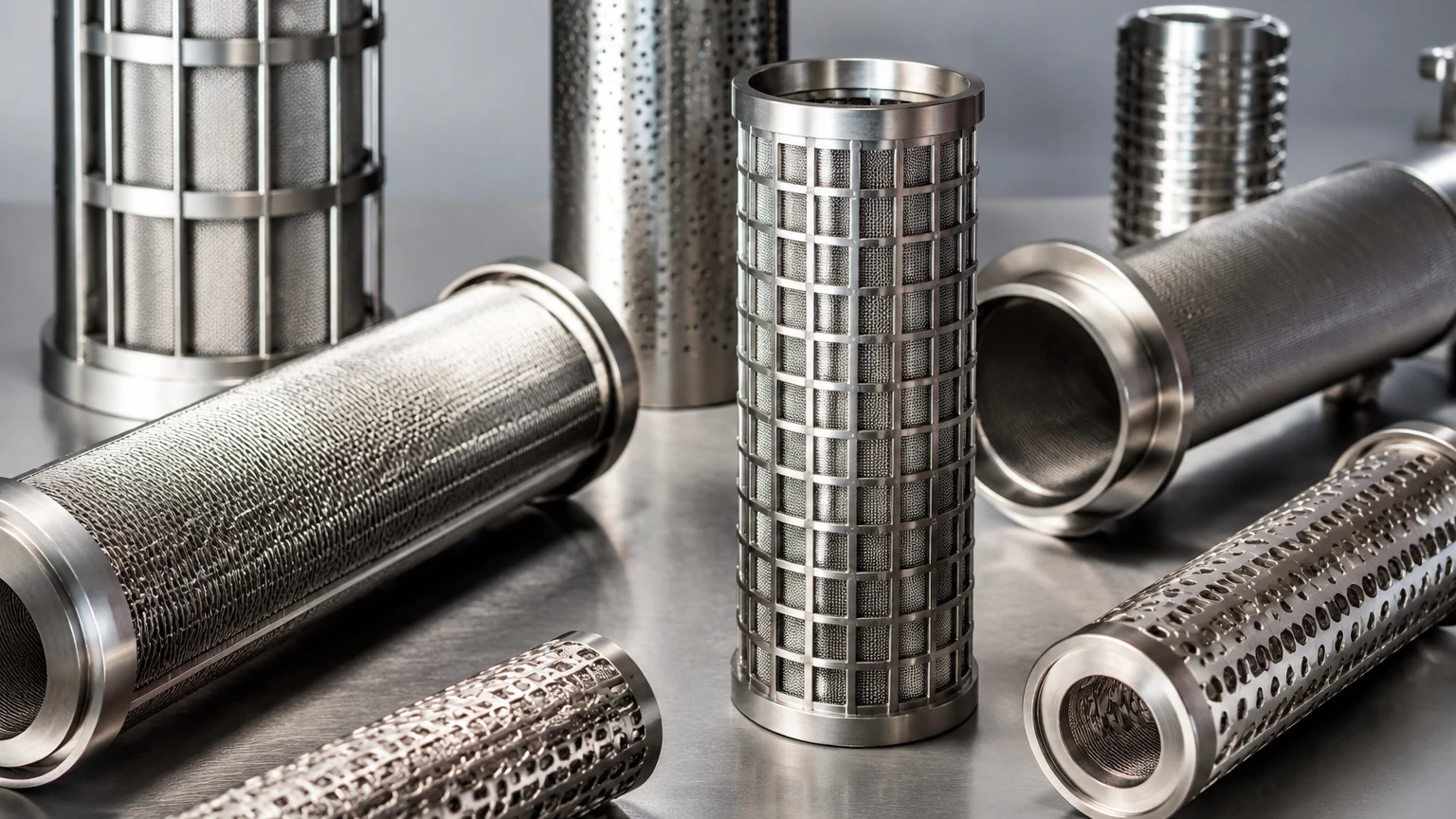
Wire mesh demisters (or mist eliminators) are installed at the top of the absorption column. These components consist of a knitted mesh of stainless steel wires. As the gas passes through the mesh, the liquid droplets impinge on the wire surfaces, coalesce into larger drops, and fall back into the column due to gravity.
Filtration Accuracy
For applications requiring high purity, the filtration accuracy of the demister is critical. The wire diameter, mesh density, and pad thickness are tailored to the droplet size distribution of the specific process. In pharmaceutical or food-grade applications, the surface finish of the stainless steel must also meet strict sanitary standards to prevent bacterial growth or cross-contamination.
Selection Criteria for Industrial Column Internals
When specifying components for an absorption column, engineers must move beyond basic dimensions and consider the total cost of ownership and operational reliability. Key evaluation criteria include:
1. Chemical Compatibility: The internal components must withstand the pH, temperature, and oxidative potential of the solvent and gas streams. Stainless steel 316L is often the baseline for chemical processing due to its molybdenum content, which provides superior resistance to chlorides.
2. Mechanical Integrity: Internals must support the weight of the liquid holdup and withstand the upward force of the gas flow without deforming. This is particularly important for support grids and packing retainers.
3. Filtration Efficiency: Whether it is a wire mesh filter for the solvent or a demister for the gas, the component must meet the specific micron rating required to protect downstream assets.
4. Ease of Cleaning: In processes prone to scaling or fouling, the ability to clean and reuse stainless steel filter cartridges and mesh pads is a significant economic advantage over disposable alternatives.
Maintenance and Optimization of Column Internals
Regular maintenance is essential to prevent the degradation of absorption column performance. Over time, packing can settle, distributors can clog, and demister pads can become fouled with particulates.
Monitoring Performance
Engineers should monitor the pressure differential across the column. A sudden increase in pressure drop often indicates fouling or flooding, while a decrease may suggest channeling or structural failure of the internals. Periodic inspections of the liquid distributors and the condition of the stainless steel mesh are recommended during scheduled turnarounds.
Replacement Cycles
While stainless steel internals are designed for durability, they are not infinite. The replacement cycle depends on the severity of the service. High-quality OEM components ensure that when replacements are necessary, the new parts fit precisely and restore the column to its original design specifications. Utilizing customized filtration solutions can often extend these cycles by providing better resistance to specific process contaminants.
Customization and OEM Solutions for Specialized Applications
Every industrial process has unique requirements that standard off-the-shelf components may not satisfy. Customization is often necessary for absorption columns operating under extreme temperatures, high pressures, or with highly viscous solvents.
Manufacturers specializing in precision metal filtration can provide tailored wire mesh filters, customized support structures, and specific alloy selections to meet these demands. By working closely with a manufacturer during the design phase, engineers can optimize the internal geometry of the column to maximize throughput and minimize energy consumption. This collaborative approach ensures that the filtration components are perfectly aligned with the specific kinetics of the absorption process.
Conclusion
The absorption column remains a vital component of modern industrial infrastructure. Its ability to efficiently separate gases and liquids is dependent on the sophisticated engineering of its internal components. From the selection of stainless steel grades to the design of high-efficiency wire mesh demisters, every detail impacts the overall performance and cost-effectiveness of the system.
By focusing on high-quality materials and precision manufacturing, industrial facilities can achieve reliable, long-term operation with minimal downtime. For those looking to upgrade their current systems or design new installations, exploring the range of custom filtration and separation products available on the Main Page is a critical step toward optimizing industrial filtration performance.
