


Air Filter Foam
In the landscape of industrial filtration, air filter foam serves as a versatile and cost-effective medium for a wide range of applications, from HVAC systems and small engine intakes to complex industrial machinery pre-filtration. Often referred to as reticulated foam, this material is engineered to provide a balance between dust-holding capacity and airflow resistance. For engineers and procurement professionals, understanding the technical nuances of air filter foam—and knowing when to transition to more robust solutions like stainless steel mesh—is critical for optimizing system performance and longevity.
For those seeking high-performance alternatives or custom-engineered metal filtration components, you can visit the Main Page to review product options and application support provided by Kaifil.
The Engineering of Reticulated Air Filter Foam
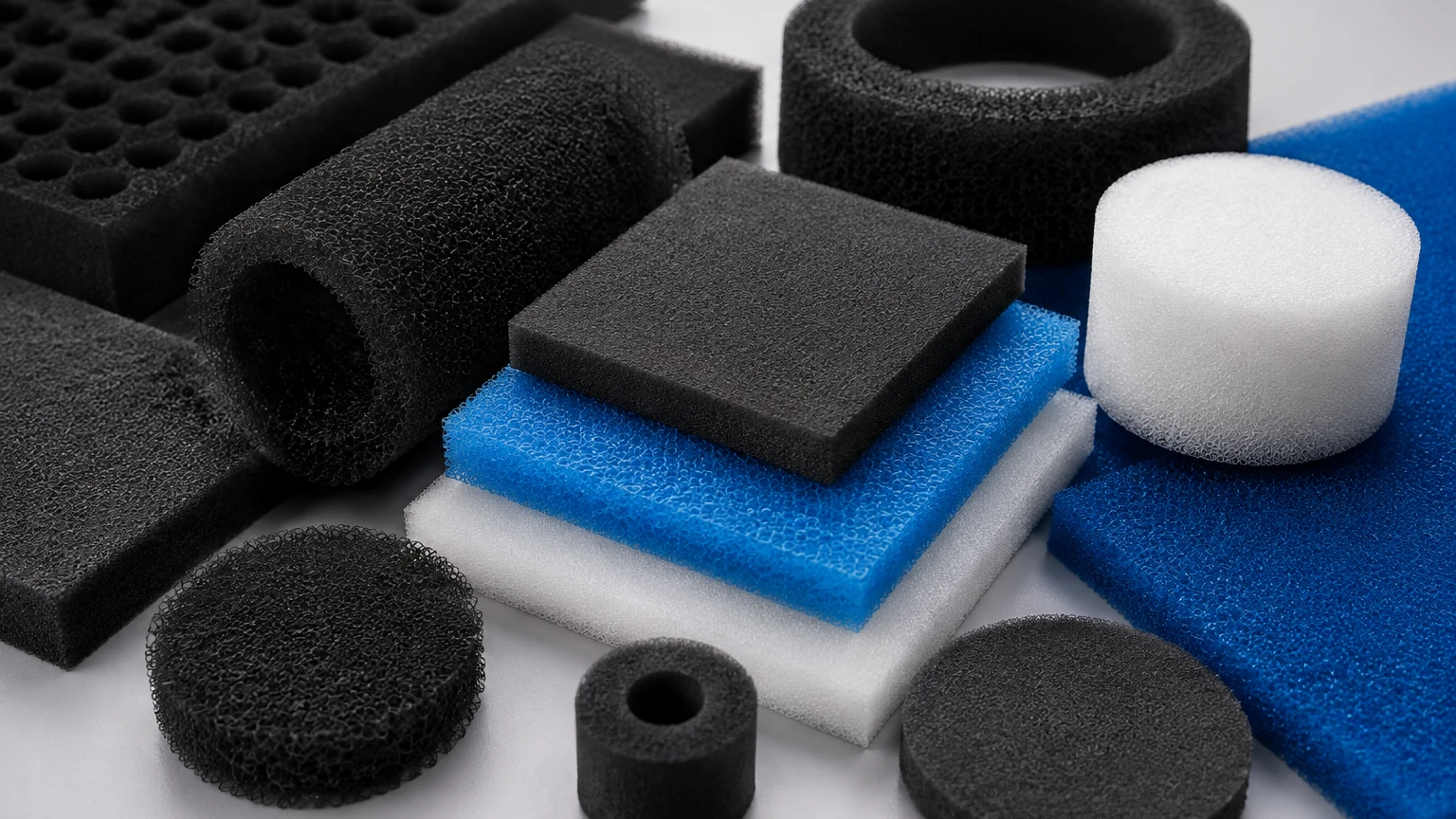
Air filter foam is primarily composed of polyurethane or polyether materials that have undergone a process called reticulation. In its raw state, polyurethane foam consists of a complex network of cells, each separated by thin membranes or "windows." Reticulation is a post-processing step—often involving a thermal shock or chemical treatment—that removes these membranes, leaving only the skeletal structure of the foam.
This process results in a material with a high void volume, typically between 95% and 98%. The absence of cell windows allows air to pass through the structure with minimal resistance, while the intricate web of strands provides an extensive surface area for trapping airborne particulates. In industrial specifications, this structure is measured in Pores Per Inch (PPI). Standard air filter foam typically ranges from 10 PPI (very coarse) to 100 PPI (very fine).
From an engineering perspective, the choice of PPI is the most significant factor in determining the filter’s efficiency. A lower PPI foam allows for higher airflow and is less likely to clog quickly, making it ideal for large debris or high-velocity environments. Conversely, a higher PPI foam provides finer filtration but introduces a higher initial pressure drop and requires more frequent maintenance.
Filtration Mechanisms: How Foam Captures Particulates
Air filter foam operates primarily as a depth filtration medium. Unlike surface filters, which trap particles on a single plane, foam utilizes its three-dimensional thickness to capture contaminants throughout the entire volume of the material. There are three primary mechanisms at work within the foam structure:
1. Inertial Impaction: As air winds through the tortuous path of the reticulated strands, heavier particles cannot follow the rapid changes in air direction. Their inertia carries them forward until they collide with and adhere to a foam strand.
2. Interception: This occurs when a particle follows an air streamline but comes close enough to a foam strand that the strand's surface captures it. This is particularly effective for medium-sized particles.
3. Diffusion (Brownian Motion): For extremely small particles, their erratic movement caused by molecular collisions increases the likelihood that they will eventually contact a foam strand and become trapped.
In many industrial air filter foam applications, the efficiency of these mechanisms is enhanced by the application of a "tackifier" or filter oil. This specialty oil coats the foam strands, ensuring that once a particle impacts the surface, it remains trapped rather than being re-entrained into the downstream airflow.
Technical Specifications: PPI and Pressure Drop
When specifying air filter foam for a B2B application, the relationship between pore size and pressure drop is the primary constraint. The pressure drop (or resistance to airflow) is a function of the foam’s thickness, its PPI, and the face velocity of the air moving through it.
* 10-30 PPI: These are coarse foams used for pre-filtration. They are effective at capturing large dust particles, insects, and debris. They offer the lowest pressure drop and are often used in rugged environments like construction equipment or large air intake systems.
* 45-60 PPI: This is the standard range for general-purpose industrial filtration. It provides a balance of efficiency and airflow, suitable for electronic enclosures and small engines.
* 80-100 PPI: Fine foams used where high-purity air is required. These are often used as secondary filters or in medical and laboratory equipment. They have a significantly higher pressure drop and can clog rapidly if exposed to high dust concentrations.
Engineers must also consider the "thickness" of the foam. Increasing the thickness increases the dust-holding capacity (the total mass of dust a filter can hold before reaching a terminal pressure drop) but also increases the initial resistance. A common strategy is to use a multi-layered approach, placing a coarse 20 PPI foam upstream of a finer 60 PPI foam to extend the service life of the assembly.
Foam vs. Stainless Steel Mesh: A Comparative Analysis
While air filter foam is an excellent solution for many standard applications, it has inherent limitations that may necessitate the use of stainless steel filtration components, such as those manufactured by Kaifil. For engineers evaluating these two options, several factors must be considered:
Durability and Lifespan
Foam is a polymer and is subject to degradation over time. Even high-quality polyether foams will eventually become brittle or lose their structural integrity due to environmental exposure. In contrast, stainless steel wire mesh filters offer virtually unlimited lifespan if properly maintained. In high-vibration environments or applications involving physical stress, metal filters are significantly more reliable.
Temperature Resistance
Standard polyurethane air filter foam is generally limited to operating temperatures below 90°C (194°F). Beyond this, the material may soften, lose its reticulated structure, or even melt. For high-temperature industrial processes, exhaust systems, or steam-related applications, stainless steel filters are required, as they can withstand temperatures exceeding 400°C depending on the alloy grade (e.g., 304 or 316L).
Chemical Compatibility
Polyurethane foam is susceptible to damage from certain solvents, fuels, and corrosive gases. In chemical processing or marine environments, the foam may swell or dissolve. Stainless steel provides superior resistance to a vast array of chemicals, making it the standard for aggressive industrial atmospheres.
Precision and Consistency
While PPI provides a general guide for foam, it is not as precise as the micron ratings available with woven wire mesh. For applications requiring absolute filtration ratings or specific flow characteristics, custom stainless steel components provide a level of engineering precision that foam cannot match.
Chemical and Thermal Limitations in Industrial Environments
Selecting the right type of air filter foam requires an understanding of the base polymer's chemical resistance. There are two main types of polyurethane foam used in filtration:
1. Polyester-based Foam: This type offers excellent resistance to hydrocarbons and oils, making it a common choice for automotive and engine air filters. However, it is highly susceptible to hydrolysis—the breakdown of the polymer in the presence of moisture and heat. In humid environments, polyester foam can literally crumble into dust over time.
2. Polyether-based Foam: This material is much more resistant to moisture and microbial growth. It is the preferred choice for HVAC and outdoor applications where humidity is a factor. However, it generally has lower resistance to oils and fuels compared to polyester-based variants.
Furthermore, UV exposure is a significant risk factor for all air filter foam. If the filter is exposed to direct sunlight, the polymer chains will break down, leading to discoloration and loss of mechanical strength. In such cases, the filter housing must be designed to shield the foam, or a metal mesh alternative should be considered.
Maintenance, Cleaning, and Replacement Cycles
One of the primary advantages of air filter foam in a B2B context is its washability. Unlike paper or glass-fiber media, most reticulated foams can be cleaned and reused multiple times. This reduces the total cost of ownership and the environmental impact of the filtration system.
Cleaning Procedure
Industrial foam filters are typically cleaned using a mild detergent and water solution or a specialized solvent, depending on the contaminants. It is crucial that the foam is not wrung out or twisted, as this can tear the delicate reticulated strands. Instead, it should be compressed flat to remove excess moisture. If the foam was originally oiled, it must be completely dried and then re-oiled before being reinstalled.
When to Replace
Despite their washability, foam filters have a finite service life. Maintenance teams should inspect for the following signs of failure:
* Loss of Elasticity: If the foam does not immediately return to its original shape after compression, the polymer structure is failing.
* Friability: If the foam sheds small particles or crumbles when touched, it must be replaced immediately to prevent the material itself from contaminating the downstream air.
* Permanent Pressure Drop: If the pressure drop remains high even after thorough cleaning, the depth of the foam is likely clogged with fine particles that cannot be removed.
Customization and Engineering Considerations for OEM Integration
For Original Equipment Manufacturers (OEMs), the integration of air filter foam into a product requires careful design of the filter housing and support structure. Because foam is flexible, it requires a rigid frame or a perforated metal backing to prevent it from being sucked into the intake under high vacuum conditions.
Kaifil specializes in providing the precision metal components that often house or supplement these foam elements. By combining a custom-made stainless steel frame or perforated support with the appropriate filtration media, engineers can create a robust filtration assembly that meets specific industrial requirements.
When designing a custom solution, engineers should confirm:
* Target Particle Size: Does the application require the broad capture of foam or the precision of a stainless steel mesh?
* Flow Rate Requirements: What is the maximum allowable pressure drop at peak flow?
* Environmental Extremes: Will the filter be exposed to steam, salt spray, or high-temperature exhaust?
* Maintenance Access: How easily can the filter be removed for cleaning or replacement?
In many high-stakes industrial applications, the transition from air filter foam to a permanent stainless steel solution is a strategic move to reduce downtime and eliminate the risk of media migration. For detailed technical specifications on metal filtration alternatives, the Main Page serves as a resource for exploring high-durability options.
Conclusion
Air filter foam remains a staple in industrial air management due to its exceptional void volume, low cost, and versatile pore structures. However, its performance is highly dependent on the correct selection of PPI, base polymer, and maintenance protocols. For engineers operating in demanding environments—where heat, chemicals, or mechanical stress are present—the limitations of foam often point toward the necessity of stainless steel filtration solutions. By understanding the technical boundaries of foam, B2B buyers can make informed decisions that balance initial costs with long-term operational reliability. Whether utilizing foam for pre-filtration or upgrading to precision metal mesh, the goal remains the same: protecting critical equipment and ensuring the purity of the industrial environment.
