


Air Muffler Compressor
In industrial pneumatic systems, the management of noise and air quality is a critical engineering challenge. An air muffler compressor serves a dual purpose: it attenuates the high-frequency noise generated by air intake or exhaust and acts as a secondary filtration stage to protect the internal components of the compressor. For engineers and procurement teams, selecting the right muffler is not merely about noise reduction; it involves a complex evaluation of airflow dynamics, pressure drop, material compatibility, and filtration efficiency.
As a specialized manufacturer of stainless steel filtration solutions, Kaifil understands that the performance of an air muffler compressor directly impacts the longevity and energy efficiency of the entire pneumatic circuit. This guide explores the technical considerations necessary for selecting and implementing high-performance mufflers in industrial environments.
Engineering Principles of Noise Attenuation and Airflow
The primary function of an air muffler compressor is to reduce the sound pressure levels (SPL) created by the rapid movement of air. In a compressor, noise is generated both during the intake stroke (due to air rushing into the cylinders or vanes) and during the exhaust cycle (as pressurized air is released into the atmosphere).
Acoustic Dissipation via Porous Media
Industrial mufflers typically utilize porous media, such as sintered stainless steel or multi-layered wire mesh, to dissipate acoustic energy. When sound waves enter the muffler, they are forced through a "tortuous path" within the metal structure. The friction between the moving air molecules and the surface of the filter media converts sound energy into a negligible amount of thermal energy.
Balancing Backpressure and Sound Reduction
A critical engineering trade-off exists between noise reduction and backpressure. A muffler that is too restrictive will cause a significant pressure drop, forcing the compressor motor to work harder and increasing energy consumption. Conversely, a muffler with too high a porosity may fail to meet OSHA noise compliance standards. Engineers must calculate the required Flow Coefficient (Cv) to ensure the air muffler compressor does not impede the system's volumetric efficiency.
Material Selection for Industrial Environments
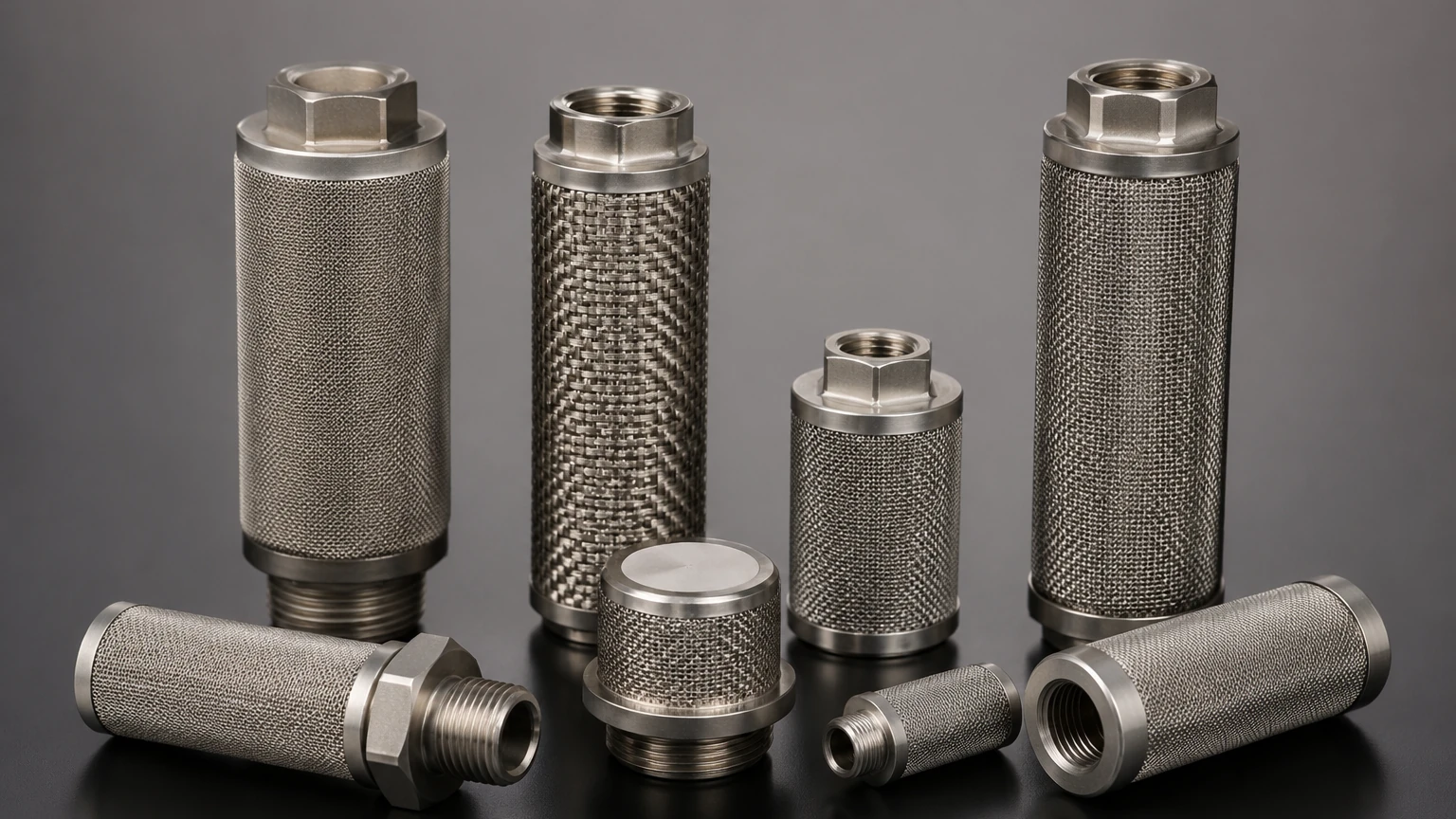
The choice of material for an air muffler compressor is dictated by the operating environment. While plastic or sintered bronze mufflers are common in light-duty applications, industrial-grade compressors—especially those in chemical processing, food and beverage, or pharmaceutical sectors—require more robust materials.
The Advantages of Stainless Steel
Kaifil specializes in stainless steel filtration components, which offer several distinct advantages over traditional materials:
1. Corrosion Resistance: In environments with high humidity or chemical vapors, stainless steel (specifically 304 or 316L grades) prevents oxidation that could lead to structural failure or downstream contamination.
2. Thermal Stability: Industrial compressors often operate at elevated temperatures. Stainless steel maintains its mechanical integrity and filtration accuracy at temperatures that would cause plastic mufflers to deform or bronze to degrade.
3. Durability and Washability: Unlike disposable plastic filters, stainless steel wire mesh mufflers can be cleaned using ultrasonic baths or back-flushing, extending the service life and reducing the total cost of ownership.
Filtration Accuracy and Protection Metrics
While often overlooked, the filtration capability of an air muffler compressor is vital for protecting the system. On the intake side, the muffler prevents particulate matter—such as dust, metal shavings, or ambient debris—from entering the compression chamber. Even microscopic particles can cause abrasive wear on pistons, rings, and cylinder walls.
Micron Ratings in Mufflers
Mufflers are typically rated by their filtration precision, ranging from 5 microns to 100 microns. For high-precision pneumatic tools or sensitive pharmaceutical processes, a lower micron rating is essential. However, in heavy industrial settings like construction or mining, a coarser mesh may be preferred to prevent premature clogging in high-dust environments. Engineering teams should consult with manufacturers like Kaifil to determine the optimal balance between particle retention and maintenance intervals.
Critical Selection Criteria for Engineers
When specifying an air muffler compressor for a new installation or as a replacement part, several technical parameters must be confirmed to ensure compatibility and performance.
Threading and Connection Types
Standardization is key to preventing leaks. Most industrial mufflers utilize NPT (National Pipe Thread) or BSP (British Standard Pipe) threads. It is essential to verify the thread pitch and diameter, as well as the sealing method (e.g., O-rings or tapered threads), to maintain system pressure integrity.
Flow Rate (CFM) and Pressure Ratings
The muffler must be rated for the maximum output of the compressor, measured in Cubic Feet per Minute (CFM) or Liters per Minute (LPM). Exceeding the rated flow of a muffler will lead to excessive noise and potential mechanical failure of the muffler element itself. Furthermore, the maximum operating pressure (PSI or Bar) must be checked, especially for mufflers used on the high-pressure side of the system.
Environmental Compatibility
Engineers must consider whether the compressor will be exposed to outdoor elements, salt spray, or caustic cleaning agents. In food-grade applications, the air muffler compressor must be made of materials that comply with FDA or equivalent safety standards to ensure that no metallic fragments or contaminants enter the air stream.
Maintenance and Replacement Cycles
An air muffler compressor is a wear-and-tear component that requires regular inspection. A clogged muffler is one of the most common causes of decreased compressor performance and overheating.
Identifying Clogged Mufflers
Signs that a muffler requires maintenance or replacement include:
* A noticeable increase in the time required for the compressor to reach target pressure.
* Elevated operating temperatures of the compressor pump.
* A change in the sound profile (e.g., a high-pitched whistling or a muffled thumping).
* Visible debris or oil saturation on the muffler exterior.
For systems utilizing stainless steel mesh, a regular cleaning schedule can restore the original flow characteristics. However, if the mesh is physically damaged or the pores are permanently blinded by carbonized oil, a full replacement is necessary to protect the motor.
Customization and OEM Solutions
Standard off-the-shelf mufflers do not always meet the specific requirements of complex industrial machinery. Customization allows engineers to optimize the air muffler compressor for unique spatial constraints or specific acoustic targets.
Kaifil provides comprehensive OEM services, allowing for the adjustment of:
* Housing Geometry: Designing mufflers to fit into tight engine compartments or specialized manifolds.
* Multi-Stage Filtration: Combining different mesh densities within a single unit to achieve superior noise reduction with minimal pressure drop.
* Specialized Fittings: Integrating custom flanges or quick-connect couplings directly into the muffler body.
By working closely with a manufacturer that understands the nuances of metal filtration, purchasing teams can ensure they are receiving a component tailored to their specific application rather than a generic solution. To explore the full range of custom filtration and noise reduction components, engineers are encouraged to Review product options and application support on the Kaifil website.
Conclusion: The Impact of Quality Filtration
Investing in a high-quality air muffler compressor is a proactive step toward system reliability. By prioritizing materials like stainless steel and ensuring precise filtration ratings, industrial operations can reduce noise pollution, protect expensive machinery from abrasive wear, and maintain peak energy efficiency.
When selecting these components, engineers should look beyond the initial purchase price and consider the total cost of ownership, including maintenance requirements and the potential costs of system downtime. With the right technical specifications and a reliable manufacturing partner, the air muffler becomes a robust asset in any pneumatic or industrial compressor application.
