


Air Muffler
In industrial pneumatic systems, the rapid exhaust of compressed air creates significant noise pollution and potential mechanical stress. An air muffler, often referred to as a pneumatic silencer, is a critical component designed to reduce the noise levels generated by exhausting air while simultaneously protecting the internal components of valves and cylinders from environmental contaminants. For engineers and maintenance professionals, selecting the correct air muffler involves a balance between noise attenuation, flow capacity, and material durability.
At Kaifil, we specialize in the manufacturing of high-performance stainless steel filtration and exhaust solutions. Understanding the technical nuances of air muffler design is essential for optimizing system performance and ensuring compliance with workplace safety regulations regarding noise exposure. This guide explores the engineering principles, material considerations, and selection criteria necessary for implementing effective pneumatic silencing solutions.
Understanding the Function of an Air Muffler in Industrial Systems
The primary function of an air muffler is to dissipate the energy of high-velocity compressed air as it exits a pneumatic circuit. When a pneumatic valve shifts, the air trapped in the cylinder or line is released into the atmosphere. Without a muffler, this air exits at high speed, creating turbulent airflow that results in a sharp, high-decibel "pop" or continuous hissing sound.
An air muffler works by increasing the surface area through which the air must pass and by forcing the air through a porous medium. This process accomplishes two main goals:
1. Velocity Reduction: By expanding the air through a porous structure, such as sintered stainless steel or wire mesh, the velocity of the air is significantly reduced, which lowers the sound frequency and intensity.
2. Diffusion: The muffler diffuses the exhaust air in multiple directions, preventing a concentrated jet of air that could disturb nearby workers or kick up dust and debris in a cleanroom or food processing environment.
Beyond noise reduction, these components serve as a secondary filter. In many industrial environments, the exhaust port of a valve is an entry point for ambient dust, moisture, and chemicals. A high-quality air muffler acts as a barrier, preventing these contaminants from entering the valve body when the system is at rest or during the return stroke of a cylinder.
The Role of Stainless Steel Wire Mesh in Muffler Performance
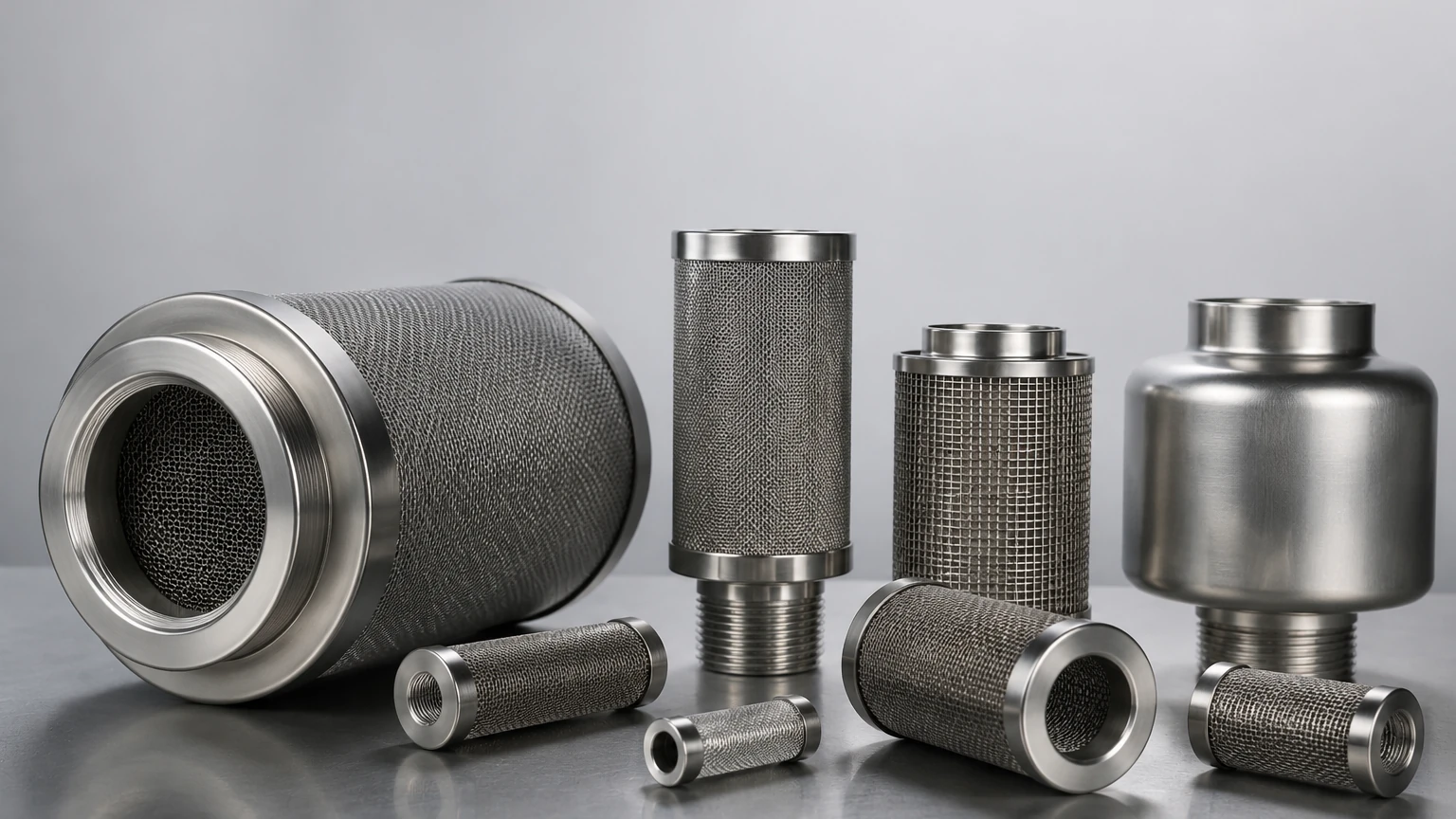
While air mufflers are available in various materials, including plastic and porous brass, stainless steel wire mesh and sintered stainless steel components offer superior performance in demanding industrial applications. As a manufacturer specializing in custom stainless steel filtration, Kaifil utilizes these materials to address the limitations of traditional silencers.
Durability and Mechanical Strength
Stainless steel mufflers are inherently more resistant to physical impact and high-pressure surges compared to plastic alternatives. In heavy-duty manufacturing environments where equipment may be subject to vibration or accidental contact, the structural integrity of a stainless steel wire mesh muffler ensures a longer service life and reduces the risk of the component shearing off at the threads.
Corrosion and Chemical Resistance
In chemical processing, pharmaceutical, and food and beverage industries, pneumatic systems are often exposed to aggressive cleaning agents or corrosive atmospheres. Stainless steel (typically Grade 304 or 316L) provides excellent resistance to oxidation and chemical degradation. This prevents the muffler from clogging due to corrosion products and ensures that the filtration media does not shed particles into the system.
Thermal Stability
High-temperature applications, such as those found in steam processing or near industrial furnaces, can cause plastic mufflers to soften or melt. Stainless steel maintains its mechanical properties across a wide temperature range, ensuring consistent noise attenuation and flow characteristics even in extreme environments.
Key Engineering Considerations for Selection
Selecting an air muffler is not a "one-size-fits-all" process. Engineers must evaluate several technical parameters to ensure the component does not negatively impact the efficiency of the pneumatic circuit.
Noise Reduction Levels (dB)
The primary metric for an air muffler is its ability to reduce decibels (dB). Most industrial silencers are designed to reduce noise by 15 to 35 dB(A). It is important to confirm that the chosen muffler brings the equipment's total noise output within OSHA or local regulatory limits for the specific duration of worker exposure.
Flow Capacity and Back Pressure
One of the most common mistakes in muffler selection is choosing a component that is too restrictive. Every muffler creates some level of back pressure. If the back pressure is too high, it will slow down the exhaust rate, leading to increased cycle times for pneumatic actuators and potentially causing the system to stall. Engineers should look for the Cv (flow coefficient) rating of the muffler and ensure it matches or exceeds the requirements of the valve it is attached to.
Filtration Accuracy (Micron Rating)
The porosity of the muffler determines both its noise-dampening capability and its filtration efficiency. A finer mesh or smaller pore size in a sintered muffler provides better noise reduction and protection against fine dust but will increase back pressure more quickly as it becomes loaded with oil or particulates from the compressed air supply.
Connection Type and Size
Air mufflers are typically available with NPT, BSPT, or metric threads. Ensuring a leak-free connection is vital, especially in systems where the muffler is integrated into a manifold. Kaifil provides customized thread options to ensure seamless integration with existing industrial hardware.
Evaluating the Impact of Back Pressure on Pneumatic Efficiency
In high-speed automated assembly lines, even a millisecond of delay in cylinder retraction can lead to synchronization issues. Back pressure is the resistance to flow caused by the muffler's internal structure. As compressed air passes through the wire mesh or sintered media, the friction between the air molecules and the media surface creates a pressure drop.
To minimize the impact on efficiency, it is recommended to:
* Oversize the Muffler: If space permits, using a muffler with a larger surface area or a larger thread size (with an adapter) can significantly reduce back pressure while maintaining excellent noise reduction.
* Monitor for Clogging: Over time, lubricants from the compressor and moisture in the air lines can combine with fine particles to clog the muffler. A clogged air muffler increases back pressure exponentially. Regular inspection cycles are necessary to prevent performance degradation.
* Use High-Porosity Media: For applications requiring high flow rates, multi-layered stainless steel wire mesh designs offer a high void volume, allowing for maximum air throughput with minimal resistance.
Customization and OEM Solutions for Specialized Applications
Standard off-the-shelf mufflers often fail to meet the specific requirements of specialized industrial machinery. This is where custom manufacturing becomes a necessity. Kaifil works closely with OEM engineers to develop air muffler solutions tailored to unique operational parameters.
Customization options include:
* Specific Dimensions: Designing mufflers to fit within tight spatial constraints of compact valve manifolds.
* Layered Mesh Configurations: Combining different grades of wire mesh to achieve a specific balance between noise frequency shifting and flow rate.
* Integrated Filtration Features: Incorporating specific micron ratings to protect sensitive proportional valves from environmental ingress.
* Material Upgrades: Utilizing 316L stainless steel or specialized alloys for environments with extreme salinity or acidity.
By focusing on the specific needs of the application, customized mufflers can enhance the overall reliability of the pneumatic system while reducing the total cost of ownership through extended replacement intervals.
Common Risks and Failure Modes
Failure to properly specify or maintain an air muffler can lead to several operational risks:
1. System Sluggishness: As mentioned, excessive back pressure from an undersized or clogged muffler will slow down pneumatic movement, leading to reduced production throughput.
2. Icing and Freezing: In cold environments or systems with high moisture content, the rapid expansion of air through the muffler can cause the temperature to drop below the freezing point. This can lead to ice formation within the porous media, completely blocking the exhaust.
3. Contamination Ingress: If a muffler is physically damaged or if the media degrades, it can no longer prevent ambient contaminants from entering the valve. This often leads to premature seal wear and valve failure.
4. Blow-outs: Inexpensive plastic mufflers can sometimes fail catastrophically under high-pressure spikes, sending shards of plastic into the work area. Stainless steel mufflers mitigate this risk through superior mechanical bonding and material strength.
Pre-Purchase Checklist for Engineers
Before selecting an air muffler for a new project or as a replacement part, engineers should confirm the following information to ensure optimal performance:
* Exhaust Port Size and Thread Type: Verify the exact thread specification (e.g., 1/4" NPT, G1/2).
* Maximum Operating Pressure: Ensure the muffler can handle the peak exhaust pressure of the system.
* Required Noise Reduction: Determine the target dB level needed for the environment.
* Environmental Conditions: Identify if the muffler will be exposed to high temperatures, chemicals, or outdoor weather.
* Flow Requirements: Calculate the required Cv to maintain desired cylinder speeds.
* Maintenance Access: Consider whether the muffler is located in a position where it can be easily inspected and replaced.
Conclusion
The air muffler is a small but vital component in the industrial landscape. Choosing a high-quality, stainless steel solution ensures that pneumatic systems operate quietly, efficiently, and reliably over the long term. By prioritizing material quality and proper technical sizing, facilities can protect both their workforce and their mechanical assets.
For more information on our range of custom stainless steel filtration components and pneumatic accessories, please visit our Main Page to review product options and application support. Kaifil remains committed to providing the engineering expertise and manufacturing precision required for the most demanding industrial filtration and exhaust challenges.
