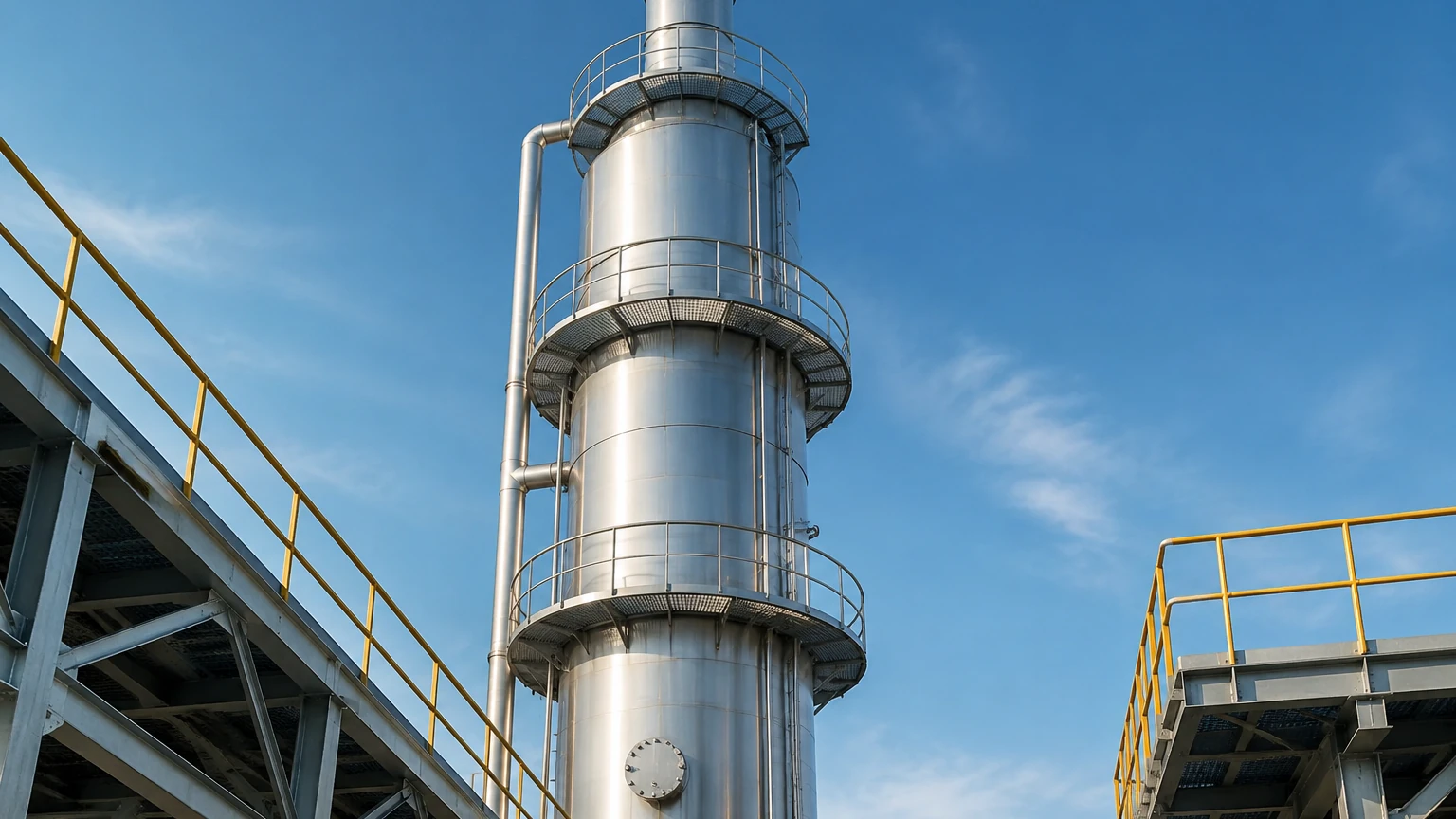
Air Stripping Tower
In industrial water treatment and environmental remediation, the air stripping tower remains one of the most effective and widely utilized technologies for removing volatile organic compounds (VOCs) and dissolved gases from aqueous solutions. This physical mass transfer process relies on the principle of shifting contaminants from a liquid phase to a gas phase, typically using ambient air as the stripping medium. For engineers and facility managers, understanding the technical nuances of tower design, internal components, and the critical role of auxiliary filtration is essential for maintaining operational efficiency and meeting stringent regulatory discharge limits.
Fundamental Principles of Air Stripping Technology
The operation of an air stripping tower is governed by Henry’s Law, which states that the amount of a dissolved gas in a liquid is proportional to its partial pressure above the liquid. In a practical industrial setting, this means that if we expose contaminated water to a large volume of clean air, the volatile contaminants will naturally migrate into the air until an equilibrium is reached.
To maximize this transfer, air stripping towers are designed as vertical pressurized or atmospheric vessels where water is introduced at the top and air is blown in from the bottom. This counter-current flow ensures that the cleanest air meets the cleanest water at the bottom of the tower, maintaining a consistent concentration gradient throughout the height of the unit. The efficiency of this process is heavily dependent on the surface area available for contact between the two phases, which is why the selection of internal packing and the precision of liquid distribution are paramount.
Key Components and Structural Design
A high-performance air stripping tower consists of several critical internal components, each serving a specific engineering purpose:
1. Tower Shell: Often constructed from stainless steel, fiberglass-reinforced plastic (FRP), or HDPE, the shell must withstand the hydrostatic load of the water and the pneumatic pressure of the blower.
2. Packing Material: This is the heart of the tower. Packing can be "random" (small plastic or metal shapes dumped into the tower) or "structured" (engineered grids or corrugated sheets). The goal is to maximize the surface area-to-volume ratio while minimizing resistance to airflow (pressure drop).
3. Liquid Distributor: Located at the top of the tower, the distributor ensures that the incoming water is spread evenly across the top of the packing. Poor distribution leads to "channeling," where water flows down the walls or through specific paths, bypassing the air and severely reducing removal efficiency.
4. Mist Eliminator: As air exits the top of the tower, it often carries small droplets of water (entrainment). A mist eliminator, frequently composed of high-precision stainless steel wire mesh, captures these droplets to prevent moisture from damaging downstream equipment or being released into the atmosphere.
The Critical Role of Precision Filtration in Tower Performance
One of the most common causes of failure in an air stripping tower is not the mass transfer calculation itself, but rather the accumulation of solids and biological growth within the packing. This is where integrated filtration solutions become indispensable. Without adequate pre-filtration, suspended solids can lodge in the packing interstices, leading to increased pressure drop and decreased stripping efficiency.
For industrial applications involving chemical processing or pharmaceutical manufacturing, the use of custom stainless steel filter cartridges is often required to protect the tower internals. These filters remove particulates that could otherwise act as nucleation sites for mineral scaling or provide a substrate for biofilm development. By implementing robust filtration at the inlet, operators can significantly extend the time between intensive tower cleanings.
Furthermore, the mist eliminator at the top of the tower is a specialized filtration component. In many demanding environments, standard plastic mesh is insufficient due to temperature or chemical compatibility issues. Precision metal filter components, such as those discussed on our Main Page, provide the durability and specific pore structures needed to ensure that the exhaust air is free of liquid carryover, even in high-velocity systems.
Engineering Parameters and Performance Optimization
When designing or specifying an air stripping tower, several engineering parameters must be balanced to achieve the desired removal efficiency at the lowest total cost of ownership.
* Air-to-Water (A/W) Ratio: This is the volumetric ratio of air flow to water flow. While a higher A/W ratio generally improves removal efficiency, it also increases the energy consumption of the blower and can lead to "flooding" if the air velocity prevents the water from flowing downward.
* Temperature Effects: Henry’s Law constants are highly temperature-dependent. Stripping is significantly more efficient at higher temperatures. In cold climates, engineers may need to pre-heat the influent water or the stripping air to maintain performance, or alternatively, increase the tower height to provide more contact time.
* Pressure Drop (ΔP): As air moves through the packing, it loses energy. Monitoring the pressure drop across the packing is the most effective way to diagnose the health of the tower. A sudden increase in ΔP usually indicates fouling, scaling, or a collapsed packing bed.
Maintenance Strategies and Fouling Mitigation
Fouling is the primary operational challenge for air stripping towers. It generally falls into three categories:
1. Inorganic Scaling: Common in hard water areas where calcium carbonate or iron oxides precipitate out of the water as the CO2 is stripped away and the pH rises.
2. Biological Fouling: Algae and bacteria can thrive in the oxygen-rich environment of the tower, especially if the water contains organic nutrients.
3. Particulate Accumulation: Silt, sand, or process fines that enter the tower and get trapped in the packing.
To mitigate these issues, a proactive maintenance strategy is required. This includes the use of scale inhibitors, periodic acid washing, and the installation of high-quality filtration systems. Using stainless steel wire mesh filters for pre-filtration allows for easy cleaning and backwashing, providing a sustainable alternative to disposable filter elements. When the tower internals are protected by precision-engineered filtration, the frequency of manual packing removal and cleaning—a labor-intensive and costly process—is greatly reduced.
Material Selection for Demanding Industrial Environments
The choice of materials for both the tower shell and its internals is dictated by the chemical composition of the water and the stripping air. While plastic packing (PP, PVC, PVDF) is common for general water treatment, many industrial B2B applications require the resilience of stainless steel.
Stainless steel 304 or 316L is preferred for applications involving high temperatures, high pressures, or aggressive chemical solvents that would degrade polymers. In the context of filtration components within the tower, such as support grids and mist eliminators, stainless steel offers superior structural integrity and resistance to the mechanical stresses of high-velocity airflow. Customization in material selection ensures that the filtration components do not become the weak link in the system's longevity.
Evaluation Criteria for Purchasing Teams
For procurement professionals and engineers tasked with selecting an air stripping tower or replacement internals, the following criteria should be confirmed before proceeding:
* Filtration Compatibility: Does the supplier offer integrated filtration solutions to protect the packing? Can they provide custom stainless steel filter cartridges tailored to the specific particle size distribution of the influent?
* OEM Capabilities: If the tower is part of a larger proprietary system, can the internal components be customized to meet specific spatial or performance constraints?
* Total Cost of Ownership: Beyond the initial purchase price, what are the expected energy costs (based on pressure drop) and maintenance costs (based on fouling resistance and ease of cleaning)?
* Material Certification: For pharmaceutical or food and beverage applications, are the materials used in the filtration and stripping process compliant with relevant industry standards?
Conclusion
The air stripping tower is a robust and reliable solution for VOC removal, provided it is designed and maintained with a focus on technical precision. By understanding the relationship between mass transfer principles and the physical protection of the tower's internals, engineers can ensure long-term performance. The integration of high-quality stainless steel filtration components is not merely an accessory but a fundamental requirement for preventing fouling and optimizing the air-to-water contact that drives the stripping process. As industrial requirements become more stringent, the move toward durable, cleanable, and highly efficient filtration solutions will continue to be a hallmark of successful air stripping operations.
For technical assistance with filtration components or to review product options and application support, please visit our Main Page.