


Aquaculture Drum Filter
In modern Recirculating Aquaculture Systems (RAS), the management of suspended solids is the most critical factor in maintaining water quality and ensuring the health of aquatic species. The aquaculture drum filter serves as the primary mechanical filtration stage, designed to remove uneaten feed, feces, and other organic debris before they can break down into harmful ammonia and nitrites. For engineers and facility managers, selecting the right drum filter involves a deep understanding of hydraulic loads, particle size distribution, and material durability.
As a specialized manufacturer of stainless steel filtration components, Kaifil provides the precision-engineered wire mesh and filter cartridges that form the heart of these industrial systems. Understanding the technical nuances of drum filtration allows purchasing teams to optimize their systems for long-term operational efficiency and biological stability.
The Engineering Principles of Drum Filtration
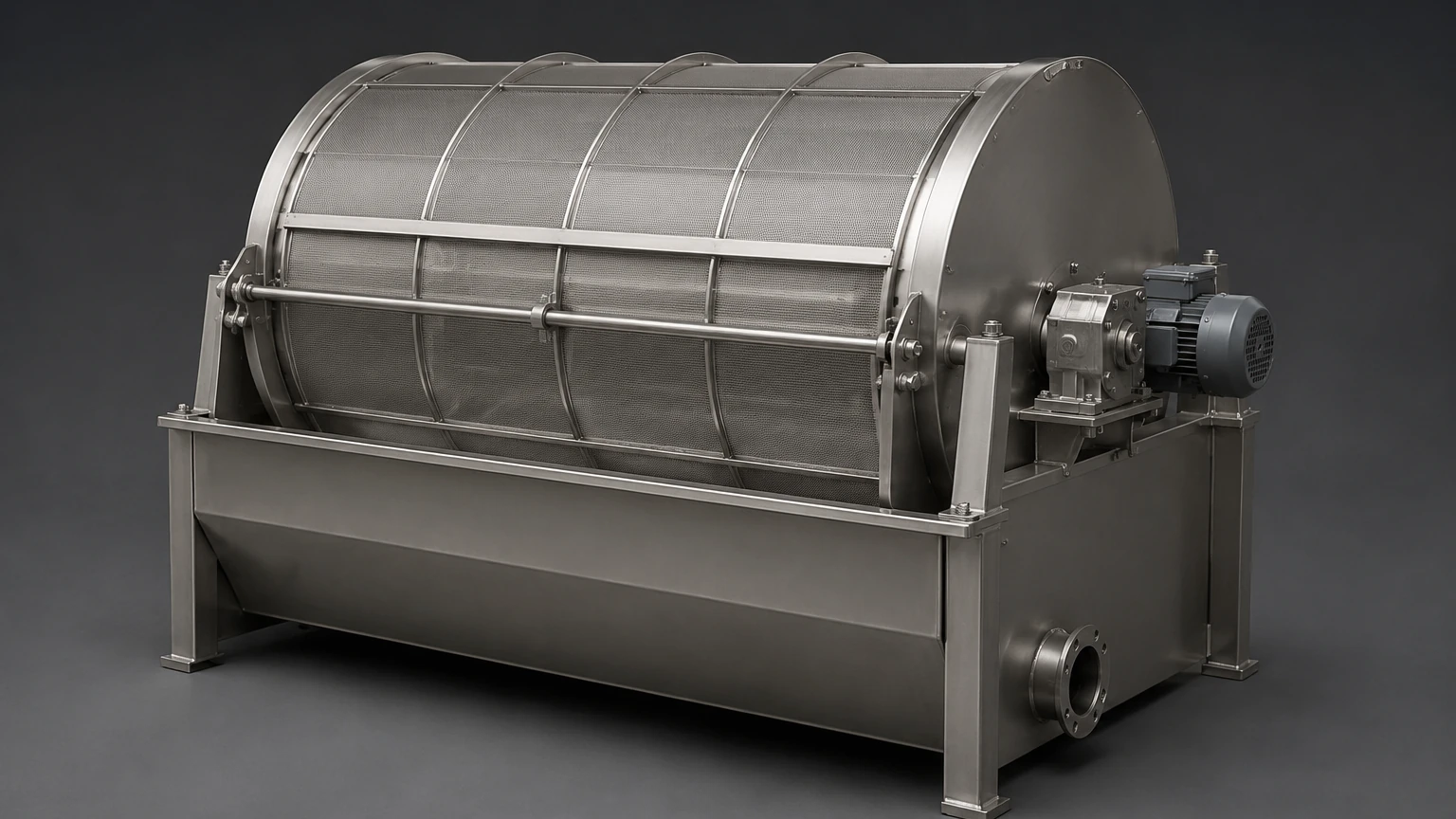
An aquaculture drum filter operates on a relatively simple but highly effective mechanical principle. The system consists of a rotating drum covered with a fine filter medium—typically a stainless steel wire mesh. Water from the fish tanks enters the interior of the drum, either by gravity or through a pump-fed system. As the water passes through the mesh to the exterior, solid particles are trapped on the inner surface.
As the trapped solids accumulate, they create a "filter cake" that gradually restricts water flow, causing the water level inside the drum to rise. Once a predetermined level is reached, a sensor triggers the cleaning cycle. The drum begins to rotate, and a series of high-pressure spray nozzles located outside the drum blast water through the mesh. This backwash process dislodges the solids into a collection trough, which then carries the waste out of the system. This automated, self-cleaning mechanism allows for continuous operation without the manual labor associated with traditional sand or bag filters.
The Critical Role of Stainless Steel Wire Mesh
The performance of an aquaculture drum filter is almost entirely dependent on the quality and specification of the filter media. While some low-end systems use polyester or nylon mesh, industrial-grade RAS applications almost exclusively demand stainless steel. There are several engineering reasons for this preference:
1. Structural Integrity and Dimensional Stability
Unlike synthetic fibers, stainless steel wire mesh maintains its pore size under pressure. In high-flow environments, plastic meshes can stretch or deform, leading to "breakthrough" where particles larger than the rated micron size pass through the filter. Stainless steel provides the rigidity necessary to maintain precise filtration accuracy over thousands of cleaning cycles.
2. Corrosion Resistance in Aquatic Environments
Aquaculture environments are inherently corrosive, especially in marine or brackish water applications. Engineers typically specify Grade 316L stainless steel for these environments due to its high molybdenum content, which provides superior resistance to pitting and crevice corrosion. For freshwater applications, Grade 304 may suffice, but 316L remains the industry standard for longevity.
3. Ease of Cleaning and Biofouling Resistance
Stainless steel surfaces are smoother than synthetic fibers at a microscopic level. This smoothness prevents organic matter and biofilms from adhering strongly to the mesh, making the backwash cycle more effective. Effective cleaning reduces the frequency of backwash cycles, saving water and reducing wear on the motor and drive components.
Key Evaluation Criteria for Industrial Filters
When specifying an aquaculture drum filter or replacement components, engineers must balance several competing technical factors. Selecting a filter based solely on price often leads to increased operational costs and potential system failure.
Micron Rating and Particle Retention
In aquaculture, the target particle size for mechanical filtration usually ranges from 20 to 100 microns. A finer mesh (e.g., 30 microns) removes more solids but requires more frequent backwashing and has a lower flow capacity per square meter of surface area. Conversely, a coarser mesh (e.g., 80 microns) allows for higher flow rates but leaves more organic matter in the water, increasing the load on the biofilter.
Open Area Percentage
The "open area" of a wire mesh is the ratio of the total area of the holes to the total area of the mesh. A higher open area results in lower head loss and higher flow capacity. However, increasing the open area often requires using thinner wires, which can compromise the mechanical strength of the mesh. Engineering the right balance between wire diameter and aperture size is essential for a durable filter component.
Hydraulic Loading Rate
Engineers must calculate the hydraulic loading rate based on the maximum expected flow of the RAS. If the drum surface area is too small for the flow rate, the water velocity through the mesh becomes too high, which can force soft organic particles through the screen or cause premature wear on the mesh due to impingement.
Customization and OEM Considerations
Every aquaculture facility has unique requirements based on the species being farmed, the density of the stock, and the physical footprint of the filtration room. Standardized, off-the-shelf drum filters may not always provide the optimal solution. This is where customized filtration components become vital.
At Kaifil, we specialize in providing tailored solutions for equipment manufacturers and system integrators. Customization options often include:
* Custom Mesh Weaves: Depending on the application, a plain weave, twilled weave, or Dutch weave may be selected to optimize strength versus filtration fineness.
* Reinforced Support Structures: For large-diameter drums, the mesh must be supported by a secondary, coarser grid to prevent sagging and mechanical fatigue.
* Specific Dimensions: OEM partners often require filter panels or cylindrical cartridges manufactured to exacting tolerances to fit proprietary drum designs.
By working closely with a manufacturer that understands the rigors of industrial filtration, engineers can ensure that their Main Page of technical specifications translates into a high-performance reality on the farm floor.
Maintenance, Durability, and Total Cost of Ownership
While the initial capital expenditure (CAPEX) of a drum filter is significant, the total cost of ownership (TCO) is driven by operational expenses (OPEX), including energy consumption, water usage for backwashing, and component replacement.
Replacement Cycles
The wire mesh is a consumable component, though its lifespan can vary significantly. High-quality stainless steel mesh, when properly maintained and not subjected to mechanical impact, can last several years. Factors that shorten the lifespan include improper backwash pressure (too high can fatigue the wires), abrasive particles in the water, or the use of incompatible chemical cleaners.
Monitoring and Automation
Modern aquaculture drum filters are increasingly integrated with PLC (Programmable Logic Controller) systems. These systems monitor the frequency of backwash cycles. A sudden increase in backwash frequency may indicate a spike in organic loading or the onset of biofouling on the mesh, allowing operators to intervene before water quality degrades.
Energy and Water Efficiency
The efficiency of the backwash system is paramount. Precision-engineered spray nozzles and high-quality mesh work together to minimize the amount of treated water required to clean the drum. In large-scale operations, even a small percentage reduction in backwash water can lead to significant savings in water treatment and pumping costs over the course of a year.
Integrating Quality Filtration Components
The success of a Recirculating Aquaculture System hinges on the reliability of its mechanical filtration stage. A failure in the drum filter can lead to a rapid increase in suspended solids, which irritates fish gills, promotes the growth of pathogenic bacteria, and eventually leads to the collapse of the nitrifying bacteria in the biofilter.
Choosing a filtration partner like Kaifil ensures that the stainless steel components used in your aquaculture drum filter are manufactured to the highest industrial standards. From initial material selection to the final precision weave, every step is focused on providing a product that can withstand the demanding conditions of continuous aquatic operation.
For engineers and purchasing professionals looking to optimize their filtration systems, it is essential to confirm the following before procurement:
1. Material Grade: Ensure the stainless steel grade (304, 316, or 316L) matches the salinity of the water.
2. Mesh Specifications: Verify the micron rating and open area to ensure they meet the hydraulic requirements of the system.
3. Structural Support: Confirm that the mesh is adequately supported to prevent mechanical failure under load.
4. Customization Availability: Determine if the manufacturer can provide the specific sizes and configurations required for your unique drum design.
By focusing on these technical details and prioritizing high-quality materials, aquaculture operations can achieve higher feed conversion ratios, lower mortality rates, and improved overall productivity. For more information on custom stainless steel filtration solutions and to explore our full range of industrial capabilities, please visit our Main Page to review product options and application support.
