


Aquaculture Filtration
In the modern aquaculture industry, maintaining water quality is the single most critical factor for operational success. Whether managing a Recirculating Aquaculture System (RAS), a flow-through facility, or a hatchery, the efficiency of aquaculture filtration directly dictates the health of the aquatic species, the growth rates achieved, and the overall profitability of the enterprise. Mechanical filtration, specifically the removal of suspended solids, serves as the first line of defense in protecting biological filters and ensuring a stable environment.
For engineers and facility managers, selecting the right filtration components requires a deep understanding of fluid dynamics, material science, and the biological demands of the species being raised. This guide explores the technical aspects of aquaculture filtration, focusing on the role of high-performance stainless steel components in achieving sustainable water quality.
The Critical Role of Mechanical Filtration
Aquaculture filtration is typically categorized into three stages: mechanical, biological, and chemical. Mechanical filtration is the process of removing physical debris, such as uneaten feed, excrement, and organic biofilm fragments, from the water column. In a high-density environment, the accumulation of these solids—referred to as Total Suspended Solids (TSS)—can lead to several systemic failures.
When solids are left in the system, they undergo mineralization, a process where bacteria break down organic matter, consuming dissolved oxygen and releasing ammonia and carbon dioxide. High TSS levels also provide a substrate for opportunistic pathogens and can physically damage the delicate gill tissues of fish and crustaceans. By implementing robust mechanical aquaculture filtration, operators can significantly reduce the load on secondary biological filters, allowing the nitrifying bacteria to focus on converting ammonia and nitrite rather than processing solid waste.
Engineering Considerations for Filter Selection
Selecting a filtration solution is not a one-size-fits-all process. Engineers must evaluate several variables to ensure the chosen system can handle the specific demands of the site.
Micron Rating and Filtration Accuracy
In aquaculture, the size of particles that need to be removed can vary from large debris (over 100 microns) to fine organic silts (under 20 microns). Stainless steel wire mesh filters offer precise control over filtration accuracy. For most RAS applications, a filtration range of 40 to 80 microns is standard for primary solids removal. Finer filtration may be required for intake water treatment to prevent the introduction of parasites or wild pathogens.
Flow Rate and Hydraulic Load
The filter must be sized to accommodate the maximum flow rate of the system without creating excessive backpressure. A common mistake in aquaculture filtration design is undersizing the filter area, which leads to high face velocities. High velocity can force soft organic particles through the mesh, effectively "extruding" them rather than capturing them. Increasing the surface area of the filter media—often achieved through pleated designs or large-diameter cartridges—allows for higher flow rates at lower velocities.
Pressure Drop (Delta P)
Monitoring the pressure differential across the filter media is essential for maintaining system efficiency. As the filter captures solids, the pressure drop increases. In automated systems, this pressure change triggers a cleaning cycle. Using durable stainless steel mesh ensures that the filter can withstand these pressure fluctuations without deforming or bypassing.
Why Stainless Steel is Preferred in Aquaculture
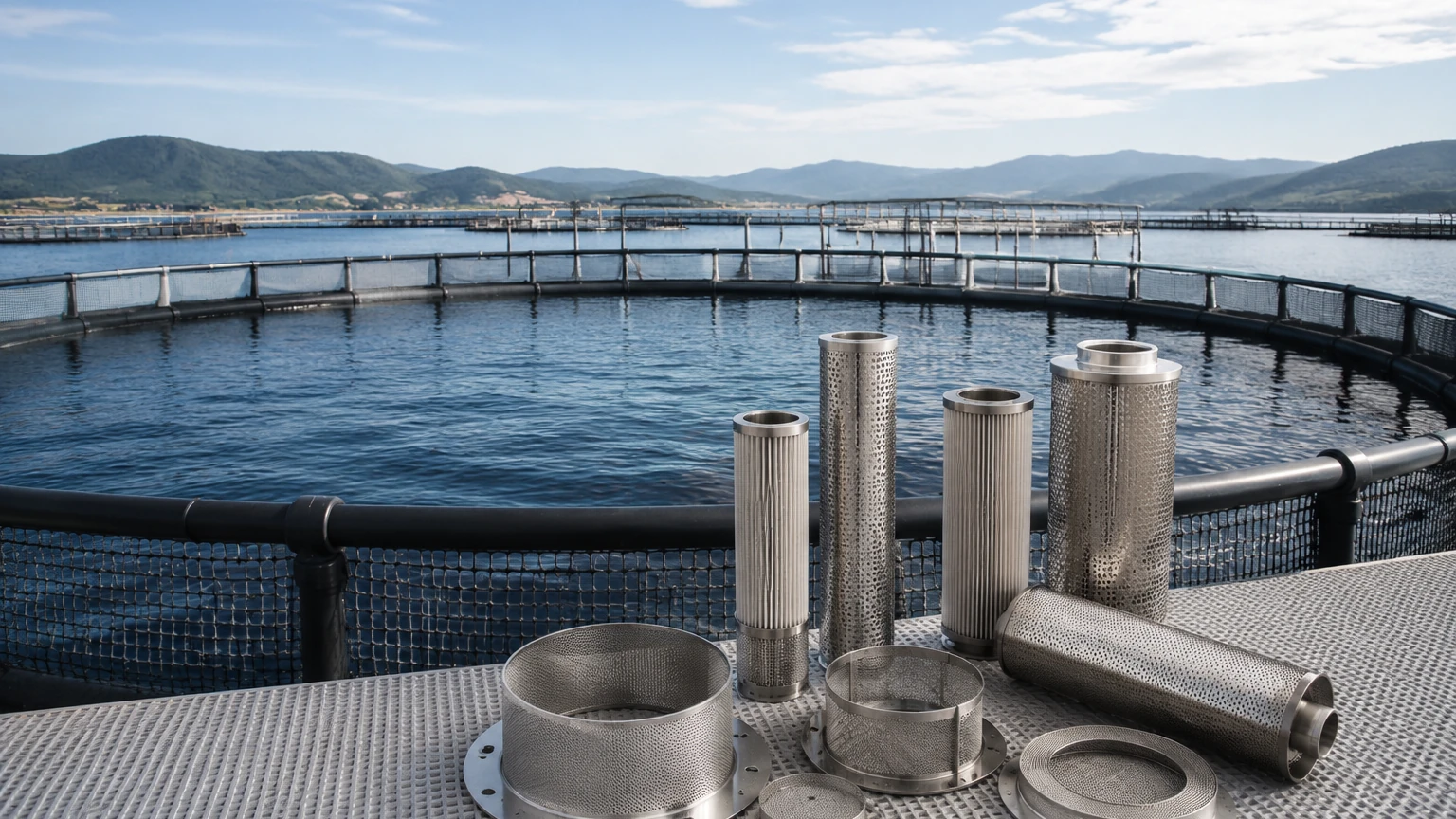
While plastic and synthetic mesh are common in low-cost applications, industrial aquaculture filtration increasingly relies on stainless steel components for long-term reliability. The choice of material is particularly important in marine or brackish water environments where corrosion is a constant threat.
1. Corrosion Resistance: For freshwater applications, Type 304 stainless steel is often sufficient. However, for saltwater aquaculture, Type 316L is the industry standard. The addition of molybdenum in 316L provides superior resistance to pitting and crevice corrosion caused by chlorides.
2. Structural Integrity: Unlike synthetic fabrics, stainless steel wire mesh does not stretch or sag under hydraulic load. This ensures that the pore size remains constant, providing consistent filtration performance over the life of the component.
3. Ease of Cleaning: Metal filters are highly compatible with automated backwashing systems and high-pressure cleaning. They can also withstand chemical disinfection and ultrasonic cleaning, which are often necessary to remove stubborn biofilms or mineral scaling.
4. Longevity and Sustainability: A high-quality stainless steel filter cartridge can last for years with proper maintenance, reducing the total cost of ownership and minimizing the environmental impact associated with disposable plastic filters.
Integration into Different Aquaculture Systems
Aquaculture filtration components are integrated into various equipment types depending on the scale and goals of the facility.
Drum Filters and Disk Filters
In large-scale RAS, rotary drum filters are the primary tool for solids removal. These systems use large panels of stainless steel wire mesh. As the drum rotates, the captured solids are rinsed off the mesh into a waste trough. The precision of the mesh weaving is vital here; inconsistent apertures can lead to premature clogging or insufficient solids removal.
Pressurized Filter Vessels
For smaller systems or specific treatment loops (such as ozone or UV pre-filtration), pressurized vessels containing stainless steel filter cartridges are used. These provide a compact footprint and high filtration efficiency. Engineers often prefer pleated stainless steel cartridges for these applications because they offer significantly more surface area than standard cylindrical designs.
Intake and Discharge Protection
Filtration is also required at the point of water intake to protect the facility from debris and invasive species, and at the discharge point to ensure the facility meets environmental regulations regarding effluent quality. Coarse stainless steel screens are typically used for these high-volume applications to prevent clogging while protecting local ecosystems.
Maintenance and Replacement Cycles
Even the most advanced aquaculture filtration system requires a structured maintenance program. The frequency of cleaning and replacement depends on the organic load of the system. In a heavily stocked nursery, filters may require more frequent backwashing than in a low-density grow-out tank.
* Routine Monitoring: Operators should monitor the pressure differential daily. A sudden drop in pressure might indicate a breach in the filter media, while a rapid increase suggests an unexpected spike in organic matter or a failure in the cleaning mechanism.
* Biofilm Management: Over time, a biological film can develop on the filter surface, even on stainless steel. Periodic chemical cleaning with approved agents or physical scrubbing is necessary to maintain the hydraulic capacity of the mesh.
* Inspection for Wear: While stainless steel is durable, mechanical wear can occur at the contact points of the filter housing or from abrasive particles in the water. Regular inspections ensure that small issues are addressed before they lead to system-wide water quality degradation.
Customization for Specific Application Needs
Every aquaculture project has unique constraints, from the salinity of the water to the specific geometry of the plumbing. Standard off-the-shelf filters may not always provide the optimal balance of flow and filtration. Customization allows engineers to specify the exact mesh count, wire diameter, and housing interface required for their specific aquaculture filtration needs.
Customized solutions often include:
* Bespoke Micron Ratings: Tailoring the mesh to capture specific particle sizes relevant to the species' feed or waste characteristics.
* Reinforced Structures: Adding internal support cores or external cages to filter cartridges to handle high-pressure surges.
* Specialized End Fittings: Ensuring seamless integration with existing piping systems to prevent bypass and simplify installation.
By working with a manufacturer that understands the rigors of industrial filtration, aquaculture professionals can develop components that enhance the reliability of their life support systems.
Total Cost of Ownership in Filtration
When evaluating aquaculture filtration options, it is important to look beyond the initial purchase price. The total cost of ownership (TCO) includes energy consumption (due to pressure drop), maintenance labor, water loss during backwashing, and the cost of replacement parts. Stainless steel filters often have a higher upfront cost than plastic alternatives, but their durability and cleanability typically result in a lower TCO over a 5-to-10-year horizon. Furthermore, the insurance of knowing the filtration system will not fail unexpectedly provides significant value in an industry where livestock loss can be catastrophic.
Conclusion
Effective aquaculture filtration is a multi-faceted engineering challenge that requires the right materials, precise design, and consistent maintenance. As the industry moves toward more intensive and closed-loop systems, the demand for high-performance mechanical filtration will only grow. Utilizing stainless steel components provides the durability and precision necessary to maintain the delicate balance of an aquatic environment.
For technical professionals seeking reliable filtration components, understanding the nuances of material selection and hydraulic design is the first step toward optimizing system performance. To explore specialized components and engineering support for industrial filtration, you can Review product options and application support on our Main Page to find solutions tailored to your specific operational requirements.
