


Titanium Purification
In high-performance industrial sectors such as aerospace, medical device manufacturing, and chemical processing, the purity of titanium is not merely a preference but a fundamental requirement for structural integrity and corrosion resistance. Titanium purification involves complex chemical and mechanical processes designed to remove interstitial elements like oxygen, nitrogen, and hydrogen, as well as metallic impurities that can compromise the alloy's mechanical properties. For engineers and procurement specialists, understanding the technical nuances of these processes—and the filtration systems that support them—is essential for ensuring the longevity and reliability of the final product.
Industrial filtration plays a critical role throughout the lifecycle of titanium production, from the initial refinement of titanium tetrachloride (TiCl4) to the recycling of titanium scrap. Precision-engineered components, such as those found on the Main Page of specialized manufacturers, provide the necessary barriers to ensure that contaminants do not enter the melt or the chemical stream.
Understanding the Industrial Significance of Titanium Purification
Titanium is valued for its exceptional strength-to-weight ratio and its ability to withstand highly corrosive environments. However, these properties are highly sensitive to the presence of impurities. For instance, even minute increases in oxygen content can significantly increase the hardness of titanium while drastically reducing its ductility, leading to premature fatigue failure in critical aerospace components.
Purification is generally categorized into two stages: the primary extraction and refinement from ore (such as the Kroll process) and the secondary purification or refining of the metal to achieve ultra-high-purity (UHP) levels. In the Kroll process, titanium tetrachloride is reduced by magnesium in a controlled atmosphere. Any presence of moisture or air during this phase can introduce oxygen and nitrogen, which are nearly impossible to remove once the titanium sponge has formed. Consequently, the gases and liquid reagents used in these processes must undergo rigorous purification and filtration before they ever contact the titanium.
The Role of Filtration in Titanium Purification Systems
Filtration serves as a primary defense mechanism against particulate contamination and chemical inconsistencies. In the context of titanium purification, filtration systems are deployed in several key areas:
Gas Phase Purification
During the production of TiCl4, various gases including chlorine and argon are used. These gases must be free of moisture and particulate matter. Sintered metal filters and high-efficiency wire mesh components are utilized to strip away fine particulates that could act as nucleation sites for impurities during the reduction process.
Liquid Chemical Filtration
Liquid TiCl4 must be purified through distillation and filtration to remove vanadium, iron, and silicon chlorides. The filtration media used here must be exceptionally resistant to chemical attack. Stainless steel filter cartridges, specifically those made from 316L or other high-nickel alloys, are often preferred due to their ability to maintain structural integrity in the presence of aggressive chlorides.
Molten Metal and Vacuum Refining
In secondary refining processes, such as Vacuum Arc Remelting (VAR) or Electron Beam Melting (EBM), filtration is used to manage the environment surrounding the melt. While you cannot "filter" molten titanium using traditional mesh due to the metal's extreme reactivity and high melting point, the vacuum systems and inert gas delivery lines rely heavily on precision filtration to prevent back-streaming of pump oils or the introduction of atmospheric contaminants.
Engineering Considerations for High-Purity Applications
Selecting the correct filtration solution for titanium purification requires a deep dive into the engineering specifications of the application. Engineers must evaluate several factors to ensure the filtration system does not become a source of contamination itself.
Material Compatibility and Corrosion Resistance
When dealing with the chemical precursors of titanium, the filter housing and the media must be chemically inert. Stainless steel remains the industry standard for many of these applications. However, the specific grade of stainless steel must be chosen based on the operating temperature and the concentration of corrosive agents. For example, in high-temperature gas filtration, the oxidation resistance of the filter media is paramount.
Micron Ratings and Filtration Efficiency
The "purity" of a fluid is often defined by the size and quantity of allowable particulates. In titanium purification, sub-micron filtration is often required for gas streams. Engineers must distinguish between nominal and absolute micron ratings. For critical purification steps, an absolute rating is necessary to guarantee that 100% of particles above a specific size are captured, ensuring the consistency of the chemical feedstock.
Pressure Drop and Flow Dynamics
High-efficiency filtration often comes at the cost of increased pressure drop. In a continuous purification plant, excessive pressure drop can reduce throughput and increase energy consumption. Designing a filter with a large surface area—often achieved through pleated wire mesh or multi-layered sintered structures—allows for high dirt-holding capacity and low initial pressure drop, extending the service life of the component.
Addressing Common Risks in Titanium Purification
One of the primary risks in titanium purification is the introduction of "interstitial" impurities. Unlike metallic inclusions, which can sometimes be identified via non-destructive testing, oxygen and nitrogen become part of the titanium crystal lattice.
Atmospheric Contamination
The most common risk is a breach in the inert gas system. If the filters in the argon or helium supply lines fail or are bypassed, atmospheric air can enter the reaction chamber. This results in "Alpha Case" formation—a brittle, oxygen-enriched layer on the surface of the titanium that must be chemically or mechanically removed, leading to material waste and increased costs.
Media Migration
In lower-quality filtration products, there is a risk of "media migration," where fragments of the filter material itself break off and enter the process stream. In titanium purification, a single stainless steel wire fragment entering the melt could create a high-density inclusion (HDI), which acts as a stress concentrator and can lead to catastrophic failure in rotating parts like turbine blades. This is why high-quality, sintered, or securely woven wire mesh filters are mandatory.
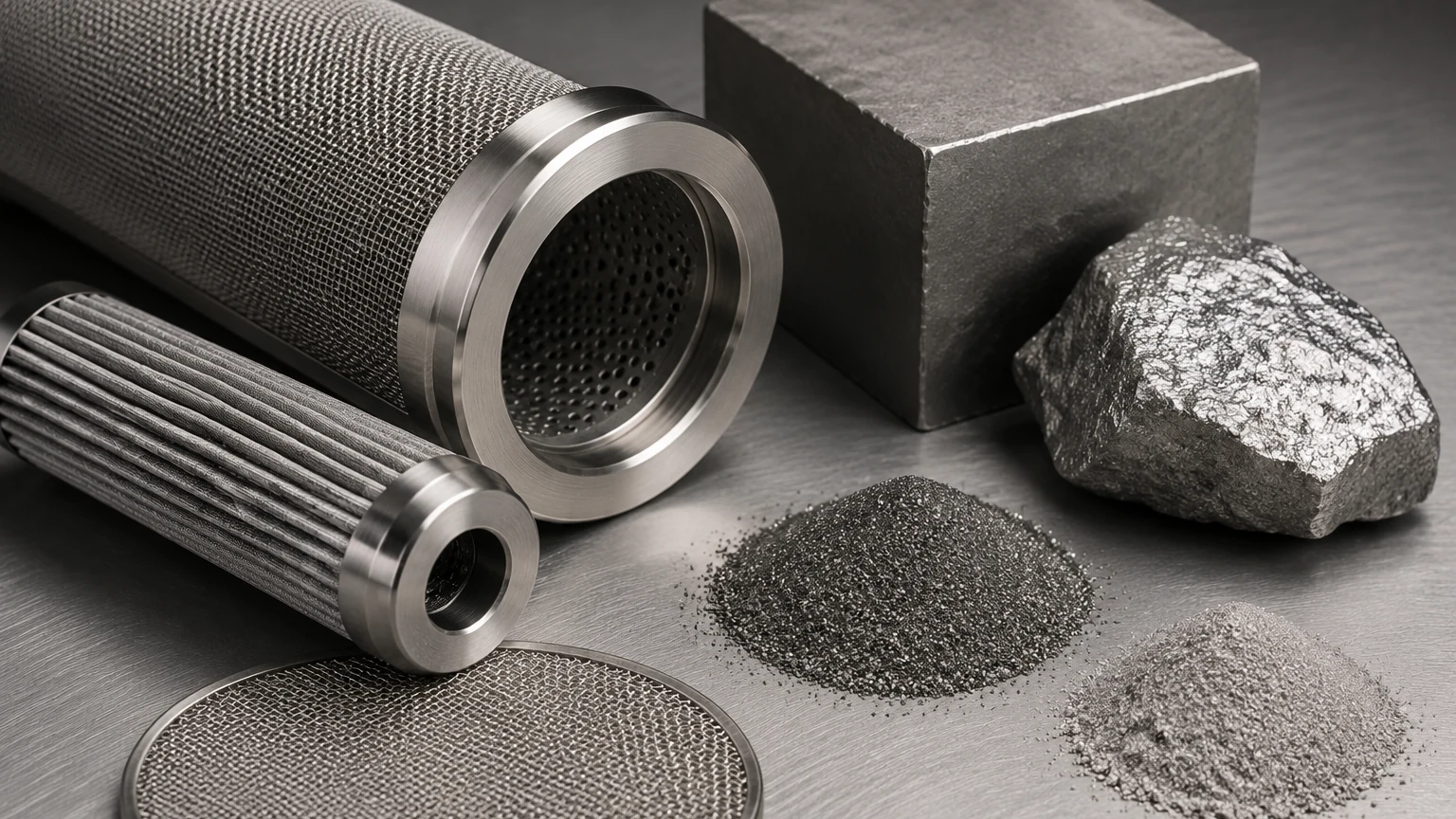
Customization and OEM Support for Filtration Systems
Every titanium purification facility has unique requirements based on its specific process flow and production volume. Off-the-shelf filtration solutions rarely provide the optimal balance of performance and longevity required for these demanding environments.
Customization options typically include:
- Bespoke Geometry: Designing filter elements that fit into existing housings to minimize downtime during upgrades.
- Alloy Selection: Utilizing specialized alloys for extreme chemical resistance beyond standard 316L stainless steel.
- Multi-Stage Media: Combining different layers of wire mesh to provide both pre-filtration and fine-polishing in a single element.
By working with a manufacturer that understands the rigors of industrial filtration, engineers can develop OEM components that are tailored to the specific pressures, temperatures, and chemical compositions of their purification lines. This collaborative approach ensures that the filtration system supports the overall goal of achieving the highest possible titanium purity.
Technical Checklist for Selecting Purification Filters
Before finalizing a filtration specification for titanium-related processes, technical teams should confirm the following data points:
1. Operating Temperature: Will the filter be exposed to the high heat of a reduction furnace or the cryogenic temperatures of gas storage?
2. Chemical Composition: What is the exact concentration of chlorides or other reactive agents in the stream?
3. Maximum Allowable Pressure Drop (ΔP): At what point must the process be halted for filter cleaning or replacement?
4. Cleaning Protocols: Is the filter intended to be a single-use component, or must it withstand ultrasonic cleaning or back-pulsing for reuse?
5. Certification Requirements: Does the application require specific material certifications (e.g., 3.1 material certificates) to ensure traceability and purity of the filter media itself?
Conclusion: Optimizing the Purification Path
Titanium purification is a high-stakes endeavor where the margin for error is exceptionally slim. The integration of high-performance filtration systems is not just a secondary consideration but a core component of the purification strategy. By utilizing precision-engineered stainless steel and wire mesh solutions, manufacturers can protect the integrity of the titanium, reduce waste caused by contamination, and ensure that the final alloy meets the stringent standards of the modern industrial landscape.
For those seeking to optimize their filtration stages, reviewing the technical capabilities and product ranges available on the Main Page of a dedicated filtration manufacturer is a vital step in the engineering process. Selecting a partner with expertise in custom OEM solutions allows for the development of filtration components that can handle the unique challenges of titanium purification, from chemical resistance to high-pressure stability.
