


Auto Self Cleaning Filter
In modern industrial processes, the demand for continuous operation and minimal downtime has driven the evolution of filtration technology toward automation. An auto self cleaning filter represents a critical component in fluid management systems, designed to remove suspended solids from liquids without interrupting the flow or requiring manual intervention. For engineers and facility managers, understanding the technical nuances of these systems is essential for optimizing process efficiency, protecting downstream equipment, and managing long-term operational costs.
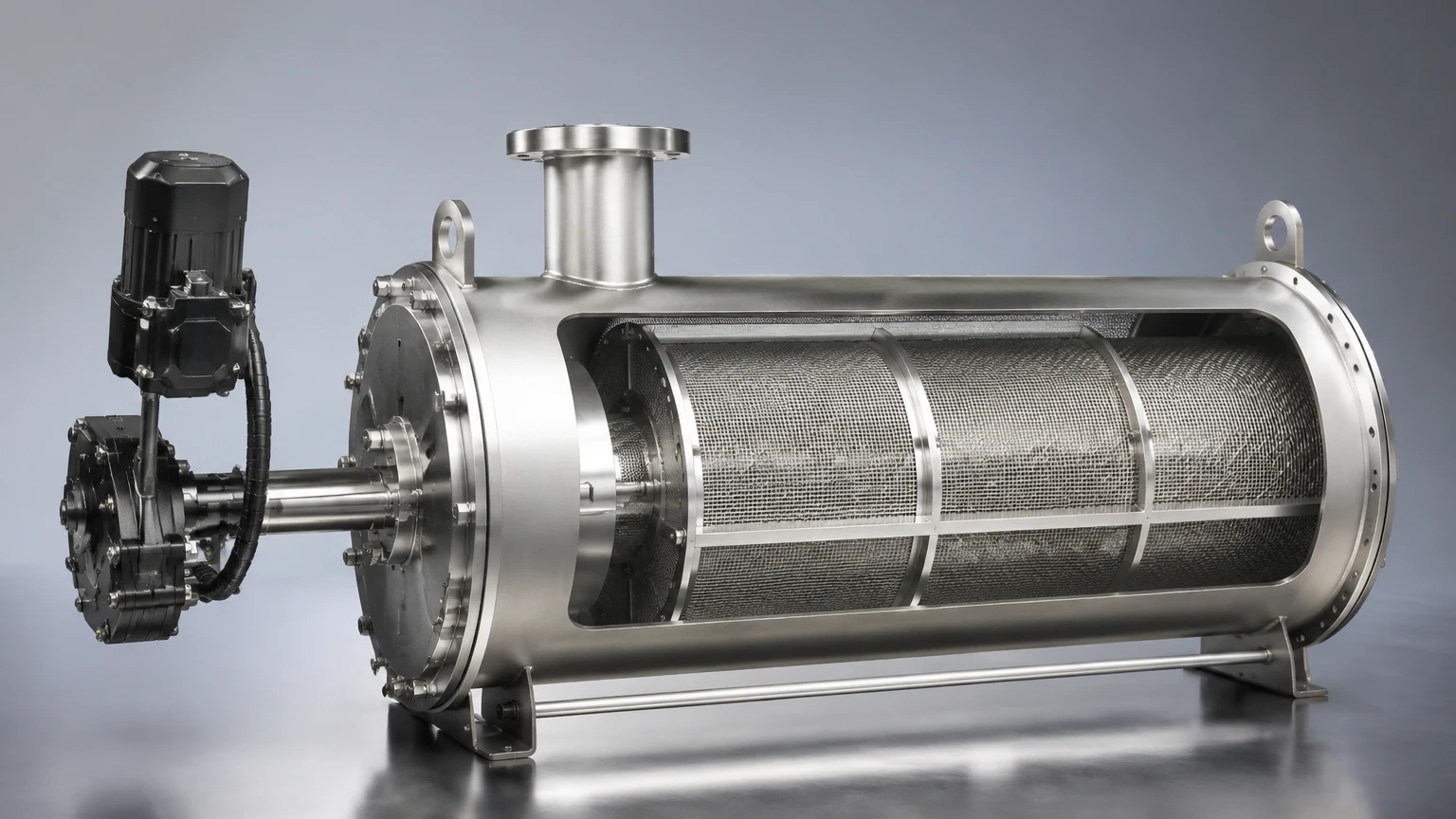
At its core, an automatic self-cleaning system is an integrated filtration unit that utilizes a cleaning mechanism—typically triggered by differential pressure or a timed interval—to clear accumulated debris from the filter element. This capability is particularly vital in industries such as chemical processing, water treatment, and food production, where high-volume throughput and strict purity standards are mandatory.
Understanding the Mechanics of Automatic Self-Cleaning Filtration
The primary advantage of an auto self cleaning filter is its ability to maintain a consistent flow rate while handling varying levels of contaminant loading. Unlike manual strainers or bag filters that require the system to be shut down for element replacement or cleaning, these automated units operate on a continuous loop.
The Cleaning Cycle Trigger
As fluid passes through the internal filter element—often a precision-engineered stainless steel mesh—solids are trapped on the inner surface. This accumulation creates a flow restriction, leading to a rise in differential pressure ($ΔP$) between the inlet and the outlet. Sensors monitor this pressure drop; once it reaches a pre-set threshold (commonly between 0.5 to 1.0 bar), the control system initiates the cleaning cycle. Alternatively, cycles can be programmed to occur at specific time intervals to ensure the mesh remains clear even during low-loading periods.
Common Cleaning Mechanisms
There are several mechanical approaches to self-cleaning, each suited to specific types of contaminants:
1. Suction Scanning: A scanner with nozzles moves spirally across the screen surface. A flush valve opens to the atmosphere, creating a high-velocity suction effect at the nozzle tips that vacuums the debris off the screen and out through the waste line.
2. Mechanical Brushing: Internal brushes rotate against the filter element, physically dislodging particles. This is highly effective for sticky or fibrous materials that might adhere to the mesh.
3. Scraper Systems: A blade or scraper moves vertically or rotationally along the element surface, pushing solids toward a collection chamber at the bottom of the housing for periodic purging.
4. Backwashing: A portion of the filtered fluid is reversed through a section of the filter media to blow out trapped particles. This is often used in multi-element systems where one element can be cleaned while others remain in service.
Material Engineering: Why Stainless Steel is the Standard
In the production of high-performance filtration components, material selection is the most significant factor influencing durability and chemical compatibility. For an auto self cleaning filter, stainless steel is the preferred material due to its structural integrity and resistance to corrosion.
SS304 vs. SS316L
Most industrial filter housings and internal elements are constructed from either Grade 304 or Grade 316L stainless steel. While SS304 provides excellent service in general water applications and mild industrial environments, SS316L is required for more aggressive conditions. The addition of molybdenum in 316L enhances resistance to pitting and crevice corrosion, particularly in chloride-rich environments or high-temperature chemical processing. For pharmaceutical and food-grade applications, the low carbon content of 316L also prevents carbide precipitation during welding, ensuring the longevity of the filter’s structural joints.
Wedge Wire vs. Woven Wire Mesh
The internal filter element often utilizes either wedge wire or multi-layered woven wire mesh. Wedge wire, characterized by its V-shaped profile, is exceptionally robust and resistant to clogging because it only has two contact points with the particles. Woven wire mesh, on the other hand, offers higher filtration accuracy (down to sub-micron levels) and a larger open area, which is beneficial for high-flow applications with fine particulate matter.
Technical Selection Criteria for Industrial Applications
Selecting the correct auto self cleaning filter requires a detailed analysis of the process fluid and the desired outcome. Engineers should evaluate the following parameters before finalizing a specification:
Filtration Accuracy (Micron Rating)
The micron rating defines the size of particles the filter is intended to remove. It is important to distinguish between nominal and absolute ratings. A nominal rating refers to the ability to retain a majority of particles at a certain size, while an absolute rating indicates the size at which 99.9% of particles are captured. Over-specifying (choosing a micron rating much smaller than necessary) can lead to frequent cleaning cycles and increased wear on the cleaning mechanism.
Flow Rate and Pressure Drop
The system must be sized to handle the maximum expected flow rate without exceeding the recommended initial pressure drop. A high initial $ΔP$ reduces the available "headroom" for contaminant loading, leading to inefficient operation. Factors such as fluid viscosity and the concentration of solids significantly impact these calculations.
Nature of Contaminants
Are the solids hard, soft, fibrous, or gelatinous? Hard, sand-like particles are easily handled by suction scanners, whereas organic matter or oils may require a mechanical scraper or brush system to prevent the mesh from blinding. Understanding the particle size distribution (PSD) allows for the selection of an element that balances throughput with capture efficiency.
For those seeking specific configurations or technical data on filter elements, it is advisable to Review product options and application support on our Main Page to ensure the selected components align with the intended industrial environment.
Operational Efficiency and Maintenance Considerations
While the "self-cleaning" aspect implies a hands-off approach, the long-term reliability of an auto self cleaning filter depends on proper installation and periodic oversight. Maintenance teams should focus on the following areas to ensure a low total cost of ownership (TCO):
Seal and Gasket Integrity
The moving parts within a self-cleaning filter—such as the scanner shafts or brush rotors—rely on high-quality seals to prevent bypass or external leakage. In chemical applications, these seals must be compatible with the process fluid (e.g., Viton, EPDM, or PTFE). Regular inspection of these seals prevents unexpected downtime.
Waste Discharge Management
The cleaning cycle generates a concentrated waste stream (the flush). Engineers must account for the volume of this discharge and how it will be treated or disposed of. Optimizing the flush duration can minimize the loss of process fluid while still ensuring the filter element is thoroughly cleaned.
Replacement Cycles
Although the stainless steel elements in an auto self cleaning filter are designed for longevity, they are subject to mechanical fatigue and abrasive wear over years of service. Establishing a baseline for cleaning frequency allows operators to detect when an element is reaching the end of its functional life—usually indicated by a rapid return to high differential pressure immediately after a cleaning cycle.
Customization and OEM Integration in Filtration Systems
In many industrial setups, a standard off-the-shelf filter may not meet the spatial or technical requirements of the facility. Customization is often necessary to integrate the filtration unit into existing piping or to meet specific industry certifications (such as ASME Section VIII or PED).
Tailored Housing Designs
Custom housings can be engineered to accommodate specific inlet/outlet orientations, such as inline, offset, or right-angle configurations. This is particularly useful in hydraulic systems or compact chemical skids where space is at a premium.
Precision Component Manufacturing
For OEM manufacturers building larger systems, the ability to source custom-sized filter cartridges and precision metal components is vital. This includes varying the length, diameter, and end-cap styles of the filter elements to fit proprietary designs. By focusing on precision manufacturing, Kaifil provides the foundational components that allow these automated systems to perform reliably under high-pressure and high-temperature conditions.
Evaluating Performance Expectations and Filtration Accuracy
When implementing an auto self cleaning filter, the performance expectation should be centered on "process stability." A well-specified filter does more than just remove dirt; it stabilizes the pressure and flow characteristics of the entire downstream line.
In cooling water applications, for example, the primary goal is to protect heat exchangers from scaling and fouling. By maintaining a constant removal of micro-solids, the heat transfer efficiency remains high, and the frequency of chemical descaling is reduced. In the pharmaceutical sector, the focus shifts to absolute retention and the prevention of batch contamination, necessitating elements with highly controlled pore structures.
Total Cost Considerations
The initial capital expenditure (CAPEX) for an automated system is higher than that of a manual strainer. However, the operational expenditure (OPEX) is significantly lower when factoring in:
* Labor Savings: No manual cleaning or element replacement.
* Increased Production: No downtime for filter maintenance.
* Reduced Waste: Lower consumption of disposable filter bags or cartridges.
* Equipment Protection: Extended life for pumps, nozzles, and valves downstream.
Conclusion
The transition to an auto self cleaning filter is a strategic investment in industrial reliability. By automating the removal of contaminants and utilizing durable stainless steel components, facilities can achieve a level of process consistency that manual systems cannot match. Whether the application involves high-viscosity chemicals, high-temperature fluids, or sensitive food-grade ingredients, the success of the system hinges on precise engineering, appropriate material selection, and a clear understanding of the filtration requirements.
For technical professionals and purchasing teams, the priority should remain on sourcing components that offer both filtration accuracy and mechanical durability. By addressing the specific challenges of the application—from micron rating to housing configuration—engineers can ensure that their filtration solution provides long-term value and optimal performance in demanding industrial environments.
