


Automatic Cleaning Filter System
In modern industrial processing, the efficiency of filtration systems directly impacts operational uptime, product quality, and the lifespan of downstream equipment. As industries move toward higher levels of automation and 24/7 production cycles, the limitations of manual filtration—such as frequent downtime for cleaning, labor costs, and exposure to hazardous materials—have become increasingly apparent. The implementation of an automatic cleaning filter system represents a critical engineering shift, providing a continuous filtration solution that maintains consistent flow rates and pressure levels without requiring manual intervention.
For engineers and procurement professionals, selecting an automatic cleaning filter system requires a deep understanding of fluid dynamics, material science, and the specific mechanical triggers that initiate the cleaning cycle. These systems are designed to handle high-solid loads and varying flow conditions, making them indispensable in sectors ranging from chemical processing to large-scale water treatment.
Understanding the Role of Automatic Cleaning Filter Systems in Industrial Processes
An automatic cleaning filter system is an integrated filtration unit designed to remove suspended solids from liquids while simultaneously cleaning the filter element in situ. Unlike traditional bag or cartridge filters that must be taken offline and opened for replacement, these systems use mechanical or hydraulic mechanisms to clear debris from the filter surface while the process remains online.
The primary objective of these systems is to manage the "filter cake"—the layer of accumulated particles on the mesh or wedge wire element. While a thin layer of cake can sometimes improve filtration efficiency, excessive buildup leads to a rise in differential pressure (DP). An automatic system monitors this DP and initiates a cleaning cycle once a specific threshold is reached. This ensures that the system operates within its designed hydraulic parameters, preventing pump strain and maintaining a steady output.
From a B2B perspective, the transition to automated filtration is often driven by the need to reduce the Total Cost of Ownership (TCO). While the initial capital expenditure for an automatic system is higher than for manual housings, the reduction in consumable costs (such as bags and cartridges) and the elimination of labor-intensive maintenance cycles often result in a rapid return on investment (ROI).
Core Mechanisms of Self-Cleaning Filtration
There are several mechanical approaches to self-cleaning, each suited to different types of contaminants and fluid viscosities. Understanding these mechanisms is essential for matching the system to the application.
Mechanical Scraper Systems
In a scraper-based automatic cleaning filter system, a physical blade or brush moves across the surface of the filter element. This is particularly effective for viscous fluids or sticky contaminants that do not easily wash away with fluid pressure. The scraper can be mounted internally or externally, and it pushes the collected solids toward a discharge chamber (sump) at the bottom of the housing. This method is common in the food and beverage industry for filtering syrups, chocolate, or oils, as well as in the paint and coating industry.
Backwash Systems
Backwashing systems utilize a reversal of flow to dislodge particles from the filter media. When the cleaning cycle is triggered, a small portion of the filtered fluid (or an external clean fluid source) is directed backward through the filter element. This high-velocity reverse flow lifts the particles out of the mesh or wedge wire pores and flushes them out through a drain valve. Backwash systems are highly effective for granular particles and are widely used in water treatment and cooling tower applications.
Suction Scanning
Suction scanning is a sophisticated form of backwashing. A nozzle scans the interior surface of the filter screen, creating a localized high-velocity vacuum effect. This pulls the debris off the screen and into the waste stream. The advantage of suction scanning is that it uses a very small volume of flush water compared to traditional backwashing, making it ideal for applications where water conservation or waste volume is a concern.
Engineering Considerations for Stainless Steel Filter Components
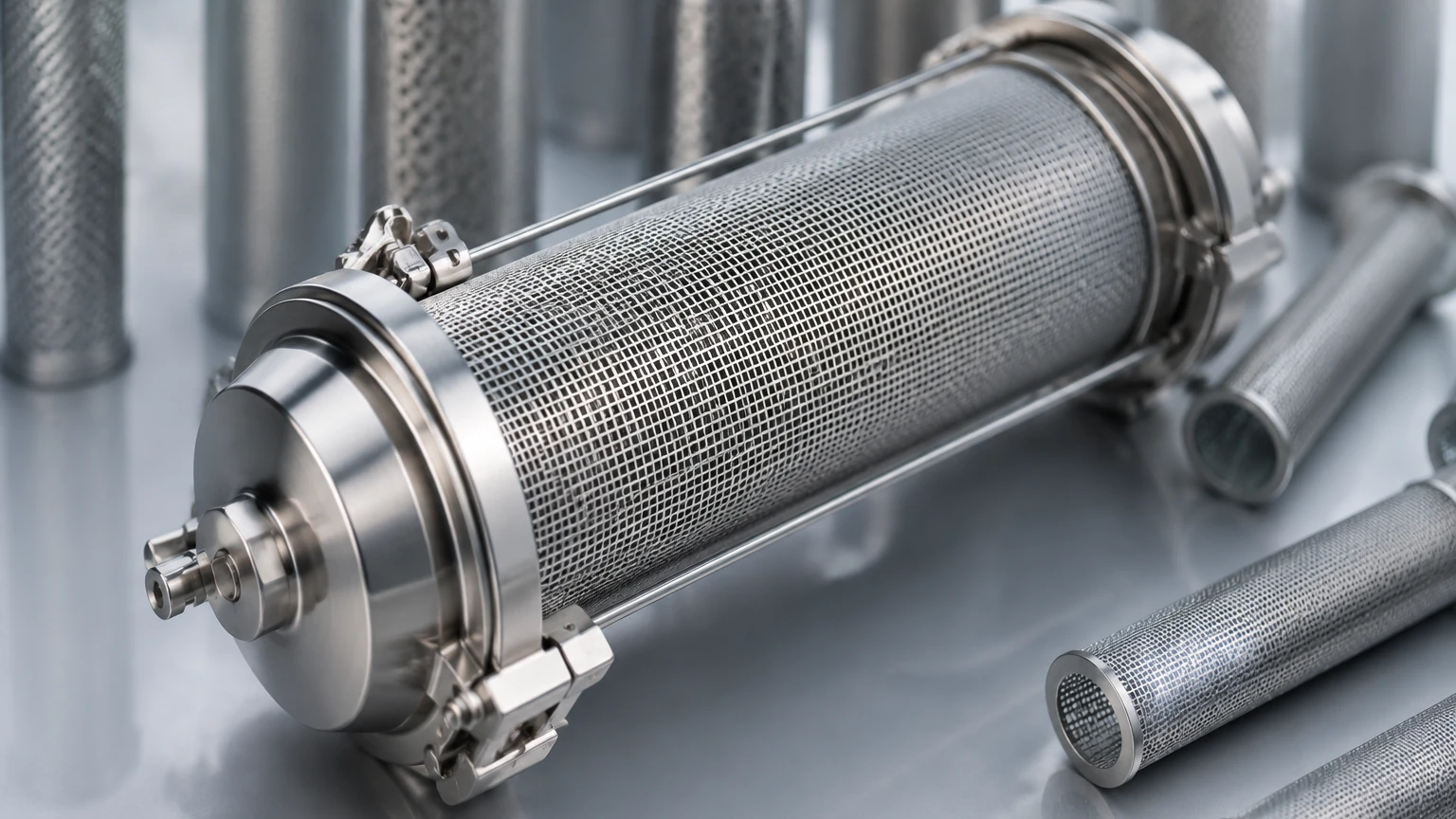
The heart of any automatic cleaning filter system is the filter element itself. At Kaifil, the focus is on precision-engineered stainless steel components that can withstand the mechanical stresses of automated cleaning cycles. When specifying a system, the choice of material and construction type is paramount.
Material Selection: 304 vs. 316L Stainless Steel
Stainless steel is the industry standard for automated filtration due to its corrosion resistance and structural integrity. Grade 304 is suitable for general industrial water and non-corrosive chemicals. However, for pharmaceutical, food-grade, or high-chloride environments (such as seawater or brine), 316L stainless steel is required. The "L" denotes low carbon, which provides better weldability and resistance to intergranular corrosion, ensuring the filter element does not fail prematurely under cyclic loading.
Wedge Wire vs. Perforated Mesh
For many automatic systems, wedge wire (V-wire) is the preferred media. The V-shaped profile of the wire creates a slot that widens inwardly, which significantly reduces the risk of "plugging" or "blinding." Particles that pass the initial gap are unlikely to get stuck further in. For finer filtration requirements, multi-layer sintered wire mesh provides a high degree of precision and mechanical strength, allowing for filtration down to the single-digit micron range while remaining rigid enough to be scraped or backwashed.
Critical Performance Parameters: Accuracy, Flow, and Pressure Drop
When evaluating an automatic cleaning filter system, engineers must look beyond the micron rating. The interaction between flow rate, viscosity, and particle load determines the frequency of the cleaning cycle and the overall efficiency of the plant.
1. Filtration Accuracy (Micron Rating): This defines the smallest particle size the system is intended to capture. It is vital to distinguish between nominal and absolute ratings. In automated systems, selecting a micron rating that is too fine for the application can lead to "short-cycling," where the filter cleans itself so frequently that it consumes excessive power or flush fluid.
2. Flow Rate and Velocity: The system must be sized to handle the peak flow rate of the process. If the velocity through the filter media is too high, particles may be forced through the pores (deforming them) or become deeply embedded, making the self-cleaning mechanism less effective.
3. Differential Pressure (DP) Triggers: Most systems are controlled by a PLC (Programmable Logic Controller) that monitors the pressure difference between the inlet and outlet. Setting the DP trigger point requires a balance: too low, and you clean unnecessarily; too high, and you risk damaging the filter element or starving downstream processes.
Application-Specific Selection: Chemical, Food, and Water Treatment
The operational environment dictates the design features of the automatic cleaning filter system.
* Chemical Processing: Systems must be designed for chemical compatibility, often requiring specialized seals (such as Viton or PTFE) and high-pressure housings. The ability to handle hazardous fluids in a closed-loop system without exposing operators to the process fluid is a major safety advantage.
* Food and Beverage: Sanitary design is the priority here. The system must be free of "dead legs" where bacteria can grow and must be compatible with Clean-in-Place (CIP) protocols. Stainless steel surfaces are often polished to a specific Ra (Roughness Average) to prevent organic buildup.
* Industrial Water Treatment: Whether it is pre-filtration for Reverse Osmosis (RO) membranes or treating cooling tower water, these systems must handle large volumes of water with varying turbidity. The robustness of the automatic cleaning filter system ensures that downstream membranes are protected from large particulate matter, extending their service life.
Total Cost of Ownership and Maintenance Cycles
While the automation reduces daily labor, these systems are not "maintenance-free." A proactive maintenance strategy is required to ensure long-term reliability. The TCO of an automatic cleaning filter system includes:
* Power Consumption: The motors and actuators that drive the cleaning mechanism.
* Flush Loss: The volume of process fluid or water lost during the backwash or purge cycle. Highly efficient systems minimize this loss.
* Wear Parts: In scraper systems, the blades or brushes are sacrificial components that will eventually require replacement. In backwash systems, the seals and valves are the primary wear points.
By choosing high-quality components from a manufacturer like Kaifil, companies can extend the intervals between these maintenance events. Durable stainless steel elements resist deformation, ensuring that the scraper or backwash nozzle maintains a consistent distance from the filter surface over thousands of cycles.
Technical Checklist: What to Confirm Before Implementation
Before finalizing a purchase or design for an automatic cleaning filter system, technical teams should confirm the following data points with their supplier:
* Fluid Characteristics: Viscosity at operating temperature, density, and chemical compatibility.
* Contaminant Profile: Particle size distribution (PSD), concentration (PPM or mg/L), and the nature of the solids (e.g., hard, fibrous, or gelatinous).
* Operating Pressure: Both minimum and maximum operating pressures. Some backwash systems require a minimum pressure to function effectively.
* Cleaning Trigger Logic: Will the system clean based on time, differential pressure, or both?
* Integration Requirements: Does the system need to communicate with a central SCADA or DCS via Modbus, Profibus, or simple analog signals?
Selecting the right filtration solution involves more than just picking a part number. It requires a partnership with a manufacturer that understands the nuances of custom metal filtration. For more detailed technical specifications and to explore custom engineering options, professionals are encouraged to Main Page to review product options and application support.
Conclusion
The implementation of an automatic cleaning filter system is a strategic investment in process stability. By automating the removal of contaminants, industrial facilities can achieve consistent product quality and protect expensive downstream equipment from damage. Whether utilizing a mechanical scraper or a high-velocity backwash, the success of the system relies on the quality of the filter media and the precision of the engineering behind the cleaning mechanism. As industrial requirements become more demanding, the role of durable, stainless steel-based automated filtration will only continue to grow, providing the reliability needed for modern manufacturing.
