


Backwash Filtration
In industrial liquid processing, the transition from manual, batch-based filtration to automated, continuous systems represents a significant leap in operational efficiency. Central to this evolution is backwash filtration, a mechanical process designed to remove accumulated solids from a filter medium without interrupting the primary flow of the system. For engineers and procurement teams managing chemical processing, water treatment, or hydraulic systems, understanding the technical nuances of backwash filtration is essential for optimizing system uptime and reducing the total cost of ownership (TCO).
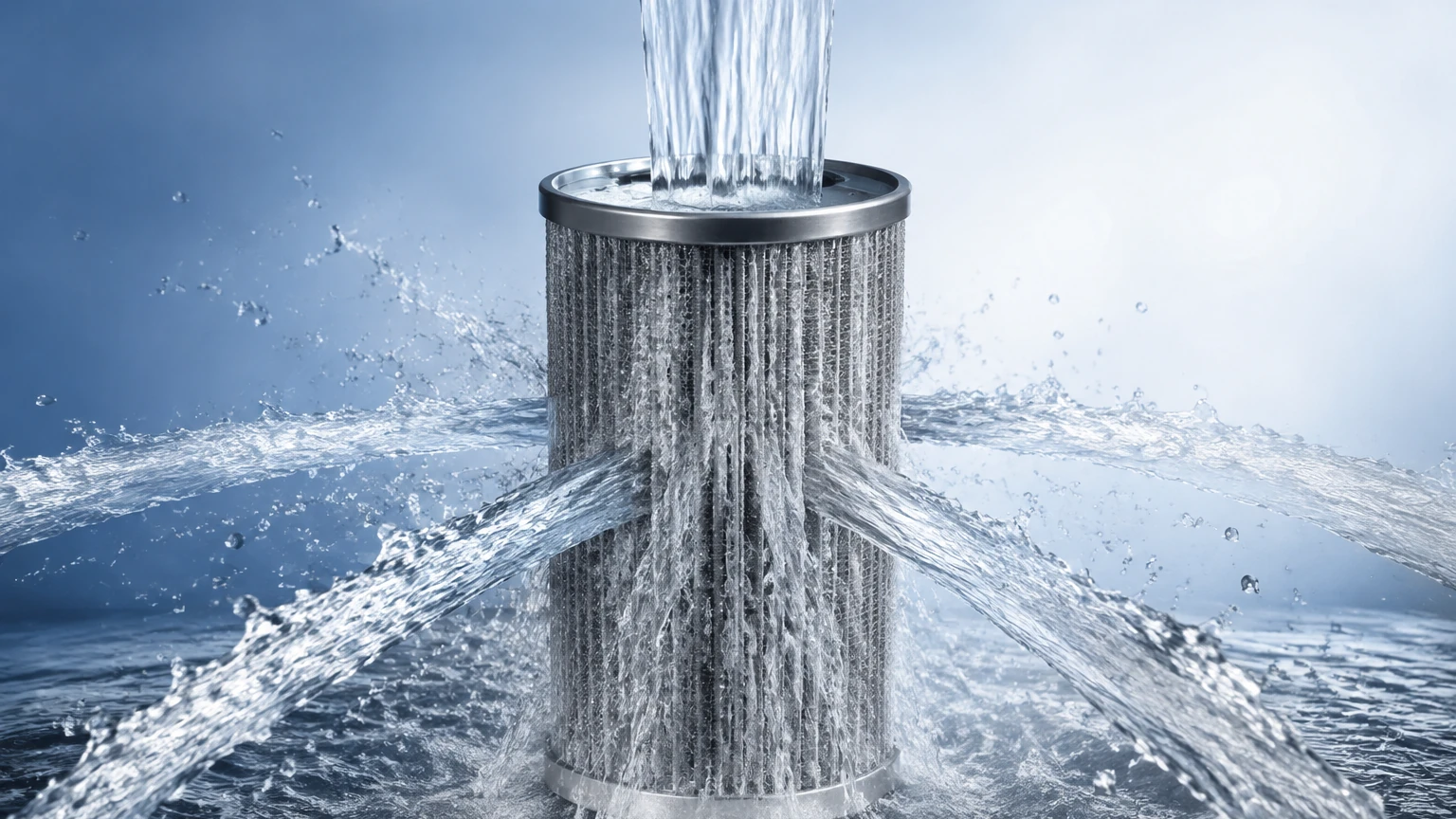
Backwash filtration relies on the principle of reversing the flow of fluid—either the filtrate itself or an external cleaning agent—to dislodge particles trapped on the surface or within the pores of the filter element. Unlike disposable cartridge systems that require manual replacement and system downtime, backwashable systems utilize durable media, typically stainless steel wire mesh or sintered metal, to provide a long-term, sustainable filtration solution.
The Engineering Principles of Backwash Filtration
The effectiveness of a backwash filtration system is governed by the relationship between the filter medium, the particle characteristics, and the hydraulic forces applied during the cleaning cycle. When a process fluid passes through a stainless steel filter element, solids begin to accumulate, forming a "filter cake." This cake initially improves filtration efficiency by acting as an additional layer of depth filtration, but it also increases the differential pressure (ΔP) across the element.
Pressure Differential and Triggering Mechanisms
In a standard industrial setup, sensors monitor the pressure at the inlet and outlet of the filter housing. As the filter cake thickens, the resistance to flow increases, causing the ΔP to rise. Once a pre-set threshold is reached—typically determined by the structural integrity of the filter element and the requirements of the downstream equipment—the backwash cycle is initiated.
This cycle can be triggered in three ways:
1. Differential Pressure: The most common method, ensuring cleaning only occurs when necessary.
2. Timed Intervals: Used in applications with extremely consistent particle loading.
3. Manual Override: Allows operators to initiate cleaning during scheduled maintenance or system flushes.
Fluid Dynamics During Backwashing
During the backwash phase, a valve configuration redirects a portion of the clean filtrate or an external fluid (such as compressed air or clean water) in the opposite direction of the normal flow. This reverse flow creates a pressure gradient that lifts the accumulated solids off the mesh surface. For precision metal filter components, the velocity of this reverse flow must be sufficient to overcome the adhesive forces of the particles without exceeding the mechanical limits of the wire mesh weave.
Media Selection: Why Stainless Steel is Standard
For backwash filtration to be viable, the filter medium must be capable of withstanding repeated cycles of reverse pressure and mechanical stress. This is why stainless steel, specifically grades 304 and 316L, is the industry standard for these applications.
Durability and Mechanical Strength
Disposable media, such as polypropylene or cellulose, are generally unsuitable for backwash systems because the reverse flow can cause the fibers to migrate or the structure to collapse. In contrast, stainless steel wire mesh filters offer high mechanical strength. When properly engineered, these elements maintain their pore geometry even under significant backpressure. Sintered metal filters, where multiple layers of mesh are thermally bonded, provide even greater structural rigidity, making them ideal for high-pressure hydraulic and chemical applications.
Corrosion and Temperature Resistance
Industrial processes often involve aggressive chemicals or extreme temperatures that would degrade synthetic materials. Stainless steel 316L provides excellent resistance to pitting and crevice corrosion, particularly in chloride-rich environments or pharmaceutical processing. Furthermore, these metal components can operate at temperatures far exceeding the melting points of polymer filters, allowing for the filtration of hot resins, oils, and steam.
Key Evaluation Criteria for Engineers
When specifying a system for backwash filtration, engineers must move beyond simple micron ratings. Several technical factors influence the long-term reliability of the system.
Particle Morphology and Adhesion
Not all solids are easily removed by backwashing. Spherical, hard particles are generally the easiest to dislodge. In contrast, fibrous or "sticky" biological solids may adhere to the wire mesh, requiring specialized coatings or ultrasonic cleaning assist. Understanding the nature of the contaminant is the first step in determining if backwash filtration is the correct choice or if a different mechanical cleaning method, such as a scraper-style filter, is required.
Flux Rate and Surface Area
Flux rate refers to the volume of fluid passing through a given area of filter media over time (typically measured in GPM/ft²). In backwashable systems, maintaining a low flux rate is often beneficial. Lower flux rates reduce the depth to which particles are driven into the mesh, making the backwash cycle more effective. To achieve this without sacrificing throughput, engineers often specify pleated stainless steel cartridges, which significantly increase the available surface area within a compact housing.
Backwash Fluid Volume
One often-overlooked factor is the volume of fluid lost during the backwash cycle. In applications involving expensive chemicals or treated water, minimizing the "reject rate" is a priority. High-efficiency backwash designs use localized cleaning nozzles or high-velocity bursts to clean the media while using the minimum amount of fluid possible.
Customization and OEM Considerations
Every industrial facility has unique spatial and operational constraints. Off-the-shelf filtration units often fail to meet the specific requirements of complex systems. This is where customized filtration solutions become necessary.
For OEM applications, engineers should confirm the following with their manufacturer:
* Custom Dimensions: Ensuring the filter element fits existing housings or specialized machinery.
* End Cap Configurations: Selection of NPT, flange, or specialized O-ring seals to prevent bypass.
* Alloy Specification: Moving to exotic alloys like Monel or Hastelloy for highly corrosive environments where even 316L stainless steel may fail.
* Micron Precision: Tailoring the weave pattern (e.g., Plain, Twill, or Dutch weave) to balance flow rate with filtration accuracy.
To explore the full range of custom engineering capabilities and material options, technical teams can visit the Main Page for detailed product specifications and application support.
Total Cost of Ownership (TCO) Analysis
While the initial capital expenditure (CAPEX) for a stainless steel backwash filtration system is higher than that of a disposable housing, the long-term operational expenditure (OPEX) is significantly lower.
Reduced Labor and Safety Risks
Manual filter changes require operator intervention, which carries labor costs and, in the case of hazardous chemicals, safety risks. Automated backwash systems minimize human contact with the process fluid and free up maintenance personnel for higher-value tasks.
Waste Mitigation
In modern ESG-conscious manufacturing, the disposal of contaminated filter cartridges is a growing concern and cost. Backwashable filters eliminate the constant stream of solid waste. The concentrated backwash sludge is often easier to treat or recover than thousands of spent polymer cartridges.
Longevity of Media
A high-quality stainless steel filter element, when operated within its design parameters and cleaned correctly, can last for several years. This longevity provides a predictable cost structure and eliminates the supply chain risks associated with the constant procurement of disposable filters.
Common Risks and Mitigation Strategies
Despite the benefits, backwash filtration is not a "set and forget" solution. Engineers should be aware of potential failure modes:
1. Media Blinding: If the backwash pressure is insufficient or the particles are too adhesive, the media may eventually "blind," where particles become permanently lodged in the pores. Regular inspection and secondary chemical cleaning protocols can mitigate this risk.
2. Mechanical Fatigue: Repeated pressure cycling can eventually lead to fatigue cracks in the wire mesh. Selecting sintered media or reinforced support structures is essential for high-frequency backwash applications.
3. Bypass Leakage: If the seals or end caps are not precision-machined, contaminated fluid can bypass the filter media entirely. Utilizing custom-manufactured components with strict tolerances ensures system integrity.
Conclusion
Backwash filtration is a cornerstone of modern industrial fluid management, offering a balance of precision, durability, and automation. By selecting the appropriate stainless steel media and engineering the system to handle specific particle loads and hydraulic conditions, facilities can achieve continuous operation with minimal environmental impact.
For engineers ready to move beyond standard filtration limitations, the focus should remain on material quality and customized design. For further technical resources on precision metal filter components and custom industrial solutions, please refer to the Main Page to review product options and application support.
