


Bag Filter Manufacturer
In industrial liquid filtration, the selection of a bag filter manufacturer is a critical decision that influences process efficiency, product purity, and long-term operational costs. Bag filtration systems are favored across industries—ranging from chemical processing and pharmaceuticals to food and beverage production—due to their high flow capacity, ease of maintenance, and cost-effectiveness. However, the performance of these systems is heavily dependent on the engineering precision of the filter housing, the durability of the support baskets, and the material integrity of the filter media.
For engineers and procurement professionals, evaluating a manufacturer requires a technical understanding of how filtration components interact with specific process variables. This guide examines the engineering considerations, material science, and selection criteria necessary to identify a reliable manufacturing partner for industrial filtration solutions.
Engineering Fundamentals of Industrial Bag Filtration
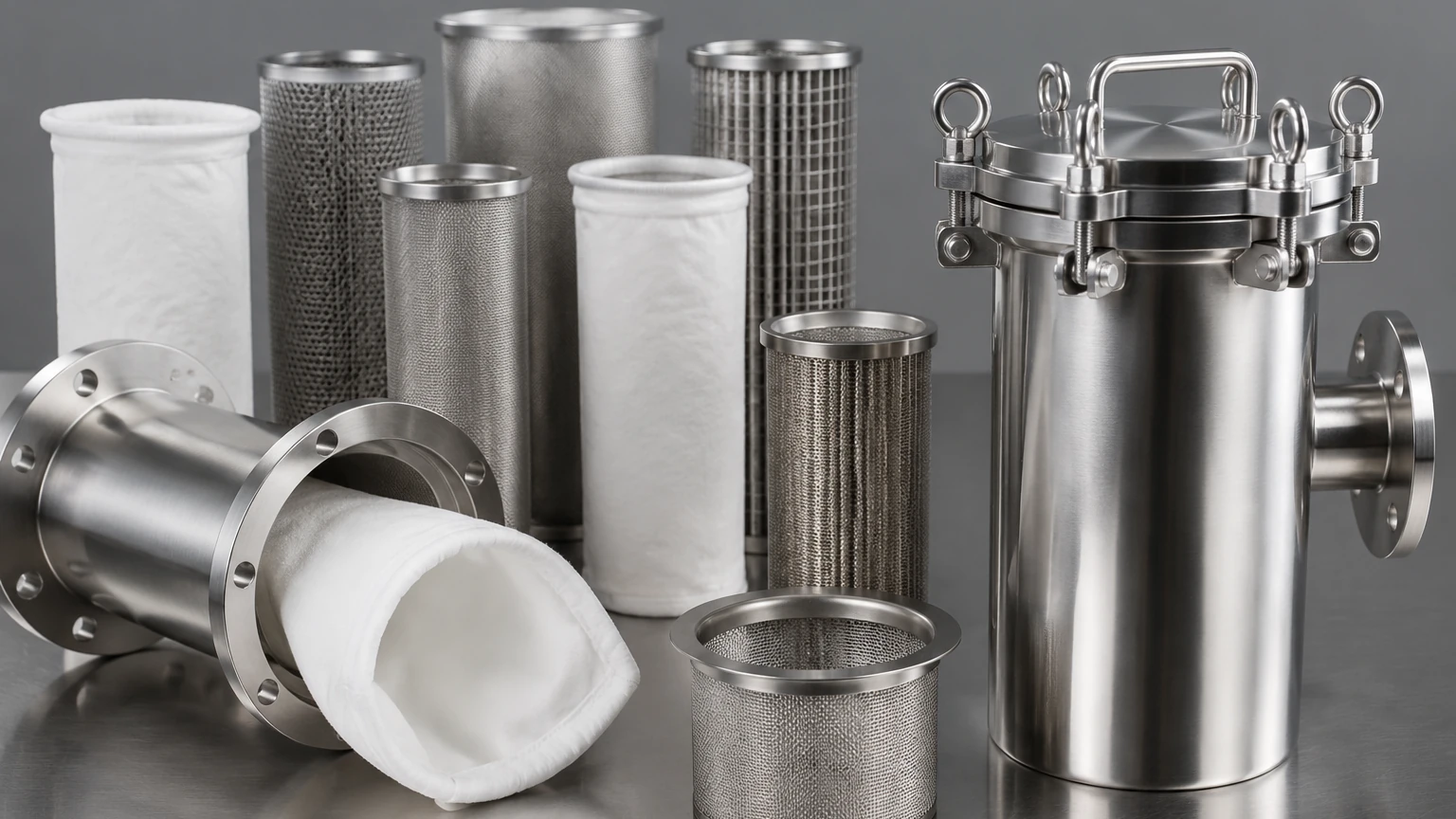
At its core, a bag filtration system consists of three primary components: a pressure vessel (the housing), a perforated support basket, and the filter bag itself. The fluid enters the housing from the top or side, passes through the filter bag from the inside out, and exits through the bottom or side outlet. Solids are trapped within the bag, making disposal or cleaning straightforward.
A professional bag filter manufacturer must address several mechanical variables to ensure the system operates within safety and performance parameters:
1. Pressure Ratings: Standard industrial housings are typically designed to withstand pressures of 100 to 150 PSI, though high-pressure applications may require custom-engineered vessels. Manufacturers should provide ASME-certified designs where necessary.
2. Flow Dynamics: The internal geometry of the housing must minimize turbulence and pressure drop. Proper inlet and outlet sizing is essential to maintain the desired flow rate without exceeding the maximum differential pressure ($ΔP$) of the filter media.
3. Sealing Integrity: To prevent bypass—where unfiltered fluid escapes around the edge of the bag—the manufacturer must utilize high-quality sealing mechanisms. This includes precision-machined flanges, O-rings (Viton, EPDM, or Buna-N), and heavy-duty hold-down devices.
Material Selection and Chemical Compatibility
The choice of material is perhaps the most significant factor in filter longevity. A manufacturer specializing in stainless steel solutions, such as Kaifil, offers distinct advantages for demanding environments. While synthetic bags (polypropylene or polyester) are common for single-use applications, stainless steel wire mesh filters provide superior performance in specific scenarios.
Stainless Steel (304 and 316L)
Stainless steel is the industry standard for corrosive environments, high-temperature processes, and applications requiring high mechanical strength.
* 304 Stainless Steel: Suitable for general industrial use, offering good resistance to oxidation and many organic chemicals.
* 316L Stainless Steel: Contains molybdenum, providing enhanced resistance to chlorides and pitting. It is the preferred choice for pharmaceutical and marine applications where hygiene and corrosion resistance are paramount.
Synthetic Media vs. Metal Mesh
When consulting a bag filter manufacturer, engineers must decide between disposable synthetic bags and cleanable metal mesh bags. Synthetic media are often chosen for low-cost, fine filtration (down to 1 micron). However, for high-viscosity fluids or processes operating above 200°F, stainless steel mesh is often the only viable option. Metal filters can be backwashed or ultrasonically cleaned, significantly reducing the waste stream and long-term consumable costs.
Evaluating Manufacturer Capabilities and Quality Standards
Not all manufacturers operate to the same technical standards. When vetting a partner, it is essential to look beyond the product catalog and assess their manufacturing infrastructure. A reliable manufacturer should demonstrate expertise in the following areas:
Precision Welding and Fabrication
For stainless steel filter housings and support baskets, the quality of the welds is a primary indicator of durability. TIG (Tungsten Inert Gas) welding is preferred for its precision and clean finish, which is vital in food-grade or pharmaceutical applications to prevent bacterial growth in crevices.
Customization and OEM Support
Off-the-shelf solutions rarely meet the exact needs of complex industrial systems. A manufacturer with robust OEM capabilities can modify port sizes, adjust housing heights, or design custom internal support structures to accommodate non-standard flow rates or space constraints. This engineering flexibility is a hallmark of a high-tier Main Page partner that understands the nuances of industrial integration.
Quality Assurance (QA) Protocols
Inquire about the manufacturer’s testing procedures. Do they perform hydrostatic pressure tests? Is there material traceability for the alloys used? For precision filtration, the accuracy of the mesh count and the consistency of the pore size must be verified through rigorous QA standards to ensure the rated micron levels are consistently met.
The Role of Customization in Filtration Performance
Standardization in the filtration industry often revolves around "Size 1" (7" x 16") and "Size 2" (7" x 32") bags. While these standards simplify procurement, they do not always optimize performance. A technical manufacturer works with engineers to determine if a multi-bag housing or a custom-dimensioned vessel is required to achieve the optimal balance between footprint and filtration surface area.
Customization also extends to the filter media itself. For example, in hydraulic systems or high-pressure chemical dosing, a standard bag might collapse or rupture. A manufacturer can engineer reinforced support baskets or multi-layered sintered mesh bags that provide the necessary structural integrity without sacrificing permeability.
Total Cost of Ownership and Operational Efficiency
While the initial purchase price is a visible metric, the Total Cost of Ownership (TCO) is a more accurate reflection of a manufacturer's value. A low-cost housing that suffers from frequent seal failures or a poorly designed basket that causes bags to burst will quickly exceed the cost of a premium system.
Factors that contribute to a lower TCO include:
* Reduced Downtime: Quick-opening covers (such as swing-bolt or V-band clamps) allow for faster bag changes.
* Longevity of Components: Heavy-duty stainless steel baskets resist deformation under high differential pressure, extending the life of the filter bags.
* Waste Mitigation: Utilizing cleanable stainless steel filter elements reduces the environmental impact and disposal costs associated with single-use bags.
* Energy Savings: A well-engineered housing with low internal resistance requires less pump energy to maintain flow rates.
Common Risks and How to Mitigate Them
Working with an unverified bag filter manufacturer can introduce several risks into an industrial process. Understanding these risks allows engineers to implement better procurement controls.
1. Bypass Issues: If the bag does not seat perfectly within the housing, fluid will take the path of least resistance, bypassing the filter media entirely. This can lead to downstream equipment damage or product contamination. Ensure the manufacturer uses a proven compression-seal or positive-pressure seal design.
2. Material Fatigue: In systems with pulsating flows, inferior metals or thin-walled housings can develop stress cracks. Specifying higher-grade alloys and appropriate wall thicknesses is essential for system safety.
3. Inaccurate Micron Ratings: Some manufacturers use "nominal" ratings, which are often misleading. A technical partner should provide data on the "absolute" filtration efficiency of their media to ensure it meets the specific requirements of the process.
Technical Specification Checklist for Procurement
Before finalizing a contract with a bag filter manufacturer, engineering teams should confirm the following technical specifications:
* Process Fluid Properties: Chemical composition, pH level, and viscosity at operating temperature.
* Operating Conditions: Normal and maximum operating pressure, temperature range, and flow rate (GPM or m³/h).
* Contaminant Characteristics: Type of solids (hard, soft, fibrous), particle size distribution, and concentration.
* Filtration Goals: Target micron rating and allowable pressure drop ($ΔP$) across the clean filter.
* Connection Standards: Flanged (ANSI/DIN), NPT, or Tri-Clamp connections to match existing piping.
Conclusion
Selecting a bag filter manufacturer is a strategic decision that impacts the reliability of industrial operations. By focusing on engineering fundamentals, material integrity, and the ability to provide customized solutions, companies can ensure they implement a filtration system that delivers consistent performance. Manufacturers like Kaifil, who specialize in high-performance stainless steel filtration components, provide the technical expertise necessary to navigate complex application requirements, ensuring that the chosen solution is not only effective but also durable and cost-efficient over its entire service life.
