


Filtration Aquaculture
In the modern industrial aquaculture sector, the transition from traditional open-pond systems to intensive Recirculating Aquaculture Systems (RAS) has placed a critical emphasis on water quality management. Filtration aquaculture processes are the backbone of these systems, ensuring that water is continuously treated and reused to maintain an environment conducive to high-density aquatic life. For engineers and facility managers, selecting the correct filtration components is not merely a matter of clarity; it is a fundamental requirement for biological stability, pathogen control, and operational efficiency.
Industrial-scale aquaculture demands filtration solutions that can handle high flow rates, resist corrosive environments, and provide consistent micron-level precision. Stainless steel filtration components, such as those discussed on our Main Page, offer the structural integrity and chemical resistance necessary to meet these rigorous demands. This guide explores the technical considerations, material requirements, and engineering principles involved in optimizing filtration for aquaculture applications.
The Role of Mechanical Filtration in Modern Aquaculture Systems
Mechanical filtration is the first line of defense in any aquaculture water treatment loop. Its primary objective is the removal of suspended solids, including uneaten feed, excrement, and bio-floc. If these solids are not removed promptly, they break down into dissolved organic compounds, leading to elevated ammonia and nitrite levels that are toxic to fish and shrimp.
In the context of filtration aquaculture, mechanical filters are typically categorized by their ability to remove particles of specific sizes. Most intensive systems target the removal of particles larger than 30 to 50 microns. Finer filtration may be required in specialized hatchery applications or as a pre-treatment step for ultraviolet (UV) sterilization or ozone injection. The efficiency of mechanical filtration directly impacts the performance of subsequent biological filters, as excessive solid loading can clog bio-media and promote the growth of heterotrophic bacteria, which compete with nitrifying bacteria for oxygen and space.
Technical Requirements for Filtration Aquaculture Components
When specifying filters for aquaculture, engineers must evaluate several technical parameters to ensure the system can handle the biological load without frequent failures or excessive maintenance.
Micron Rating and Filtration Efficiency
The micron rating determines the smallest particle size the filter can effectively capture. In aquaculture, a balance must be struck between water clarity and flow resistance. While a 10-micron filter provides exceptional clarity, it will require more frequent cleaning and result in a higher pressure drop compared to a 60-micron screen. Woven stainless steel wire mesh is often preferred for its precise pore size distribution and high open area, which facilitates high flow rates with minimal resistance.
Flow Capacity and Surface Area
Aquaculture systems operate on continuous cycles. The filtration unit must be sized to handle the maximum flow rate of the circulation pumps without exceeding the recommended face velocity. High face velocities can force deformable organic solids through the mesh, a phenomenon known as "breakthrough," which compromises water quality. Increasing the effective surface area through pleated designs or large-diameter drum filters is a standard engineering approach to manage high volumes while maintaining low pressure drops.
Corrosion Resistance in Saline Environments
Many aquaculture operations, particularly those involving marine species, operate in highly corrosive saltwater environments. Standard carbon steels or low-grade stainless steels are prone to pitting and crevice corrosion. For long-term durability, Type 316L stainless steel is the industry standard due to its molybdenum content, which provides superior resistance to chloride-induced corrosion. In extremely high-salinity or warm-water applications, specialized alloys or surface treatments may be necessary to prevent premature component failure.
Advantages of Stainless Steel Media in Aquaculture Filtration
While polymer-based meshes are common in smaller applications, industrial filtration aquaculture relies heavily on stainless steel for several engineering reasons:
1. Structural Integrity: Unlike plastic meshes, stainless steel wire cloth does not stretch or deform under pressure. This ensures that the micron rating remains constant even during high-pressure backwashing cycles.
2. Thermal and Chemical Stability: Stainless steel can withstand high-temperature sterilization and aggressive chemical cleaning agents used to remove bio-fouling or mineral scale. This is essential for maintaining biosecurity in commercial hatcheries.
3. Longevity and Wear Resistance: The abrasive nature of some aquaculture feeds and the continuous movement in drum filters can wear down softer materials. Stainless steel provides the hardness required to resist mechanical abrasion over years of operation.
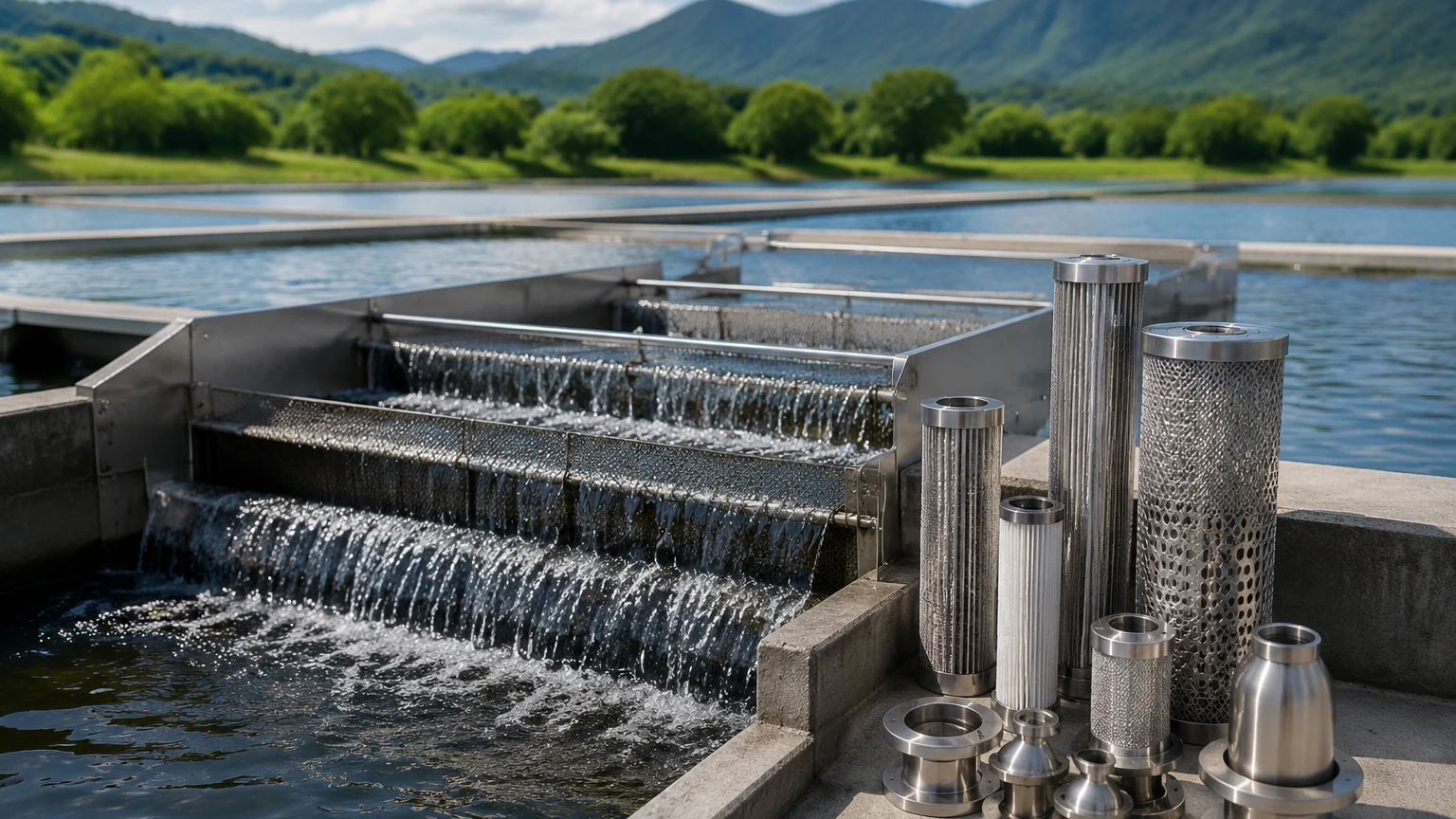
4. Customizability: Stainless steel components can be manufactured into various forms, including cylindrical cartridges, flat screens, and wedge wire structures, allowing for seamless integration into existing infrastructure.
Selection Criteria for Industrial Aquaculture Filters
Choosing the right filter requires a deep dive into the specific operational parameters of the facility. Engineers should consider the following criteria during the selection process:
Particle Size Distribution (PSD)
Understanding the nature of the solids in the water is vital. Are the solids primarily large and fibrous, or are they fine and colloidal? A PSD analysis helps in selecting a mesh size that captures the bulk of the waste without unnecessary over-specification, which would increase the frequency of backwash cycles.
Backwashing and Cleaning Mechanisms
In a 24/7 aquaculture environment, manual cleaning is often impractical. Automated backwashing systems use high-pressure jets to clear the filter media. The filter must be robust enough to withstand these repetitive pressure shocks. Wedge wire screens are particularly effective in these scenarios due to their non-clogging V-shaped profile, which allows particles to be easily dislodged during the backwash phase.
Pressure Drop (ΔP) Considerations
Every filter introduces a degree of resistance to the flow. A high initial pressure drop means the pump must work harder, increasing energy consumption. By selecting high-performance stainless steel wire mesh with optimized open area ratios, facilities can reduce their total energy expenditure while maintaining high filtration standards.
Common Risks and Mitigation in Aquaculture Filtration
Failure to properly engineer a filtration system can lead to catastrophic losses in aquaculture. One of the primary risks is bio-fouling. In nutrient-rich water, bacteria and algae can quickly colonize the surface of the filter media, forming a biofilm that restricts flow. To mitigate this, systems should be designed with accessible filter housings for periodic deep cleaning and may incorporate antimicrobial coatings or UV pre-treatment.
Another risk is mechanical bypass. If a filter element is not seated correctly or if the seals fail, unfiltered water will bypass the media entirely. Utilizing precision-machined stainless steel housings with high-quality gaskets ensures a positive seal, preventing bypass and protecting sensitive downstream equipment like heat exchangers and oxygenators.
Optimizing Total Cost of Ownership (TCO)
While the initial capital expenditure (CAPEX) for stainless steel filtration components may be higher than for plastic alternatives, the total cost of ownership is often lower. The durability of metal filters translates to fewer replacements and less downtime. In a commercial aquaculture setting, the cost of a system failure—measured in lost biomass—far outweighs the savings from using cheaper, less reliable filtration media.
By investing in high-quality stainless steel cartridges and screens, operators can extend the intervals between maintenance cycles and ensure that the water quality remains within the narrow parameters required for optimal growth rates and feed conversion ratios (FCR).
Partnering for Custom Filtration Solutions
Every aquaculture facility has unique requirements based on the species being raised, the water source, and the local climate. Standard off-the-shelf filters may not always provide the optimal balance of flow and retention. Custom-engineered filtration solutions allow for the adjustment of micron ratings, dimensions, and connection types to fit specific system geometries.
When evaluating a manufacturer for filtration aquaculture components, it is essential to confirm their capabilities in material traceability, precision welding (such as TIG or plasma welding for smooth, hygienic joints), and their ability to provide technical support regarding flow dynamics and pressure drop calculations. For more information on available configurations and technical support, you can visit our Main Page.
Conclusion
Filtration in aquaculture is a complex engineering challenge that requires a thorough understanding of fluid dynamics, material science, and biological requirements. By prioritizing robust materials like stainless steel and focusing on precise mechanical filtration, aquaculture operators can create a stable, scalable, and sustainable environment for aquatic production. As the industry continues to move toward more intensive and automated systems, the role of high-performance filtration will only become more central to commercial success. Confirming technical specifications and performance expectations with a qualified manufacturer is the final critical step in ensuring that your filtration system meets the long-term needs of your facility.
