


Bag Filter Pulse Jet
In industrial air pollution control and process filtration, the bag filter pulse jet system stands as a cornerstone technology for maintaining air quality and recovering valuable particulate matter. Unlike older filtration methods that require periodic shutdowns for cleaning, pulse jet technology allows for continuous, high-efficiency operation. For engineers and procurement teams, understanding the technical nuances of these systems—from the physics of the pulse to the material integrity of the internal supports—is essential for optimizing system longevity and filtration performance.
As a specialized manufacturer of stainless steel filtration solutions, Kaifil recognizes that the efficiency of a pulse jet system depends not only on the filter media but also on the precision-engineered components that support it. This guide examines the engineering principles, selection criteria, and maintenance requirements of the bag filter pulse jet system in modern industrial applications.
The Mechanics of the Pulse Jet Cleaning System
The defining characteristic of a bag filter pulse jet system is its "on-line" cleaning capability. The system operates by passing dust-laden gas through filter bags, where particulates are captured on the exterior surface (outside-in filtration). Over time, a dust cake builds up, increasing the differential pressure across the system.
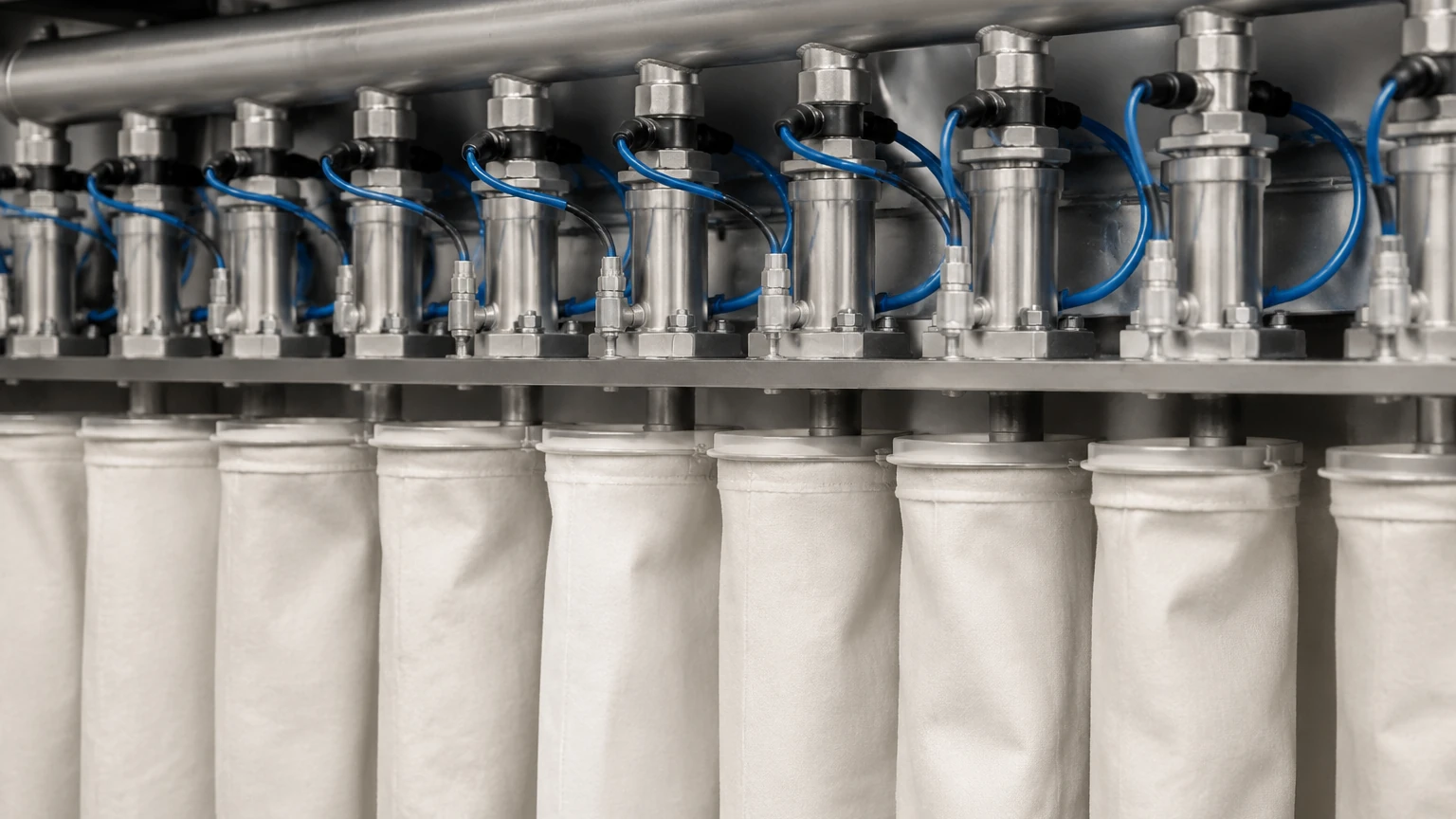
To manage this, the pulse jet mechanism employs a high-pressure burst of compressed air. This burst is directed from a header pipe, through a solenoid valve, and down into the filter bag via a blowpipe. The sudden injection of air creates a shockwave and a brief expansion of the filter bag. This mechanical flexing, combined with a momentary reversal of airflow, dislodges the accumulated dust cake, which then falls into a hopper for collection.
The effectiveness of this pulse is often enhanced by a Venturi located at the top of the bag. The Venturi uses the high-velocity compressed air to induce a larger volume of secondary air from the clean-air plenum, maximizing the cleaning energy delivered to the bottom of the bag. For technical professionals, the synchronization of the pulse duration (typically 0.1 to 0.5 seconds) and the pulse interval is critical to balancing cleaning efficiency with the mechanical stress placed on the filter media.
Key Engineering Considerations for System Design
When specifying or evaluating a bag filter pulse jet system, several engineering parameters dictate the overall performance and the total cost of ownership.
Air-to-Cloth Ratio
One of the most vital metrics is the Air-to-Cloth (A/C) ratio, also known as the filtration velocity. This represents the volume of gas passing through a square foot of filter media per minute (CFM/ft²). A pulse jet system typically operates at higher A/C ratios than shaker or reverse-air systems, often ranging from 3:1 to 6:1 depending on the dust characteristics. An excessively high A/C ratio can lead to premature bag blinding and high pressure drops, while an overly conservative ratio increases the initial capital expenditure and the footprint of the equipment.
Interstitial Velocity
Interstitial velocity refers to the speed of the gas moving upward between the filter bags. If this velocity is too high, it can prevent dislodged dust from falling into the hopper, causing it to be re-entrained onto adjacent bags. Engineers must ensure the spacing between bags is optimized to allow for effective dust settling during the pulse cycle.
Compressed Air Quality
The pulse jet system relies heavily on the quality of compressed air. Moisture or oil in the air lines can lead to "mudding" on the filter bags, where the dust cake becomes damp and adheres permanently to the media. This significantly reduces permeability and necessitates frequent bag replacements. Proper drying and filtration of the pulse air are non-negotiable for reliable operation.
Material Selection and the Role of Stainless Steel Components
While the filter bag itself is often made of needle-felted fabrics or membranes (such as PTFE or Aramid), the internal support structure—the filter cage—is equally critical. In demanding industrial environments, such as chemical processing or high-temperature steam applications, standard galvanized carbon steel cages may suffer from corrosion or thermal degradation.
Kaifil specializes in providing high-performance stainless steel filtration components that address these challenges. Stainless steel cages (typically Grade 304 or 316) offer superior resistance to acid gases and moisture, preventing the formation of rust that can snag and tear the filter fabric. Furthermore, in applications involving fine or abrasive powders, precision-welded stainless steel wire mesh can be integrated into the filtration assembly to provide additional mechanical support or to act as a primary filter stage in specialized housings.
When selecting materials, engineers must consider the chemical compatibility of both the bag and the cage with the process gas. For instance, in the pharmaceutical or food and beverage industries, stainless steel is often mandated to meet hygiene standards and prevent product contamination. You can Review product options and application support on our Main Page to see how custom metal components integrate into these complex systems.
Performance Evaluation and Troubleshooting
Monitoring the performance of a bag filter pulse jet system requires a data-driven approach. The primary indicator of system health is the differential pressure (DP). A steady DP suggests a stable dust cake and effective cleaning cycles. A sudden spike in DP may indicate a failure in the pulse valves, a loss of compressed air pressure, or bag blinding.
Common risks in pulse jet operation include:
* Pulse Valve Failure: Solenoid valves or diaphragms can wear out, leading to inadequate cleaning of specific bag rows.
* Bag Abrasion: If cages are poorly constructed or have broken welds, they can cause mechanical wear on the bags during the pulse cycle.
* Hopper Bridging: If dust is not evacuated efficiently from the hopper, it can back up into the bag area, causing massive failure and potential fire hazards in combustible dust applications.
To mitigate these risks, regular inspections of the clean-air plenum are necessary. The presence of dust in the clean-air side is a definitive sign of a broken bag or a bypass leak in the tubesheet. Implementing a predictive maintenance schedule based on DP trends and pulse counts can significantly extend the life of the filter media.
Customization and OEM Integration
Every industrial process has unique requirements regarding temperature, particle size, and gas chemistry. A "one-size-fits-all" approach rarely yields the best results in pulse jet filtration. Customization is often required in the design of the tubesheet, the configuration of the blowpipes, and the specific geometry of the filter cages.
For OEM manufacturers building dust collection units, sourcing reliable components is paramount. Kaifil provides customized stainless steel filter cartridges and wire mesh components designed to withstand high differential pressures and aggressive cleaning cycles. By working closely with engineering teams, we ensure that the filtration accuracy and structural integrity of the components align with the specific demands of the application, whether it involves hydraulic fluids, water treatment, or industrial gas filtration.
When ordering custom components for a pulse jet system, procurement teams should confirm:
1. Material Grade: Ensuring the stainless steel alloy matches the corrosive profile of the environment.
2. Filtration Accuracy: Defining the required micron rating for the specific particulate matter.
3. Dimensional Tolerances: Ensuring a precise fit between the bag, cage, and tubesheet to prevent leakage.
4. Welding Standards: High-quality welds are essential to prevent burrs that could damage the filter bags.
Total Cost of Ownership and Long-Term Value
While the initial cost of a bag filter pulse jet system is a significant factor, the total cost of ownership (TCO) is driven by energy consumption and maintenance. The energy required to generate compressed air for the pulse cleaning is a major operational expense. Optimizing the pulse frequency—cleaning only when necessary based on DP triggers rather than a fixed timer—can lead to substantial energy savings.
Furthermore, investing in high-quality stainless steel supports and precision-engineered filter media reduces the frequency of bag change-outs. In many industrial settings, the labor cost and downtime associated with a bag change-out far exceed the cost of the bags themselves. By selecting durable, corrosion-resistant components from the outset, facilities can achieve a more stable process and a better return on investment.
In conclusion, the bag filter pulse jet system is a sophisticated piece of engineering that requires a balance of mechanical, aerodynamic, and material science principles. By focusing on high-quality components and precise design parameters, industrial operators can ensure efficient particulate removal and long-term system reliability. For more information on custom filtration solutions and technical specifications, visit the Kaifil Main Page.
