


Bag to Filter
In the landscape of industrial liquid filtration, the transition from disposable bag systems to high-performance cartridge filters—often referred to as a "bag to filter" conversion—represents a significant shift in operational strategy. For many processing plants, the initial choice of bag filtration is driven by low upfront capital expenditure and the simplicity of the system. However, as production requirements evolve toward higher precision, stricter purity standards, and reduced waste, engineers frequently evaluate the technical and economic feasibility of retrofitting existing bag housings with stainless steel filter elements or replacing the systems entirely.
This guide examines the engineering considerations, performance metrics, and long-term cost implications associated with moving from bag-based systems to permanent or high-efficiency metal filtration solutions. By understanding the mechanical differences and the specific requirements of industrial applications, technical professionals can make informed decisions that optimize their filtration processes.
The Technical Drivers Behind the Bag to Filter Transition
The primary motivation for moving from a bag to filter cartridge system often stems from the inherent limitations of fabric or felt bags. While bags are effective for high-flow, high-dirt-load applications where broad filtration is acceptable, they often struggle with consistency. Bag media is typically flexible and prone to bypass if not seated perfectly within the housing basket. Furthermore, under high differential pressure, the pores in a fabric bag can stretch, leading to "particle unloading" where previously trapped contaminants are forced through the media.
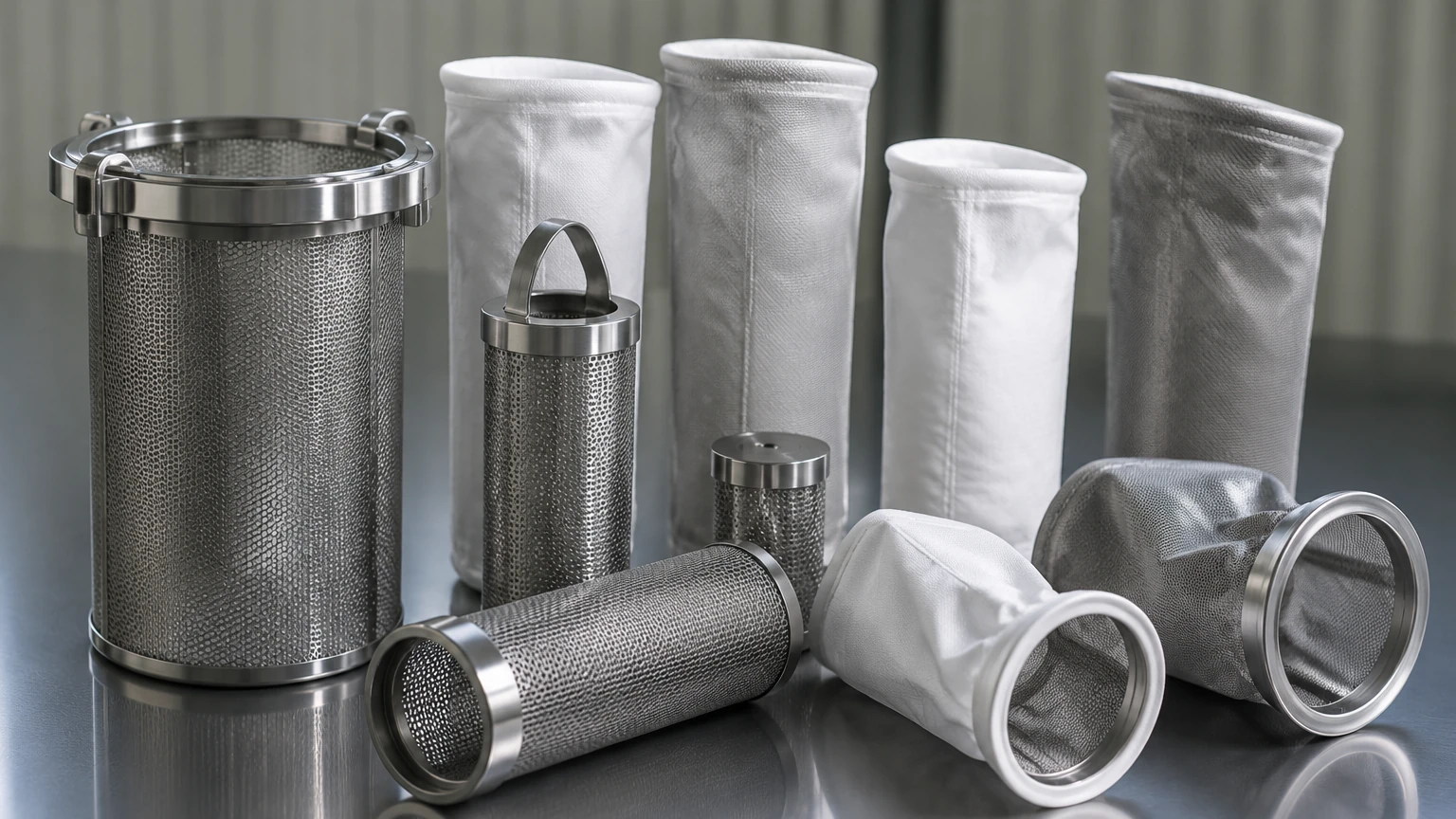
In contrast, stainless steel filter cartridges, such as those manufactured by Kaifil, utilize rigid wire mesh or sintered metal structures. These components maintain their geometric integrity even under significant pressure fluctuations. For industries such as chemical processing or pharmaceutical manufacturing, where a single excursion in filtration quality can compromise an entire batch, the stability of a metal filter provides a necessary safeguard. The transition is not merely about changing the media; it is about moving from nominal filtration (where a percentage of particles at a given size are caught) to absolute filtration (where the physical pore structure prevents any particle above a specific micron rating from passing).
Structural Differences: Bag Media vs. Stainless Steel Wire Mesh
To understand the impact of a bag to filter upgrade, one must compare the media structures. Traditional filter bags are usually constructed from needlefelt or monofilament mesh made of polyester, polypropylene, or nylon. These are depth-loading or surface-loading media that are designed to be discarded once they reach their terminal differential pressure.
Stainless steel filters, often used as the upgrade path in these scenarios, employ advanced weaving techniques to create precise apertures.
1. Square Weave Mesh: Provides high flow rates and excellent surface filtration, making it easy to clean via backwashing.
2. Dutch Weave Mesh: Offers a more complex, tortuous path for fluids, providing higher strength and finer filtration ratings than standard square weaves.
3. Sintered Metal: Multiple layers of mesh are bonded together through heat and pressure to create a robust, porous plate or cylinder that can withstand extreme temperatures and corrosive environments.
When an engineer initiates a bag to filter conversion, they are often seeking the mechanical strength of these materials. Unlike bags, which can tear or collapse, stainless steel elements are engineered to handle high-viscosity fluids and aggressive chemical solvents that would degrade synthetic polymers.
Engineering the Conversion: Retrofitting Bag Filter Housings
One of the most cost-effective ways to execute a bag to filter transition is through the use of conversion kits or specialized cartridges designed to fit into existing bag filter housings (typically Size #1 or Size #2 housings). This allows facilities to upgrade their filtration performance without the need for extensive piping changes or the purchase of new pressure vessels.
The Role of the Adapter
To facilitate this change, a specialized adapter or "basket insert" is used. This component occupies the space where the filter bag would normally sit. The stainless steel cartridge is then secured within this insert. It is critical to ensure that the seal between the cartridge and the housing is airtight and watertight. Common sealing methods include O-rings (EPDM, Viton, or PTFE) that prevent bypass, a common failure point in standard bag systems.
Flow Dynamics and Pressure Drop
When converting from a bag to filter, engineers must recalculate the clean pressure drop (ΔP). Because stainless steel mesh has a defined open area, the initial resistance to flow may differ from a clean felt bag. However, because the surface area of a pleated stainless steel cartridge can be significantly higher than the surface area of a standard bag, the flow capacity often increases, or the interval between cleanings is extended. For more information on how these components integrate into industrial systems, you can visit the Main Page of the Kaifil website to review technical specifications.
Assessing Filtration Efficiency and Absolute Micron Ratings
In many B2B industrial environments, the term "micron rating" is used loosely. Bag filters are almost exclusively rated nominally. A 10-micron bag might catch 60% to 80% of 10-micron particles. In high-stakes applications, this variance is unacceptable.
The bag to filter move allows for the implementation of absolute-rated media. A stainless steel wire mesh filter with an absolute rating of 10 microns is laboratory-verified to capture 99.9% of particles at that size. This precision is vital for:
* Protecting Downstream Equipment: Preventing fine particulates from damaging high-pressure pumps or clogging spray nozzles.
* Catalyst Recovery: In chemical processing, recovering expensive catalyst fines requires the reliable pore structure of metal filters.
* Product Clarity: In the food and beverage industry, achieving a specific "brilliance" in liquids requires the removal of microscopic haze-causing particles that bags might allow to pass.
Economic Impact: Analyzing OPEX and Sustainability
While the initial cost of a stainless steel filter element is higher than a disposable bag, the Total Cost of Ownership (TCO) often favors the metal solution in the long run. The economic analysis of a bag to filter transition should include the following factors:
Disposal Costs and Environmental Impact
Disposable bags contribute significantly to a facility's waste stream. If the filtered contaminant is hazardous, the cost of disposing of thousands of contaminated bags per year can be astronomical. Stainless steel filters are cleanable and reusable, aligning with corporate sustainability goals and reducing hazardous waste footprints.
Labor and Downtime
Changing a filter bag requires depressurizing the system, opening the housing, disposing of the bag, and installing a new one. If this occurs daily or even shift-wise, the labor costs accumulate. A high-quality metal filter, especially one integrated into a backwashable system, can operate for months without manual intervention. Even in manual systems, the durability of the element means it can be cleaned via ultrasonic bath or chemical soaking and returned to service, rather than being replaced.
Product Loss
Filter bags often retain a significant amount of process fluid (the "hold-up volume") when they are removed. Over hundreds of cycles, this lost product represents a hidden cost. Rigid metal cartridges can be designed with lower hold-up volumes and can be more effectively purged of product before cleaning.
Application-Specific Selection for Demanding Environments
Choosing the right path for a bag to filter conversion requires a deep understanding of the operating environment. Kaifil specializes in tailoring these solutions to specific industrial needs.
* High-Temperature Processing: Synthetic bags typically fail above 120°C. Stainless steel elements can operate at temperatures exceeding 300°C, making them essential for hot oil filtration or steam applications.
* Corrosive Fluids: In environments involving strong acids or bases, material selection is paramount. While polypropylene bags offer some resistance, AISI 316L stainless steel or specialized alloys provide a much broader range of chemical compatibility.
* High-Pressure Differentials: In hydraulic systems or high-viscosity polymer filtration, the pressure across the media can reach levels that would burst a standard bag. The structural reinforcement of a metal filter cartridge ensures safety and continuous operation.
Maintenance and Longevity of Metal Filter Elements
To maximize the ROI of a bag to filter conversion, a proper maintenance protocol must be established. Unlike bags, which are "run to failure" (or rather, run to terminal pressure), stainless steel filters are an asset.
Cleaning methods include:
* Backpulsing: Using a reverse flow of clean fluid or air to dislodge surface cake.
* Ultrasonic Cleaning: Using high-frequency sound waves in a solvent bath to remove fine particles lodged deep within the mesh pores.
* Chemical Cleaning: Utilizing specific surfactants or acids to dissolve organic or inorganic scaling without damaging the stainless steel substrate.
When maintained correctly, a single stainless steel filter element can replace hundreds of disposable bags, providing a consistent filtration profile throughout its multi-year lifespan.
Conclusion: Making the Move from Bag to Filter
The transition from bag to filter is a strategic engineering decision that addresses the need for precision, durability, and cost-efficiency. While bag filters serve a purpose in pre-filtration or less critical applications, the move to stainless steel filtration components offers a level of process control that is unattainable with disposables.
For engineers and purchasing teams, the process begins with a thorough audit of current filtration performance, including an analysis of bypass issues, particle counts, and annual disposal expenditures. By partnering with a manufacturer like Kaifil, companies can design custom filtration solutions that fit seamlessly into existing infrastructures, ensuring that the move from bag to filter results in immediate improvements in product quality and operational reliability.
As industrial standards continue to tighten, the reliability of the filter media becomes the backbone of the production line. Moving to a permanent, high-precision stainless steel solution is not just an upgrade in hardware; it is an investment in the consistency and sustainability of the entire manufacturing process.
