


Baghouse Equipment
In industrial air quality management and particulate control, baghouse equipment serves as a primary solution for removing dust and solid contaminants from gas streams. Often referred to as fabric filters, these systems are essential for maintaining regulatory compliance, protecting downstream equipment, and ensuring a safe working environment. For engineers and facility managers, selecting the right baghouse equipment involves a deep understanding of filtration mechanics, material science, and the specific thermal and chemical demands of the application.
While traditional baghouses utilize fabric media, modern industrial requirements—particularly in high-temperature or highly corrosive environments—often necessitate the integration of precision metal filtration components. This guide explores the engineering principles, component selection, and operational considerations necessary for optimizing baghouse performance.
Understanding Baghouse Equipment and Its Industrial Importance
Baghouse equipment operates on the principle of surface filtration. As dust-laden gas enters the system, it passes through a series of filter elements. The particulates are trapped on the surface of the media, forming a "dust cake" that eventually acts as an additional filtration layer. Periodically, the system cleans the filters to maintain airflow and manage pressure drop.
In sectors such as chemical processing, cement production, and metal smelting, baghouses are not merely auxiliary components; they are central to the production process. Efficient particulate recovery can prevent the loss of valuable product and ensure that exhaust gases meet environmental standards. The effectiveness of these systems is measured by their collection efficiency, which often exceeds 99% for sub-micron particles when properly engineered.
Key Components of an Industrial Baghouse System
A standard baghouse assembly consists of several critical sub-systems that must work in unison. Understanding these components is vital for technical teams when specifying replacements or designing new installations.
1. Filter Media and Support Structures
The filter media is the heart of the baghouse. While synthetic fibers like polyester, aramid (Nomex), and PTFE are common, demanding industrial applications often require stainless steel wire mesh or sintered metal filters. These metal elements provide superior structural integrity and resistance to thermal degradation. To prevent the collapse of flexible bags, internal support cages are used. In high-performance systems, these cages must be precision-manufactured to ensure a tight fit and prevent mechanical wear on the filter media.
2. The Housing and Hopper
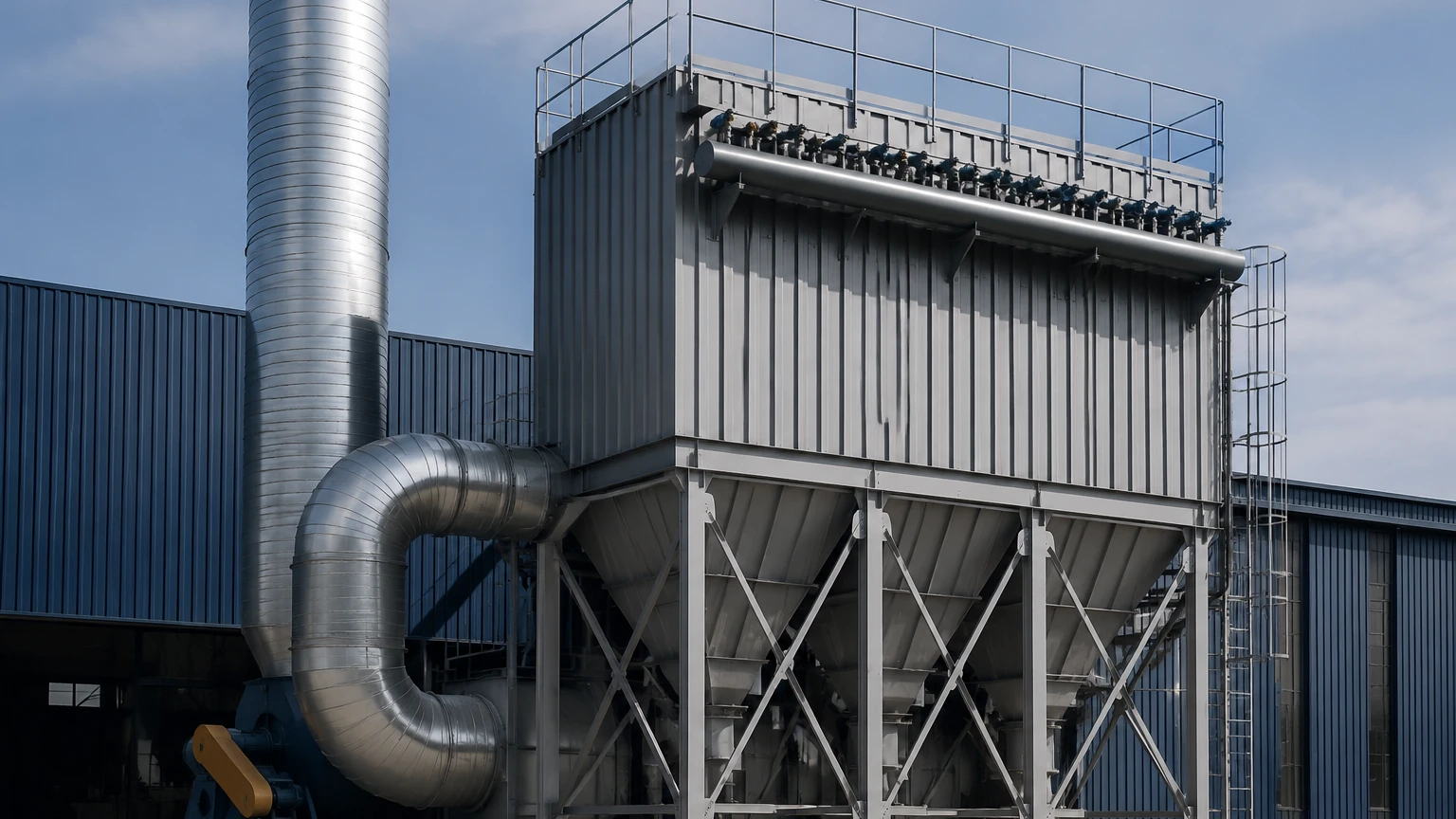
The housing contains the filter elements and directs the gas flow. It is typically divided into a "dirty air" plenum and a "clean air" plenum by a tubesheet. The hopper at the bottom collects the dislodged dust for disposal or recycling. The design of the hopper must account for the angle of repose of the specific dust being handled to prevent bridging or clogging.
3. Cleaning Mechanisms
Baghouse equipment is categorized by its cleaning method:
* Pulse-Jet: Uses high-pressure compressed air to create a shockwave that dislodges the dust cake. This is the most common method in modern industrial settings due to its ability to clean filters while the system remains online.
* Shaker: Employs mechanical shaking to remove dust. This usually requires the system (or a specific compartment) to be offline during cleaning.
* Reverse-Air: Uses a low-pressure fan to blow clean air in the opposite direction of the filtration flow, gently collapsing the bags to release the dust.
Engineering Considerations for Baghouse Design
When evaluating baghouse equipment, engineers must look beyond the initial purchase price and focus on technical specifications that impact long-term reliability and operational costs.
Air-to-Cloth Ratio (A/C Ratio)
The A/C ratio, also known as the filtration velocity, is the ratio of gas flow (CFM) to the total square footage of filter media. A lower A/C ratio generally leads to higher filtration efficiency and longer filter life but requires a larger, more expensive housing. For heavy dust loads or fine particulates, maintaining a conservative A/C ratio is critical to prevent premature blinding of the filters.
Pressure Drop (Differential Pressure)
Pressure drop ($ΔP$) is the resistance to airflow across the filter media. It is a key indicator of baghouse health. A high $ΔP$ indicates that the filters are clogged or that the cleaning system is failing, leading to increased energy consumption by the system fan. Conversely, a sudden drop in $ΔP$ may signal a leak or a ruptured filter element.
Temperature and Chemical Compatibility
Standard fabric filters have clear thermal limits. In applications involving flue gas or chemical reactors, temperatures can exceed the melting point of synthetic fibers. In these instances, stainless steel filtration solutions are preferred. Stainless steel 304 or 316L provides the necessary oxidation resistance and mechanical strength to operate at temperatures where traditional fabrics would fail. Furthermore, in the presence of acidic or alkaline gases, the chemical inertness of high-grade alloys is essential for preventing corrosion-induced failure.
The Role of Metal Filters in High-Performance Baghouses
In many specialized industrial processes, the limitations of fabric media become a bottleneck. This is where precision metal filtration components, such as those provided by Main Page, become indispensable. Metal filter cartridges and wire mesh elements offer several advantages over traditional bags:
1. High Temperature Tolerance: Metal filters can withstand continuous operating temperatures well above 500°F (260°C), making them ideal for incineration and metallurgical processes.
2. Mechanical Durability: Unlike fabric, metal mesh is resistant to abrasion from sharp or abrasive dust particles. This reduces the frequency of filter replacements and minimizes downtime.
3. Cleanability: Sintered metal and wire mesh filters can be cleaned more aggressively, including ultrasonic cleaning or chemical backwashing, allowing for a much longer service life compared to disposable fabric bags.
4. Fixed Pore Geometry: Woven wire mesh provides precise and consistent filtration ratings. This ensures that the filtration efficiency remains stable throughout the life of the filter, whereas fabric pores can stretch or degrade over time.
Selection Criteria for Engineers and Purchasing Teams
Choosing the right baghouse equipment or replacement components requires a systematic approach. Technical professionals should confirm the following data points before finalizing a specification:
* Particle Size Distribution: Knowing the micron size of the dust allows for the selection of the correct mesh count or fabric weight.
* Gas Chemistry: Identify the presence of moisture, oils, or corrosive gases. Moisture can lead to "mudding," where dust turns into a paste on the filter surface, while oils may require oleophobic coatings or specialized metal treatments.
* Inlet Dust Loading: High concentrations of dust require more robust cleaning systems and potentially pre-separator stages like cyclones.
* Space Constraints: If the installation footprint is limited, pleated filter elements (including pleated metal cartridges) can provide significantly more surface area in the same volume as traditional round bags.
Installation and Maintenance Best Practices
The longevity of baghouse equipment is heavily dependent on proper installation and a proactive maintenance schedule. Even the highest quality filter media will fail prematurely if the system is poorly managed.
Proper Tensioning and Alignment
For systems using fabric bags, ensuring proper tension is critical. Bags that are too loose will rub against the cages, leading to mechanical wear. For metal filter cartridges, ensuring a perfect seal at the tubesheet is paramount. Even a minor bypass can lead to significant downstream contamination and potential environmental fines.
Monitoring the Cleaning Cycle
The pulse-jet cleaning system should be optimized based on the actual pressure drop rather than a simple timer. "Clean-on-demand" logic reduces the consumption of compressed air and extends the life of the filter media by avoiding unnecessary mechanical stress.
Regular Inspection of Support Cages
Support cages should be inspected for signs of corrosion or broken wires. A damaged cage can quickly tear a filter bag. In corrosive environments, upgrading to galvanized or stainless steel cages is a cost-effective way to prevent frequent filter failures.
Total Cost of Ownership (TCO) in Filtration
When procuring baghouse equipment, the initial capital expenditure (CAPEX) is only one part of the equation. Operating expenses (OPEX), including energy for fans and compressors, labor for filter changes, and the cost of the filters themselves, often exceed the initial cost within a few years.
Investing in high-quality, durable filtration components—such as custom stainless steel filters—can significantly lower the TCO. By extending the interval between filter replacements and maintaining a lower average pressure drop, facilities can achieve substantial savings in both maintenance labor and energy costs. Furthermore, the reliability of precision-engineered components reduces the risk of unplanned shutdowns, which are often the single largest expense in industrial operations.
Conclusion
Baghouse equipment remains a cornerstone of industrial particulate control. Whether the application involves standard ambient dust collection or high-temperature chemical processing, the selection of filter media and system components must be grounded in technical reality. By understanding the interplay between air-to-cloth ratios, material compatibility, and cleaning dynamics, engineers can design systems that are both efficient and durable. For those dealing with demanding environments where standard solutions fall short, specialized metal filtration components offer the precision and resilience required for modern industrial excellence.
