


Baghouse Filter Systems
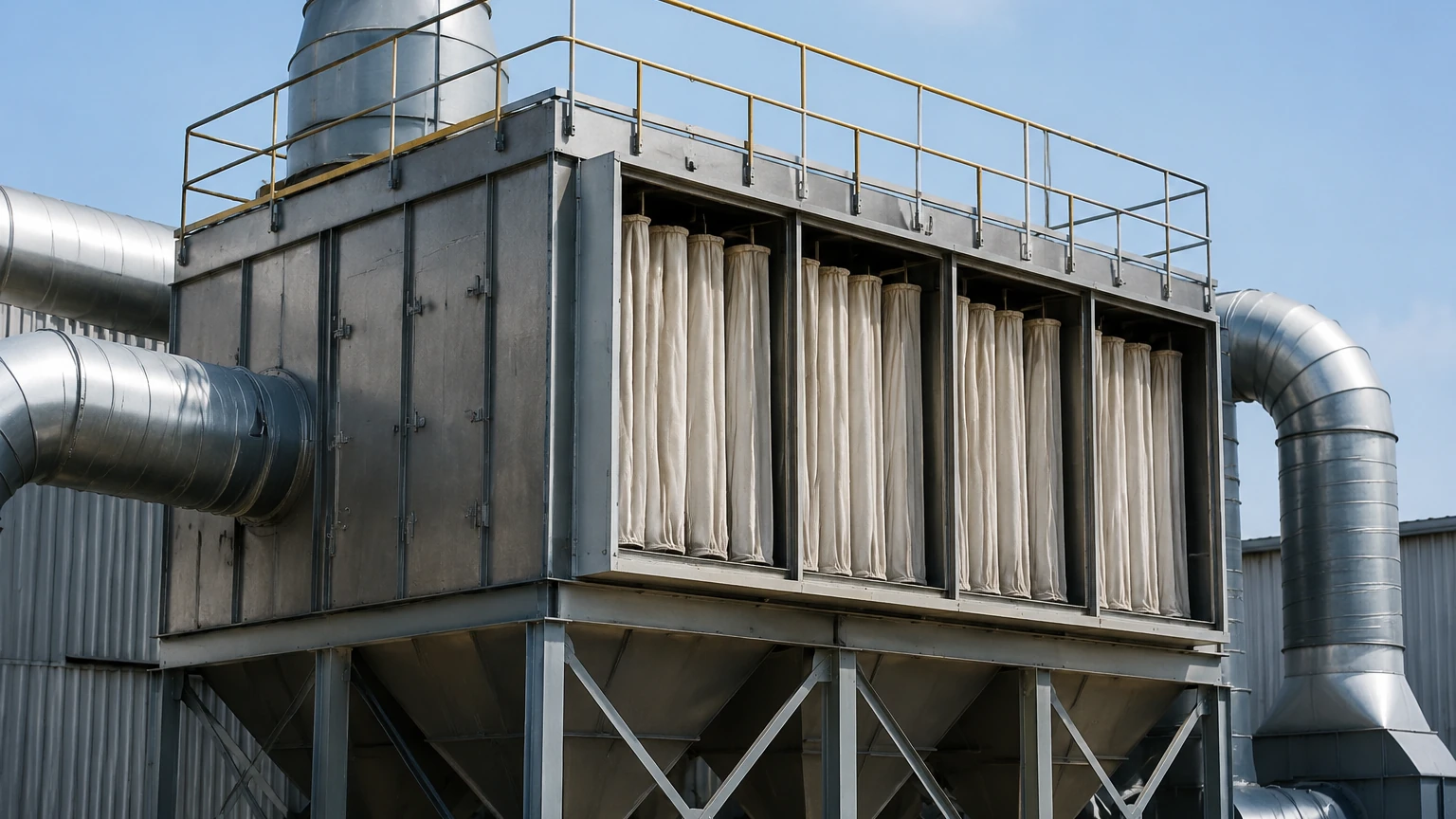
Baghouse filter systems, often referred to as fabric filters or dust collectors, represent a critical technology in industrial air pollution control and product recovery. These systems are designed to remove particulate matter from gas streams in diverse sectors, ranging from chemical processing and power generation to food and beverage manufacturing. While the term "baghouse" traditionally implies the use of fabric bags, modern engineering demands have led to the integration of advanced materials, including stainless steel wire mesh and sintered metal components, to handle extreme temperatures, corrosive environments, and high-pressure differentials.
For engineers and procurement professionals, selecting the appropriate configuration for baghouse filter systems requires a deep understanding of gas chemistry, particle characteristics, and mechanical design. This guide examines the technical foundations of these systems, the role of specialized metal filtration components, and the criteria necessary for optimizing long-term performance.
Understanding the Mechanics of Baghouse Filter Systems
The fundamental operation of a baghouse filter system involves passing a contaminated gas stream through a series of filter elements. As the gas permeates the filter media, particulates are captured on the surface or within the depth of the material, while the cleaned gas is discharged. The efficiency of this process is governed by several physical mechanisms:
1. Inertial Impaction: Larger particles, unable to follow the gas streamlines around the filter fibers or wires, collide directly with the media.
2. Interception: Mid-sized particles that follow the gas flow come within one particle radius of the filter surface and are captured.
3. Diffusion (Brownian Motion): Very fine particles (typically sub-micron) move erratically due to molecular collisions, increasing their likelihood of contacting the filter media.
In industrial applications, the accumulation of a "dust cake" on the filter surface is essential. While the initial clean media provides basic filtration, the accumulated layer of particles eventually acts as the primary filtration barrier, significantly increasing efficiency. However, this accumulation also increases the pressure drop (ΔP) across the system, necessitating periodic cleaning to maintain flow rates. For a comprehensive overview of the components used in these high-efficiency environments, technical teams can visit the Main Page to review specific material configurations and support structures.
Material Selection: Transitioning from Fabric to Stainless Steel
While traditional baghouse filter systems utilize polyester, aramid, or PTFE-coated fabrics, these materials have inherent limitations regarding temperature and chemical resistance. In demanding industrial environments, stainless steel filtration solutions offer distinct advantages.
Temperature Resistance
Standard fabric bags typically fail at temperatures exceeding 250°C (482°F). In contrast, stainless steel wire mesh and sintered metal filters can operate continuously at temperatures up to 500°C or higher, depending on the alloy (e.g., 304, 316L, or Inconel). This capability eliminates the need for expensive gas cooling equipment upstream of the baghouse, reducing both capital expenditure and system complexity.
Chemical Compatibility
In chemical processing and pharmaceutical applications, gas streams may contain acidic or alkaline vapors that degrade organic fibers. Stainless steel, particularly Grade 316L, provides superior resistance to corrosion and oxidation. This durability ensures that the filter elements maintain their structural integrity and filtration accuracy over extended service lives, even when exposed to aggressive cleaning agents or process byproducts.
Mechanical Strength
Metal filter elements are rigid and self-supporting or require minimal internal cage support compared to flexible fabric bags. This rigidity prevents the "blinding" or collapse of the filter media under high vacuum or pressure surges, which is a common failure mode in heavy-duty industrial dust collection.
Engineering Considerations for High-Temperature Filtration
When designing baghouse filter systems for high-temperature applications, engineers must account for thermal expansion and the mechanical properties of the filter housing and the filter elements. Metal filters, such as those manufactured using precision wire mesh, must be engineered with specific tolerances to prevent bypass or structural failure at peak operating temperatures.
One critical factor is the selection of the weave type. Plain weave, twilled weave, and Dutch weave patterns offer different balances of flow rate, strength, and particle retention. For instance, a Dutch weave provides a denser structure suitable for fine particulate capture in high-pressure environments, whereas a plain weave might be preferred for high-flow, low-pressure applications. The choice of weave directly impacts the cleaning efficiency; smoother metal surfaces allow for easier release of the dust cake during pulse-jet cycles.
Optimizing Pulse-Jet Cleaning with Precision Components
Most modern baghouse filter systems utilize pulse-jet cleaning, where a high-pressure burst of compressed air is injected into the top of the filter element. This creates a shockwave that travels down the length of the filter, momentarily expanding the media and dislodging the dust cake.
The effectiveness of this cleaning cycle depends heavily on the internal support structures, such as filter cages. In systems utilizing metal filter elements or high-end fabric bags, the precision of the cage is paramount. A poorly constructed cage can cause abrasion on the filter media, leading to premature failure. Stainless steel cages provide the necessary rigidity to withstand repeated pulsing without deforming, ensuring that the filter media remains properly tensioned and aligned.
Furthermore, the use of venturis at the top of the filter elements can optimize the airflow of the pulse, ensuring that the cleaning energy is distributed evenly from the top to the bottom of the bag. This prevents localized dust buildup, which can lead to "hot spots" and uneven wear.
Evaluating Total Cost of Ownership and Durability
While the initial investment in stainless steel or custom-engineered filtration components for baghouse filter systems may be higher than standard fabric alternatives, the Total Cost of Ownership (TCO) often favors the more durable solution. Engineers should consider the following factors when calculating TCO:
* Replacement Frequency: Fabric bags may require replacement every 6 to 18 months in harsh environments. Stainless steel filters can last for several years, significantly reducing labor costs and downtime associated with filter change-outs.
* Energy Consumption: A more efficient cleaning cycle and a lower stable pressure drop result in reduced energy consumption for the system's primary fan or blower.
* Product Recovery: In industries where the captured dust is a valuable product (e.g., precious metal refining or specialized chemical production), the high retention efficiency and easy recovery from metal surfaces provide a direct financial return.
* Waste Disposal: Reducing the frequency of filter replacements decreases the volume of contaminated waste material that must be disposed of, which is a significant consideration in regulated industries.
Customization and OEM Solutions for Specialized Environments
No two industrial processes are identical, and off-the-shelf baghouse filter systems often require modification to meet specific performance targets. Customization is a core component of successful filtration engineering. This includes the development of bespoke filter dimensions, specialized mounting flanges, and tailored micron ratings.
OEM (Original Equipment Manufacturer) capabilities allow for the integration of filtration components that are designed specifically for the unique geometry of a particular baghouse housing. For example, in pharmaceutical applications, "clean-in-place" (CIP) requirements may dictate that all metal surfaces be polished to a specific Ra (Roughness Average) to prevent bacterial growth and ensure complete sterilization. In hydraulic or high-viscosity fluid applications that might interact with air filtration systems, the precision of the wire mesh ensures that no media migration occurs, protecting sensitive downstream equipment.
Technical Confirmation Before Implementation
Before finalizing the design or procurement of components for baghouse filter systems, technical teams should confirm several key parameters with their manufacturing partner:
1. Gas-to-Cloth Ratio: This is the ratio of gas flow (CFM) to the total filter area (sq. ft.). An inappropriate ratio can lead to excessive pressure drop and rapid filter blinding.
2. Interstitial Velocity: The velocity of the gas as it moves between the filter elements. If this is too high, it can prevent dislodged dust from falling into the hopper, causing it to be immediately re-entrained on the filters.
3. Dew Point Analysis: If the gas stream cools below its dew point within the baghouse, moisture will condense, leading to "mudding" of the filter media. This is particularly problematic in systems handling hygroscopic dust.
4. Material Traceability: For regulated industries like food and beverage or pharmaceuticals, ensuring that all stainless steel components come with mill test reports (MTRs) is essential for compliance.
By focusing on these engineering realities and opting for high-quality, customized metal filtration components, industrial facilities can achieve reliable, high-performance dust collection that meets both environmental standards and operational goals. The transition toward more robust materials like stainless steel represents a strategic move toward sustainability and process stability in the modern industrial landscape.
