


Customizable Boiler Inspection Tools Diameter Length Requirements
In industrial boiler maintenance and management, the precision of inspection tools directly correlates with the reliability of the system. Boilers are complex thermal systems where internal components are subjected to extreme pressure, high temperatures, and corrosive environments. To ensure operational safety and efficiency, engineers must utilize specialized equipment designed to navigate the intricate internal geometries of the boiler. Understanding customizable boiler inspection tools diameter length requirements is essential for technical teams tasked with maintaining these critical assets.
Customization is not merely a preference but a technical necessity. Standardized tools often fail to account for the specific clearances of tube bundles, the depth of headers, or the diameter of access ports. For manufacturers like Kaifil, providing precision metal components that integrate into these inspection systems requires a deep understanding of how diameter and length influence tool performance and data accuracy.
Understanding the Criticality of Diameter and Length in Boiler Inspection
The physical dimensions of an inspection tool—specifically its diameter and length—determine its accessibility and the scope of the inspection. In a B2B industrial context, "one size fits all" does not apply to boiler internals.
Diameter Constraints and Access Ports
Diameter is the primary limiting factor for tool entry. Most boilers feature inspection ports, handholes, or manways that vary in size based on the boiler's design and capacity. A tool that is even marginally oversized will fail to pass through the port, leading to downtime and the potential need for costly modifications. Furthermore, once inside the boiler, the tool must navigate between water tubes and fire tubes. In high-density tube bundles, the clearance may be as narrow as a few millimeters. Precision-engineered housings for cameras, sensors, or cleaning heads must be optimized to maximize functionality while minimizing diameter.
Length and Reach Requirements
Length requirements are dictated by the depth of the boiler vessel and the location of critical components such as the mud drum, steam drum, and superheater headers. If an inspection tool is too short, it cannot reach the furthest corners where scale buildup or localized corrosion is most likely to occur. Conversely, excessive length without proper structural rigidity can lead to tool deflection, making it difficult to control the positioning of the sensor or probe. Customizable lengths allow engineers to match the tool to the specific dimensions of the boiler model, ensuring a 100% inspection coverage rate.
Technical Specifications for Customizable Inspection Tools
When specifying customizable boiler inspection tools diameter length requirements, engineers must consider several technical factors that influence the tool's performance in the field. These specifications go beyond simple measurements and delve into the mechanical integrity of the tool.
1. Outer Diameter (OD) Tolerances: For precision inspection, OD tolerances must be strictly controlled. In applications involving automated borescope systems or robotic crawlers, a tolerance of +/- 0.05mm is often required to ensure the tool fits through guide tubes and sleeves.
2. Effective Working Length: This refers to the portion of the tool that can actually perform the inspection. Engineers must distinguish between the total length of the device and the reach of its active sensors. For deep-vessel boilers, modular length extensions are often used to provide versatility.
3. Flexibility vs. Rigidity: The length of a tool affects its mechanical behavior. Longer tools often require a balance of flexibility (to navigate bends in piping) and rigidity (to maintain a straight path in open drums). This is often achieved through the use of reinforced stainless steel braiding or articulated segments.
Material Selection: Why Stainless Steel is the Industrial Standard
The environment inside a boiler is unforgiving. High humidity, residual chemical treatments, and elevated temperatures necessitate materials that offer superior corrosion resistance and mechanical strength. Stainless steel, particularly grades 304 and 316L, is the preferred material for the construction of inspection tool housings and components.
At Kaifil, the focus on custom stainless steel solutions aligns with the needs of the boiler inspection industry. Stainless steel provides the necessary durability to withstand the abrasive nature of scale and soot while maintaining the precision of the tool’s diameter. Unlike plastic or lower-grade alloys, stainless steel does not degrade or off-gas when exposed to the heat often found during "warm" boiler inspections, where the system has not yet fully cooled to ambient temperatures.
Furthermore, the surface finish of the stainless steel components is vital. A smooth, electropolished finish on the tool’s exterior reduces friction as it moves through the boiler and prevents the tool from snagging on internal protrusions. This is a critical consideration when calculating the maximum length a tool can be pushed into a system without buckling.
Engineering Considerations for Custom Tooling in High-Temperature Environments
Designing tools for boiler inspection requires an understanding of thermal expansion. When a tool enters a boiler, it may be exposed to temperatures significantly higher than the external environment.
Thermal Expansion and Diameter
As the material of the tool heats up, it expands. In high-precision applications, the increase in diameter caused by thermal expansion must be accounted for. If the clearance between the tool and a tube is minimal, thermal expansion could cause the tool to become lodged. Engineers must select materials with predictable coefficients of thermal expansion and design the tool with sufficient "cold" clearance to account for "hot" operation.
Structural Integrity Over Length
As the length of an inspection tool increases, the weight of the tool itself becomes a factor. For horizontal inspections, a long tool may sag under its own weight, potentially damaging delicate sensors or the boiler tubes themselves. Customization allows for the integration of lightweight yet strong stainless steel alloys and the addition of centralizers or guides that maintain the tool's position within the center of a pipe or header.
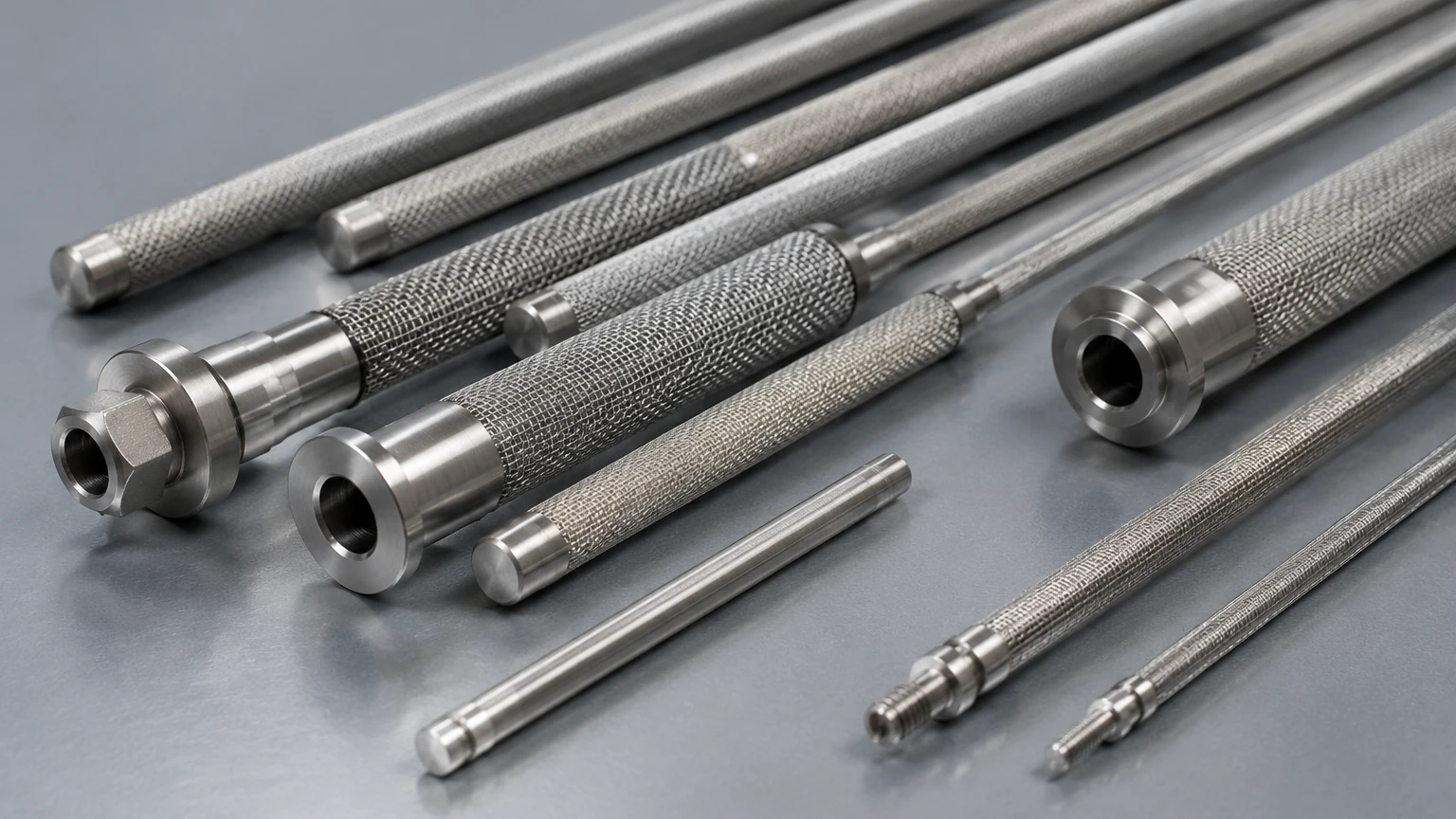
Integrating Filtration Component Inspection into Boiler Maintenance
Boilers rely heavily on filtration systems to maintain water quality and steam purity. Feedwater filters, condensate polishers, and steam strainers are essential for preventing scale formation and protecting downstream equipment. Consequently, boiler inspection tools are often used specifically to evaluate the condition of these filtration components.
Customizable tools must be able to inspect the integrity of wire mesh filters and stainless steel filter cartridges. This involves checking for:
* Mesh Blinding: Using high-resolution cameras to identify areas where particulates have permanently clogged the filter surface.
* Mechanical Deformation: Ensuring that the pressure differentials within the boiler have not caused the filter cartridge to collapse or warp.
* Corrosion and Pitting: Identifying localized thinning of the metal mesh that could lead to a breach in filtration accuracy.
By ensuring that customizable boiler inspection tools diameter length requirements are met, maintenance teams can perform detailed visual and ultrasonic testing on these filtration elements without removing them from the system, significantly reducing labor costs and downtime. For more information on the types of filtration components that require regular inspection, you can Review product options and application support on our Main Page.
Selection Criteria and Procurement for Industrial Inspection Components
When procurement teams and engineers look to source components for custom inspection tools, they must evaluate suppliers based on technical capability and quality assurance. The following criteria are essential when selecting a manufacturer for the precision metal parts used in these tools:
* Customization Capabilities: Can the manufacturer produce non-standard diameters and lengths? The ability to provide OEM solutions is critical for specialized boiler architectures.
* Filtration Expertise: Since many inspection tools are used to check filtration systems, a supplier with deep knowledge of stainless steel wire mesh and filter cartridges can provide valuable insights into tool design.
* Quality Certification: Ensure the supplier adheres to international standards (such as ISO) to guarantee that the materials used are of the specified grade and that tolerances are consistently met.
* Total Cost of Ownership: While custom tools may have a higher initial cost, their ability to provide more accurate data and reach more areas of the boiler leads to better preventative maintenance and longer boiler life, reducing the total cost of ownership.
Common Risks of Improper Tool Specification
Failure to accurately define customizable boiler inspection tools diameter length requirements can lead to several operational risks:
1. Incomplete Data: If a tool cannot reach the rear of a tube sheet due to insufficient length, critical defects may be missed, leading to catastrophic tube failure later.
2. Equipment Damage: Forcing an oversized tool through a restricted opening can damage both the tool and the boiler’s internal components.
3. Extended Downtime: If a tool is found to be incompatible with the boiler’s dimensions during a scheduled outage, the inspection must be postponed until a replacement is sourced, extending the period the boiler is offline.
Conclusion: Ensuring Long-Term Boiler Efficiency through Precise Tool Specification
The maintenance of industrial boilers is a high-stakes environment where precision is the only safeguard against failure. Customizable boiler inspection tools diameter length requirements are the foundation of a successful inspection program. By tailoring these dimensions to the specific needs of the boiler, engineers can ensure thorough monitoring of internal surfaces and filtration components.
Working with a manufacturer that understands the nuances of stainless steel fabrication and industrial filtration allows for the development of tools that are not only durable but also perfectly suited for the task at hand. Whether it is inspecting a high-pressure steam line or evaluating the condition of a stainless steel filter cartridge, the right diameter and length make all the difference in achieving operational excellence.
For engineers and purchasing teams looking to optimize their filtration and inspection processes, focusing on high-quality, customized metal components is the most effective way to ensure the longevity and safety of their boiler systems. Detailed planning during the specification phase prevents costly errors and ensures that every square inch of the boiler's interior is accounted for during maintenance cycles.
Download Customizable Boiler Inspection Tools Diameter Length Requirements as a PDF
