


Baghouse Manufacturer
In the landscape of industrial air pollution control, a baghouse manufacturer plays a critical role in ensuring that facilities meet environmental regulations while maintaining operational efficiency. A baghouse, or fabric filter, is an air pollution control device designed to remove particulates out of air or gas released from commercial processes or combustion for electricity generation. For engineers and procurement professionals, selecting the right partner involves more than just purchasing a piece of equipment; it requires a deep understanding of material science, fluid dynamics, and the specific mechanical requirements of the application environment.
Industrial filtration is not a one-size-fits-all solution. Whether the application involves chemical processing, food and beverage production, or pharmaceutical manufacturing, the integrity of the filtration system depends heavily on the precision of its components. From the structural housing to the internal filter cages and specialized metal mesh elements, every detail must be engineered to withstand high temperatures, corrosive gases, and mechanical stress.
The Role of a Baghouse Manufacturer in Industrial Air Quality
A baghouse manufacturer is responsible for the design, fabrication, and often the installation of large-scale dust collection systems. These systems are essential for capturing fine particulate matter (PM) that would otherwise be released into the atmosphere. The effectiveness of a baghouse is measured by its collection efficiency, which can often exceed 99% for even the smallest particles.
From an engineering perspective, the manufacturer must account for several variables during the design phase. These include the volume of gas to be treated (measured in Cubic Feet per Minute or CFM), the temperature of the gas stream, the chemical composition of the dust, and the moisture content. Failure to account for any of these factors can lead to premature filter failure, increased pressure drop, and costly system downtime.
Manufacturers often specialize in different types of baghouses, such as pulse-jet, shaker, or reverse-air systems. Each has its own set of advantages depending on the dust load and the physical space available within a facility. The choice of a manufacturer should be guided by their ability to provide technical documentation and empirical data supporting their design choices.
Engineering Considerations for High-Performance Baghouse Systems
When collaborating with a baghouse manufacturer, engineers must focus on the technical specifications that dictate long-term performance. One of the most critical metrics is the air-to-cloth (A/C) ratio, also known as the filtration velocity. This ratio represents the volume of gas passing through one square foot of filter media per minute. A ratio that is too high can lead to deep-seated blinding of the filter media, while a ratio that is too low may result in an oversized, inefficient system.
Another vital consideration is the pressure drop across the system. The differential pressure (DP) indicates the resistance to airflow caused by the filter media and the accumulated dust cake. A well-designed baghouse maintains a stable DP through effective cleaning cycles. If the manufacturer does not optimize the cleaning mechanism—whether it be compressed air pulses or mechanical shaking—the system will consume excessive energy and require frequent maintenance.
Furthermore, the internal structural integrity of the baghouse is paramount. This includes the tube sheet, which holds the filter bags in place, and the filter cages that prevent the bags from collapsing during the filtration cycle. For demanding industrial environments, these components are often manufactured from high-grade stainless steel to prevent corrosion and structural deformation.
Material Selection: Why Stainless Steel Components Matter
While the fabric bags are the primary filtration media, the performance of those bags is inextricably linked to the quality of the metal components supporting them. A baghouse manufacturer must often source or produce precision metal parts that can survive the harsh conditions inside the collector.
Stainless steel is the material of choice for many industrial filtration applications due to its exceptional resistance to heat and chemical attack. In industries such as chemical processing or waste-to-energy, the gas streams can be highly acidic or alkaline. Using standard carbon steel for filter cages or internal mesh supports would result in rapid oxidation and eventual failure.
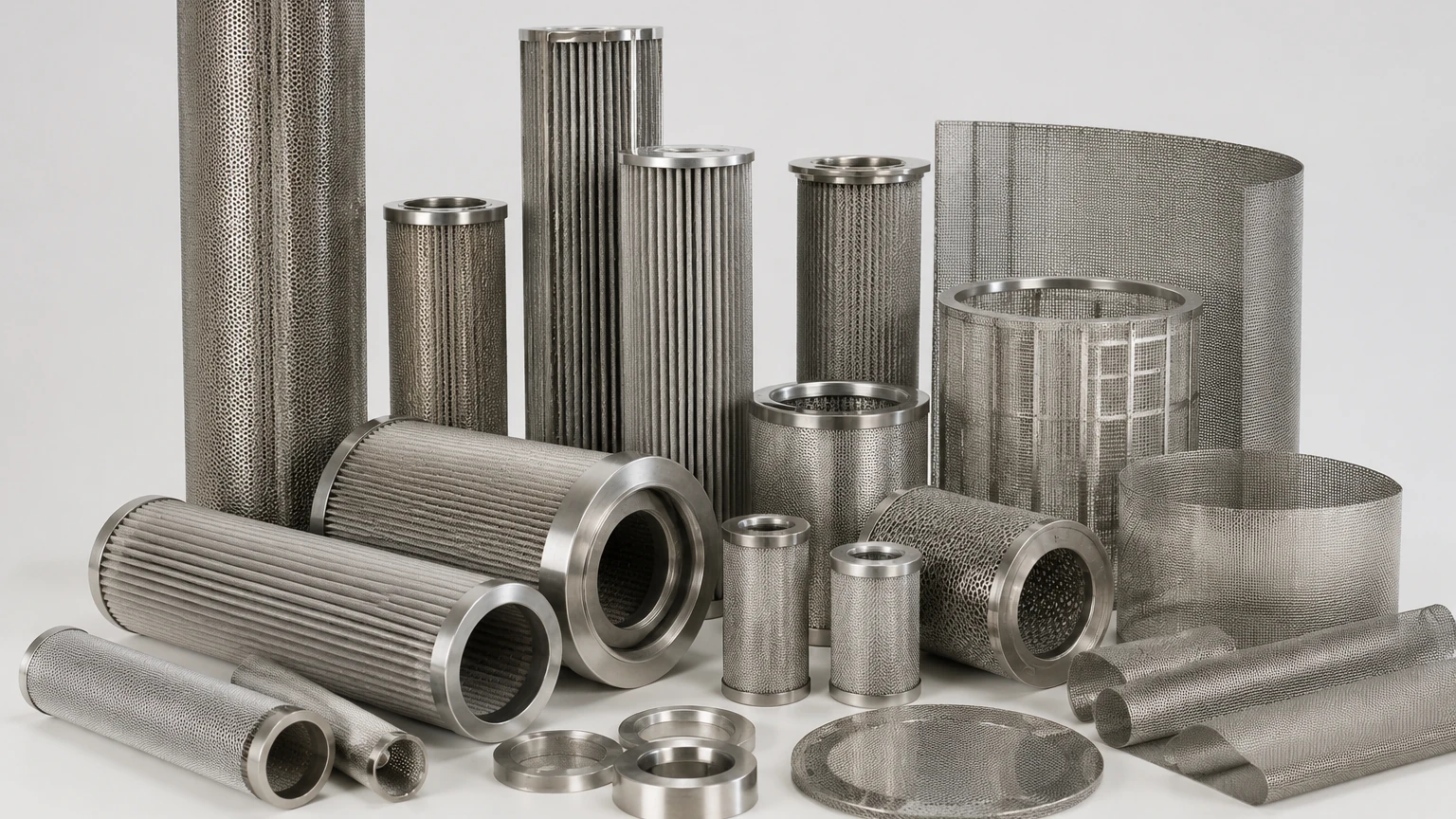
By utilizing 304 or 316L stainless steel, manufacturers ensure that the internal components remain smooth and structurally sound. This is particularly important for the filter cages; any burrs or corrosion on the cage wires can snag and tear the fabric bags, leading to particulate leakage. Additionally, in food and beverage or pharmaceutical applications, stainless steel is required to meet stringent hygiene and safety standards, as it does not shed contaminants into the process stream. For those looking to optimize their system with high-quality metal elements, they can visit the Main Page to review product options and application support.
Comparing Cleaning Technologies: Pulse-Jet vs. Reverse Air
The method used to clean the filter media is a defining characteristic of a baghouse manufacturer’s design philosophy. The most common technology in modern industrial settings is the pulse-jet system. In this configuration, high-pressure bursts of compressed air are shot down the center of the filter bag, causing it to expand rapidly and shed the accumulated dust cake. Pulse-jet systems are favored for their ability to clean bags while the system remains online, allowing for continuous operation.
In contrast, reverse-air baghouses use a separate fan to blow low-pressure air in the opposite direction of the filtration flow. This gently collapses the bag, causing the dust cake to fall into the hopper. While reverse-air systems are typically larger and more expensive, they are gentler on the filter media, which can extend the life of the bags in certain high-temperature applications.
A technical evaluation of these cleaning methods must include an analysis of the compressed air requirements and the potential for mechanical wear. A reputable manufacturer will provide a cost-benefit analysis of each cleaning technology based on the specific particulate characteristics of the client's facility.
Customization and OEM Integration in Filtration
Many industrial applications require customized filtration solutions that standard off-the-shelf units cannot provide. This is where the expertise of a specialized baghouse manufacturer or a component manufacturer like Kaifil becomes invaluable. Customization may involve unique dimensions to fit into existing facility footprints, specialized coatings for corrosive environments, or the integration of precision wire mesh filters for fine-tuned particulate capture.
OEM (Original Equipment Manufacturer) services are also a significant part of the industry. Many larger environmental engineering firms partner with specialized manufacturers to produce the internal filtration components required for their proprietary systems. This collaborative approach ensures that the filtration accuracy and durability meet the exact requirements of the end-user.
Customized designs often focus on the filtration accuracy required for specific processes. For instance, in hydraulic or water treatment applications, the filtration components must be engineered to handle high pressure and specific flow rates without compromising the integrity of the filter media. The ability to manufacture these components to tight tolerances is a hallmark of a high-quality production facility.
Maintenance and Operational Efficiency Metrics
The total cost of ownership (TCO) for a baghouse system is heavily influenced by its maintenance requirements and energy consumption. A baghouse manufacturer that prioritizes engineering excellence will design systems that are easy to maintain and monitor.
Key performance indicators (KPIs) for baghouse efficiency include:
1. Differential Pressure: Consistently high DP indicates that the cleaning system is failing or the bags are blinded.
2. Opacity Levels: Continuous emissions monitoring systems (CEMS) track the opacity of the exhaust gas. A sudden spike in opacity usually indicates a broken filter bag.
3. Compressed Air Consumption: In pulse-jet systems, excessive use of compressed air can be a significant hidden cost. Optimizing the pulse frequency and duration is essential.
4. Filter Bag Lifespan: The frequency of bag replacement is a major operational expense. High-quality support cages and proper material selection can significantly extend this cycle.
Regular inspections of the tube sheet, hoppers, and discharge valves are necessary to prevent dust accumulation and mechanical failure. A manufacturer should provide a detailed maintenance schedule and offer replacement parts that match the original engineering specifications to ensure continued performance.
Selecting the Right Partner for Industrial Filtration Solutions
Choosing a baghouse manufacturer or a filtration component supplier requires a thorough vetting process. Engineers should look for partners who demonstrate a deep understanding of the physical and chemical challenges associated with their specific industry.
Before finalizing a contract, it is recommended to confirm the following:
* Material Certification: Ensure that all stainless steel and alloy components come with material mill reports to verify their composition.
* Manufacturing Capabilities: Does the manufacturer have the advanced machinery required for precision welding and wire mesh fabrication?
* Technical Support: Can the manufacturer provide engineering drawings, flow simulations, and performance guarantees?
* Customization Flexibility: Is the partner willing to adapt their designs to meet unique process requirements or spatial constraints?
In the demanding world of industrial processing, the reliability of your filtration system is a direct reflection of the quality of its components. By focusing on engineering fundamentals and high-grade materials, facilities can achieve both environmental compliance and operational excellence. For those in need of specialized stainless steel filtration solutions and precision metal components, exploring the offerings on the Main Page is an excellent step toward optimizing industrial filtration performance.
Conclusion
A baghouse manufacturer is more than a supplier; they are an engineering partner essential to the safety and efficiency of industrial operations. By understanding the nuances of air-to-cloth ratios, material compatibility, and cleaning mechanisms, purchasing teams can make informed decisions that reduce long-term costs and prevent environmental violations. Whether you are looking for a complete dust collection system or the precision stainless steel components that keep those systems running, the focus must always remain on quality, durability, and technical precision.
