


Bar Screen in Wastewater Treatment
In the hierarchy of industrial and municipal water processing, the preliminary treatment stage serves as the critical safeguard for the entire facility. At the forefront of this stage is the bar screen in wastewater treatment. This mechanical filtration component is designed to remove large solids—such as rags, plastics, wood, and stones—from the influent before they can reach and damage sensitive downstream equipment. For engineers and plant managers, understanding the technical nuances of bar screen design, material selection, and hydraulic performance is essential for maintaining operational continuity and minimizing the total cost of ownership.
Effective primary screening prevents the clogging of pipes, protects centrifugal pumps from impeller damage, and reduces the organic loading on secondary treatment processes. As industrial facilities move toward more sophisticated filtration systems, including the precision stainless steel components found on the Main Page of leading filtration manufacturers, the role of the bar screen as a foundational barrier becomes even more significant.
The Fundamental Role of Bar Screens in Preliminary Treatment
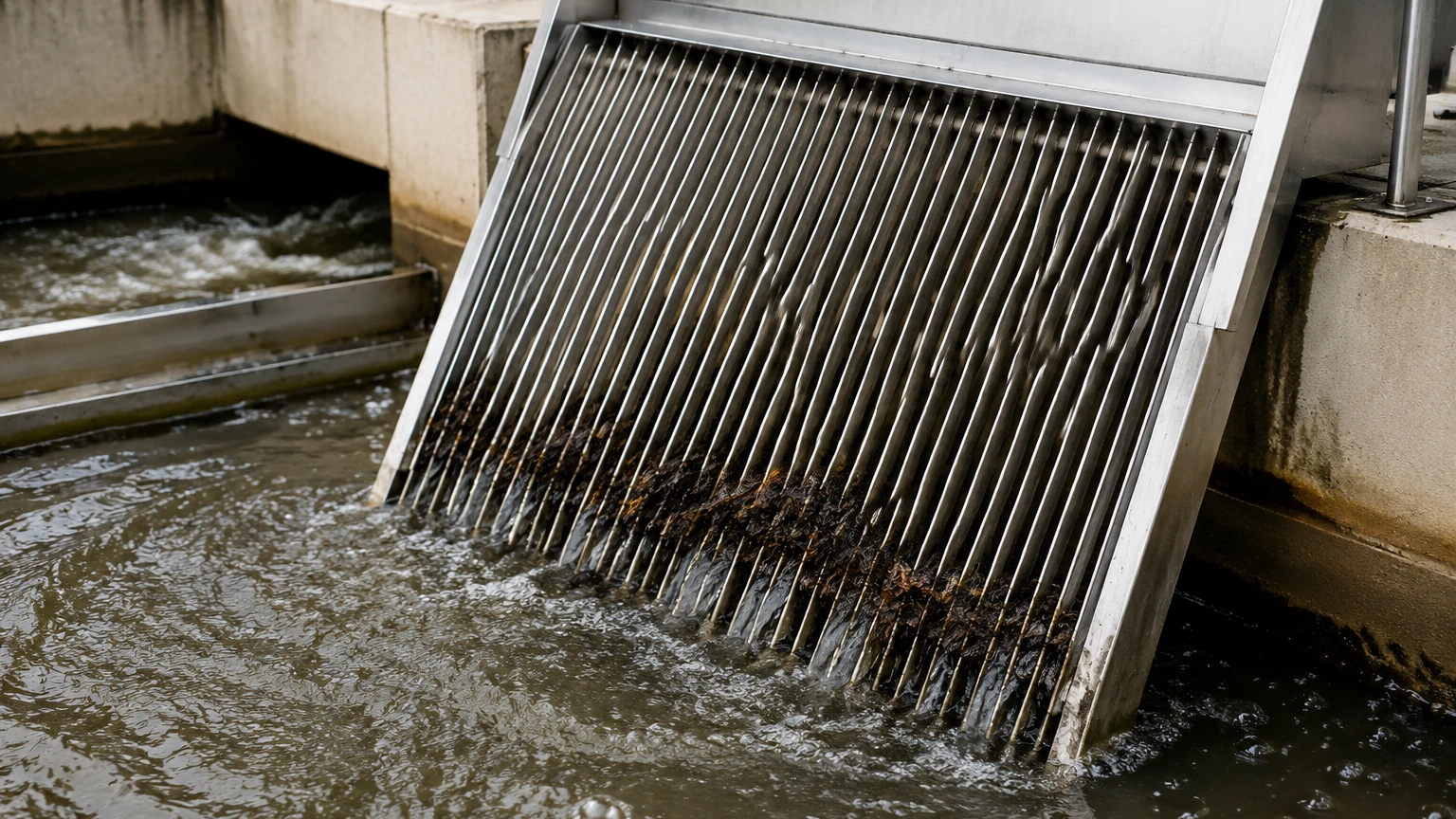
A bar screen in wastewater treatment is typically the very first unit operation in a treatment plant. Its primary function is "pre-treatment" or "preliminary screening." Wastewater, whether from municipal sewers or industrial discharge, contains a high volume of non-biodegradable debris. If these materials are allowed to pass into the aeration tanks or clarifiers, they can form "rag balls" that seize pumps or settle in anaerobic digesters, necessitating costly manual cleanouts.
The bar screen functions by intercepting these solids while allowing the water and smaller suspended particles to pass through. The efficiency of this process is governed by the spacing between the bars, the angle of the screen, and the velocity of the incoming flow. By removing large objects early, the bar screen ensures that subsequent filtration stages—such as fine mesh filters or membrane bioreactors—can operate within their design parameters without the risk of physical puncture or excessive fouling.
Classification of Bar Screens: Coarse vs. Fine Filtration
Engineers categorize bar screens primarily based on the clear opening size between the bars. This classification determines the level of protection provided to the downstream system.
Coarse Screens
Coarse screens generally have openings ranging from 6mm to 150mm (0.25 inches to 6 inches). These are used to capture the largest debris. In many large-scale municipal plants, a very coarse "trash rack" with 50mm+ openings is placed first, followed by a secondary coarse screen with 15mm to 20mm openings. These are robust structures designed to withstand high hydraulic surges and heavy physical impact.
Fine Screens
Fine screens have openings smaller than 6mm. These are increasingly common in modern plants that utilize advanced secondary treatments like Membrane Bioreactors (MBR). Fine screens often utilize specialized geometries, such as wedge wire or perforated plates, to achieve high capture rates of smaller fibers and hair. While they provide superior protection, they also require more frequent cleaning and result in a higher head loss across the screen.
Mechanical vs. Manual Bar Screens: Operational Efficiency and ROI
The choice between a manually cleaned screen and a mechanically raked screen is often a balance between initial capital expenditure (CAPEX) and long-term operational expenditure (OPEX).
Manual Bar Screens
Manual screens are static racks where debris is removed by an operator using a hand rake. These are typically reserved for very small plants, bypass channels, or as emergency backups. While the initial cost is low, the labor requirements are high, and the risk of overflow due to sudden clogging (blinding) is significant. In modern industrial settings, manual screens are rarely the primary choice due to safety and consistency concerns.
Mechanical Bar Screens
Mechanically raked screens use automated systems to remove accumulated debris. There are several common designs:
* Climber Screens: A rake travels up the front of the screen, pulling debris to a discharge point. These are reliable and have few moving parts submerged in the water.
* Catenary Screens: These use a continuous chain of rakes. They are excellent for handling very heavy solids loads but require more vertical space.
* Reciprocating Rakes: Often called "step screens," these use a series of moving and fixed bars to lift solids out of the flow. They are highly efficient for fine screening applications.
For most B2B applications, mechanical screens are the standard because they provide consistent head loss management and reduce the risk of process upsets.
Engineering Design Parameters: Velocity, Head Loss, and Spacing
Designing a bar screen in wastewater treatment requires precise hydraulic calculations to ensure the system does not cause upstream flooding or allow solids to "blow through" the bars.
Approach and Through-Bar Velocity
The velocity of the wastewater as it approaches the screen (approach velocity) should ideally be around 0.3 to 0.6 meters per second (m/s). If the velocity is too low, grit and heavy solids will settle in the channel before reaching the screen. Conversely, the velocity through the openings (through-bar velocity) should generally not exceed 0.9 m/s at peak flow. High velocities can force flexible debris (like plastic film) through the bars, defeating the purpose of the screen.
Head Loss Calculations
Head loss refers to the drop in water level across the screen. It is a function of the flow rate, the percentage of the screen area that is open, and the amount of debris currently on the screen. Engineers often use Kirschmer’s formula to estimate head loss:
*h = β * (w/b)^(4/3) * (v²/2g) * sin(θ)*
Where *w* is the bar width, *b* is the clear spacing, *v* is the approach velocity, and *θ* is the angle of the screen. Managing head loss is critical; as the screen blinds with debris, the head loss increases, which usually triggers the mechanical cleaning cycle via differential pressure sensors.
Material Selection for Corrosive Wastewater Environments
Wastewater is a chemically aggressive environment. It often contains hydrogen sulfide (H2S), chlorides, and varying pH levels that can rapidly degrade carbon steel. For long-term reliability, stainless steel is the industry standard for bar screen construction.
* Grade 304 Stainless Steel: Suitable for most municipal wastewater applications where chloride levels are moderate.
* Grade 316L Stainless Steel: Required for industrial wastewater, coastal installations, or environments with high chemical concentrations. The addition of molybdenum in 316L provides superior resistance to pitting and crevice corrosion.
At Kaifil, the emphasis on high-quality stainless steel fabrication ensures that filtration components can withstand these harsh conditions. Whether it is a primary bar screen or a precision wire mesh filter used later in the process, selecting the correct alloy is the single most important factor in determining the equipment's lifespan.
Integration with Downstream Precision Filtration Systems
A bar screen in wastewater treatment does not work in isolation. It is the first step in a multi-stage filtration strategy. Once the large debris is removed, the water can be processed by more refined systems. For example, after the coarse screening and grit removal, wastewater may pass through stainless steel filter cartridges or fine wire mesh screens to remove smaller particulates.
This tiered approach is essential for protecting high-value assets. If a bar screen fails, the resulting debris can tear filter cloths, clog spray nozzles in cooling towers, or foul heat exchangers. By ensuring the primary bar screen is correctly specified and maintained, operators significantly extend the life of the precision metal filter components used in secondary and tertiary treatment. For those seeking specialized components for these later stages, exploring the Main Page of an experienced manufacturer provides insight into how precision engineering complements heavy-duty primary screening.
Maintenance Protocols and Troubleshooting Common Failures
To ensure the longevity of a bar screen, a proactive maintenance schedule is mandatory. Common failure points include chain tension issues in mechanical rakes, wear on the rake teeth, and corrosion of the fasteners.
1. Daily Inspection: Check for unusual noise or vibration in the drive motor. Ensure that the screenings discharge chute is clear.
2. Monthly Lubrication: Mechanical rakes have numerous pivot points and bearings that require water-resistant grease.
3. Annual Structural Check: Inspect the bars for bending or misalignment. Even a small gap caused by a bent bar can allow significant amounts of debris to bypass the screen.
4. Sensor Calibration: Ensure that the ultrasonic or pressure-differential sensors that trigger the cleaning cycle are calibrated. If the sensors fail, the screen may blind completely, leading to an upstream overflow.
Conclusion: Selecting the Right Solution
Choosing the appropriate bar screen in wastewater treatment involves a deep dive into the specific characteristics of the influent and the requirements of the downstream process. Engineers must account for peak flow variations, the nature of the solids (organic vs. inorganic), and the available footprint in the treatment channel.
By prioritizing robust stainless steel construction and precise hydraulic design, facilities can achieve a reliable first line of defense. This not only protects the mechanical integrity of the plant but also optimizes the performance of the entire filtration train. For industrial professionals looking to enhance their filtration systems beyond preliminary screening, partnering with manufacturers who understand the complexities of custom stainless steel solutions is the key to long-term operational success.
