


Blood Filters
In the specialized field of medical device manufacturing and industrial biotechnology, blood filters represent a pinnacle of precision engineering. These components are not merely sieves; they are highly engineered barriers designed to remove specific particles, microaggregates, and cellular components while maintaining the integrity of the fluid being processed. For engineers and procurement professionals, selecting the right filtration media—often involving high-grade stainless steel wire mesh—is critical to ensuring the safety and efficacy of the final medical or laboratory assembly.
Industrial-grade blood filters are utilized in a variety of applications, ranging from cardiotomy reservoirs and arterial filters to specialized laboratory equipment for blood component separation. Understanding the technical nuances of these filters is essential for developing reliable OEM solutions that meet stringent regulatory and performance standards.
The Engineering Behind Blood Filters
The primary function of blood filters is the removal of potentially harmful debris, such as fat emboli, microaggregates, and air bubbles, from the blood flow during surgical procedures or processing. From a technical perspective, this requires a balance between filtration efficiency and flow dynamics.
Engineers must consider the pore size, which typically ranges from 20 microns to 40 microns for arterial filtration, and even finer for specific laboratory applications. The choice of material is paramount. While polymer-based meshes are common in disposable units, stainless steel wire mesh is often the preferred choice for high-precision components and reusable housing assemblies due to its superior mechanical strength and predictable pore geometry.
Material Selection and Biocompatibility
When designing or sourcing components for blood filters, material selection begins with biocompatibility. Stainless steel 316L is the industry standard for metal filtration components in medical applications. Its low carbon content and high molybdenum levels provide excellent corrosion resistance, which is vital when exposed to the complex biochemical environment of human blood.
Beyond corrosion resistance, the surface finish of the wire mesh must be considered. Electropolishing is a common post-manufacturing process that smooths the surface of the stainless steel at a microscopic level. This reduces the risk of hemolysis (the rupture of red blood cells) and prevents the adhesion of proteins or cellular matter to the filter surface, which could otherwise lead to clogging or reduced flow rates.
Technical Specifications of Wire Mesh in Blood Filtration
The performance of blood filters is largely determined by the characteristics of the wire mesh used within the filter housing. At Kaifil, the focus is on providing precision-woven wire mesh that meets the exacting tolerances required by the medical industry.
Micron Rating and Pore Geometry
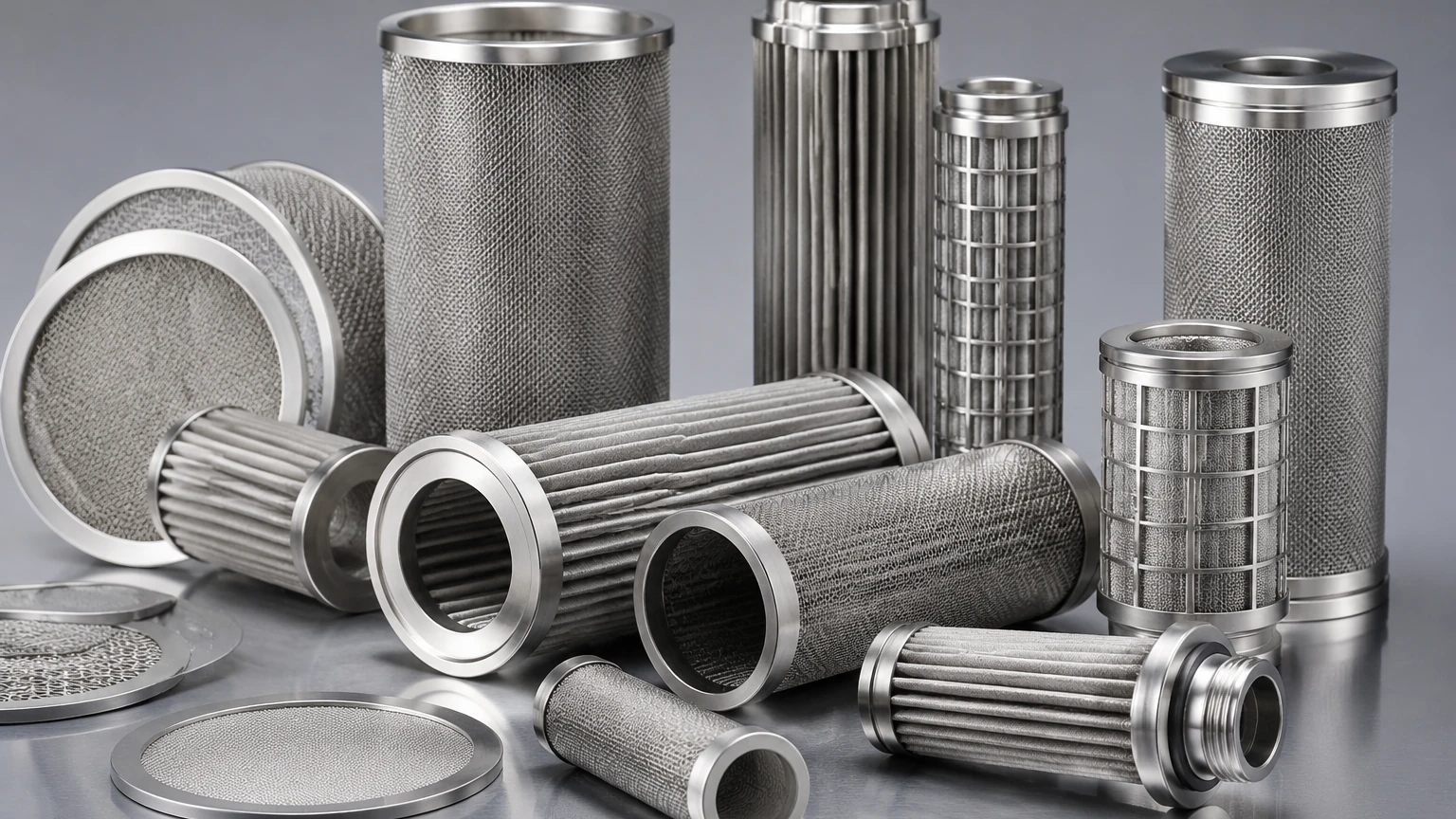
Unlike depth filters, which trap particles throughout a thick medium, wire mesh blood filters act as surface filters. This provides a precise "absolute" micron rating. Engineers must specify whether they require a plain weave, which offers a high open area for maximum flow, or a Dutch weave, which provides higher mechanical strength and finer filtration capabilities.
In blood filtration, the uniformity of the pore size is non-negotiable. A single oversized pore can allow a microembolus to pass through, potentially leading to clinical complications. Advanced manufacturing techniques ensure that every aperture in the mesh is consistent across the entire surface area of the filter.
Effective Filtration Area (EFA) and Flow Rates
One of the most significant challenges in blood filter design is maximizing the Effective Filtration Area (EFA) without increasing the overall footprint of the device. A larger EFA allows for higher flow rates and a lower pressure drop across the filter. This is often achieved through pleating the wire mesh.
For a technical professional, calculating the pressure drop (ΔP) is a vital step in the selection process. A high pressure drop can lead to shear stress on the blood cells, causing damage. By utilizing high-precision stainless steel mesh with a high percentage of open area, manufacturers can maintain high throughput while keeping shear stress within safe limits.
Customization and OEM Solutions
In the B2B landscape, off-the-shelf solutions rarely meet the specific needs of complex medical systems. Customization is often required to integrate a filter component into a proprietary housing or to meet a unique flow requirement.
Tailored Geometries
Blood filters come in various shapes, including discs, cylinders, and conical forms. Precision laser cutting and specialized welding techniques (such as TIG or ultrasonic welding) are used to ensure that the edges of the mesh are securely sealed. This prevents any loose wires from entering the fluid stream—a critical safety requirement in medical applications.
Integration with Plastic Housings
Many modern blood filters are hybrid components where a stainless steel mesh is over-molded with a medical-grade polymer. This requires the mesh to have consistent thickness and structural integrity to withstand the pressures of the injection molding process. Engineering teams must work closely with manufacturers to ensure that the mesh dimensions are compatible with the molding tools to prevent bypass or leakage.
Evaluation Criteria for Purchasing Teams
When evaluating suppliers for blood filter components, purchasing teams and engineers should look beyond the unit price. The total cost of ownership and the reliability of the component in a clinical setting are the true measures of value.
1. Certification and Traceability: Ensure the manufacturer provides Material Test Reports (MTRs) and complies with ISO 13485 or similar quality management systems. Traceability of the raw stainless steel wire is essential for medical-grade products.
2. Cleanliness Standards: Blood filters must be free from oils, lubricants, and particulate matter from the manufacturing process. Inquire about the manufacturer’s cleaning protocols, such as ultrasonic cleaning and cleanroom packaging.
3. Durability and Sterilization Compatibility: If the filter is intended for multiple uses or must undergo rigorous sterilization (such as autoclaving or Gamma irradiation), the material must remain stable. Stainless steel 316L is exceptionally resilient to these processes compared to many polymers.
4. Prototyping Capabilities: For new product development, the ability to produce small-batch prototypes for validation testing is a significant advantage. This allows engineering teams to verify flow rates and filtration efficiency before committing to high-volume production.
Common Risks in Blood Filter Implementation
Failure to account for technical variables can lead to significant risks in the implementation of blood filters. One common issue is "blinding" or premature clogging. This often occurs if the pre-filtration stages are inadequate or if the EFA was underestimated for the expected particulate load.
Another risk is the introduction of air into the system. High-quality wire mesh filters are often treated to be hydrophilic, ensuring that the mesh wetted out quickly and does not trap air bubbles, which could be catastrophic if passed into the patient’s bloodstream.
Furthermore, mechanical failure of the filter element due to fatigue or improper support can lead to bypass. Engineers must ensure that the filter mesh is adequately supported by a coarser backing mesh or a rigid internal frame if the application involves high-pressure pulses.
The Role of Kaifil in Industrial Filtration
As a professional manufacturer specializing in custom stainless steel filtration solutions, Kaifil provides the technical expertise and manufacturing precision required for demanding applications. Whether you are developing a new medical device or optimizing an existing industrial process, selecting a partner who understands the intricacies of wire mesh is essential.
You can Review product options and application support on our Main Page to see how our capabilities in wire mesh filters and custom filter cartridges can support your project requirements. From material selection to final production, we focus on delivering reliable, high-performance filtration components.
Conclusion
Blood filters are critical components that demand the highest levels of engineering precision and material integrity. For the B2B sector, the focus remains on sourcing components that offer predictable performance, biocompatibility, and the ability to be customized for specific OEM applications. By focusing on the technical properties of stainless steel wire mesh—such as pore uniformity, EFA, and surface finish—engineers can design filtration systems that meet the rigorous demands of the medical and pharmaceutical industries.
When selecting a filtration partner, prioritize those who offer deep technical support and a transparent manufacturing process. This ensures that the blood filters integrated into your systems will perform reliably, protecting both the equipment and, ultimately, the end-user.
