


L 80
In the demanding landscape of industrial engineering, particularly within the oil and gas, petrochemical, and high-pressure hydraulic sectors, the designation L 80 represents a critical standard for material performance. Primarily recognized under the API 5CT specification, L 80 is a controlled-yield strength grade of casing and tubing steel designed for use in environments where specific mechanical properties and corrosion resistance are paramount. For engineers and procurement specialists, understanding the interplay between L 80 infrastructure and the filtration systems required to protect it is essential for maintaining operational integrity and minimizing downtime.
As a specialized manufacturer of stainless steel filtration solutions, Kaifil recognizes that the performance of filtration components is inextricably linked to the materials used in the surrounding system. Whether managing fluid purity in a wellbore lined with L 80 casing or ensuring the reliability of chemical processing lines, selecting the correct filtration media requires a deep understanding of metallurgy, pressure dynamics, and chemical compatibility.
Understanding L 80 in Industrial and Oilfield Applications
L 80 is categorized as a "Group 2" material according to API standards. Its primary characteristic is a restricted yield strength range, typically between 80,000 psi and 95,000 psi (552 to 655 MPa). This controlled strength is vital because it provides a balance between mechanical toughness and resistance to Sulfide Stress Cracking (SSC), a common failure mode in "sour" environments containing hydrogen sulfide (H2S).
There are several sub-grades of L 80, each tailored for specific environmental challenges:
- L 80-1: The standard carbon steel grade, often used in sour service where H2S is present but CO2 concentrations are manageable.
- L 80-9Cr: Contains approximately 9% chromium, offering enhanced resistance to CO2-induced corrosion compared to standard carbon steel.
- L 80-13Cr: Contains approximately 13% chromium. This grade is frequently specified for high-CO2 environments where traditional carbon steel would suffer from rapid weight-loss corrosion.
For filtration engineers, the choice of L 80 grade in a system dictates the requirements for the filter housing and the internal filter elements. If a system utilizes L 80-13Cr, the filtration components must offer equivalent or superior corrosion resistance—often necessitating the use of high-grade stainless steels like 316L, Duplex, or Super Duplex wire mesh to prevent galvanic corrosion and ensure long-term durability.
The Role of Precision Filtration in L 80 Systems
Systems utilizing L 80 materials are often subject to high pressures and harsh chemical compositions. In these environments, filtration is not merely a secondary process; it is a critical safeguard for expensive downstream equipment such as pumps, valves, and precision instrumentation.
Protecting Infrastructure from Particulate Damage
In oil and gas production, L 80 tubing is used to transport fluids that may contain sand, scale, and other abrasive particulates. Without effective filtration, these particles can cause erosive wear on the L 80 pipe walls and clog the completion equipment. High-strength stainless steel wire mesh filters are employed to capture these solids before they can cause damage. The filtration media must be engineered to withstand the differential pressures inherent in these high-flow environments without deforming or bypassing.
Ensuring Fluid Purity in Chemical Processing
In petrochemical applications where L 80 components are used for their pressure-bearing capabilities, the purity of the processed fluid is essential for product quality and catalyst protection. Precision metal filter cartridges provide the necessary micron ratings—often ranging from 1 to 100 microns—to remove contaminants that could compromise the chemical reaction or foul heat exchangers.
Material Compatibility: Stainless Steel Filters and L 80 Infrastructure
When integrating filtration solutions into a system designed with L 80 materials, compatibility is a multi-faceted consideration. Engineers must evaluate chemical, mechanical, and thermal factors to ensure that the filter element does not become the weak link in the process.
Galvanic Corrosion Considerations
One of the primary concerns when placing a stainless steel filter element inside an L 80 housing or piping system is the potential for galvanic corrosion. Stainless steel is more noble than L 80 carbon steel. In the presence of an electrolyte (such as brine or acidic process fluids), the L 80 material could act as an anode and corrode preferentially. To mitigate this, Kaifil provides customized filtration designs that may include insulating gaskets or the selection of specific alloys that minimize the electrochemical potential difference.
Thermal Expansion and Mechanical Stress
L 80 systems often operate at elevated temperatures. The coefficient of thermal expansion for stainless steel filter media differs from that of L 80 alloy steel. During thermal cycling, this difference can lead to mechanical stress at the connection points or within the filter pleats. Engineering the filter support structure—using perforated cores or outer shrouds—is essential to maintain the structural integrity of the mesh under these fluctuating conditions.
To explore the full range of material options and technical specifications for industrial filters, engineers can refer to the Main Page for comprehensive product data and application support.
Engineering Specifications for High-Performance Filtration
Selecting a filter for an L 80 environment requires more than just choosing a micron rating. It involves a detailed analysis of the operating parameters to ensure the filter performs reliably throughout its service life.
Micron Rating and Filtration Efficiency
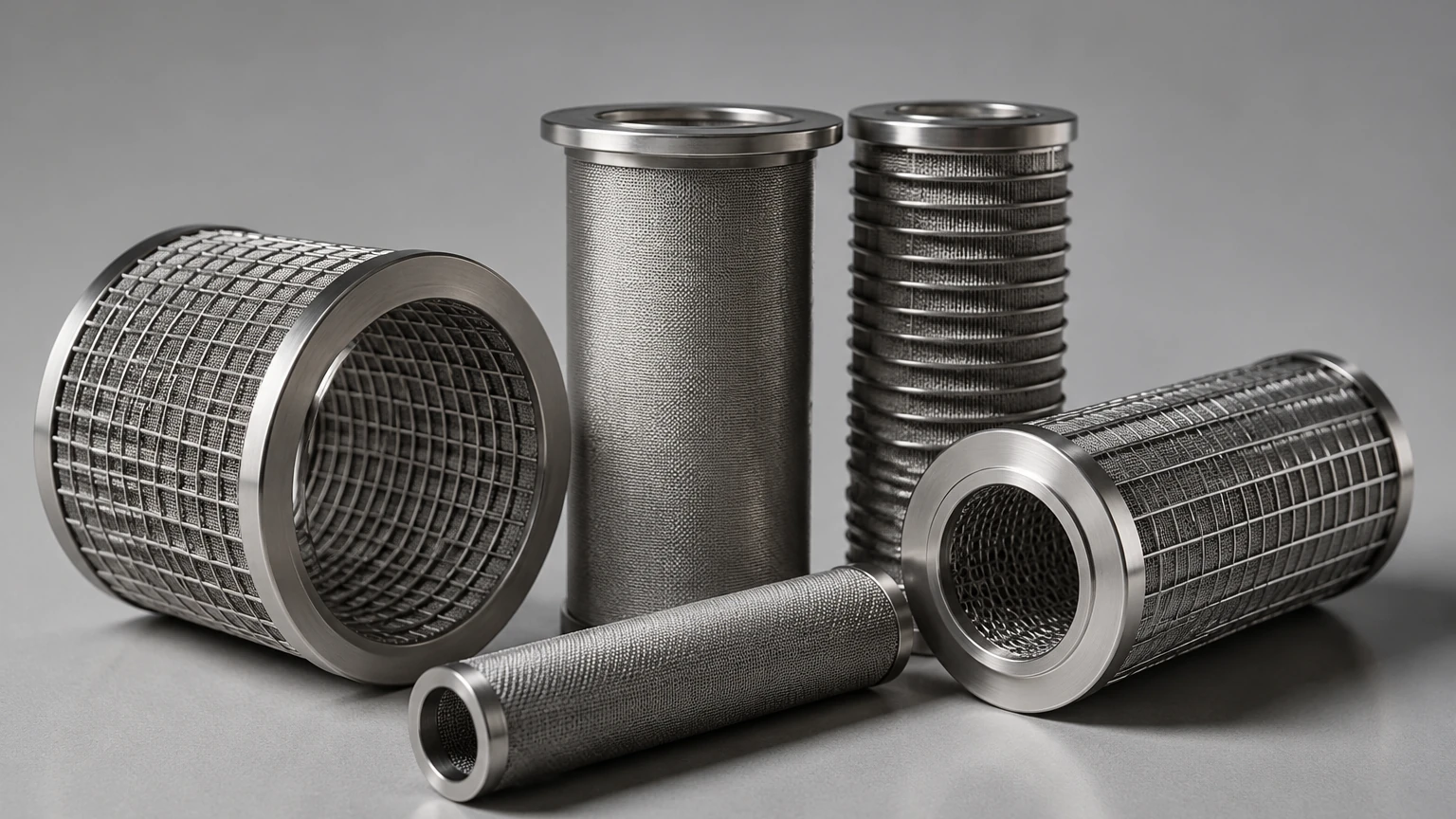
The "nominal" versus "absolute" micron rating is a critical distinction. In high-pressure L 80 systems, an absolute rating is often preferred to ensure that no particles larger than the specified size pass through the media. Sintered wire mesh is a preferred choice for these applications because the diffusion bonding process locks the wires in place, ensuring consistent pore size even under high pressure and vibration.
Pressure Drop and Flow Capacity
Every filter introduces a pressure drop (delta P) into the system. In systems using L 80 tubing, maintaining flow efficiency is paramount. A filter with too high a resistance will increase energy costs and may trigger premature bypass. Kaifil engineers filtration solutions by optimizing the surface area—often through pleating—to maximize flow capacity while maintaining the required filtration efficiency. This is particularly important in hydraulic systems where L 80 components are used to manage high-pressure fluid power.
Mechanical Strength and Collapse Pressure
Filter elements must be designed to withstand the maximum possible differential pressure that could occur if the filter becomes completely fouled. For L 80 applications, this collapse pressure rating must be carefully calculated. Using heavy-duty center cores and reinforced end caps ensures that the filter remains intact, preventing the downstream migration of both contaminants and filter media fragments.
Customization for Specialized L 80 Environments
Standard off-the-shelf filtration products rarely meet the specific needs of complex industrial systems. Customization is often the key to achieving optimal performance. Kaifil’s OEM capabilities allow for the development of bespoke filtration components that integrate seamlessly with L 80 infrastructure.
Tailored Geometry and Fittings
Whether the application requires a cylindrical cartridge, a conical strainer, or a flat disc filter, the geometry must be tailored to the available space and flow patterns within the L 80 system. Custom end fittings—such as NPT threads, flanges, or O-ring seals—ensure a leak-proof interface with the existing piping.
Specialized Media Selection
Beyond standard 304 and 316L stainless steel, certain L 80 environments may require more exotic materials. For instance, in highly acidic sour service, Hastelloy or Monel mesh may be necessary to provide the required longevity. Kaifil works closely with clients to select the most cost-effective material that meets the chemical resistance requirements of the specific application.
Evaluating the Total Cost of Ownership in Industrial Filtration
When purchasing filtration for L 80 systems, the initial acquisition cost is only one part of the equation. Engineers must consider the total cost of ownership (TCO), which includes maintenance, replacement frequency, and the potential cost of system failure.
Cleanability and Reusability
Unlike disposable polymer filters, stainless steel wire mesh filters are often cleanable and reusable. In L 80 systems where the cost of downtime is high, the ability to clean a filter element via backwashing, ultrasonic cleaning, or chemical treatment can significantly reduce long-term operational expenses. This durability is a hallmark of high-quality metal filtration.
Reliability and Risk Mitigation
The failure of a low-quality filter can lead to catastrophic damage in an L 80 completion or a high-pressure processing line. Investing in precision-engineered filtration components reduces the risk of bypass, media migration, and equipment damage. By ensuring that the filtration system is perfectly matched to the mechanical and chemical properties of the L 80 environment, operators can extend the service life of their entire infrastructure.
For technical professionals seeking to optimize their filtration processes, consulting with a manufacturer that understands the nuances of industrial materials like L 80 is essential. Detailed product options and engineering guidance are available on the Main Page, providing the resources necessary to make informed decisions for demanding industrial applications.
