


Breathing Air Filter for Compressor
In industrial environments where compressed air is used for human respiration—such as in sandblasting, tank cleaning, pharmaceutical manufacturing, or emergency response—the quality of the air is a matter of life safety. A standard industrial compressor produces air that is contaminated with water vapor, oil aerosols, carbon monoxide, and various particulates. To transform this raw output into breathable air, a specialized breathing air filter for compressor systems is required.
For engineers and facility managers, selecting the right filtration components involves understanding the intersection of fluid dynamics, material science, and stringent safety standards. This guide examines the technical requirements of breathing air filtration, the role of high-performance materials like stainless steel, and the critical factors in maintaining a safe, breathable air supply.
The Critical Role of Breathing Air Filtration
Compressed air is naturally susceptible to contamination from three primary sources: the intake air, the compressor itself, and the distribution piping. Ambient air contains moisture and dust, while oil-lubricated compressors introduce oil mist and potentially toxic carbon monoxide (CO) if the unit overheats. Furthermore, the high temperatures generated during compression can cause chemical reactions that produce volatile organic compounds (VOCs).
A breathing air filter for compressor applications must meet international standards such as EN 12021 (Europe) or CGA G-7.1 Grade D (United States). These standards dictate maximum allowable levels for oxygen, carbon monoxide, carbon dioxide, oil, and water vapor. Failure to implement a robust filtration sequence can lead to respiratory distress, long-term health complications for workers, and significant legal liability for the enterprise.
Multi-Stage Filtration Architecture
Achieving the purity levels required for human respiration is rarely the result of a single filter. Instead, it requires a multi-stage approach where each component targets a specific class of contaminant.
1. Pre-Filtration and Water Separation
The first stage typically involves a centrifugal separator or a high-capacity particulate filter. This stage removes bulk liquids (water and oil) and large solid particles. By removing the heaviest contaminants early, the system protects more sensitive downstream stages from premature clogging or saturation.
2. Coalescing Filtration
Coalescing filters are designed to remove fine liquid aerosols. As the air passes through a fiber matrix, small droplets collide and merge into larger drops that eventually drain away. For breathing air, these filters must be highly efficient, often rated to remove particles down to 0.01 microns. Stainless steel support structures within these cartridges ensure that the filter media remains stable under the high-pressure differentials common in compressor systems.
3. Adsorption and Odor Removal
Even after oil aerosols are removed, oil vapors and odors remain. Activated carbon filters are used in this stage. Through the process of adsorption, the carbon bed traps gaseous contaminants. In a breathing air filter for compressor setups, this stage is vital for ensuring the air is not only safe but also palatable and free of the "oily" taste often associated with compressed air.
4. Catalyst Stages (CO Conversion)
While not always part of the filter cartridge itself, many breathing air systems include a catalyst (such as Hopcalite) to convert lethal carbon monoxide into carbon dioxide. This stage is particularly sensitive to moisture, requiring the upstream air to be extremely dry.
Engineering Material Selection: The Case for Stainless Steel
In the design of industrial filtration components, material selection is a primary determinant of reliability. Stainless steel, particularly grades 304 and 316L, is the preferred material for high-performance filter elements in breathing air systems.
Corrosion Resistance
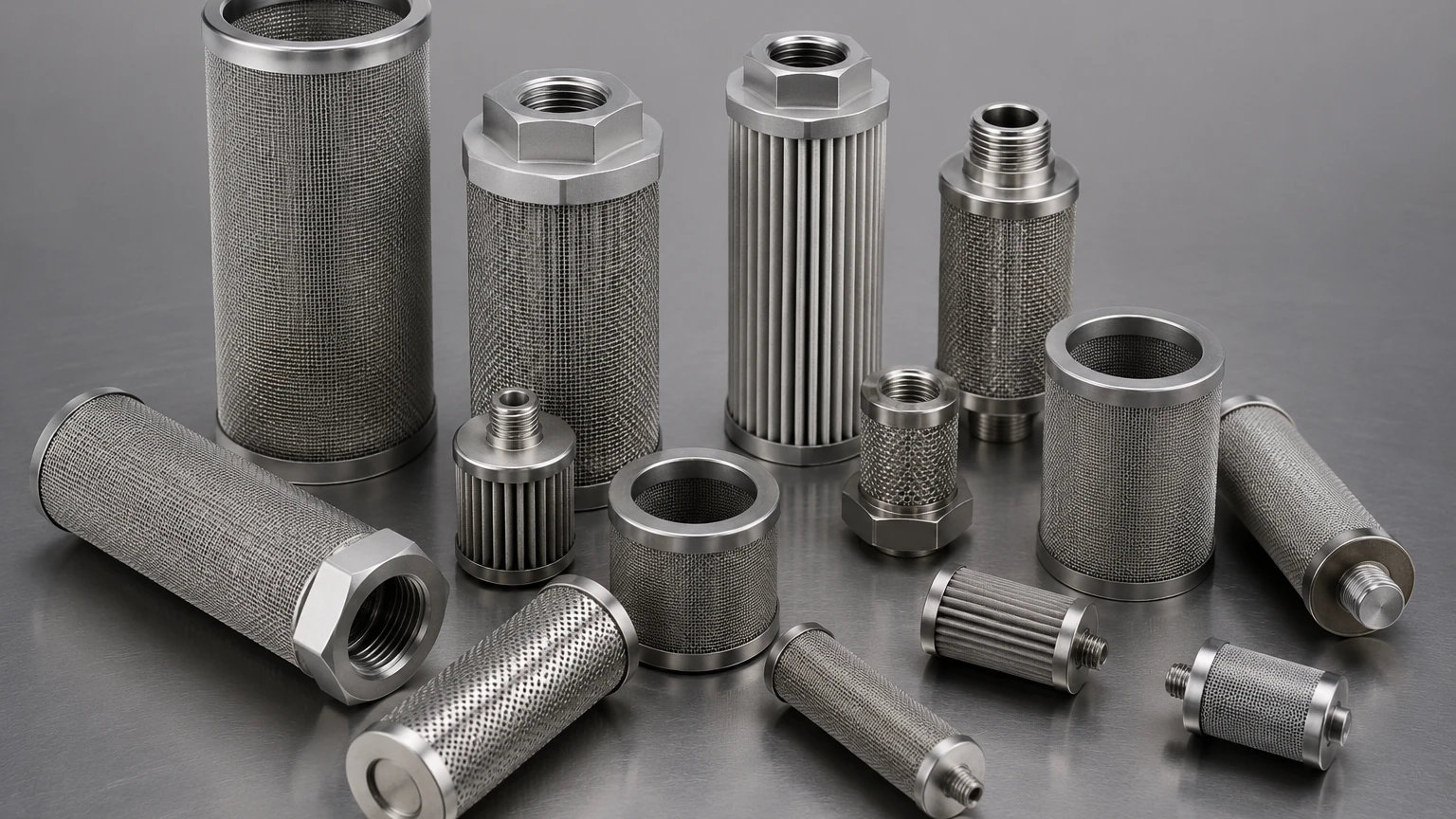
Breathing air systems often deal with high levels of moisture before the drying stage. Standard carbon steel or low-grade plastics can corrode or degrade, introducing new contaminants (rust or microplastics) into the air stream. Stainless steel wire mesh and sintered components provide superior resistance to oxidation, ensuring the structural integrity of the filter over its entire service life.
Structural Integrity under Pressure
Compressors operate at significant pressures, often exceeding 100 PSI for standard industrial use and much higher for SCBA (Self-Contained Breathing Apparatus) refilling. Stainless steel filter cartridges, such as those manufactured by Kaifil, are engineered to withstand high differential pressures without collapsing or bypassing. This mechanical strength is essential for maintaining a consistent filtration rating.
Cleanability and Durability
Unlike disposable synthetic media, stainless steel wire mesh filters can often be cleaned and reused in certain pre-filtration stages. This reduces the total cost of ownership and minimizes industrial waste. In the context of a breathing air filter for compressor systems, the durability of metal components ensures that the filter does not shed fibers—a common failure mode in lower-quality fiber-based filters.
Technical Evaluation Criteria for Engineers
When specifying or purchasing filtration components for breathing air, technical professionals must look beyond the basic micron rating. Several key performance indicators (KPIs) define the effectiveness of the system.
Filtration Precision and Efficiency
The micron rating must be viewed in the context of efficiency (Beta Ratio). For breathing air, a nominal rating is insufficient; absolute ratings are required to ensure that 99.9% of contaminants at the specified size are captured. Engineers should confirm the efficiency of the coalescing and particulate stages to ensure compliance with Grade D or EN 12021 requirements.
Pressure Drop (Delta P)
Every filter introduces resistance to the airflow. A high initial pressure drop forces the compressor to work harder, increasing energy consumption and wear. High-quality stainless steel mesh filters are designed to maximize open area, providing high filtration surface area while minimizing resistance. Monitoring the increase in pressure drop over time is the standard method for determining when a filter element needs replacement.
Flow Rate and Capacity
The filter must be sized to handle the maximum output of the compressor. If the flow rate exceeds the filter's design capacity, the velocity of the air passing through the media will be too high, leading to "breakthrough" where contaminants are forced through the filter. Conversely, an oversized filter may be unnecessarily expensive and take up valuable space.
Maintenance and Safety Protocols
The performance of a breathing air filter for compressor systems is not static. It degrades as the media becomes loaded with particulates or saturated with oils. A rigorous maintenance schedule is the only way to guarantee air safety.
1. Differential Pressure Monitoring: Gauges should be installed to monitor the pressure drop across each filter stage. A sudden drop in pressure may indicate a ruptured element, while a steady increase indicates the need for a change-out.
2. Regular Element Replacement: Even if the pressure drop is within limits, adsorption elements (like activated carbon) have a finite capacity for chemical capture. These must be replaced based on run hours or air quality testing results.
3. Air Quality Testing: Periodic laboratory analysis of the compressed air is mandatory in many jurisdictions. This involves taking a sample of the air and testing it for CO, CO2, oil, and moisture levels.
4. Drain Maintenance: Automatic drains on pre-filters and separators must be checked daily. If a drain fails, liquid water can carry over into the downstream filters, ruining the activated carbon and catalyst stages instantly.
Customization and OEM Solutions
Many industrial applications require non-standard filtration configurations due to space constraints, extreme temperatures, or unique flow requirements. For these scenarios, off-the-shelf solutions may not suffice. Custom-engineered stainless steel filter cartridges allow for precise control over the filtration media, end-cap configurations, and seal materials (such as Viton or EPDM) to ensure compatibility with the specific compressor oil and environmental conditions.
Working with a specialized manufacturer like Kaifil allows engineering teams to develop filtration components that are tailored to the specific demands of their equipment. Whether it is a unique wire mesh weave for high-flow pre-filtration or a precision-engineered housing for high-pressure breathing air, customization ensures that the filtration system is an optimized part of the larger compressor assembly.
Conclusion: Ensuring Reliable Air Quality
Selecting a breathing air filter for compressor systems is a high-stakes engineering task. By focusing on multi-stage filtration, choosing durable materials like stainless steel, and adhering to strict maintenance and testing protocols, facilities can ensure a continuous supply of safe, breathable air. The integration of high-quality filtration components not only protects the health of the workforce but also enhances the reliability and efficiency of the entire compressed air system.
For technical professionals seeking to optimize their filtration performance or explore custom OEM solutions, it is essential to partner with manufacturers who understand the nuances of industrial metal filtration. To learn more about precision filtration components and engineering support, you can Review product options and application support on our Main Page.
