


Breathing Air Filters for Compressors
In industrial environments where compressed air is utilized for human respiration—such as in pharmaceutical cleanrooms, chemical processing plants, or underwater diving operations—the quality of that air is a matter of critical safety and regulatory compliance. Standard industrial compressed air contains a variety of contaminants, including oil aerosols, water vapor, atmospheric dust, and carbon monoxide, which must be rigorously removed. Breathing air filters for compressors are the primary line of defense, ensuring that the air delivered to the end-user meets stringent international standards like EN 12021, CGA Grade D/E, and ISO 8573-1.
From an engineering perspective, selecting the right filtration system requires a deep understanding of the physical properties of contaminants and the mechanical limitations of the compressor system. This article examines the technical requirements, material considerations, and performance benchmarks necessary for effective breathing air filtration, providing a technical resource for engineers and purchasing teams seeking to optimize their systems.
The Technical Necessity of Breathing Air Filtration
When air is compressed, the concentration of atmospheric contaminants increases proportionally to the pressure ratio. A compressor drawing in "clean" ambient air at 1 bar and compressing it to 10 bar effectively increases the concentration of dust, pollen, and hydrocarbons by tenfold before even accounting for the oil and wear particles added by the compressor itself.
For breathing applications, the filtration system must address three primary phases of contamination:
1. Solid Particulates: Metallic scales, rust from piping, and atmospheric dust that can cause respiratory irritation or damage downstream equipment.
2. Liquid Aerosols and Vapors: Oil from the compressor’s lubrication system and water vapor which, if not removed, can lead to microbial growth or freezing in cold environments.
3. Gaseous Contaminants: Specifically carbon monoxide (CO) and carbon dioxide (CO2), along with odors and organic vapors that affect the safety and palatability of the air.
Achieving the required purity levels is rarely the result of a single filter. Instead, it involves a multi-stage approach designed to protect the most sensitive filtration media from premature saturation.
Engineering the Multi-Stage Filtration Process
To ensure consistent air quality and manage the total cost of ownership, breathing air systems typically employ a series of specialized filters. Each stage is designed to handle a specific type of contaminant, preventing the downstream high-efficiency stages from becoming clogged with bulk debris.
Stage 1: Bulk Water and Particulate Removal
This initial stage often utilizes centrifugal separators or high-porosity stainless steel wire mesh filters. The goal is to remove liquid water droplets and large particles (typically >10-25 microns). By using durable materials like those found on the Kaifil Main Page, engineers can implement pre-filters that withstand high pressure and are easily cleaned, extending the life of more expensive secondary elements.
Stage 2: Coalescing Filtration
Coalescing filters are perhaps the most critical component for removing oil aerosols and fine water mist. These filters work on the principle of coalescence, where sub-micron liquid particles are forced to collide and merge into larger droplets as they pass through a fiber matrix. These larger droplets then gravitate to the bottom of the filter housing for drainage. High-quality coalescing filters can reduce oil content to as low as 0.01 mg/m³.
Stage 3: Adsorption (Activated Carbon)
Even after coalescing, oil vapors and odors remain in the gaseous phase. Adsorption filters, typically containing activated carbon, utilize a massive surface area to chemically bond with these vapors. This stage is essential for ensuring the air is "taste-free" and safe for prolonged inhalation. However, activated carbon does not remove carbon monoxide, which requires a separate catalytic stage if CO levels are high.
Key Evaluation Criteria for Breathing Air Filters
When specifying breathing air filters for compressors, engineers must look beyond simple micron ratings. The following performance metrics are essential for evaluating the long-term viability of a filtration solution.
Filtration Efficiency and Micron Rating
Efficiency should be measured against the Most Penetrating Particle Size (MPPS), which usually falls between 0.1 and 0.3 microns. A filter rated at 99.99% efficiency for 0.3-micron particles provides significantly higher protection than one rated only for larger particles. For breathing air, a final stage particulate filter is often required to ensure no carbon dust from the adsorption stage enters the breathing line.
Pressure Drop (Delta P)
Every filter introduces resistance to the airflow, known as pressure drop. A high initial pressure drop forces the compressor to work harder, increasing energy consumption and wear. Engineers should select filters with a low "wet" pressure drop—the resistance measured when the filter is saturated with the liquids it is designed to remove. Monitoring Delta P is the most effective way to determine when a filter element requires replacement.
Flow Rate Capacity
Filters must be sized according to the maximum flow rate of the compressor at its lowest operating pressure. Undersized filters lead to excessive air velocity, which can cause "carryover," where contaminants are pulled through the filter media by the sheer force of the air, bypassing the filtration mechanisms entirely.
Material Selection: The Case for Stainless Steel
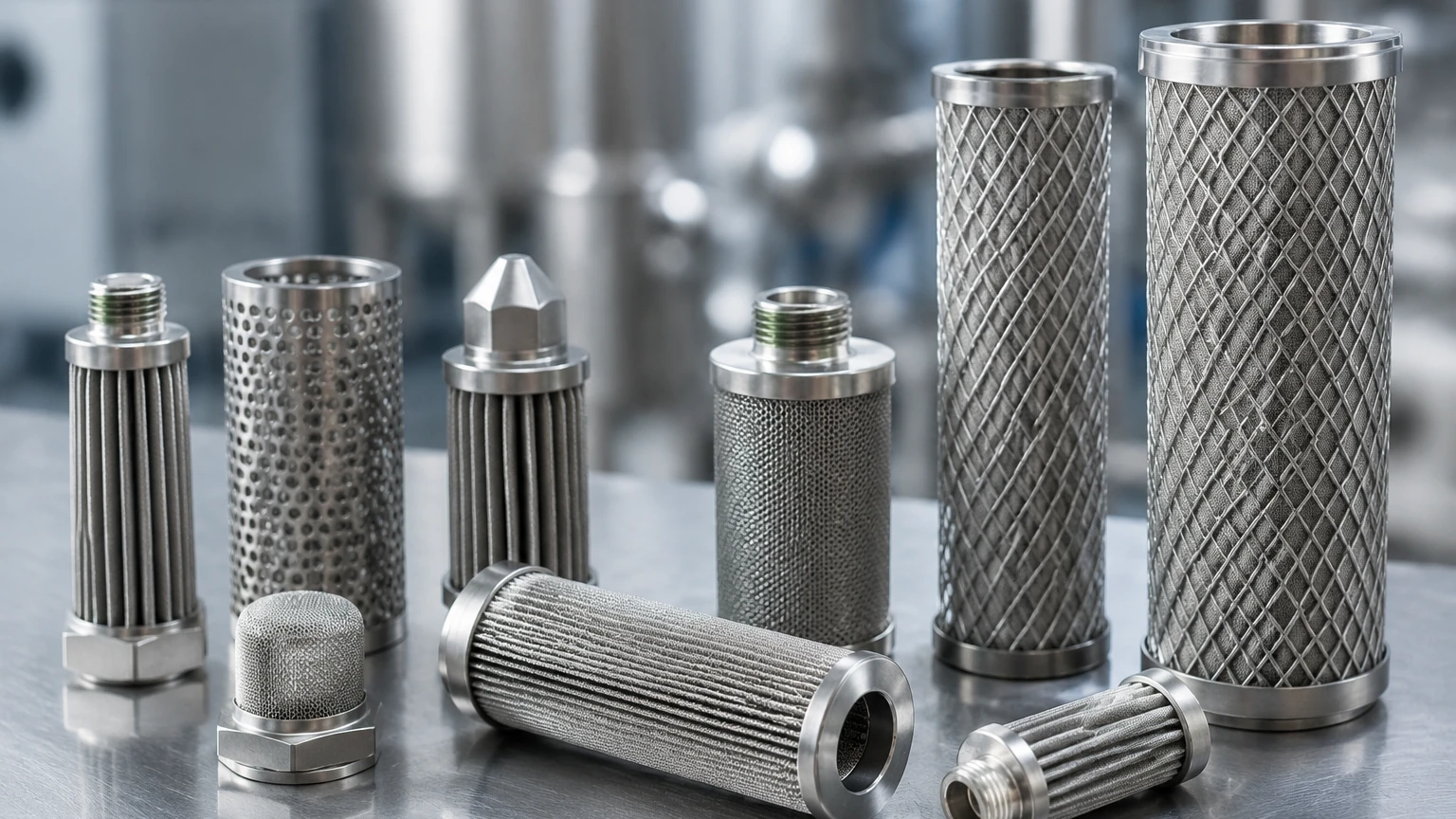
In industrial and demanding environments, the material of the filter housing and the internal support structures is paramount. While plastic or aluminum may suffice for light-duty applications, stainless steel (specifically 304 or 316L grades) is the gold standard for breathing air systems for several reasons:
* Corrosion Resistance: Breathing air systems often handle high levels of moisture. Stainless steel prevents the formation of rust within the filter itself, which would otherwise become a secondary source of contamination.
* Structural Integrity: Breathing air compressors often operate at high pressures (up to 300-400 bar for SCBA filling). Stainless steel components offer the necessary tensile strength and fatigue resistance to handle these cycles safely.
* Chemical Compatibility: In chemical processing or pharmaceutical environments, the filter may be exposed to aggressive cleaning agents or ambient vapors. Stainless steel ensures the filtration system remains inert and does not leach chemicals into the air stream.
Kaifil specializes in custom stainless steel filtration solutions, providing the precision metal components necessary to maintain these high standards in specialized industrial applications.
Common Risks and Failure Modes
Understanding how breathing air filters fail is essential for preventing accidents. The most common failure modes include:
1. Media Saturation: When a coalescing filter becomes overloaded with oil, it loses its ability to merge droplets, and oil begins to "blow through" the media. Regular maintenance and the use of high-capacity pre-filters are the primary mitigations.
2. Channeling: If the filter media is poorly packed or becomes damaged, air will take the path of least resistance, creating a "channel" where no filtration occurs. This is often a result of using low-quality, non-validated replacement cartridges.
3. Adsorption Exhaustion: Activated carbon has a finite capacity for vapor. Unlike particulate filters, adsorption filters do not show an increase in pressure drop when they are exhausted. Therefore, they must be replaced based on a strict schedule of operating hours or through the use of electronic vapor sensors.
Maintenance Cycles and Total Cost of Ownership (TCO)
For B2B purchasing teams, the initial purchase price of a filter housing is often a small fraction of the total cost of ownership. The true cost is found in energy loss due to pressure drop and the frequency of element replacement.
* Scheduled vs. Predictive Maintenance: While many manufacturers recommend replacing elements every 6 to 12 months, high-load environments may require more frequent changes. Implementing differential pressure gauges allows for predictive maintenance, ensuring elements are changed only when necessary, but before air quality is compromised.
* Cleanable vs. Disposable Elements: In the pre-filtration stages, using cleanable stainless steel wire mesh elements can significantly reduce waste and long-term costs. These elements can be ultrasonically cleaned and returned to service, providing a durable alternative to disposable synthetic media.
Customization and OEM Solutions
Industrial applications often present unique challenges that standard off-the-shelf filters cannot meet. Whether it is a requirement for a specific footprint in a mobile compressor unit or the need for specialized materials to handle extreme temperatures, customization is often necessary.
Engineers should partner with manufacturers capable of providing tailored filtration designs. This includes custom micron ratings, specialized end-cap configurations for filter cartridges, and housings designed for specific pressure ratings. By focusing on the specific needs of the application—whether it is food-grade air for packaging or high-pressure air for emergency services—custom solutions ensure that safety and efficiency are never compromised.
Conclusion: Ensuring Reliable Performance
Breathing air filters for compressors are more than just consumables; they are critical safety components that require careful engineering and selection. By understanding the multi-stage nature of filtration, the importance of material selection like stainless steel, and the technical benchmarks for performance, engineers can design systems that protect personnel and comply with international standards.
For technical professionals looking to optimize their filtration systems, focusing on high-quality components and reliable manufacturing partners is the first step toward achieving long-term operational success. For more information on custom stainless steel filtration components and industrial solutions, you may review product options and application support on the Kaifil Main Page.
When evaluating a potential filtration partner, always confirm their capabilities in material traceability, pressure testing, and customization to ensure the final product meets the specific rigors of your industrial environment.
