


Brewing Filtration
In the industrial production of beer, filtration serves as a critical bridge between the raw fermentation process and the delivery of a shelf-stable, visually appealing product. Brewing filtration is not a single event but a multi-stage separation process designed to remove solids, yeast, and spoilage organisms while preserving the delicate balance of flavor, aroma, and mouthfeel. For engineers and production managers, selecting the appropriate filtration media is a balance of technical performance, operational cost, and hygiene standards.
As breweries scale from craft operations to industrial-level production, the reliance on durable, high-performance materials like stainless steel becomes paramount. Unlike disposable media, stainless steel filtration components offer the structural integrity required for high-pressure environments and the chemical resistance necessary for rigorous Clean-in-Place (CIP) cycles. Understanding the nuances of brewing filtration requires a deep dive into the specific requirements of each production stage and the engineering characteristics of the filter media employed.
The Role of Filtration in the Brewing Process
Brewing filtration can be broadly categorized into primary, secondary, and final filtration stages. Each stage has distinct objectives and requires different filtration technologies to achieve the desired throughput and clarity.
Primary Filtration (Clarification)
Primary filtration typically occurs after fermentation and maturation. The goal is to remove the bulk of the yeast and large particulate matter, such as hop residues and proteins (trub). In many industrial setups, this involves the use of centrifuges or diatomaceous earth (DE) filters, but stainless steel wire mesh filters are increasingly used as pre-filters or as part of recovery systems to protect downstream equipment.
Secondary Filtration (Polishing)
Secondary filtration, often referred to as polishing, aims to achieve the brilliant clarity expected in many beer styles, particularly lagers and pilsners. At this stage, the filter must remove smaller particles, including residual yeast and protein-tannin complexes that cause chill haze. Stainless steel filter cartridges with precise micron ratings are often utilized here to provide a consistent barrier that ensures visual consistency across batches.
Final Filtration (Stabilization)
Final filtration is the last line of defense before packaging. This stage is focused on microbial stabilization, removing any remaining yeast or bacteria (such as *Lactobacillus* or *Pediococcus*) that could cause spoilage in the container. While membrane filters are common for sterile filtration, stainless steel housings and support structures are essential to maintain the pressure and hygiene levels required for this sensitive step.
Key Technologies in Brewing Filtration
The choice of filter material significantly impacts the efficiency of the brewing line. For industrial applications, stainless steel remains the gold standard due to its longevity and reliability.
Stainless Steel Wire Mesh Filters
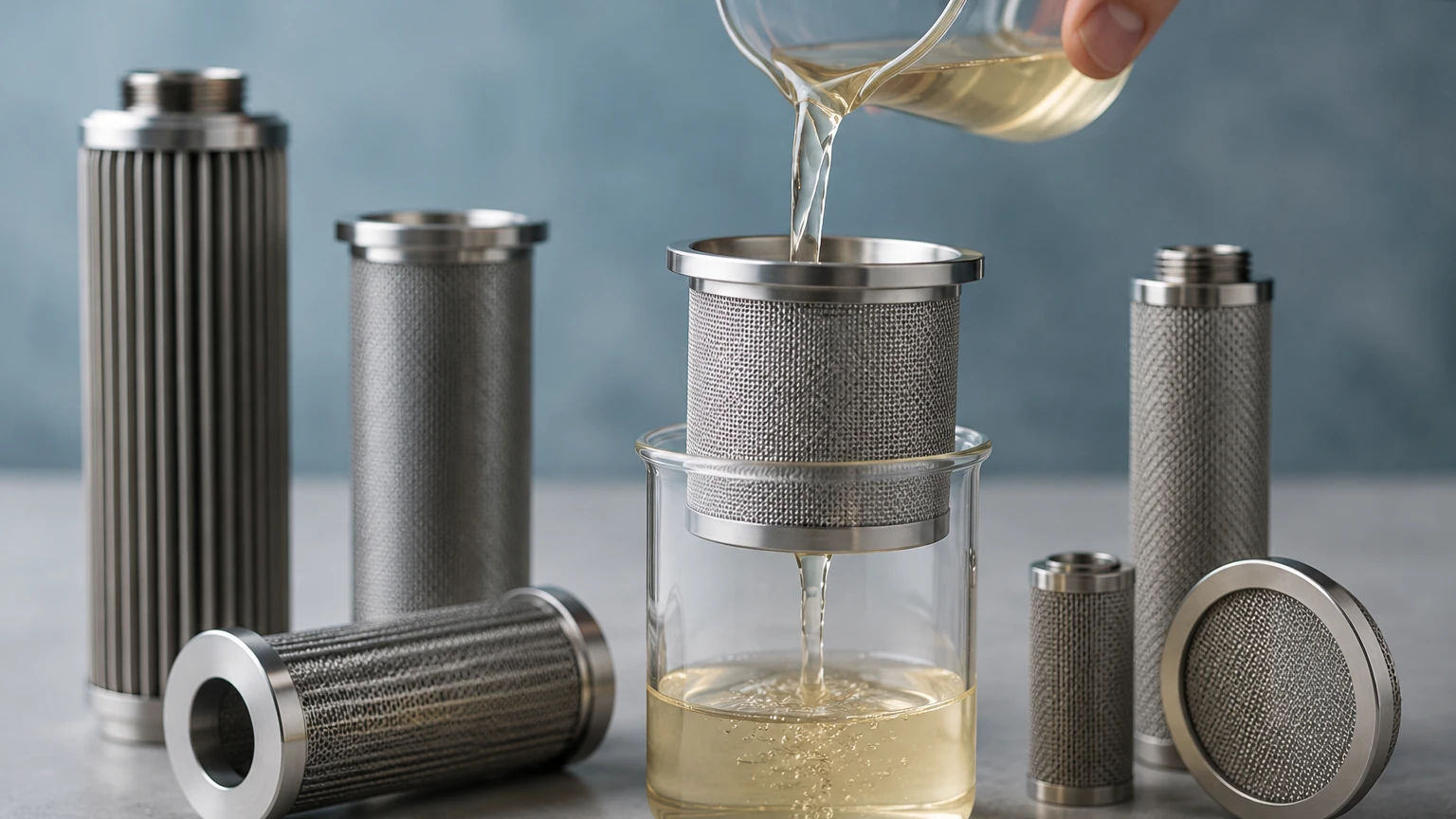
Wire mesh filters are versatile components used throughout the brewery. They are constructed from woven stainless steel wire, providing a controlled pore size. These filters are ideal for removing hop debris in the kettle or as coarse filters in the early stages of the cold block. Their robust construction allows them to withstand high flow rates and back-flushing, which is essential for maintaining continuous production cycles.
Sintered Metal Filter Cartridges
Sintered metal filters are created by fusing stainless steel powder or fibers under high heat and pressure. This creates a porous material with high structural strength and a very precise filtration rating. In brewing filtration, sintered cartridges are often used for gas filtration (CO2 or nitrogen) and for steam filtration used in sterilization. Their ability to operate at extreme temperatures makes them indispensable for hot-side applications.
Wedge Wire Screens
Wedge wire is a specialized type of screen used primarily in the mash tun (as a false bottom) or in the lauter tun. The V-shaped profile of the wire prevents clogging and allows for efficient drainage of the wort while retaining the grain bed. The engineering of wedge wire screens involves calculating the specific slot width to balance flow rate with grain retention, a critical factor in brewhouse efficiency.
Technical Engineering Considerations
When specifying filtration components for a brewery, engineers must look beyond simple micron ratings. Several technical factors dictate the performance and lifespan of the filter.
Micron Ratings: Nominal vs. Absolute
In brewing filtration, the distinction between nominal and absolute micron ratings is vital. A nominal rating indicates the ability of the filter to retain a majority of particles of a certain size, whereas an absolute rating guarantees the retention of 99.9% or more of particles at that size. For microbial stabilization, absolute-rated filters are non-negotiable. For earlier stages of clarification, nominal-rated stainless steel mesh may be more cost-effective while providing sufficient performance.
Material Selection: 304 vs. 316L Stainless Steel
While 304 stainless steel is suitable for many general-purpose applications, the brewing environment often demands 316L stainless steel. The "L" stands for low carbon, which improves weldability and resistance to intergranular corrosion. More importantly, 316L contains molybdenum, which provides superior resistance to chlorides and the aggressive acidic or alkaline chemicals used in CIP processes. Using 316L ensures that the filtration components do not pit or corrode, which could otherwise become a breeding ground for bacteria.
Pressure Drop and Flow Dynamics
Every filter introduces a pressure drop (delta P) into the system. As the filter accumulates solids, the pressure drop increases. Engineers must design systems that account for the maximum allowable pressure drop before the filter requires cleaning or replacement. Stainless steel filters are advantageous here because they can withstand much higher differential pressures than polymer-based filters without deforming or bypassing.
Customization and OEM Solutions
No two breweries are identical. Differences in recipe, equipment layout, and production volume mean that off-the-shelf filtration products often fall short of optimal performance. Customization is a key aspect of industrial filtration procurement. Manufacturers like Kaifil specialize in developing bespoke solutions that fit existing piping and vessel configurations.
Whether it is a custom-sized wire mesh strainer for a unique hop-back design or specialized filter cartridges for a proprietary clarification process, technical collaboration is essential. For more detailed information on available configurations and engineering support, professionals can visit the Main Page to explore the full range of custom stainless steel filtration capabilities.
Customization also extends to the mechanical interface of the filters. Options such as Tri-Clamp, threaded, or flanged connections ensure that the filtration components integrate seamlessly with the brewery’s hygienic piping standards, reducing the risk of leaks or dead spaces where contaminants can accumulate.
Operational Efficiency and Total Cost of Ownership (TCO)
While the initial investment in stainless steel filtration components may be higher than disposable alternatives, the Total Cost of Ownership (TCO) is significantly lower over the long term.
Durability and Reusability
Stainless steel filters are designed for years of service. Unlike depth filters or pleated paper cartridges that must be discarded after they become fouled, stainless steel mesh and sintered elements can be cleaned and reused hundreds of times. This reduces the ongoing cost of consumables and minimizes the waste generated by the facility.
Clean-in-Place (CIP) Compatibility
Efficiency in a modern brewery is tied to the speed and effectiveness of the CIP cycle. Stainless steel filters are fully compatible with high-temperature caustic and acid washes. They can also be steam-sterilized (SIP) to ensure total biological control. The ability to clean filters in place without disassembly reduces labor costs and downtime, directly impacting the brewery's bottom line.
Energy and Water Savings
Optimized filtration systems reduce the need for excessive pumping pressure and minimize water usage during the cleaning phase. By selecting filters with high open-area ratios and low initial pressure drops, breweries can reduce the energy consumption of their centrifugal pumps.
Common Risks in Brewing Filtration
Failure to manage the filtration process correctly can lead to several risks that compromise product quality and safety.
1. Oxidation: If the filtration system is not properly purged of air before use, the beer can pick up dissolved oxygen, leading to rapid staling and "cardboard" off-flavors.
2. Microbial Contamination: Dead zones in filter housings or damaged filter media can harbor bacteria. Regular integrity testing and the use of high-quality, crevice-free stainless steel components are the primary defenses against this risk.
3. Flavor Stripping: Over-filtering or using inappropriate media can remove desirable proteins and polyphenols, resulting in a beer that lacks body or head retention. Precision in micron selection is key to avoiding this outcome.
4. Structural Failure: In high-pressure applications, lower-quality filters may collapse or bypass. This not only ruins the batch but can also send debris downstream, damaging valves and filling equipment.
Conclusion: Selecting the Right Filtration Partner
Achieving excellence in brewing filtration requires more than just buying a filter; it requires an engineering partnership. Technical professionals must confirm several factors before finalizing a filtration strategy: the specific nature of the solids being removed, the chemical environment of the cleaning cycles, and the long-term throughput requirements of the production line.
By focusing on high-quality stainless steel solutions, breweries can ensure a consistent product that meets the highest standards of clarity and stability. Manufacturers like Kaifil provide the manufacturing expertise and engineering depth necessary to navigate these complex requirements, offering durable and precise filtration components that stand up to the rigors of the industrial brewing environment. Investing in the right filtration technology today ensures operational reliability and product quality for years to come.
