


Cartridge Dust Collector
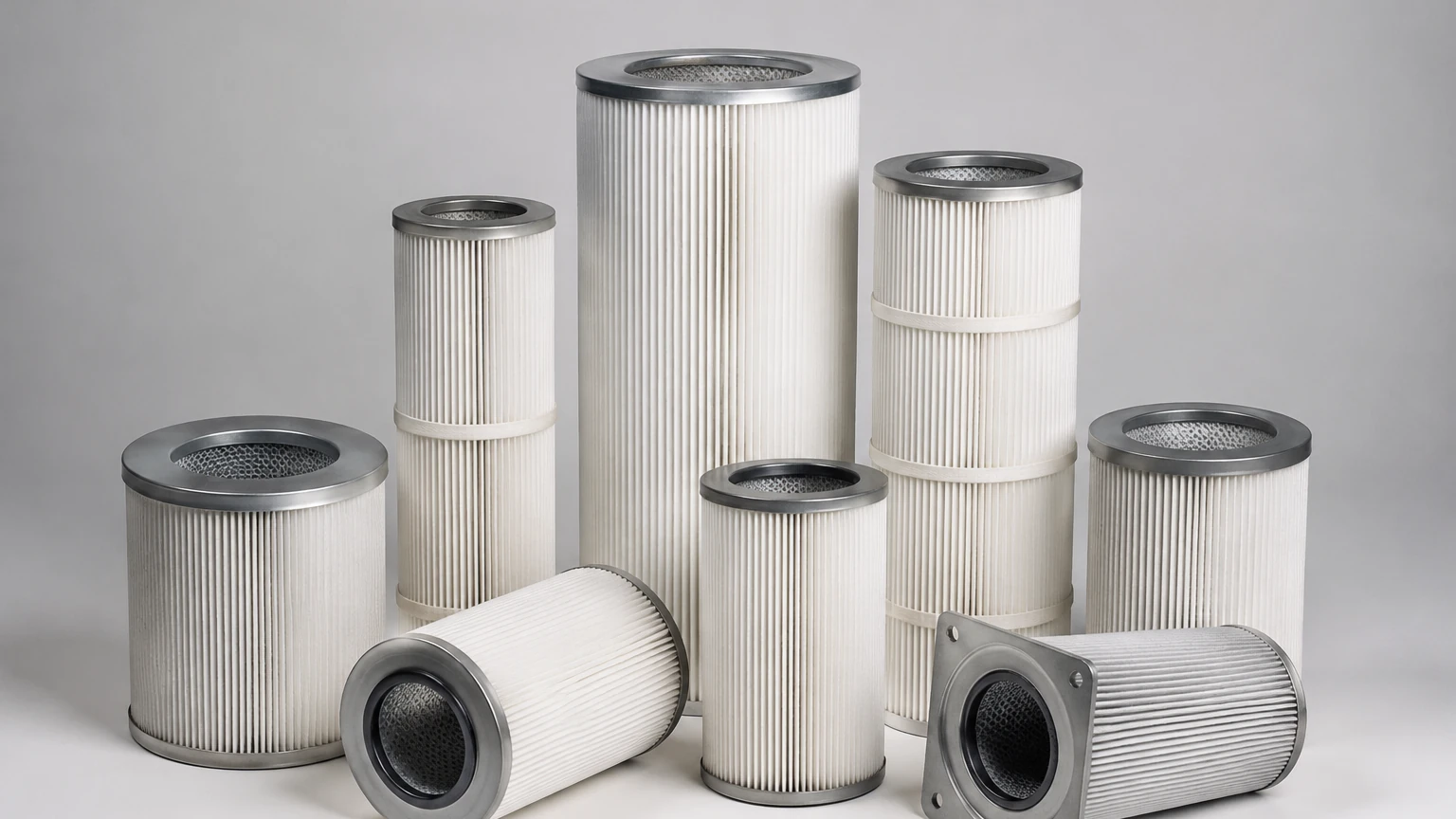
In industrial environments, maintaining air quality and managing particulate matter is a critical engineering requirement. A cartridge dust collector is a specialized filtration system designed to capture and remove dust, fumes, and other airborne contaminants from industrial exhaust streams. Unlike traditional baghouses, which utilize long cylindrical bags, cartridge collectors employ pleated filter media housed within a compact unit. This design significantly increases the available filtration surface area within a smaller footprint, making it a preferred choice for many modern manufacturing and processing facilities.
For engineers and procurement teams, selecting the right cartridge dust collector involves a deep understanding of the specific dust characteristics, airflow requirements, and the structural integrity of the filter media. As a manufacturer specializing in custom stainless steel filtration solutions, Kaifil provides technical expertise in developing high-performance components that ensure long-term operational efficiency and compliance with environmental standards.
Engineering Principles of Cartridge Filtration
The effectiveness of a cartridge dust collector relies on the principles of surface filtration. The pleated design of the filter cartridge allows for a high air-to-cloth ratio, which is the volume of air passing through a square foot of filter media per minute (CFM/ft²). By maximizing the surface area, these systems can handle high volumes of air while maintaining a low face velocity, which enhances the capture of fine sub-micron particles.
Mechanisms of Particle Capture
Industrial cartridge filters utilize four primary mechanisms to capture particulate matter:
1. Inertial Impaction: Larger, heavier particles traveling in the airstream are unable to adjust to the rapid changes in air direction around the filter fibers. These particles strike the fibers directly and become trapped.
2. Interception: Mid-sized particles that follow the air streamline come into contact with a fiber as they pass by and are captured by the media.
3. Diffusion: Very small particles (typically less than 0.1 microns) exhibit Brownian motion, moving erratically due to collisions with gas molecules. This increased movement increases the likelihood that they will contact and adhere to the filter media.
4. Sieving: This occurs when the space between the fibers is smaller than the particle itself, physically preventing the particle from passing through.
The Role of Pleat Geometry
The geometry of the pleats is a critical engineering factor. If pleats are too tightly packed, "bridge-over" can occur, where dust accumulates in the valleys of the pleats and cannot be effectively removed during the cleaning cycle. Conversely, pleats that are too shallow reduce the total filtration area. Precision in pleat spacing and the use of specialized support structures, such as stainless steel wire mesh, ensure that the cartridge maintains its shape under high differential pressure.
Material Selection and Media Compatibility
The choice of filter media is perhaps the most significant factor in the performance and longevity of a cartridge dust collector. While many standard applications use cellulose or polyester blends, demanding industrial environments often require advanced materials to withstand chemical exposure, high temperatures, or abrasive dust.
Stainless Steel and Metal Mesh Solutions
In applications involving corrosive gases, high-temperature processing, or the need for frequent ultrasonic cleaning, stainless steel filtration components are indispensable. Kaifil specializes in manufacturing custom stainless steel filter cartridges that offer superior mechanical strength compared to synthetic alternatives. These metal filters are particularly effective in:
* High-Temperature Applications: Where synthetic fibers would melt or degrade, stainless steel maintains structural integrity up to several hundred degrees Celsius.
* Chemical Processing: Resistance to acids, alkalis, and organic solvents prevents premature media failure.
* Food and Beverage: Stainless steel is inherently hygienic and can withstand the rigorous Clean-in-Place (CIP) protocols required in food-grade environments.
Specialized Coatings and Treatments
To enhance performance, base media can be treated with various coatings:
* PTFE Membrane: A thin layer of polytetrafluoroethylene (PTFE) provides excellent dust release properties and high efficiency for fine particles.
* Anti-Static (Carbon-Impregnated): Essential for handling combustible dusts, these materials dissipate static charges to prevent ignition.
* Flame Retardant: Used in applications like welding or grinding where sparks may enter the collector.
Key Evaluation Criteria for Industrial Selection
When evaluating a cartridge dust collector for a specific project, engineers must look beyond the initial purchase price. The total cost of ownership (TCO) is influenced by energy consumption, maintenance frequency, and the lifespan of the filter elements.
Air-to-Cloth Ratio (ACR)
The ACR is a fundamental metric. A high ACR (e.g., above 3.0:1 for certain dust types) may lead to rapid pressure drop increases and shortened filter life. For heavy dust loads or fine, friable dust, a lower ACR is generally recommended to ensure the pulse-jet cleaning system can effectively clear the media.
Pressure Drop and Energy Efficiency
Pressure drop is the resistance to airflow through the filter media. As dust builds up, the pressure drop increases, requiring the fan to work harder and consume more energy. A well-designed cartridge collector utilizes an automated pulse-jet cleaning system that monitors the differential pressure and triggers a blast of compressed air to dislodge the dust cake when a set point is reached. High-quality filter cartridges with optimized pleat designs help maintain a lower average pressure drop over time.
Micron Rating and Efficiency
It is vital to confirm the required filtration efficiency based on the particle size distribution of the dust. For many industrial applications, a MERV (Minimum Efficiency Reporting Value) rating is used, but for specific process filters, a percentage efficiency at a specific micron size (e.g., 99.9% at 0.5 microns) is more precise. Technical teams should consult the Main Page to review specific performance data for custom metal filtration components that meet these stringent requirements.
Customization and OEM Considerations
Standard off-the-shelf cartridge collectors may not always meet the unique requirements of specialized industrial processes. Customization is often necessary to address specific spatial constraints, unusual dust characteristics, or integration with existing machinery.
Structural Customization
Customized cartridge designs can include variations in:
* End Cap Configurations: Compatibility with specific mounting styles such as twist-lock, flange-mount, or bolt-on designs.
* Inner and Outer Cores: The use of perforated stainless steel or expanded metal cores provides the necessary support to prevent cartridge collapse under high vacuum or pressure conditions.
* Gasket Materials: Selecting the right elastomer (e.g., EPDM, Viton, Silicone) ensures a leak-proof seal that is compatible with the process temperature and chemistry.
OEM Partnership Benefits
Working with an OEM manufacturer like Kaifil allows engineering teams to develop proprietary filtration solutions. This collaboration ensures that the filtration component is perfectly matched to the system's airflow dynamics and the physical properties of the particulate being handled. From material selection to final production, a customized approach reduces the risk of system underperformance and unplanned downtime.
Maintenance, Replacement, and Common Risks
Even the most advanced cartridge dust collector requires regular maintenance to function at peak efficiency. Neglecting the filtration system can lead to reduced suction at the source, increased energy costs, and potential environmental non-compliance.
Monitoring the Pulse-Jet System
The pulse-jet cleaning system is the heart of a cartridge collector's self-cleaning capability. Engineers should regularly inspect:
* Diaphragm Valves: Worn or ruptured diaphragms will result in weak pulses that fail to clean the filters.
* Compressed Air Quality: Moisture or oil in the compressed air line can contaminate the filter media, causing dust to "mud" and permanently plug the pleats.
* Pulse Timing: Incorrectly set pulse intervals or durations can either waste compressed air or allow excessive dust buildup.
Identifying Filter Failure
Common risks associated with cartridge filters include "blinding" and structural failure. Blinding occurs when fine particles become deeply embedded in the media, and the cleaning system can no longer remove them. This is indicated by a high baseline pressure drop that does not return to normal after cleaning cycles. Structural failure, such as pleat collapse or gasket bypass, can lead to "dust leakage," where contaminants are visible in the exhaust stream. Regular visual inspections and the use of broken bag detectors (opacity monitors) are recommended for critical applications.
Replacement Cycles
The replacement cycle for cartridges varies significantly based on the application. While some filters in light-duty environments may last years, those in heavy industrial chemical or abrasive processes may need replacement every 6 to 12 months. Utilizing durable materials like stainless steel mesh can significantly extend these cycles by allowing for more aggressive cleaning and better resistance to mechanical wear.
Industry-Specific Applications
Cartridge dust collectors are versatile and find use across a broad spectrum of industries, each with its own set of technical challenges.
| Industry | Typical Contaminants | Key Filtration Requirement |
| :— | :— | :— |
| Chemical Processing | Fine powders, corrosive vapors | Chemical resistance, high efficiency |
| Pharmaceutical | Active ingredients, fine dust | Cross-contamination prevention, HEPA-grade filtration |
| Food & Beverage | Flour, sugar, spices | Food-grade materials, moisture resistance |
| Metalworking | Welding fumes, grinding dust | Flame retardancy, spark arrestance |
| Hydraulic Systems | Metallic wear particles | High pressure resistance, precise micron control |
In the pharmaceutical and food sectors, the ability to clean and reuse filtration components is a major advantage. Stainless steel cartridges are often preferred here because they can be sterilized and do not shed fibers into the product stream, ensuring a high level of purity.
Conclusion
A cartridge dust collector is a complex piece of industrial equipment where the performance is heavily dependent on the quality and suitability of the internal filter elements. By understanding the engineering fundamentals—from air-to-cloth ratios to the nuances of pleat geometry and material science—purchasing and technical teams can select systems that provide reliable, long-term service.
For organizations requiring specialized or high-durability filtration, focusing on custom-engineered solutions is often the most cost-effective path. Whether dealing with high temperatures, corrosive chemicals, or stringent purity standards, the integration of precision-manufactured stainless steel components ensures that the dust collection system operates within its designed parameters. For detailed technical specifications and support in developing a customized filtration strategy, engineers are encouraged to Review product options and application support to find the optimal solution for their specific industrial environment.
