


Cartridge Filter for Water Treatment
In the landscape of industrial fluid management, the selection of a cartridge filter for water treatment is a critical engineering decision that impacts system longevity, product purity, and operational overhead. Unlike residential systems, industrial-grade water filtration requires components capable of withstanding high flow rates, fluctuating pressures, and aggressive chemical environments. Stainless steel cartridge filters have emerged as the preferred solution for technical professionals seeking a balance between high-precision filtration and long-term durability.
Industrial water treatment encompasses a wide range of processes, from pre-filtration in reverse osmosis (RO) systems to the removal of suspended solids in cooling towers and the sterilization of process water in pharmaceutical manufacturing. Understanding the technical nuances of cartridge design, material science, and fluid dynamics is essential for optimizing these systems.
Fundamental Principles of Cartridge Filtration in Water Systems
At its core, a cartridge filter for water treatment operates on the principle of mechanical separation. As water passes through the filter media, particles larger than the pore size are trapped. However, the efficiency of this process depends heavily on the type of filtration—depth vs. surface—and the rating of the media.
Surface vs. Depth Filtration
Surface filtration occurs when particles are captured on the outer layer of the filter media. This is common in wire mesh and pleated metal filters. These designs offer a high surface area, which allows for higher flow rates and lower initial pressure drops. Depth filtration, conversely, involves a thicker media where particles are trapped throughout the entire cross-section. While depth filters can hold more contaminants, they are often more difficult to clean and regenerate compared to surface-based metal filters.
Nominal vs. Absolute Ratings
Engineers must distinguish between nominal and absolute micron ratings. A nominal rating indicates the filter can trap a large percentage of particles of a certain size, but it does not guarantee 100% efficiency. An absolute rating, typically verified through glass bead testing or the Beta Ratio method, ensures that 99.9% of particles above the specified micron size are removed. In critical applications like pharmaceutical water treatment or high-pressure hydraulic systems, absolute-rated stainless steel cartridges are mandatory to prevent downstream contamination.
Material Selection for Industrial Water Treatment
Material compatibility is the primary factor in determining the lifespan of a cartridge filter for water treatment. While polymer-based filters (polypropylene or PES) are common in low-demand scenarios, industrial applications often require the robust properties of stainless steel.
Stainless Steel 304 and 316L
Stainless steel 304 is suitable for general water treatment applications where corrosion risk is moderate. However, for systems involving brackish water, high-salinity environments, or chemical processing, 316L stainless steel is the industry standard. The addition of molybdenum in 316L provides superior resistance to pitting and crevice corrosion, especially in the presence of chlorides.
Thermal and Structural Stability
Metal filters excel in high-temperature environments where polymers would lose structural integrity. In steam filtration or hot process water cycles, stainless steel cartridges maintain their pore structure and filtration accuracy. Furthermore, they can withstand high differential pressures (Delta P) without collapsing, a common failure mode for disposable plastic cartridges during sudden flow surges.
Engineering Considerations for System Integration
Integrating a cartridge filter for water treatment into an existing industrial workflow requires careful calculation of hydraulic parameters. Oversizing a filter leads to unnecessary capital expenditure, while undersizing results in frequent maintenance and system downtime.
Pressure Drop and Flow Rates
The "clean pressure drop" is the initial resistance the filter offers to the fluid flow. As the filter accumulates debris, the pressure drop increases. Engineers must design systems with a clear understanding of the maximum allowable differential pressure before the filter must be cleaned or replaced. Utilizing pleated stainless steel designs can significantly increase the effective filtration area, thereby reducing the initial pressure drop and extending the service interval.
Sealing Mechanisms and Housing Compatibility
A filter is only as effective as its seal. Common sealing configurations include Double Open End (DOE), Code 7 (226 O-ring with fin), and Code 3 (222 O-ring). For industrial water treatment, high-integrity seals like the 226 locking tab configuration are preferred to prevent bypass, which occurs when unfiltered water leaks around the cartridge edges. Selecting the correct O-ring material—such as Viton, EPDM, or PTFE—is equally vital to ensure chemical compatibility with the treated water.
Customization Options for Specific Water Profiles
No two industrial water sources are identical. The particulate load in well water differs significantly from that of recycled process water. Consequently, a one-size-fits-all approach to filtration often fails. Customization is a core strength of specialized manufacturers like Kaifil, where filter components are engineered to meet specific site requirements.
Sintered Metal Mesh vs. Wedgewire
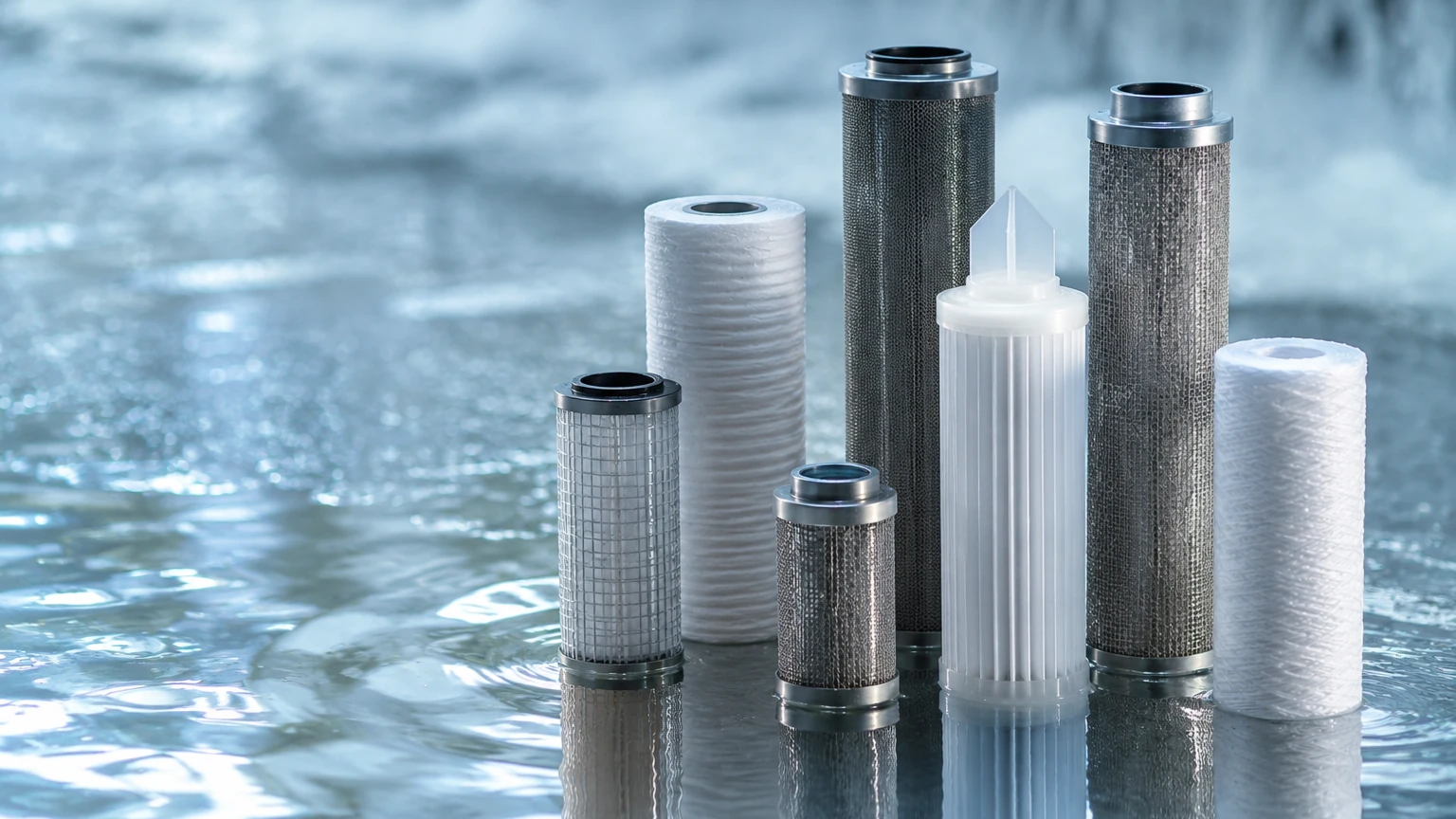
For heavy-duty applications involving sand, scale, or large organic debris, wedgewire or coarse sintered mesh provides excellent mechanical strength and ease of backwashing. For fine polishing of water, multi-layered sintered wire cloth offers precise pore distribution. Sintering—a process of bonding layers of wire mesh through heat and pressure—creates a rigid structure that does not migrate or shed fibers into the effluent stream, a critical requirement for food and beverage applications.
Pleated Designs for High Surface Area
When the goal is to maximize the time between cleaning cycles in a high-flow system, pleated stainless steel cartridges are the optimal choice. By folding the mesh media, the available surface area can be increased by 300% to 500% compared to a standard cylindrical filter. This design is particularly effective for removing fine suspended solids in cooling water loops.
Performance Evaluation and Maintenance Cycles
The total cost of ownership (TCO) of a cartridge filter for water treatment is determined not just by the purchase price, but by the maintenance requirements and the cost of replacement parts.
Cleanability and Regeneration
One of the primary advantages of stainless steel cartridges is their ability to be cleaned and reused. Depending on the contaminant, filters can be regenerated using:
* Backwashing: Reversing the flow of water to dislodge surface particles.
* Ultrasonic Cleaning: Using high-frequency sound waves in a solvent bath to remove deeply embedded particulates.
* Chemical Cleaning: Using mild acids or bases to dissolve scale or organic bio-films.
This reusability eliminates the recurring cost of purchasing and disposing of hundreds of plastic cartridges annually, making metal filters a more sustainable and cost-effective choice for large-scale operations.
Monitoring and Automation
Modern water treatment plants often utilize differential pressure sensors to monitor filter health in real-time. When the Delta P reaches a pre-set limit, the system can trigger an automated backwash cycle or alert operators that manual cleaning is required. This data-driven approach prevents "breakthrough," where high pressure forces contaminants through the filter media.
Common Risks in Industrial Water Filtration
Failure to properly specify a cartridge filter for water treatment can lead to several operational risks:
1. Media Migration: In low-quality disposable filters, fibers from the filter itself can break off and enter the clean water stream. Stainless steel sintered media eliminates this risk.
2. Bypass: If the cartridge is not properly seated or the O-rings fail, the water will take the path of least resistance, bypassing the filtration media entirely.
3. Biofouling: In water systems with high organic content, bacteria can grow on the filter surface, creating a slimy biofilm that rapidly increases pressure drop. Stainless steel is easier to sanitize with heat or chemicals to mitigate this issue.
Selecting the Right Cartridge Filter for Water Treatment
When evaluating suppliers and technical specifications, engineers should prepare a comprehensive data sheet that includes the fluid type, flow rate, operating temperature, maximum pressure, and the specific nature of the contaminants. For those looking to optimize their filtration systems with high-performance, custom-engineered solutions, it is beneficial to Review product options and application support on the Kaifil Main Page.
Before finalizing a purchase, technical teams should confirm the following:
* Beta Ratio: Is the micron rating absolute or nominal?
* Chemical Compatibility: Are the housing, media, and seals resistant to the specific chemicals in the water?
* Cleaning Protocol: Does the facility have the equipment (ultrasonic baths or backwash headers) to support reusable metal filters?
* Compliance: Does the filter meet industry-specific standards, such as FDA requirements for food contact or ASME standards for pressure vessels?
By focusing on these technical boundaries, industrial operators can ensure that their water treatment systems remain efficient, reliable, and cost-effective over their entire service life. Stainless steel filtration components represent a significant upgrade over disposable options, providing the structural integrity and precision required for the most demanding industrial environments.
