


Cartridge Filter Housing Manufacturer
In industrial filtration systems, the cartridge filter housing serves as the critical pressure vessel that contains and supports the filter elements. Selecting a qualified cartridge filter housing manufacturer is a strategic decision that impacts the safety, efficiency, and longevity of the entire process line. These housings are engineered to withstand specific pressures, temperatures, and chemical environments while ensuring that the fluid passes through the filtration media without bypass.
For engineers and procurement professionals, understanding the technical nuances of housing construction—from material grades to closure mechanisms—is essential for optimizing system performance. A manufacturer must not only provide a physical container but also offer the engineering expertise required to match the housing design with the specific flow dynamics and filtration requirements of the application.
Engineering Fundamentals of Industrial Filter Housings
The primary function of a filter housing is to provide a leak-proof environment where fluid can be directed through a filter cartridge. As a cartridge filter housing manufacturer, the focus remains on structural integrity and hydraulic efficiency. Most industrial housings are constructed from stainless steel due to its superior mechanical properties and resistance to corrosion.
Material Selection: SS304 vs. SS316L
Stainless steel 304 is the standard for many general-purpose industrial applications, including municipal water treatment and basic cooling systems. However, in more demanding environments, such as chemical processing or pharmaceutical manufacturing, SS316L is preferred. The "L" denotes low carbon content, which improves weldability and reduces the risk of intergranular corrosion. SS316L also contains molybdenum, which significantly enhances resistance to pitting and crevice corrosion in chloride-rich environments.
Pressure Ratings and Compliance
Industrial housings must be designed to handle the maximum operating pressure of the system, including potential pressure surges. Manufacturers typically offer standard housings rated for 100 PSI to 150 PSI, but high-pressure applications may require custom-engineered vessels rated for 300 PSI or higher. Adherence to international standards, such as the ASME Boiler and Pressure Vessel Code, ensures that the housing has undergone rigorous design verification and testing, including hydrostatic pressure tests to 1.5 times the design pressure.
Key Evaluation Criteria for Choosing a Manufacturer
When evaluating a cartridge filter housing manufacturer, technical capability and quality assurance protocols are more significant than unit price alone. A reliable partner should demonstrate expertise in several core areas of production and design.
Precision Manufacturing and Welding
The integrity of a filter housing relies heavily on the quality of its welds. Manufacturers utilizing advanced TIG (Tungsten Inert Gas) or orbital welding processes provide cleaner, stronger joints that are less prone to failure under thermal cycling or vibration. Furthermore, the internal and external surface finishes must be appropriate for the application. For sanitary applications, electropolishing or mechanical polishing to a specific Ra (Roughness Average) value is mandatory to prevent bacterial growth and ensure ease of cleaning.
Customization and OEM Capabilities
Off-the-shelf solutions often fail to meet the spatial or functional constraints of complex industrial skids. A specialized manufacturer should offer OEM services, allowing for the customization of inlet and outlet sizes, connection types (such as NPT, BSP, or ANSI flanges), and overall vessel height. This flexibility is crucial for integrating filtration units into existing piping networks without requiring extensive modifications. For those seeking comprehensive filtration components, exploring Main Page can provide insights into how customized designs are integrated into broader industrial solutions.
Quality Control and Documentation
A reputable manufacturer provides full traceability for all materials used in construction. This includes Mill Test Reports (MTRs) for the stainless steel and certificates of compliance for gaskets and O-rings. Testing protocols should include leak testing, dimensional inspections, and, where required, non-destructive testing (NDT) such as X-ray or dye penetrant inspection of critical welds.
Structural Design and Closure Mechanisms
The method by which a housing is opened and closed significantly affects maintenance downtime and operator safety. Manufacturers offer several closure designs tailored to different operational needs.
* V-Band Clamps: These are commonly used for low-pressure, light-duty applications. They offer a quick-opening feature but are generally limited in their pressure-handling capabilities compared to bolted designs.
* Swing Bolt Closures: This is the industry standard for high-pressure and heavy-duty industrial housings. Swing bolts allow for relatively fast access to the filter elements without the need for specialized tools, while providing a secure, high-integrity seal that can withstand significant pressure fluctuations.
* Threaded Lids: Often found on single-round housings, threaded tops are simple and cost-effective but may require more physical effort to open after long periods of service due to thread binding or seal compression.
Housing Configurations
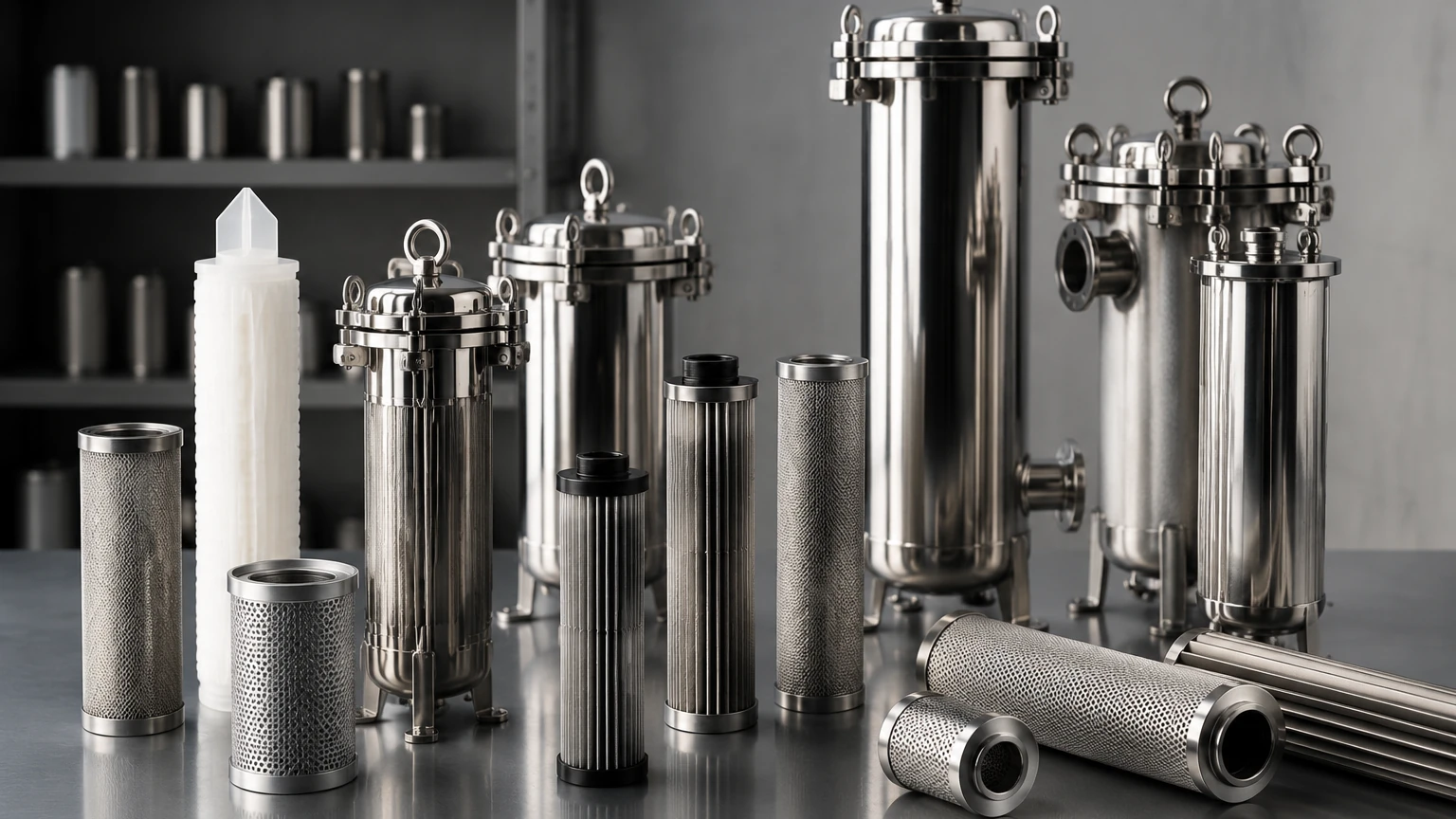
Manufacturers produce both single-round and multi-round housings. Single-round housings are used for lower flow rates or point-of-use filtration. Multi-round housings, which can contain anywhere from 3 to over 100 cartridges, are designed for high-capacity industrial processes. The internal arrangement—specifically the design of the tubesheet and the cartridge hold-down plate—is vital for preventing fluid bypass, which occurs when unfiltered liquid escapes around the ends of the cartridges.
Performance Optimization and Internal Components
A high-quality cartridge filter housing manufacturer pays close attention to the internal components that facilitate efficient filtration. These include the riser pipes, spring-loaded caps, and sealing seats.
Sealing Mechanisms
The seal between the cartridge and the housing is the most frequent point of failure in filtration systems. Manufacturers must ensure that the housing seats are compatible with standard cartridge end-cap styles, such as Double Open End (DOE), Code 7 (226 O-ring with locking tabs), or Code 3 (222 O-ring). The choice of O-ring material—such as EPDM, Viton, Silicone, or PTFE-encapsulated Viton—must be based on the chemical compatibility of the process fluid and the operating temperature.
Flow Dynamics and Pressure Drop
The internal geometry of the housing influences the "clean pressure drop" (ΔP). A well-designed housing minimizes turbulence and flow restriction at the inlet and outlet ports. Manufacturers use fluid dynamics principles to size the ports and internal bypass-free zones, ensuring that the majority of the system pressure is available for the filtration process itself rather than being lost to housing resistance.
Maintenance Considerations and Total Cost of Ownership
While the initial purchase price of a filter housing is a factor, the total cost of ownership (TCO) is driven by durability and ease of maintenance. A cheaply manufactured housing may suffer from frequent seal failures, stripped threads, or corrosion, leading to expensive downtime.
Ease of Cleaning and Drainage
Effective maintenance requires the ability to completely drain the housing before cartridge replacement. Manufacturers should include dedicated drain ports at the lowest point of the vessel and vent ports at the highest point. In applications involving hazardous chemicals or high temperatures, these features are essential for operator safety. For sanitary processes, the housing must be designed with "clean-in-place" (CIP) or "steam-in-place" (SIP) capabilities, eliminating dead legs where contaminants could accumulate.
Replacement Cycles and Durability
Stainless steel housings from a premium manufacturer are designed for decades of service. Unlike plastic housings, which can embrittle over time due to UV exposure or chemical degradation, metal housings maintain their structural integrity. When selecting a manufacturer, engineers should confirm that replacement parts, such as gaskets and swing bolt assemblies, are readily available to prevent prolonged outages during routine maintenance.
Industry-Specific Requirements
Different sectors impose unique demands on cartridge filter housing manufacturers.
* Food and Beverage: Requires 3A or FDA-compliant materials and high-polish finishes to ensure no bacterial niches exist.
* Pharmaceutical: Often demands electropolished surfaces (Ra < 0.4 µm) and full documentation for validation purposes.
* Chemical Processing: Focuses on material compatibility with aggressive solvents or acids, often requiring specialized alloys like Hastelloy or Duplex stainless steel.
* Water Treatment: Prioritizes high-flow capacity and resistance to environmental corrosion, often utilizing SS304 or SS316 with bead-blasted exterior finishes.
By partnering with a manufacturer that understands these specific regulatory and technical landscapes, industrial users can ensure their filtration systems remain compliant and effective. A manufacturer's ability to provide technical support, from initial sizing calculations to post-installation troubleshooting, is a hallmark of a professional B2B relationship.
In conclusion, the selection of a cartridge filter housing manufacturer is a foundational step in building a reliable industrial filtration system. By focusing on material quality, engineering precision, and the ability to customize designs to specific application needs, engineers can secure a solution that provides consistent performance and a low total cost of ownership. For more information on high-performance filtration components and custom manufacturing capabilities, visit the Main Page to explore professional solutions tailored to demanding industrial environments.
