


Casing Materials
In industrial filtration, the selection of casing materials is as critical as the choice of the filter media itself. The filter casing, or housing, serves as the primary pressure vessel that contains the filtration process, protects the internal elements from external damage, and ensures that the fluid remains within the designated flow path. For engineers and procurement specialists, understanding the technical nuances of various casing materials is essential for ensuring system longevity, safety, and operational efficiency.
Selecting the appropriate material for a filter housing requires a multi-faceted evaluation of the operating environment. Factors such as chemical compatibility, temperature fluctuations, pressure requirements, and hygiene standards must all be weighed against the total cost of ownership. This guide provides a technical overview of the primary materials used in industrial filter casings, with a focus on stainless steel and high-performance alloys, to assist in making informed engineering decisions.
Engineering Considerations for Material Selection
Before specifying a material, engineers must define the boundary conditions of the application. The casing is subject to mechanical stresses that differ significantly from the internal filter element. While the mesh or cartridge focuses on particle retention, the casing must withstand the full system pressure and any external environmental loads.
Pressure and Temperature Ratings
The mechanical strength of casing materials decreases as temperature increases. For instance, the allowable stress for 316L stainless steel is significantly lower at 300°C than at ambient temperature. Engineers must consult the ASME Boiler and Pressure Vessel Code (BPVC) or equivalent local standards to ensure the wall thickness and material grade are sufficient for the maximum allowable working pressure (MAWP) at the maximum operating temperature. Failure to account for these variables can lead to material fatigue or catastrophic vessel failure.
Chemical Compatibility and Corrosion Resistance
Corrosion is the primary cause of casing failure in chemical processing and water treatment applications. The casing material must be inert to the process fluid. Even "corrosion-resistant" materials like stainless steel can succumb to specific types of attack, such as pitting or stress corrosion cracking (SCC), if exposed to high concentrations of chlorides or acidic environments. Evaluating the Pitting Resistance Equivalent Number (PREN) of a material is a standard method for comparing the performance of different alloys in chloride-rich environments.
The Dominance of Stainless Steel in Industrial Filtration
Stainless steel remains the industry standard for high-quality filtration casings due to its versatility, durability, and cost-effectiveness. As a manufacturer specializing in stainless steel solutions, Kaifil utilizes various grades to meet specific industrial demands. You can explore more about these capabilities on our Main Page.
304/304L Stainless Steel
Grade 304 is the most common stainless steel used in general industrial applications. It offers good corrosion resistance to many oxidizing acids and is easily fabricated. However, it is susceptible to pitting in chloride environments. The "L" designation (304L) indicates a low carbon content, which is essential for components that require extensive welding. Low carbon prevents carbide precipitation during the welding process, maintaining the material's corrosion resistance at the heat-affected zones (HAZ).
316/316L Stainless Steel
For more demanding environments, 316L stainless steel is the preferred choice. The addition of 2-3% molybdenum significantly enhances its resistance to pitting and crevice corrosion in chloride-containing media. This makes it the standard for marine applications, pharmaceutical production, and food and beverage processing. Like 304L, the low-carbon 316L variant is used to ensure the integrity of welded joints in filter housings.
High-Performance Alloys for Extreme Environments
In applications where standard stainless steels fail, specialty alloys must be considered. These materials are often used in the petrochemical, desalination, and specialty chemical industries where the process fluids are highly aggressive.
Duplex and Super Duplex Stainless Steels
Duplex stainless steels, such as 2205, feature a dual-phase microstructure consisting of both austenite and ferrite. This structure provides nearly double the mechanical strength of austenitic stainless steels (like 316L) and superior resistance to stress corrosion cracking. Super Duplex grades (e.g., 2507) offer even higher resistance to localized corrosion, making them ideal for high-pressure seawater filtration systems.
Nickel-Based Alloys (Hastelloy and Inconel)
When dealing with highly acidic or alkaline fluids at elevated temperatures, nickel-based alloys like Hastelloy C-276 are often the only viable option. These materials provide exceptional resistance to a wide range of chemical environments, including wet chloride gas, hypochlorite, and chlorine dioxide. While the initial capital expenditure is higher, the extended service life often justifies the cost in critical processes.
Surface Finishes and Sanitary Requirements
The internal and external surface finish of the casing is a critical specification, particularly in the pharmaceutical and food industries. The roughness of the material surface, measured as Ra (Roughness Average), dictates how easily the casing can be cleaned and sterilized.
Mechanical Polishing
Mechanical polishing uses abrasives to smooth the surface of the metal. For standard industrial applications, a 2B mill finish or a 120-grit polish may be sufficient. However, for sanitary applications, a higher polish (e.g., 240 or 320 grit) is required to eliminate microscopic crevices where bacteria or contaminants could lodge.
Electropolishing
Electropolishing is an electrochemical process that removes a thin layer of material from the surface, resulting in a mirror-like finish. This process not only reduces the surface roughness to extremely low levels (often below 0.4 μm Ra) but also passivates the steel by increasing the chromium-to-iron ratio at the surface. This significantly enhances the corrosion resistance and cleanability of the filter casing, making it essential for high-purity water systems and sterile filtration.
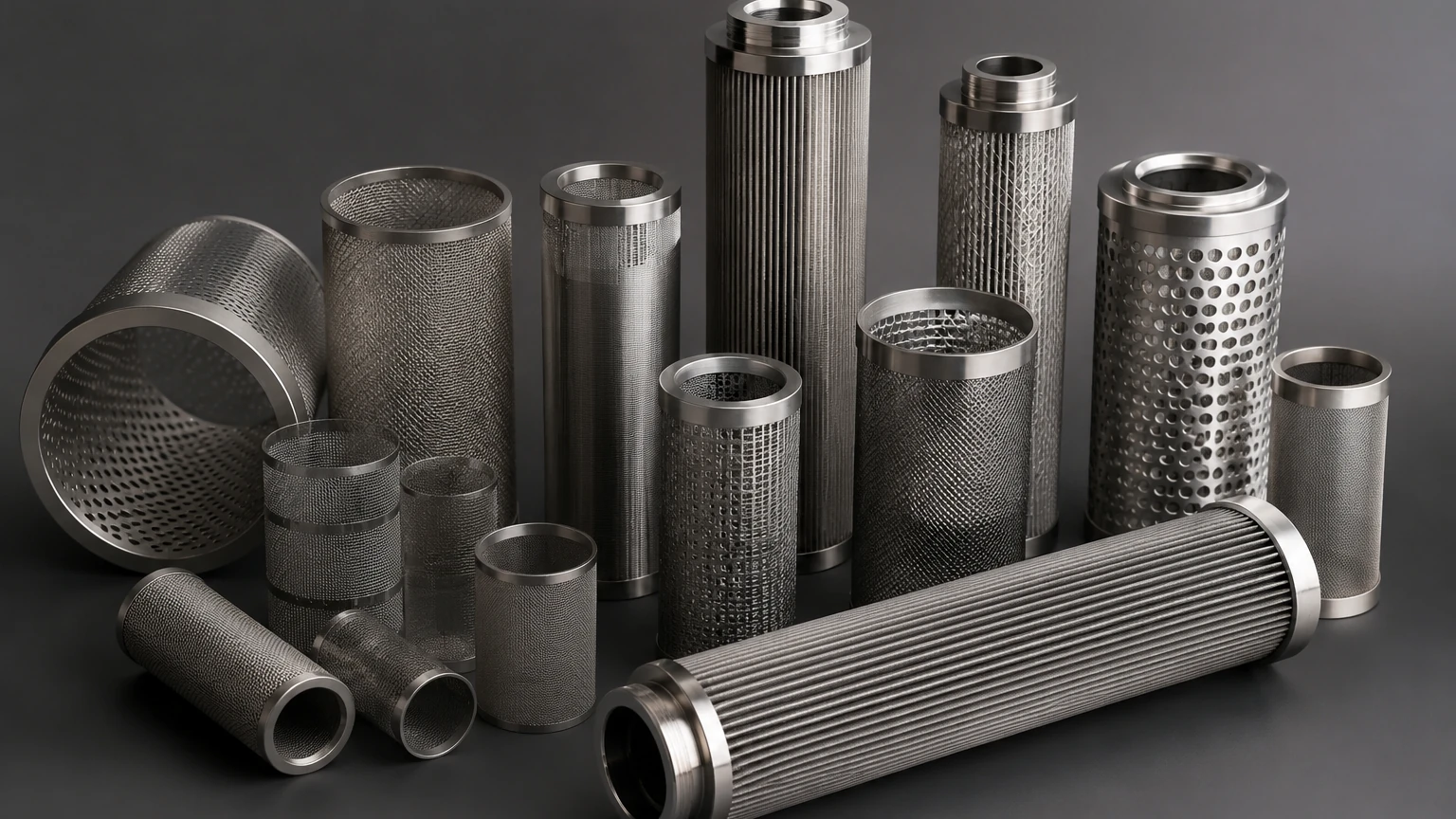
Sealing Materials and Gasket Compatibility
While the primary focus is on the metal casing, the choice of sealing materials (O-rings and gaskets) is inseparable from the casing design. The seal must be compatible with both the process fluid and the casing material to prevent leaks.
* Buna-N (Nitrile): Suitable for general water and oil applications at moderate temperatures.
* EPDM: Excellent for steam, water, and many polar solvents, but should not be used with petroleum-based oils.
* Viton (FKM): Offers high chemical and temperature resistance, making it suitable for many aggressive chemicals and fuels.
* PTFE/Teflon: Provides nearly universal chemical resistance but has limited elasticity, often requiring encapsulated designs for effective sealing.
Engineers must ensure that the gasket material does not degrade or swell, as this can lead to bypass or difficulty in opening the housing for maintenance.
Maintenance, Durability, and Total Cost of Ownership
When evaluating casing materials, it is a mistake to focus solely on the initial purchase price. The total cost of ownership (TCO) includes installation, maintenance, downtime, and replacement frequency. A cheaper material that requires frequent replacement or causes unplanned downtime due to corrosion will quickly become more expensive than a higher-grade alloy.
Inspection and Replacement Cycles
Filter housings should be inspected regularly for signs of wall thinning, pitting, or weld decay. In high-pressure applications, non-destructive testing (NDT) such as ultrasonic thickness gauging or dye penetrant inspection of welds may be required. A well-chosen casing material, such as 316L stainless steel for a mildly corrosive environment, can last for decades with minimal maintenance, whereas an under-specified material might fail within months.
Customization and OEM Solutions
Every industrial process has unique requirements. Standard off-the-shelf housings may not always provide the optimal balance of performance and cost. Customization options, such as specialized inlet/outlet configurations (flanged, NPT, or Tri-clamp), heating jackets for viscous fluids, or specific mounting brackets, allow the filter to be integrated seamlessly into the existing infrastructure. Kaifil provides extensive OEM capabilities to ensure that the casing design meets the exact engineering specifications of the client.
Conclusion: Making the Right Choice
The selection of casing materials is a foundational engineering decision that impacts the safety, reliability, and cost-effectiveness of an industrial filtration system. By carefully considering the chemical environment, pressure and temperature demands, and hygiene requirements, engineers can specify a housing that provides optimal performance over a long service life.
Whether the application requires the standard reliability of 304 stainless steel or the extreme resistance of a Super Duplex alloy, the priority must always be on material integrity and engineering precision. For detailed technical specifications on our range of stainless steel filtration components and customized solutions, please visit our Main Page.
