


Catalytic Filters
In the landscape of modern industrial processing, the requirement for high-efficiency filtration often intersects with the need for chemical transformation. Catalytic filters represent a specialized class of filtration technology designed to perform this dual role. By integrating a catalytic agent with a robust physical filtration substrate, these components allow for the simultaneous removal of particulate matter and the gaseous conversion of pollutants or process intermediates. For engineers and procurement teams in the chemical, pharmaceutical, and energy sectors, selecting the right catalytic filter involves a deep understanding of material science, fluid dynamics, and chemical kinetics.
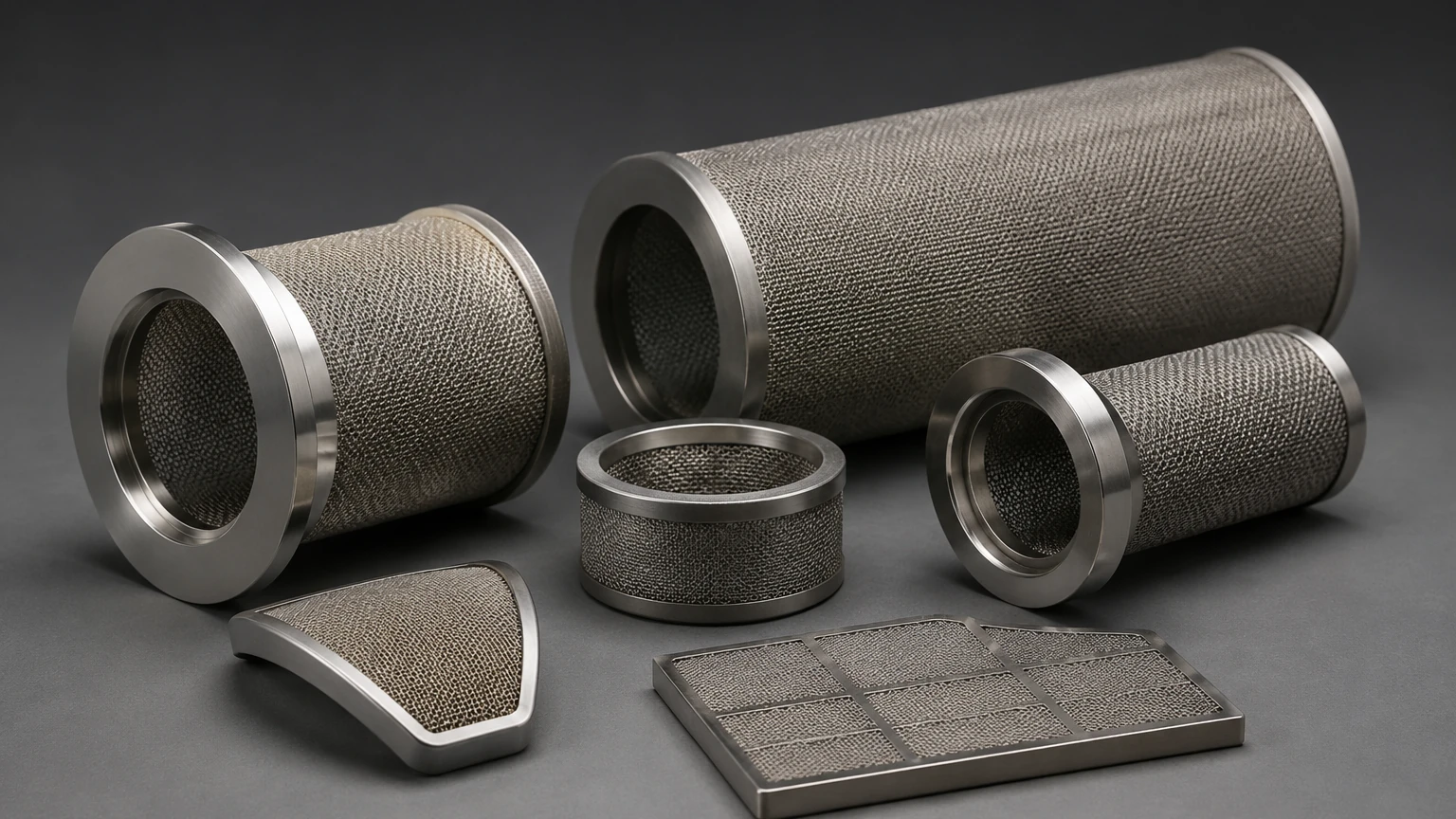
At the core of these systems is the filter medium, which must provide the necessary surface area for catalytic reactions while maintaining structural integrity under demanding operating conditions. Stainless steel wire mesh and sintered metal components have emerged as the preferred substrates for these applications due to their thermal stability and corrosion resistance. As a professional manufacturer, Kaifil specializes in providing the precision-engineered metal substrates required to support these complex catalytic processes.
The Fundamentals of Catalytic Filtration Technology
Catalytic filters function by passing a gas or liquid stream through a porous medium that has been impregnated or coated with a catalyst. Unlike standard mechanical filters that only trap solids, catalytic filters facilitate a chemical reaction at the molecular level. This is particularly critical in emission control, where nitrogen oxides (NOx), volatile organic compounds (VOCs), and carbon monoxide must be reduced before discharge.
The effectiveness of a catalytic filter is determined by its ability to maximize the contact time between the process fluid and the catalyst-coated surface. This is known as residence time. To achieve high conversion rates without creating an excessive pressure drop, the substrate must feature a highly controlled pore structure. Engineers must balance the micron rating—ensuring it is fine enough to capture target particulates—with the permeability required to maintain efficient flow rates.
In many industrial settings, these filters are subjected to extreme temperatures, often exceeding 500°C. In such environments, traditional ceramic or polymer-based filters may suffer from thermal shock or degradation. This is where stainless steel filtration solutions provide a distinct advantage, offering the mechanical strength needed to withstand both thermal cycling and high-pressure differentials.
Material Selection for High-Temperature Catalytic Substrates
The choice of material for the filter substrate is the most critical decision in the engineering phase. The substrate must not only support the catalyst but also resist the corrosive nature of the process fluids. Common materials utilized in the construction of catalytic filters include:
* Stainless Steel 316L: Known for its excellent corrosion resistance, particularly in acidic or chloride-rich environments. It is a standard choice for pharmaceutical and food-grade applications.
* Stainless Steel 310S: A high-temperature alloy that maintains its strength and oxidation resistance at temperatures up to 1100°C, making it ideal for furnace exhaust and thermal processing.
* Inconel and Hastelloy: These nickel-based superalloys are reserved for the most extreme chemical environments where standard stainless steel would succumb to pitting or stress corrosion cracking.
When designing a catalytic filter, the interaction between the catalyst (often precious metals like platinum or palladium, or metal oxides) and the metal substrate must be considered. The surface of the stainless steel mesh can be chemically or mechanically treated to improve the adhesion of the catalyst wash-coat, ensuring that the active material does not delaminate during high-velocity flow or cleaning cycles.
Structural Engineering: Wire Mesh vs. Sintered Cartridges
The physical structure of the filter significantly impacts its performance. Depending on the application, engineers may choose between different configurations of metal media:
Woven Wire Mesh
Woven mesh provides a predictable and uniform pore size. It is often used as a support layer for catalytic membranes or as a primary filter in low-pressure applications. Its flexibility allows it to be pleated, which dramatically increases the available surface area within a compact footprint. This increased surface area is vital for catalytic reactions, as it provides more sites for the chemical conversion to occur.
Sintered Metal Fiber Felt
Sintered fiber felt is composed of non-woven stainless steel fibers that are thermally bonded. This creates a highly porous, three-dimensional structure. The advantage of fiber felt in catalytic filters is its high dirt-holding capacity and its exceptionally high surface-area-to-volume ratio. This structure allows for deep-bed filtration and provides an expansive landscape for catalyst deposition.
Multi-Layer Sintered Mesh
For applications requiring maximum mechanical stability, multiple layers of wire mesh are sintered together. This process creates a robust, rigid plate or tube that can withstand high-pressure backwashing and mechanical vibrations. In a catalytic context, the outer layers may act as the particulate filter while the inner layers are optimized for the catalytic reaction.
Performance Metrics: Efficiency, Pressure Drop, and Residence Time
When evaluating catalytic filters, engineering teams must look beyond simple filtration ratings. The total cost of ownership and process efficiency are driven by three primary metrics:
1. Filtration Efficiency: This is the ability of the filter to remove particles of a specific size. In catalytic applications, maintaining a clean catalyst surface is essential. If the filter fails to capture soot or dust, these particles will mask the catalyst sites, leading to "poisoning" or deactivation of the filter’s chemical function.
2. Pressure Drop (ΔP): Every filter creates resistance to flow. A high pressure drop requires more energy from pumps or blowers, increasing operational costs. Catalytic filters must be designed with optimized porosity to ensure that the chemical reaction occurs without choking the process flow.
3. Catalytic Conversion Rate: This measures the percentage of the target pollutant or chemical that is successfully converted. This is influenced by the catalyst loading, the temperature of the process, and the residence time within the filter media.
For more detailed technical specifications on how these metrics are calculated and optimized for specific industrial setups, professionals can visit the Main Page to review product options and application support.
Customization and OEM Integration for Industrial Reactors
One of the primary challenges in industrial filtration is that no two processes are identical. A catalytic filter used in a petrochemical refinery will have vastly different requirements than one used in a pharmaceutical cleanroom. Customization is therefore not a luxury but a necessity.
OEM (Original Equipment Manufacturer) services allow for the design of filters that fit precisely into existing reactor housings or exhaust stacks. This includes custom end-cap configurations (such as 222, 226, or NPT threaded connections), specialized lengths, and bespoke diameters. Beyond physical dimensions, the filtration media itself can be customized. For instance, a multi-stage filter might feature a coarse outer mesh for pre-filtration and a fine sintered inner core for the catalytic stage.
At Kaifil, the focus is on collaborating with engineers to develop these high-performance components. By understanding the specific flow rates, chemical compositions, and temperature profiles of a client's operation, a manufacturer can recommend the optimal combination of alloy and mesh structure to ensure long-term reliability.
Maintenance, Cleaning, and Replacement Cycles
Unlike standard disposable filters, industrial catalytic filters are often designed to be cleaned and reused. However, the cleaning process for a catalytic filter is more complex because it must preserve the integrity of the catalyst coating. Common maintenance methods include:
* Backpulsing/Backwashing: Using a reverse flow of clean gas or liquid to dislodge accumulated particulates from the surface of the filter.
* Ultrasonic Cleaning: Utilizing high-frequency sound waves in a chemical bath to remove fine contaminants from deep within the porous structure. This is highly effective for sintered metal media.
* Thermal Regeneration: Heating the filter to a specific temperature to burn off organic contaminants (coke) that may be masking the catalyst.
Engineers must establish a replacement cycle based on the degradation of the catalyst. Over time, catalysts can become permanently poisoned by heavy metals or sulfur compounds, or they may sinter and lose surface area due to prolonged exposure to extreme heat. Monitoring the conversion efficiency and the baseline pressure drop is the most effective way to determine when a catalytic filter has reached the end of its functional life.
Conclusion: Optimizing Filtration for Process Efficiency
Catalytic filters represent the pinnacle of functional filtration, combining the mechanical necessity of particle removal with the chemical necessity of molecular transformation. By selecting high-quality stainless steel substrates and engineering the media for specific flow conditions, industrial operators can achieve higher purity levels, meet stringent environmental regulations, and reduce the overall footprint of their processing equipment.
When sourcing these components, it is vital to partner with a manufacturer that understands the nuances of metal filtration. From material selection and pore size optimization to custom OEM designs, the right filtration partner ensures that the catalytic system performs reliably in the most demanding environments. For those seeking to enhance their industrial filtration performance or explore customized metal filter solutions, the Main Page serves as a comprehensive resource for technical data and product selection guidance.
