


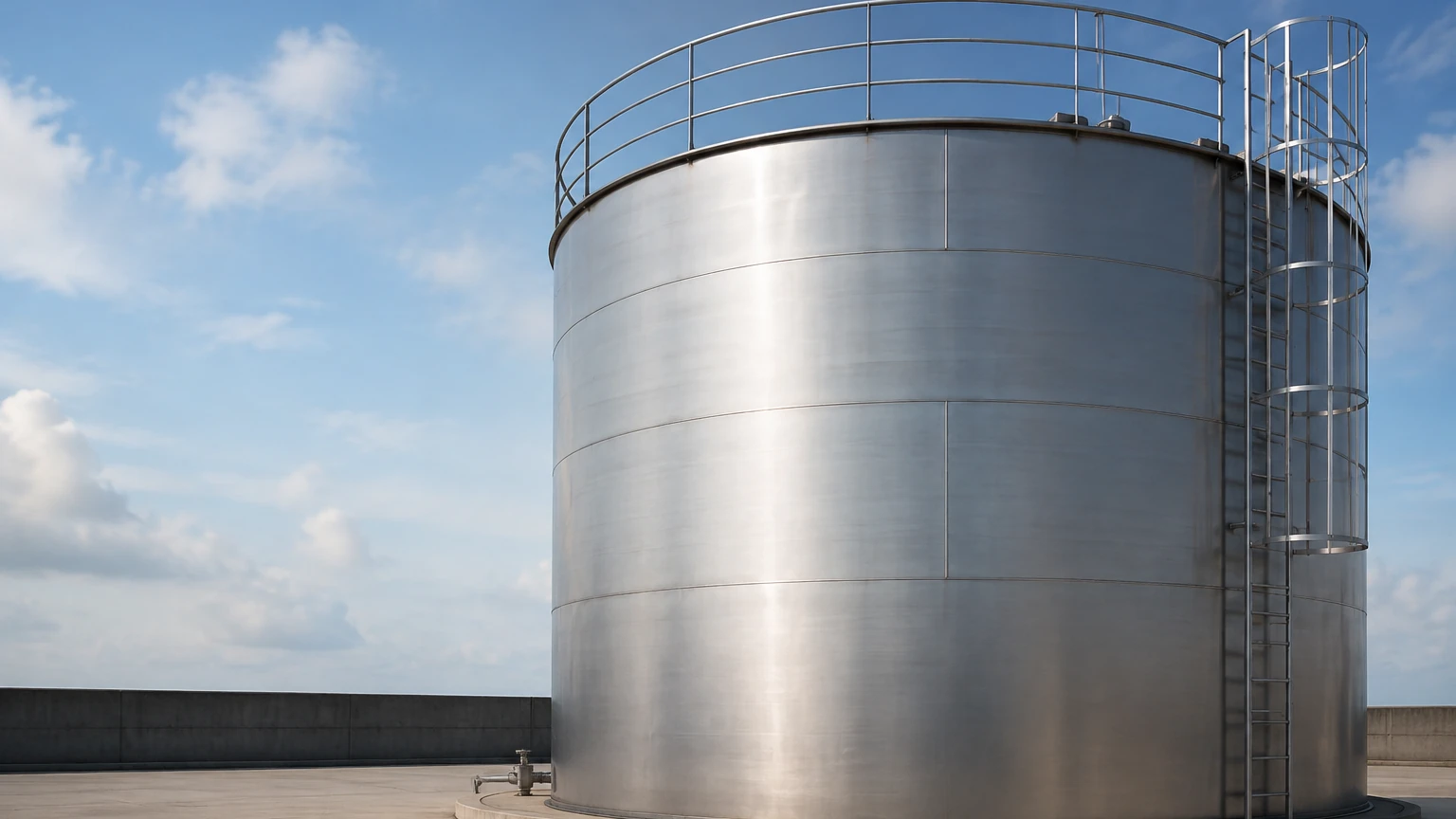
Chemical Tank Storagetank
In the landscape of industrial chemical processing, the integrity of a chemical tank storagetank system is paramount to operational safety, product purity, and environmental compliance. These storage units are not merely passive containers; they are engineered systems that must handle volatile, corrosive, or high-purity substances while maintaining a stable internal environment. For engineers and facility managers, selecting the right filtration and venting components is a critical step in ensuring that the storage process does not become a point of failure in the production chain.
Industrial filtration plays a dual role in these systems. It must protect the stored medium from external contaminants while simultaneously protecting the surrounding environment and personnel from hazardous vapors. As a specialist in stainless steel filtration solutions, Kaifil provides the precision-engineered components required to meet these demanding specifications. Understanding the technical nuances of chemical tank storagetank management allows for more informed procurement and long-term system reliability.
Engineering Requirements for Chemical Tank Storage Systems
The design of a chemical tank storagetank must account for several physical and chemical variables. Unlike water storage, chemical storage involves complex interactions between the fluid and the vessel walls, as well as the headspace gases. Engineering teams must prioritize structural integrity, particularly when dealing with high-density chemicals that exert significant hydrostatic pressure on the tank floor and lower walls.
Material compatibility is the first hurdle. The storage of aggressive acids, bases, or solvents requires materials that can resist pitting, crevice corrosion, and stress corrosion cracking. Stainless steel, particularly grades 304 and 316L, is often the industry standard due to its robust mechanical properties and resistance to a wide spectrum of chemicals. However, the engineering does not stop at the tank shell. Every penetration—including inlets, outlets, and vents—must be equipped with filtration media that matches the tank's durability.
Furthermore, thermal expansion and contraction are significant factors. Chemicals stored in outdoor environments are subject to diurnal temperature shifts, which cause the liquid and the air in the headspace to expand and contract. This "breathing" process necessitates a robust venting system equipped with filtration to prevent the tank from buckling under vacuum or rupturing under overpressure.
Critical Filtration Challenges in Chemical Tank Storagetank Systems
Filtration within a chemical tank storagetank environment serves several distinct purposes. The first is particulate control during the filling process. When chemicals are transferred from transport tankers to the storage tank, they can carry contaminants such as scale, rust, or environmental dust. Installing high-performance stainless steel wire mesh filters at the inlet ensures that only clean fluid enters the system, thereby protecting downstream equipment like pumps and precision valves.
Another challenge is the management of the headspace. As a tank is emptied, air is drawn in from the atmosphere. If this air is not filtered, it can introduce moisture, bacteria, or particulate matter that may react with or contaminate the stored chemical. Conversely, when the tank is filled, the displaced air or gas must be vented. If the chemical is volatile or hazardous, this vent must be equipped with filtration or scrubbing media to capture harmful emissions.
For high-purity applications, such as those found in the pharmaceutical or food and beverage industries, the filtration requirements are even more stringent. In these cases, the chemical tank storagetank must utilize absolute-rated filter cartridges that can remove sub-micron particles, ensuring the chemical remains at the required specification throughout its residence time in the tank.
Material Engineering: Stainless Steel Solutions for Corrosive Environments
When specifying filtration components for a chemical tank storagetank, the choice of material is non-negotiable. While plastic filters may suffice for mild applications, industrial-grade chemical processing usually demands the resilience of metal. Stainless steel wire mesh and sintered metal filters are preferred for several reasons:
1. Chemical Resistance: Stainless steel 316L contains molybdenum, which significantly enhances its resistance to chlorides and acidic environments. This makes it ideal for the harsh conditions often found in chemical storage.
2. Temperature Stability: Metal filters maintain their structural integrity across a wide temperature range, from cryogenic storage to high-temperature process tanks, where polymer-based filters might soften or degrade.
3. Mechanical Strength: In high-flow filling operations, the filtration media is subjected to significant mechanical stress. Stainless steel mesh can withstand high differential pressures without bypassing or shedding fibers.
4. Cleanability: Unlike disposable filters, stainless steel components can often be cleaned and reused, providing a lower total cost of ownership over the life of the tank system.
For more information on material selection and technical specifications, engineers can visit the Kaifil Main Page to review product options and application support.
Pressure Management and Venting Filtration Technology
The venting system is perhaps the most critical safety feature of a chemical tank storagetank. A tank that cannot breathe is a liability. Vent filters, often referred to as breather filters, must be designed to handle the maximum flow rate of the tank’s pumps. If a pump removes liquid faster than air can enter through the vent filter, the resulting vacuum can collapse the tank in seconds.
Technical considerations for vent filtration include:
* Hydrophobic Properties: In many chemical applications, it is essential to keep moisture out of the tank. Vent filters can be designed with hydrophobic coatings or specific mesh geometries that repel water vapor while allowing air to pass.
* Micron Ratings: The air entering the tank must be filtered to a level that prevents contamination. Depending on the chemical, this might range from 0.1 microns for sterile applications to 10 microns for general industrial chemicals.
* Flow Capacity: The effective filtration area (EFA) must be calculated based on the tank's filling and emptying rates. A filter that is too small will create excessive backpressure, potentially triggering pressure relief valves or causing mechanical strain.
Kaifil specializes in custom-designed vent filters that integrate seamlessly with existing tank architectures, providing both the necessary airflow and the required level of particulate capture.
Optimizing the Lifecycle of Tank Filtration Components
Maintenance is a vital aspect of managing a chemical tank storagetank. Filtration components are sacrificial by nature; they collect contaminants to protect the system. However, in a B2B industrial context, downtime must be minimized. Establishing a predictable replacement or cleaning cycle is essential.
Engineers should monitor the differential pressure across filter housings. A steady increase in pressure drop indicates that the filter media is becoming loaded. In chemical storage, this can be caused by the accumulation of atmospheric dust in the vent or the buildup of chemical precipitates in the inlet/outlet filters.
For stainless steel filters, Clean-in-Place (CIP) or Steam-in-Place (SIP) protocols can often be used to restore the filter's performance without removing it from the system. This is particularly useful in the pharmaceutical and food industries where breaking the seal of a sterile tank is highly undesirable. When manual cleaning is required, ultrasonic cleaning or chemical backflushing are effective methods for removing embedded particles from the wire mesh or sintered structures.
Selecting Custom Filtration Solutions for Chemical Storage
No two chemical storage applications are identical. The viscosity of the fluid, the volatility of the vapors, and the specific environmental conditions of the site all dictate the filtration strategy. Off-the-shelf solutions often fall short of the precision required for specialized chemical tank storagetank setups.
Customization options include:
* Custom End Fittings: Ensuring the filter housing or cartridge matches the tank's specific flange or NPT requirements.
* Layered Mesh Designs: Combining different grades of wire mesh to create a multi-stage filter within a single component, increasing dirt-holding capacity.
* Reinforced Structures: For tanks that experience high-pressure surges, filters can be reinforced with internal cores or external shrouds to prevent deformation.
By working closely with a manufacturer like Kaifil, engineering teams can develop bespoke filtration components that are optimized for their specific chemical compatibility and flow requirements. This collaborative approach ensures that the filtration system is an asset to the operation rather than a maintenance bottleneck.
Conclusion
The management of a chemical tank storagetank requires a holistic understanding of fluid dynamics, material science, and safety engineering. By focusing on high-quality stainless steel filtration and robust venting strategies, industrial operators can ensure the longevity of their storage assets and the purity of their chemical products. As the industry moves toward more automated and precise processing, the role of reliable, custom-engineered filtration components will only continue to grow. Investing in the right filtration technology today is a safeguard against the operational risks and environmental challenges of tomorrow.
