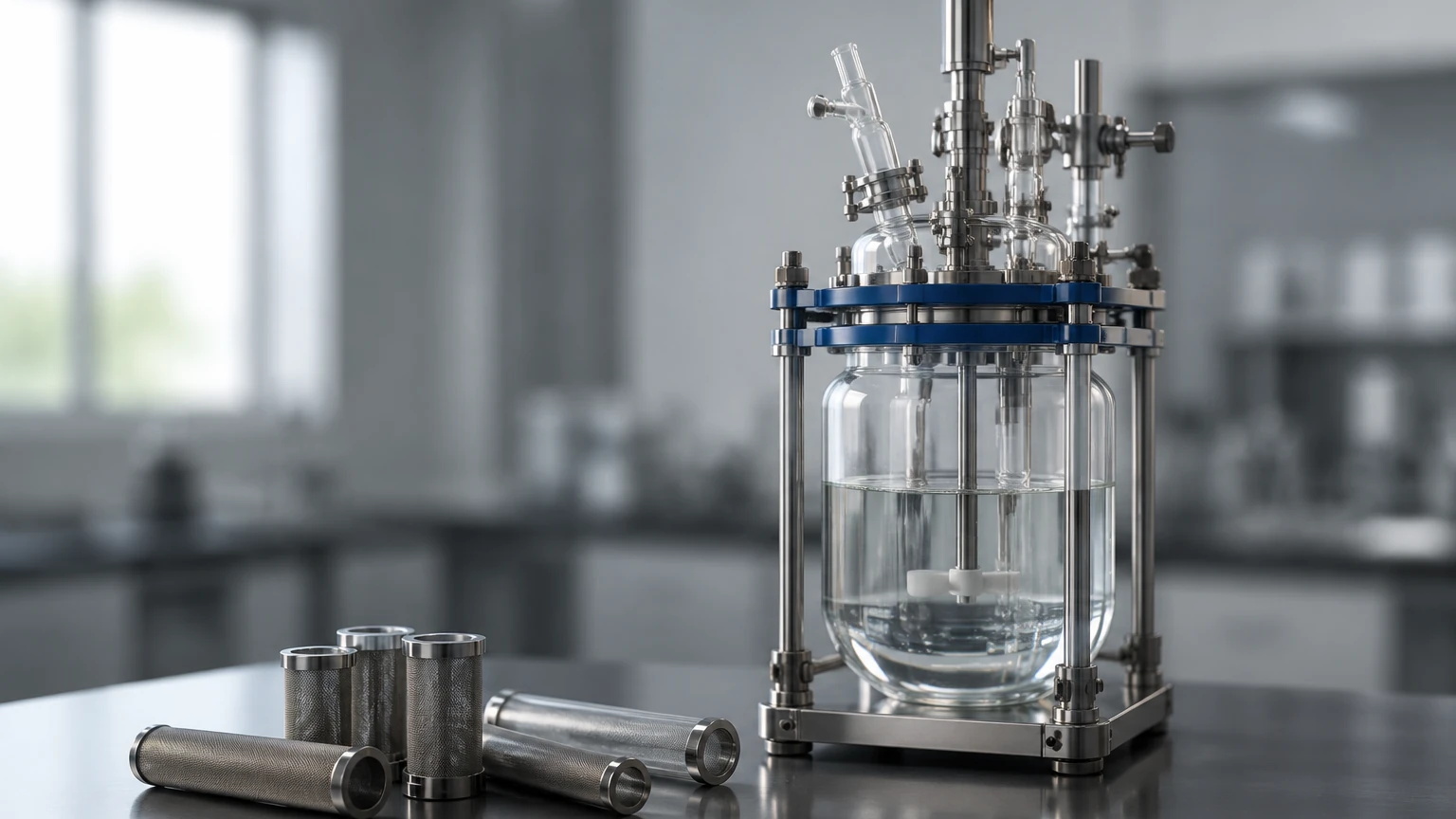
Chemie Reaktor
In the complex landscape of industrial chemical processing, the performance of a chemie reaktor (chemical reactor) is fundamentally tied to the precision and durability of its internal components. A reactor is not merely a vessel where substances are mixed; it is a highly engineered environment where pressure, temperature, and chemical kinetics must be meticulously balanced. Within this environment, filtration plays a critical role in ensuring product purity, protecting downstream equipment, and enabling the recovery of expensive catalysts. For engineers and procurement professionals, selecting the right filtration media is as vital as the design of the reactor itself.
The Critical Intersection of Filtration and Chemie Reaktor Design
The integration of high-performance filtration within a chemie reaktor system is essential for maintaining process continuity and product integrity. Whether the reactor operates on a batch or continuous basis, the presence of solids—whether they are intended products, catalysts, or unwanted byproducts—requires robust management.
In batch processing, filtration often occurs at the end of a reaction cycle to separate the liquid product from solid residues. In continuous flow reactors, filtration systems must operate in real-time, often under extreme conditions, to prevent the migration of solids that could foul heat exchangers or damage high-pressure pumps. The failure to implement adequate filtration can lead to "off-spec" batches, increased maintenance downtime, and significant financial losses. Therefore, understanding the specific filtration requirements of a chemie reaktor is the first step toward optimizing industrial output.
Technical Specifications and Material Selection for Reactor Filters
Material science is at the heart of filtration for chemical reactors. Because the chemical environment inside a chemie reaktor can be exceptionally aggressive, the filter media must exhibit superior resistance to corrosion, oxidation, and mechanical stress. Stainless steel is the primary material of choice, but the specific grade must be matched to the application.
Stainless Steel Grades: 304 and 316L
For standard industrial applications involving non-corrosive or mildly acidic media, AISI 304 stainless steel provides a cost-effective solution with good mechanical strength. However, in the chemical industry, AISI 316L is the most frequently specified material. The addition of molybdenum in 316L enhances its resistance to pitting and crevice corrosion, particularly in environments containing chlorides or organic acids. The "L" designation signifies low carbon content, which is crucial for preventing intergranular corrosion after welding—a common requirement for custom-fabricated reactor filters.
Specialty Alloys for Extreme Environments
In cases where standard stainless steel is insufficient—such as in reactors involving highly concentrated acids, alkaline solutions at high temperatures, or halogenated compounds—specialty alloys are required. Materials like Hastelloy® (C276 or C22), Monel®, and Inconel® offer exceptional stability where 316L might fail. These alloys maintain their structural integrity and filtration accuracy even when exposed to the most demanding chemical reagents found in a chemie reaktor.
Specialized Filtration Media for Chemical Processing
Not all filter media are created equal. The physical structure of the filter determines its efficiency, flow rate, and cleanability. Kaifil specializes in several types of metal filtration media designed specifically for the rigors of chemical engineering.
Sintered Wire Mesh Filters
Sintered wire mesh is a sophisticated material produced by diffusion-bonding multiple layers of woven wire cloth under high heat and pressure in a vacuum furnace. This process creates a monolithic structure that combines the fine filtration capabilities of thin mesh with the mechanical rigidity of thicker support layers. In a chemie reaktor, sintered mesh is often used for catalyst retention screens and gas sparging elements. Its fixed pore structure ensures that the filtration rating remains constant, even under high pressure or turbulent flow conditions.
Wedge Wire Screens
Wedge wire, characterized by its V-shaped profile wires, is ideal for applications where solids must be easily removed from the filter surface. The unique geometry creates a widening gap between the wires, which prevents particles from becoming wedged or trapped. In large-scale chemical reactors, wedge wire is used for support grids in catalyst beds and as intake screens for internal circulation pumps. Its high open-area ratio allows for high flow rates with minimal pressure drop.
Pleated Stainless Steel Cartridges
When the available space for a filter is limited but high flow capacity is required, pleated stainless steel cartridges are the preferred choice. By pleating the mesh, the effective filtration surface area can be increased by a factor of three to five compared to a standard cylindrical filter. This increased surface area reduces the flux (flow per unit area), which in turn lowers the pressure drop and significantly extends the service life of the filter between cleaning cycles.
Engineering Challenges: Pressure, Flow, and Catalyst Recovery
Designing a filtration system for a chemie reaktor involves solving complex engineering challenges related to fluid dynamics and thermodynamics. One of the most critical functions of these filters is catalyst recovery.
Catalyst Retention and Recovery
Many modern chemical processes rely on heterogeneous catalysts, often in the form of fine powders or granules containing precious metals like palladium, platinum, or nickel. These catalysts are expensive and must be retained within the reactor or recovered with near 100% efficiency. Precision metal filters with absolute micron ratings are essential here. If the filter pores are too large, the catalyst escapes, leading to product contamination and financial loss. If the pores are too small, the filter may clog prematurely. Achieving the perfect balance requires a deep understanding of particle size distribution and the behavior of the catalyst under reactor conditions.
Managing Pressure Drop (Delta P)
As a reaction progresses, solids may accumulate on the surface of the filter, creating a "filter cake." While this cake can actually improve filtration efficiency by acting as a secondary filter medium, it also increases the resistance to flow, leading to a rise in pressure drop across the filter. Engineers must design the chemie reaktor system to monitor this Delta P. If the pressure drop exceeds the mechanical limits of the filter element, the media could collapse or bypass. High-quality stainless steel filters are engineered with reinforced internal cores to withstand these differential pressures without deforming.
Gas-Liquid Reactions and Sparging
In many reactors, gas must be introduced into a liquid phase to facilitate a reaction (e.g., hydrogenation or oxidation). Sintered metal filters serve as excellent spargers in these scenarios. By forcing the gas through the fine pores of a sintered metal element, thousands of tiny bubbles are created. This increases the surface area for mass transfer between the gas and liquid phases, significantly improving the reaction rate and efficiency within the chemie reaktor.
Maintenance, Cleaning, and Total Cost of Ownership (TCO)
One of the primary advantages of stainless steel filtration in a chemie reaktor is its ability to be cleaned and reused. This stands in stark contrast to disposable polymer or paper filters, which must be replaced and discarded after each use, leading to higher long-term costs and environmental waste.
Cleaning Protocols
Depending on the nature of the contaminants, metal filters can be cleaned using several methods:
* Backpulsing/Backwashing: Reversing the flow of the process fluid or using a clean gas to dislodge solids from the filter surface.
* Ultrasonic Cleaning: Using high-frequency sound waves in a cleaning solvent to remove fine particles trapped deep within the mesh or sintered structure.
* Chemical Cleaning: Using acids, alkalis, or specialized solvents to dissolve organic or inorganic deposits.
* Thermal Cleaning (Burn-off): In some cases, organic residues can be removed by heating the filter in a controlled atmosphere to carbonize and remove the contaminants.
Evaluating TCO
When procurement teams evaluate filtration for a chemie reaktor, they must look beyond the initial purchase price. The Total Cost of Ownership (TCO) includes the cost of the filter, the cost of labor for replacement, the cost of downtime, and the cost of waste disposal. Stainless steel filters, while having a higher upfront cost, often prove to be more economical over a 2-to-5-year period because they can be cleaned hundreds of times and provide more reliable protection for the reactor system.
Customization and OEM Integration for Specific Reactor Types
No two chemical processes are identical, and therefore, filtration solutions must often be customized. Industrial reactors come in various forms—Stirred Tank Reactors (STR), Plug Flow Reactors (PFR), and Fluidized Bed Reactors—each with its own set of internal geometries and flow patterns.
Kaifil works closely with OEM reactor manufacturers and plant engineers to develop bespoke filtration components. This customization includes:
* Custom End-Fittings: Ensuring the filter integrates perfectly with existing housing designs (e.g., NPT, BSP, Flanged, or specialized sanitary fittings).
* Variable Micron Ratings: Tailoring the pore size to the specific particle size distribution of the process solids.
* Reinforced Structures: Adding outer shrouds or inner support tubes to handle extreme mechanical loads or high-velocity flows.
* Specialized Shapes: Moving beyond simple cylinders to cones, discs, or complex lateral assemblies to optimize flow distribution within the chemie reaktor.
Conclusion
The efficiency of a chemie reaktor is a product of its engineering, and filtration is a cornerstone of that engineering. By selecting high-quality stainless steel and specialty alloy filters, industrial operators can ensure the purity of their products, the recovery of valuable catalysts, and the longevity of their equipment. As a manufacturer dedicated to precision and durability, Kaifil provides the technical expertise and customized solutions required to meet the challenges of modern chemical processing. To explore our full range of filtration products and technical support capabilities, please visit our Main Page.
In an industry where precision is paramount, the right filtration partner is an essential asset. By focusing on material integrity, mechanical strength, and application-specific design, Kaifil helps engineers achieve optimized performance and a lower total cost of ownership for their reactor systems. Whether you are scaling up a new process or looking to improve the reliability of an existing chemie reaktor, professional-grade metal filtration is the key to operational excellence.