


China Spiral Plate Heat Exchangers Manufacturer
In the landscape of industrial thermal management, selecting a reliable China spiral plate heat exchangers manufacturer is a critical decision for engineers and procurement professionals. Spiral plate heat exchangers (SPHEs) are renowned for their high thermal efficiency, compact design, and ability to handle fluids with high solid content or high viscosity. However, the complexity of their internal geometry and the precision required in their fabrication mean that not all manufacturers are equal.
For industries ranging from chemical processing and wastewater treatment to food and beverage production, the performance of a heat exchanger is often the bottleneck of the entire process. Understanding the technical nuances of these units, the manufacturing standards required, and the secondary systems—such as high-precision filtration—needed to protect them is essential for long-term operational success.
Understanding the Engineering Fundamentals of Spiral Plate Heat Exchangers
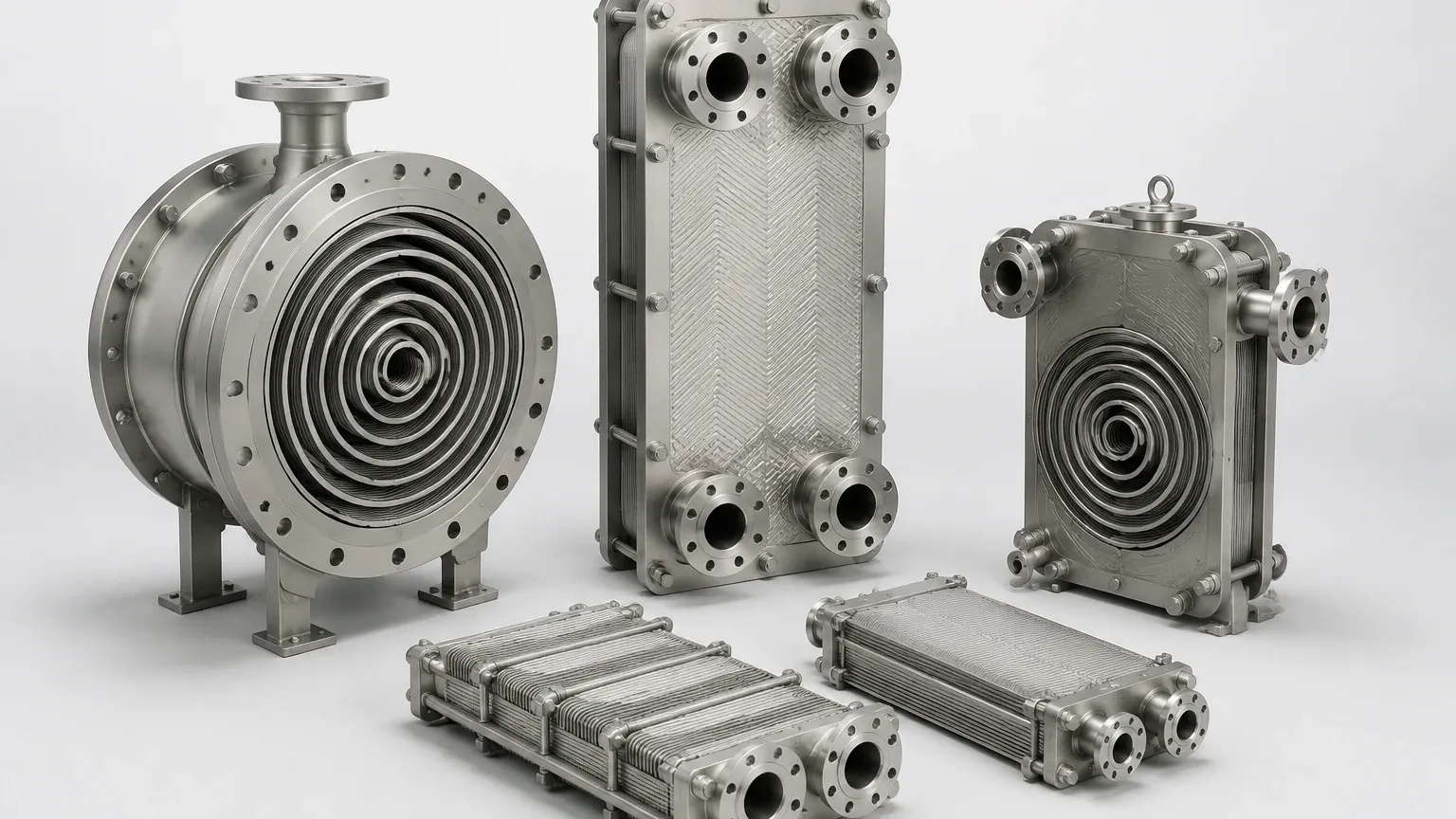
A spiral plate heat exchanger is constructed by rolling two long metal plates around a central mandrel to create two concentric spiral channels. These channels allow two fluids to flow in counter-current or co-current directions, facilitating heat transfer. The primary advantage of this design is the high level of turbulence it generates, even at low flow velocities. This turbulence increases the heat transfer coefficient and creates a "self-cleaning" effect, where the fluid velocity helps to scrub the surface of the plates.
When evaluating a China spiral plate heat exchangers manufacturer, technical teams must focus on the design's ability to manage specific pressure drops and temperature approaches. Unlike plate-and-frame heat exchangers, which can be easily expanded by adding more plates, a spiral unit is a fully welded, fixed-capacity component. Therefore, the initial engineering calculations regarding surface area and channel spacing must be precise. Manufacturers with in-house thermal design capabilities using advanced software are generally preferred over those who rely on generic templates.
Key Criteria for Selecting a Manufacturer in China
Sourcing from China offers significant advantages in terms of manufacturing scale and cost-efficiency, but it requires a rigorous vetting process. A reputable manufacturer should demonstrate expertise in several key areas:
1. Welding and Fabrication Precision
Because SPHEs are welded structures, the integrity of the welds is the most common point of failure. Internal leaks in a spiral exchanger are notoriously difficult to repair. A qualified manufacturer must employ certified welders and utilize automated welding processes where possible to ensure consistency. Non-destructive testing (NDT), such as radiographic or ultrasonic testing, should be a standard part of the quality assurance protocol.
2. Compliance with International Standards
For global operations, compliance with standards such as ASME Section VIII, PED (Pressure Equipment Directive), or ISO 9001 is mandatory. A China spiral plate heat exchangers manufacturer should be able to provide full documentation, including material mill certificates and pressure test reports, to ensure the unit meets the safety requirements of the destination country.
3. Customization Capabilities
Industrial applications rarely fit a "one size fits all" model. Whether it is adjusting the channel width to accommodate slurries or selecting specialized gaskets for the header covers, the manufacturer must be willing to customize the design based on the specific rheology of the fluids involved.
Material Selection and Corrosion Resistance
The longevity of a heat exchanger is dictated by its material of construction. In most industrial environments, stainless steel is the standard due to its balance of thermal conductivity and corrosion resistance. Common grades include:
* 304/304L Stainless Steel: Suitable for general-purpose applications where corrosion risk is low.
* 316/316L Stainless Steel: The preferred choice for chemical processing and marine environments due to its molybdenum content, which provides superior resistance to pitting and crevice corrosion.
* Duplex Stainless Steels: Used in highly aggressive environments where both high strength and extreme corrosion resistance are required.
Engineers must confirm that the manufacturer sources high-quality raw materials. Substandard alloys can lead to premature failure, especially in the heat-affected zones (HAZ) near the welds. When sourcing components or seeking technical guidance on material compatibility for filtration and heat exchange systems, visiting the Main Page of an established manufacturer like Kaifil can provide insights into high-grade stainless steel fabrication standards.
The Critical Link Between Filtration and Heat Exchanger Longevity
While spiral plate heat exchangers are marketed as "self-cleaning," this does not mean they are immune to fouling or clogging. In fact, large particulates or fibrous materials can still become lodged in the spiral channels, leading to increased pressure drops and decreased thermal efficiency. Once a spiral exchanger is significantly fouled, cleaning it can be a labor-intensive process involving chemical circulation or mechanical scrubbing of the opened headers.
To mitigate this risk, integrated filtration is essential. High-performance stainless steel wire mesh filters or wedge wire strainers should be installed upstream of the heat exchanger. These filters are designed to capture particulates that exceed the channel width of the spiral.
Kaifil specializes in these types of custom filtration solutions. By implementing a robust filtration stage, operators can significantly extend the maintenance intervals of their heat exchangers. The synergy between a well-manufactured heat exchanger and a precision-engineered filtration system is what determines the total reliability of the thermal loop. Technical professionals should evaluate their filtration needs alongside their heat exchanger specifications to ensure the entire system is protected from debris-induced damage.
Evaluating Manufacturing Infrastructure and Quality Control
A visit to a China spiral plate heat exchangers manufacturer—whether in person or via a detailed virtual audit—should reveal a focus on modern infrastructure. Key indicators of a high-quality facility include:
* Large-Scale Rolling Equipment: The ability to roll thick plates into tight spirals without compromising the material's structural integrity requires heavy-duty, specialized machinery.
* Controlled Welding Environments: Clean, organized welding bays that prevent cross-contamination between different types of metals (e.g., carbon steel and stainless steel).
* Pressure Testing Facilities: Dedicated areas for hydraulic and pneumatic testing to verify the pressure-bearing capacity of the finished units.
Quality control should not be an afterthought. It begins with the inspection of raw materials and continues through every stage of rolling, welding, and assembly. A manufacturer that provides a comprehensive Manufacturing Data Report (MDR) demonstrates a commitment to transparency and engineering excellence.
Total Cost of Ownership and Maintenance Cycles
When purchasing from a China spiral plate heat exchangers manufacturer, the initial purchase price is only one component of the total cost of ownership (TCO). Engineers must also consider:
1. Operational Efficiency: A slightly more expensive, better-engineered unit may offer lower pressure drops, reducing the energy consumption of the pumps over the life of the system.
2. Maintenance Costs: Units designed with accessible headers and robust gasket surfaces are easier to maintain. Furthermore, the inclusion of high-quality filtration components reduces the frequency of manual cleanings.
3. Service Life: A unit built with superior welding and higher-grade alloys will outlast a cheaper alternative, providing a better return on investment over ten or twenty years.
Maintenance cycles for SPHEs typically involve periodic inspections of the gaskets and monitoring the temperature and pressure differentials. If the pressure drop across the exchanger increases significantly, it is an indicator that the "self-cleaning" mechanism is being overwhelmed by particulates, necessitating a review of the upstream filtration efficiency.
Customization and OEM Support for Complex Systems
Many B2B buyers require more than just a standard catalog item; they need a partner who can provide OEM support. This is particularly true for system integrators who are building modular process skids. A manufacturer that can provide 3D CAD models, detailed thermal calculations, and flexible connection types (such as ANSI flanges, DIN flanges, or sanitary tri-clamp fittings) is invaluable.
Customization also extends to the internal structure. For example, some applications may require "studs" or spacers between the plates to handle high-pressure differentials, while others may require a completely open channel for high-solids content. A knowledgeable manufacturer will guide the buyer through these engineering choices to prevent application failure.
Conclusion: Making an Informed Decision
Selecting a China spiral plate heat exchangers manufacturer requires a balance of technical scrutiny and commercial evaluation. By focusing on welding quality, material integrity, and the manufacturer's ability to provide customized engineering support, procurement teams can secure equipment that meets the demanding needs of modern industrial processes.
Furthermore, recognizing that the heat exchanger is part of a larger ecosystem—one that requires clean, filtered fluids to operate at peak efficiency—is vital. Integrating high-quality stainless steel filtration components, such as those produced by Kaifil, ensures that the investment in a spiral plate heat exchanger is protected from the risks of fouling and mechanical wear. For more information on precision filtration solutions and industrial metal components, engineers are encouraged to Review product options and application support to find the right balance of performance and durability for their specific applications.
Download China Spiral Plate Heat Exchangers Manufacturer as a PDF
