


Stainless Steel Filter Cartridge Manufacturer
In industrial process engineering, the selection of filtration components is a critical decision that impacts fluid purity, equipment protection, and overall operational costs. For environments characterized by high temperatures, aggressive chemical solvents, or high differential pressures, polymer-based filters often reach their physical limits. This is where a specialized stainless steel filter cartridge manufacturer becomes an essential partner in the supply chain. Stainless steel cartridges offer mechanical robustness and chemical resistance that synthetic media cannot match, providing a reusable and durable solution for complex industrial separations.
Understanding the technical nuances of these components—from alloy selection to structural design—is vital for engineers and procurement teams. This guide examines the engineering standards, manufacturing processes, and selection criteria required to integrate stainless steel filtration effectively into industrial systems.
Technical Fundamentals of Stainless Steel Filtration
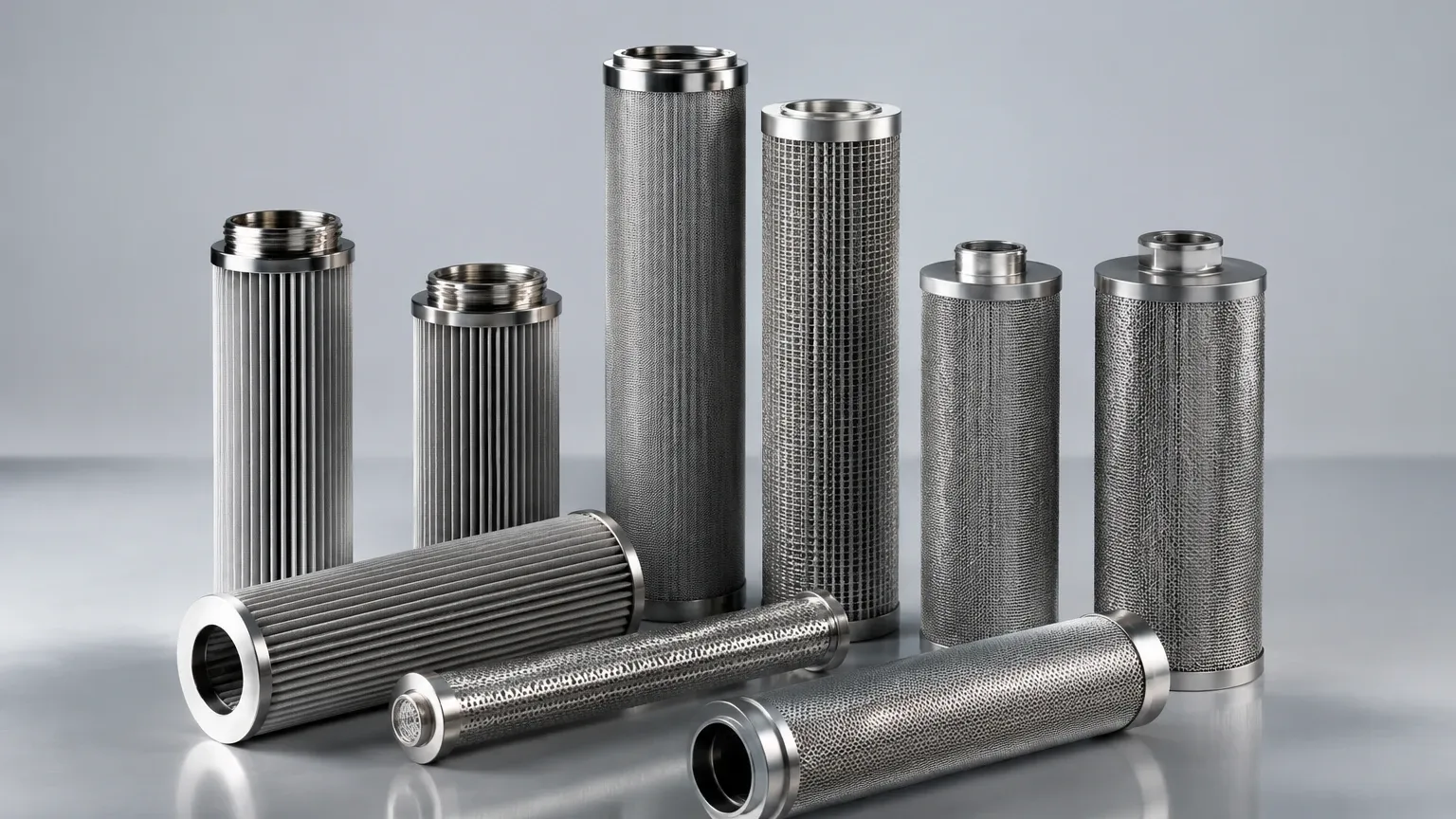
Stainless steel filter cartridges are engineered to provide precise particulate retention while maintaining structural integrity under stress. Unlike disposable depth filters, these metal components rely on surface or near-surface filtration mechanisms, which allows for predictable performance and the ability to be cleaned and reused.
Material Selection: 304 vs. 316L
The choice of alloy is the first engineering hurdle. Most industrial applications utilize either Grade 304 or Grade 316L stainless steel.
* Grade 304: Suitable for general industrial use, offering good corrosion resistance and excellent welding characteristics. It is commonly used in water treatment and food and beverage applications where high concentrations of chlorides are not present.
* Grade 316L: The "L" denotes low carbon content, which minimizes carbide precipitation during welding, enhancing corrosion resistance. 316L contains molybdenum, making it significantly more resistant to pitting and crevice corrosion in chloride-rich environments or acidic chemical processing.
For highly specialized environments involving extreme acidity or oxidative conditions, a stainless steel filter cartridge manufacturer may also work with exotic alloys like Hastelloy or Monel, though 316L remains the industry standard for the majority of high-performance B2B applications.
Filtration Media Structures
There are three primary types of stainless steel media used in cartridge construction:
1. Woven Wire Mesh: This media consists of precisely woven wires forming square or Dutch weave patterns. It provides a fixed pore size and is ideal for surface filtration where easy backwashing is required.
2. Sintered Metal Felt: Made from non-woven stainless steel fibers that are bonded through a high-temperature sintering process. This creates a high-porosity depth media that offers superior dirt-holding capacity and low pressure drop.
3. Sintered Mesh: Multiple layers of wire mesh are sintered together to create a composite material that combines the fine filtration of thin mesh with the mechanical strength of heavier support layers.
Evaluating a Stainless Steel Filter Cartridge Manufacturer
When sourcing these components, technical professionals must look beyond unit price. The reliability of a filtration system depends on the manufacturer’s ability to maintain tight tolerances and material purity.
Quality Control and Testing Protocols
A reputable manufacturer must employ rigorous testing to ensure the integrity of the filter media and the strength of the welds. Key tests include:
* Bubble Point Test: Used to determine the maximum pore size (absolute rating) and verify that there are no defects in the media or seals. This is a non-destructive test essential for validating filtration efficiency.
* Differential Pressure Testing: Evaluating how much pressure the cartridge can withstand before deformation or failure. This is critical for hydraulic and high-viscosity applications.
* Material Traceability: In regulated industries like pharmaceuticals or food processing, manufacturers must provide Mill Test Reports (MTRs) to prove the chemical composition of the stainless steel used.
Manufacturing Precision
The welding process is a focal point of quality. TIG (Tungsten Inert Gas) or plasma welding is typically preferred over adhesive bonding, as it ensures the cartridge remains a single, monolithic metallic structure. This eliminates the risk of bypass or chemical leaching from glues and resins, which is a common failure point in lower-quality cartridges.
Engineering Considerations for Filter Selection
Selecting the correct cartridge requires a deep dive into the specific parameters of the fluid process. Engineers must calculate the balance between filtration fineness and system throughput.
Micron Ratings: Absolute vs. Nominal
A common point of confusion in procurement is the difference between nominal and absolute micron ratings.
* Nominal Rating: An indicative value representing the ability of the filter to retain a majority of particles of a certain size (often 60% to 90%).
* Absolute Rating: The diameter of the largest hard spherical particle that will pass through the filter under specified test conditions. In critical applications, such as protecting high-pressure nozzles or sensitive catalysts, absolute-rated cartridges are mandatory.
Pressure Drop (Delta P)
Every filter introduces resistance to flow. The initial pressure drop is a function of fluid viscosity, flow rate, and the filter’s effective filtration area. A stainless steel filter cartridge manufacturer can often optimize this by using pleated designs. Pleating increases the surface area within the same footprint, which lowers the flux (flow per unit area), reduces the initial pressure drop, and significantly extends the service life between cleanings.
Chemical and Thermal Compatibility
Stainless steel is prized for its thermal stability. While polymer filters may soften or degrade at temperatures above 80°C, stainless steel cartridges can operate at temperatures exceeding 300°C, depending on the seal material. The choice of O-rings or gaskets (Viton, EPDM, PTFE, or Silicone) must be matched to the process fluid to prevent seal failure and bypass.
Applications Across Industrial Sectors
The versatility of stainless steel makes it the preferred choice for several demanding sectors:
* Chemical Processing: Handling aggressive solvents, polymers, and high-temperature resins where synthetic fibers would dissolve or melt.
* Food and Beverage: Used for steam filtration, culinary water, and final polishing of oils. The ability to withstand Clean-in-Place (CIP) cycles with caustic chemicals is a major advantage.
* Pharmaceuticals: Requiring high-purity materials and the ability to be sterilized via autoclaving or Steaming-in-Place (SIP).
* Hydraulics and Power Generation: Protecting sensitive valves and turbines from metallic wear particles in high-pressure oil systems.
Maintenance and Total Cost of Ownership
One of the strongest arguments for partnering with a high-quality stainless steel filter cartridge manufacturer is the long-term economic benefit. While the initial investment for a stainless steel cartridge is higher than for a disposable polypropylene melt-blown filter, the total cost of ownership (TCO) is often lower.
Cleaning and Regeneration
Stainless steel cartridges are designed for multiple lifecycles. Depending on the contaminant, they can be cleaned using several methods:
* Backwashing: Reversing the flow to dislodge surface particles.
* Ultrasonic Cleaning: Using high-frequency sound waves in a cleaning solution to remove fine particulates trapped deep within sintered media.
* Chemical Cleaning: Using acids, bases, or solvents to dissolve organic or inorganic scaling.
* Burn-off/Pyrolysis: For polymer applications, high-heat ovens can be used to remove carbonized residues.
Sustainability Impact
By moving away from disposable filters, industrial facilities significantly reduce their solid waste stream. This aligns with corporate sustainability goals and reduces the logistical burden of frequently ordering, storing, and disposing of used filter elements.
Customization and OEM Solutions
Standard off-the-shelf filters do not always meet the requirements of specialized machinery. A manufacturer like Kaifil provides extensive OEM capabilities, allowing for the customization of end-cap configurations (such as 222, 226, or DOE styles), varying lengths, and reinforced internal cores for high-collapse pressure requirements. Custom-engineered filtration components ensure that the filter fits the housing perfectly, preventing the bypass issues that occur with poorly matched third-party replacements.
When evaluating potential suppliers, it is important to confirm their ability to handle low-volume custom runs as well as large-scale production. Engineering teams should seek partners who can provide technical drawings and performance data during the design phase to ensure seamless integration into the final system.
Conclusion
Choosing a stainless steel filter cartridge manufacturer is a decision that affects the reliability and efficiency of an entire industrial process. By focusing on material integrity, welding precision, and the specific engineering requirements of the application—such as absolute micron ratings and pressure drop limits—purchasing teams can secure components that offer years of service.
For those looking to optimize their filtration systems with durable, high-precision metal components, reviewing technical specifications and manufacturing capabilities is the necessary next step. You can explore a wide range of industrial filtration solutions and request technical consultations by visiting the Main Page of the Kaifil website. Accessing professional application guidance ensures that the selected filtration technology aligns with both the technical demands of the process and the long-term economic goals of the facility.
Download Stainless Steel Filter Cartridge Manufacturer as a PDF
